
German Regional Cuisine: What to Eat in Each Region
German regional cuisine changes with the landscape: seafood and dark bread in the north, pork and beer in Bavaria, and wine-country cooking in the west.
On this page
There is no single German national dish, and that is the point. The country's cooking splits along climate and coastline: the north eats seafood, cabbage and dark multigrain bread, while Bavaria leans on flour, dairy and wheat, with beer at the table.
This guide walks through the regional kitchens from the coast to the Alps, names the dishes that mark each one, and separates the regional specialists from the classics that travel the whole country.
Why German regional cuisine varies so much
German cooking was shaped first by what grew locally. A cold climate pushed the diet toward grains, dairy and meat, and long winters made salting, pickling, smoking and curing essential for keeping food through the cold months.
Borders did the rest. Germany shares frontiers with nine European countries, and each has left a mark on the meals served nearby, from Danish-influenced cooking in the far north to French and Austrian touches in the south and west.
Roman settlement added vineyards and orchards to the south and west, and later trade routes brought spices into cities such as Cologne. The result is a set of regional kitchens rather than one national menu.
Northern Germany: seafood, cabbage and dark multigrain bread
The north is Germany's seafood country. Coastal cooking leans toward fish and shellfish, and the region produces much of the country's cabbage, which shows up in hearty casseroles and alongside pork.
What is Germany's national food? Germany does not have one national dish. Cooking splits by region, with seafood, cabbage and dark bread in the north, floury dairy dishes and beer in Bavaria, and wine-country food in the west.
What is Germany's favorite street food? The Bratwurst is the most widespread street food, sold from stands in a bread roll with mustard or ketchup. Currywurst is another everyday favorite, and both are easy to find at an Imbiss.
What are some traditional German foods? Expect Bratwurst, Schnitzel, Leberkäse, Eintopf, Erbsensuppe, Rouladen and Flammkuchen, plus pretzels, Sauerkraut and fried potatoes. Eastern regions also serve dishes such as Königsberger Klopse and the GDR-era Ketwurst.
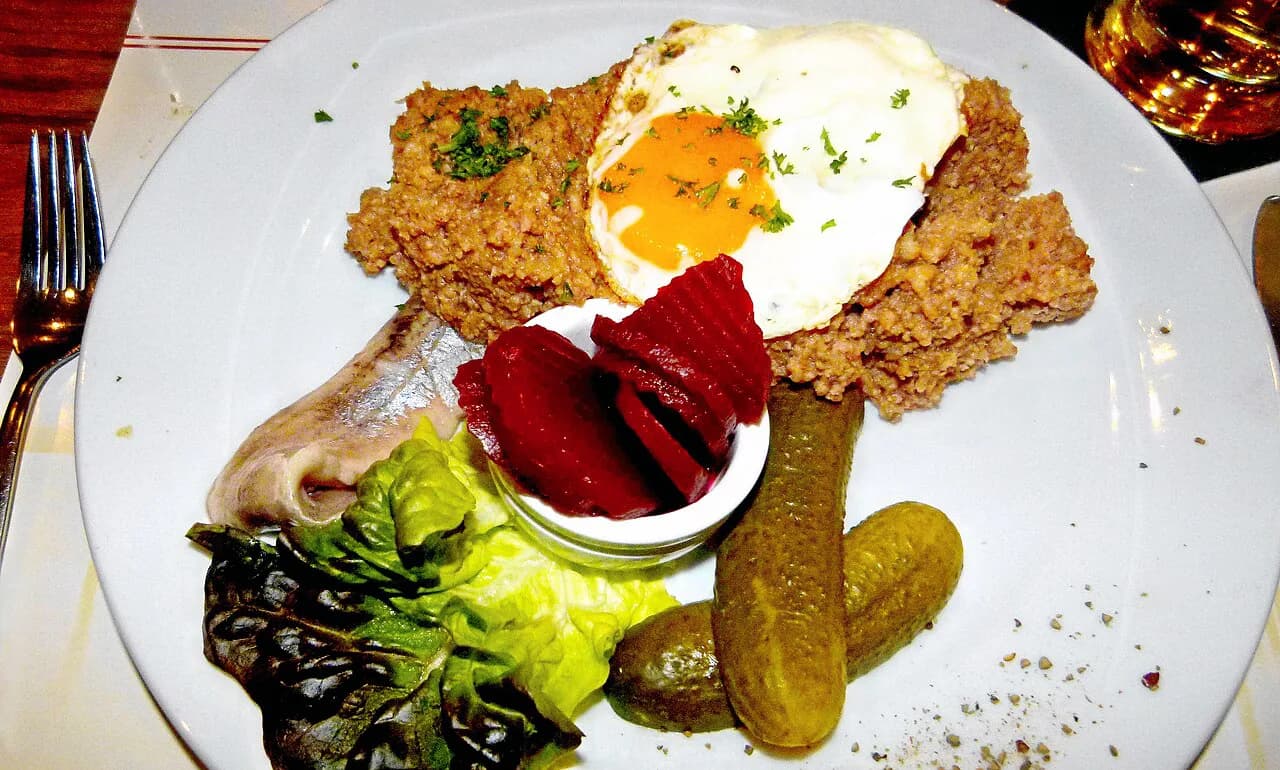
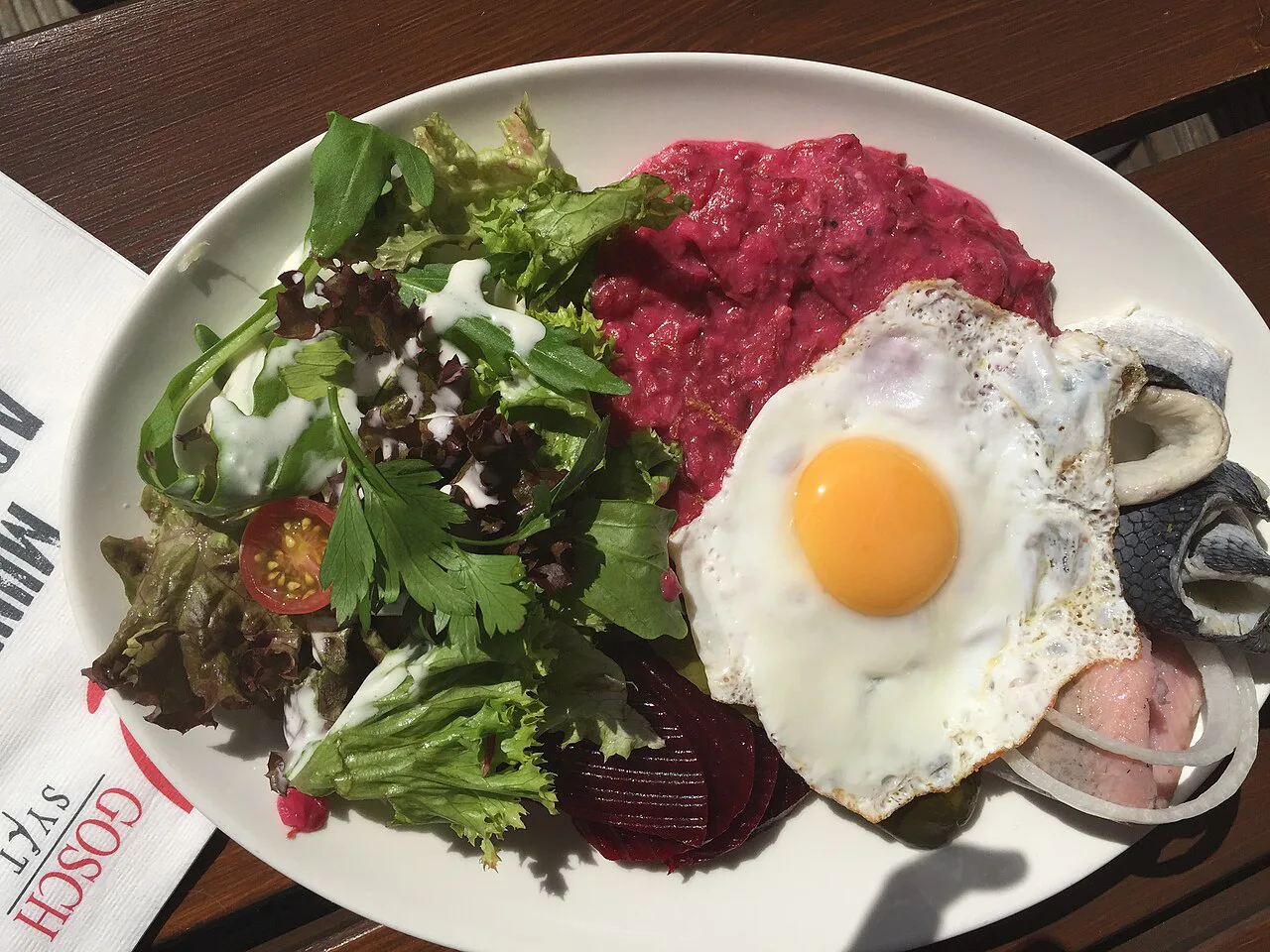
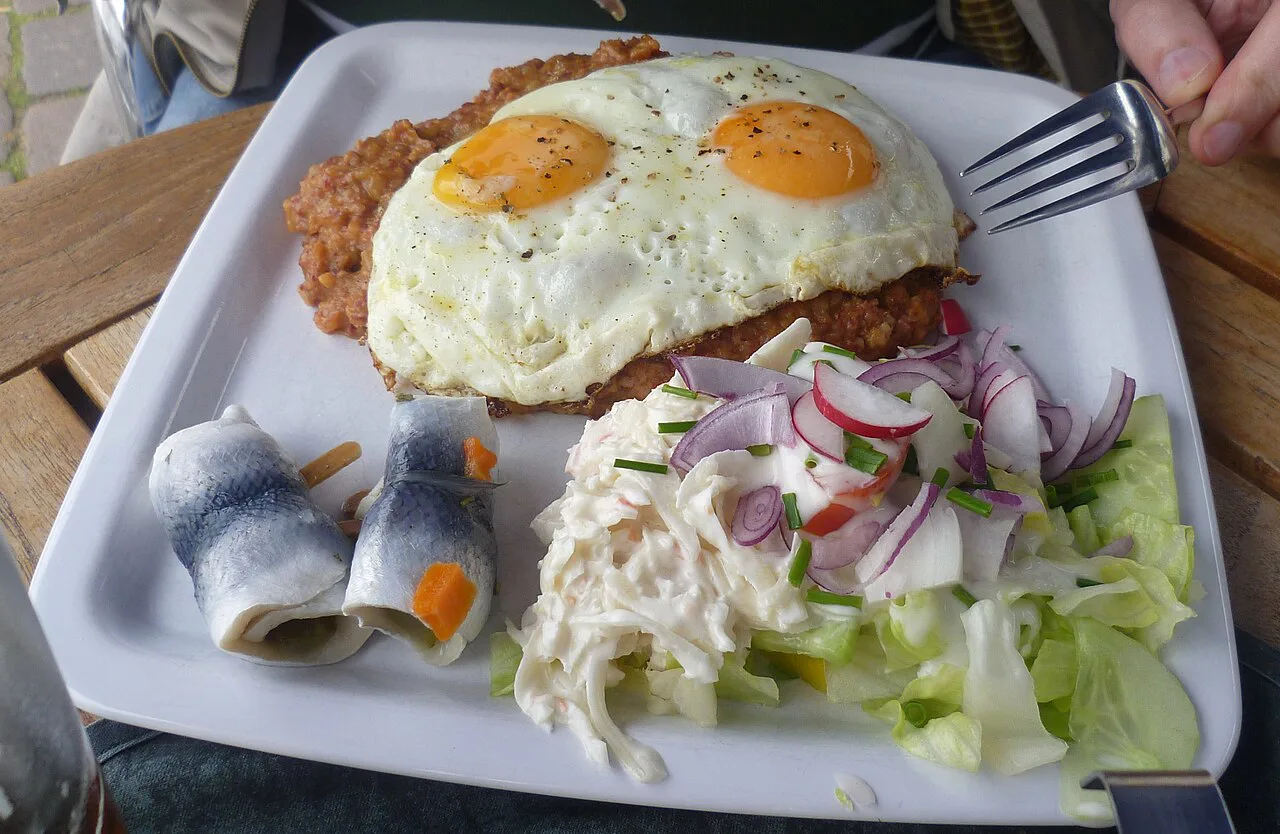
The plate here reads closer to Scandinavia than to Bavaria: dark multigrain bread, potatoes, green cabbage and berries, sometimes combined in ways that surprise visitors. A classic example pairs pears, green beans and bacon in one dish.
One habit worth adopting: northern cooks happily mix hearty and sweet components on the same plate. For a closer look at fish dishes across the country, including carp in beer sauce, see the guide to fish in Germany.
Bavaria and the south: floury, dairy-rich cooking built around wheat and beer
Southern cooking, especially in Bavaria, is heavier on flour, dairy and wheat products, and beer is treated as a normal mealtime drink rather than a special-occasion one. That combination produces the food most Americans picture when they think of Germany.
Bavarian food rewards ordering by category rather than by restaurant. Think pretzels the size of a plate, pale sausages, pork roasts and dumplings, with a beer garden as the natural setting for a long afternoon.
Neighboring Swabian cuisine belongs to the same southern family but has its own identity, built on pasta-like Spätzle, lentils and hearty roasts. If you are traveling between Munich and Stuttgart, expect the menu to change before the accent does.
The west and Rhineland: wine-country food, gingerbread and Roman-era vines
The western Rhine lands have grown wine since Roman times, with vineyards across Rhineland-Palatinate, North Rhine-Westphalia and Hesse. White grapes dominate, mainly Riesling and Müller-Thurgau, while Pinot Noir and Dornfelder are the best-known reds.
The west also has a sweet tooth. Aromatic gingerbread and other sweets are popular here, and the culinary overlap with neighboring Belgium, Luxembourg and France is strong enough that some dishes feel more Rhenish than strictly German.
In Cologne and the wider Rhineland, the local cooking has dishes worth seeking out, including Himmel un Ääd, a mash of apples and potatoes served with fried blood sausage.
Further south along the Rhine, the Palatinate has its own hearty pork-based cooking, from stuffed dishes to rich, slow-cooked braises.
Eastern Germany: GDR-era dishes like Ketwurst and Königsberger Klopse
Eastern Germany kept a set of dishes from the GDR era that many English-language food lists skip. Ketwurst is sausage with ketchup in a hollowed roll, and Krusta is the East German take on pizza, square and baked on a baking sheet.
The east also serves dishes from former German territories further east, notably Königsberger Klopse, meatballs in a white sauce. Both the GDR snacks and the older dishes have come back into fashion in some regions.
Saxon food sits within this eastern frame but has its own weight: potato-heavy plates, rich sauces and a strong café and cake culture in Dresden and Leipzig. Thuringian cooking next door is built around dumplings and its own grilled sausage.
The classic dishes you will meet almost everywhere
Some dishes travel the whole country. The Bratwurst is the obvious one: recipes have barely changed in centuries, and there are as many as 40 varieties sold by street vendors in a roll with ketchup or mustard, or in restaurants with potato salad and Sauerkraut.
Nuremberg's council regulated sausage-making as early as 1313, which makes Franconian bratwurst one of the oldest documented food traditions you can still eat. They are small, seasoned and usually served several to a plate.
Schnitzel is Germany's most famous dish and not originally German at all; its history runs from Vienna to Milan and beyond. Leberkäse, despite the name, is a baked meatloaf of finely ground pork, beef or liver, and by law it must contain at least 4 percent liver nationally, 5 percent in Stuttgart, with an exception in Bavaria.
Eintopf means one pot, a stew of broth, vegetables, potatoes and meat or sausage. Its cousin Erbsensuppe is a thick pea soup with potatoes, ham hock and sausage, eaten hot with bread and butter.
Two more dishes worth knowing: Rouladen, rolled meat with a savory filling, and Flammkuchen, a thin flatbread topped with cream, onions and bacon. Both appear on menus well beyond their home regions.
Bread, potatoes and preserved foods: the backbone of the German table
Bread may be the thing Germans miss most when they live abroad, and the range in a normal bakery is the reason. Pumpernickel, the dense dark rye loaf, is the extreme end of a spectrum that runs from soft rolls to seeded multigrain loaves.
Potatoes appear in almost every form, from boiled alongside a roast to Bratkartoffeln, fried potatoes with onion and bacon. Sauerkraut, fermented cabbage, is the other constant, served as a tart counterweight to pork and sausage.
Preservation is the quiet thread running through all of it. Before refrigeration, smoking, curing and pickling were how a household survived winter, and dishes such as Westphalian ham and Black Forest ham are the polished results.
Drinks at the table: beer styles, Radler and the wine regions in the southwest
Beer is the default mealtime drink in much of Germany, and the range is wide: roughly 1,400 breweries operate across the country. Styles differ by region, from pale lagers to the top-fermented Kölsch of Cologne and the wheat beers of Bavaria.
In summer, many drinkers switch to Radler or Alsterwasser, a fifty-fifty mix of pale beer and lemonade. It is low in alcohol and easy to drink with a plate of sausage and bread on a warm afternoon.
Wine is the mealtime drink in the southwest, where white varieties make up about 65 percent of production. The old cliché that German white wine is always sweet is wrong, and winemakers flinch when they hear it.
How immigration and trade reshaped German food since the 1960s
Everyday German food is more international than the traditional menu suggests. Italian ice-cream makers arrived after the First World War and brought pizza and pasta, which have since become staples.
From the 1960s onward, arrivals from Turkey, China, Vietnam, Greece and the former Soviet Union each added to the mix. That is why a kebab shop or an Imbiss stand is now as much a part of a German lunch as a Gasthaus.
Trade did the same work over centuries. Cologne grew into a major trading center and absorbed foreign spices, while port cities such as Hamburg and Bremen built cooking around fish, seafood and imported ingredients.
Where regional food sits in the price range: Gasthaus, Imbiss and Michelin-starred kitchens
Look beyond the stereotype and German food runs the full range, from traditional fare to haute cuisine. The country sits closer to Italy and France in Michelin stars than most visitors expect, so tasting menus and ambitious kitchens are part of the picture.
At the everyday end sit the Gasthaus, the neighborhood pub-restaurant with a short menu of regional dishes, and the Imbiss, the snack stand selling sausage, fries or a quick kebab. Both are where most locals actually eat on a weekday.
Budget travelers are well served: southern European, eastern European and traditional German places offer filling lunches at reasonable prices, and the range runs all the way up to ambitious kitchens.
Start with the region you are actually in
The practical rule is to eat what the region does best. In the north, order fish and dark bread; in Bavaria, a pretzel, a pale sausage and a beer; in the west, a Riesling with something from the Rhine; in the east, try a GDR-era snack alongside the dumplings and roasts.
Stretching across the south, the Allgäu adds dairy to the southern story, with mountain cheese and Käsespätzle a natural pairing. Farther north in Westphalia, the plate turns toward ham and hearty farmhouse cooking.
Which region should you eat your way through first?
If you want the biggest contrast in the fewest meals, start in the north and work south: seafood and dark bread in Hamburg or Lübeck, then dumplings, sausage and beer in Bavaria. Two or three days in each region gives you a clear sense of how the cooking changes.
If you are based in one city, eat the local specialty first and add the national classics second. A Thuringian grilled sausage on a roll or a Franconian bratwurst on a plate is the regional version, and ordering it where it belongs is the whole point of eating regionally in Germany.
Explore more Germany guides
- Bavarian Food: What to Eat, What It Is, and How to Order
- Black Forest Food
- Cologne Food
- Fish in Germany: What to Eat and Where
- Frankfurt Food
- Saumagen
- Saxon Food
- Swabian Food
- Westphalian Ham: What It Is, How It's Made, and How to Eat
- Allgäu Food
- Franconian Food
- Northern German Food: Dishes to Eat and Their Origins
- Thuringian Food
Frequently Asked Questions
What is Germany's national food?
Germany does not have one national dish. Cooking splits by region, with seafood, cabbage and dark bread in the north, floury dairy dishes and beer in Bavaria, and wine-country food in the west.
What is Germany's favorite street food?
The Bratwurst is the most widespread street food, sold from stands in a bread roll with mustard or ketchup. Currywurst is another everyday favorite, and both are easy to find at an Imbiss.
What are some traditional German foods?
Expect Bratwurst, Schnitzel, Leberkäse, Eintopf, Erbsensuppe, Rouladen and Flammkuchen, plus pretzels, Sauerkraut and fried potatoes. Eastern regions also serve dishes such as Königsberger Klopse and the GDR-era Ketwurst.
Sources
Notes for your next German food trip
Optional updates to our guides.
You might also like



Continue reading
More guides you'll find useful





