
Cologne Food: Himmel un Ääd, Halve Hahn and What to Order
Cologne food centers on Himmel un Ääd, Halve Hahn and Reibekuchen. Learn what each Rhineland dish is and which brauhaus or café to order it in.
On this page
Cologne food is Rhineland home cooking built for drinking weather: Himmel un Ääd, a black pudding plate with apple sauce; Halve Hahn, a rye roll with cheese; and Reibekuchen, potato fritters with apple purée. Get those three right and the city's brauhaus menus start to make sense, from schnitzel to Flammkuchen to the small glasses of Kölsch that keep arriving. This guide explains each dish, the venues worth aiming for by neighborhood, and how ordering and paying work.
The good news for a short visit is that Cologne eats by neighborhood: the Altstadt around the Cathedral for traditional brauhaus rooms, the Belgian Quarter for cafés and brasserie cooking, and Ehrenfeld for bakeries and brunch. Pick the area you are already in and the food follows naturally.
What Cologne food is: the Rhineland table in one paragraph
Cologne sits in the Rhineland, and its cooking is plain, porky and slightly sweet: mashed potato, apple, black pudding, rye bread, mustard and potatoes fried in fat. It is a working table rather than a showpiece one, designed to sit alongside beer rather than compete with it. Order a plate and a Kölsch and you have the local logic in front of you.
Local menus also carry dishes that cross regional borders, including schnitzel in pork or veal, thin Flammkuchen with bacon and onion, and grilled sausage with cabbage. That mix is normal here, so don't treat a brauhaus card as strictly local.
The dishes to order first: Himmel un Ääd, Halve Hahn and Reibekuchen explained
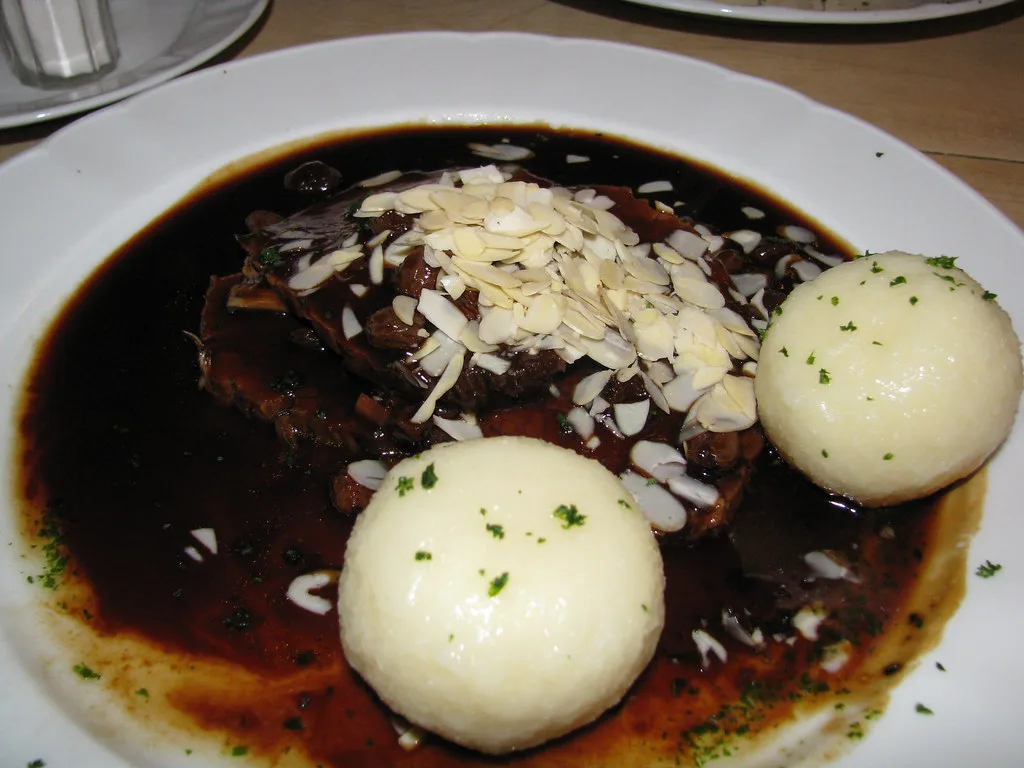
Himmel un Ääd means "heaven and earth": black pudding with fried onions and mashed potato, served with apple sauce. It reads odd on paper and makes complete sense on the plate, the sweetness of the apple cutting the rich sausage. Peters Brauhaus serves it, which makes the Altstadt a sensible first stop.
What is Himmel un Ääd? It means "heaven and earth": black pudding with fried onions and mashed potato, served with apple sauce. It is one of the standard Rhineland plates in a Cologne brauhaus.
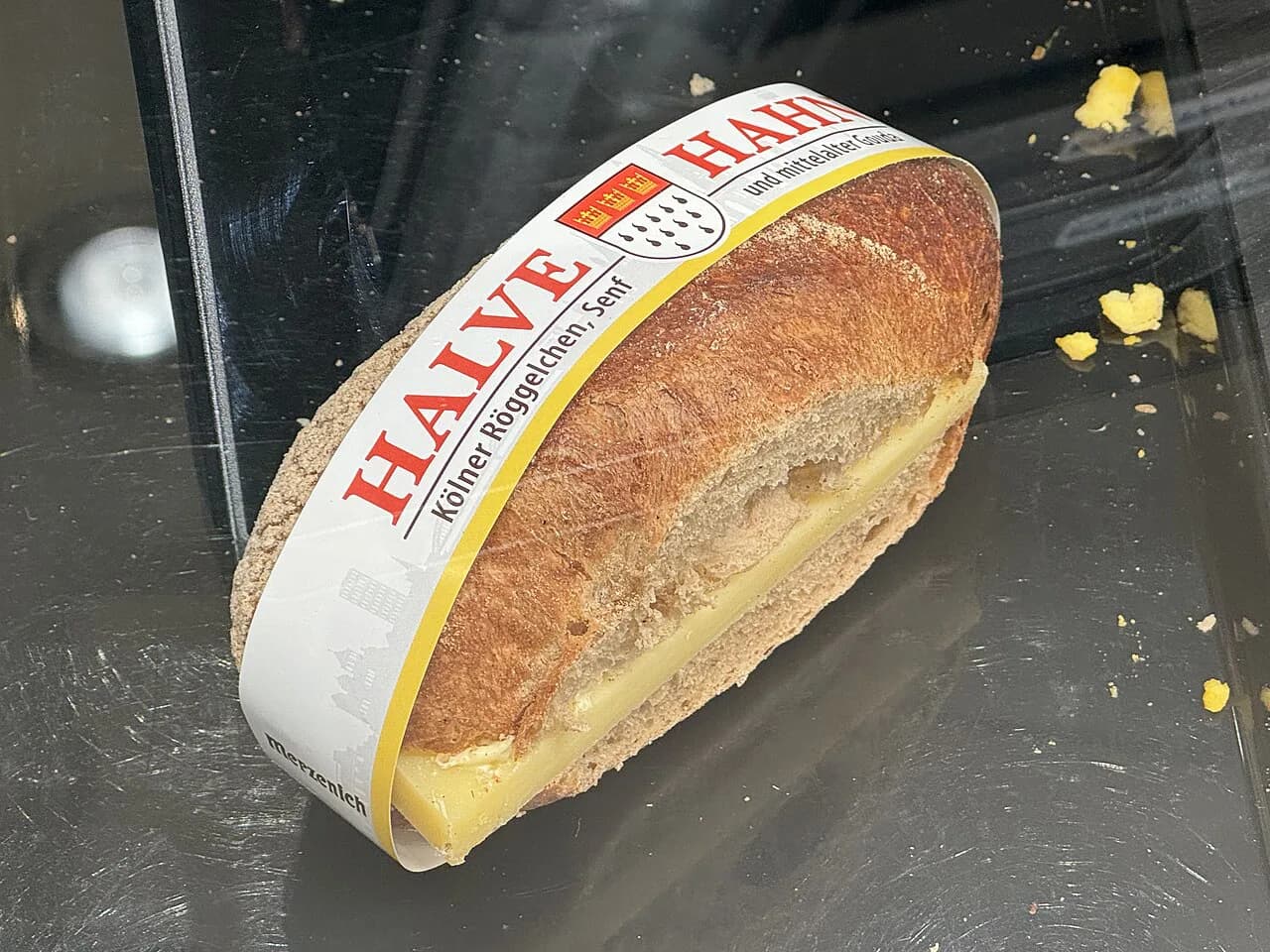
What is a Halve Hahn? Despite the name, which literally means "half a rooster," it is a rye roll with a thick slice of cheese, mustard, onion and pickle. It is a snack rather than a main course.
How do I stop the Kölsch refills? In a traditional brauhaus, place your coaster on top of your glass. Otherwise the Köbes will keep replacing an empty glass and marking each round on the coaster.
Halve Hahn is a Cologne joke of a name: it translates as "half a rooster" but is actually a rye roll with a thick slice of cheese, mustard, onion and pickle. Order it with a Kölsch as a snack rather than a full meal. Reibekuchen are potato fritters fried crisp and served with apple purée, and they belong in the Rhineland's cheaper, homelier cooking. Much of the Rhineland table follows the same logic as German regional cuisine elsewhere: starch, pork and something sharp to cut it.
Kölsch: how the beer works with the food and how the glasses keep coming
Kölsch is a pale, light top-fermented beer served in small, narrow glasses, and it is the default drink in every brauhaus in the city. The size is the point: the beer stays cold and fresh, and you drink several across a meal rather than one large one.
In a traditional Cologne brauhaus, the server, the Köbes, replaces an empty glass without being asked, marking your coaster for each round. If you want a pause, put your coaster on top of the glass. Budget your evening around small rounds rather than a single big pour.
Brauhaus classics beyond the big three: schnitzel, Flammkuchen and sausage plates
Beyond the signature dishes, the Cologne brauhaus card runs to roasted pork knuckle, herring fillets, venison stew and goulash, all sturdy plates for cold weather. Grilled sausage with savoy cabbage and bacon-fried potatoes is a useful middle ground when you want something simpler than a roast.
Flammkuchen, a thin, crisp flatbread usually topped with crème fraîche, bacon, onion and chives, is the lighter way into a brauhaus meal and a good shared starter. Belgischer Hof in the Belgian Quarter is known for it, with toppings that run from traditional to experimental.
Where to eat in the Altstadt near the Cathedral: Peters Brauhaus and Café Reichard
Peters Brauhaus on Mühlengasse is the classic Altstadt address for a long lunch, in a room with a stained-glass ceiling and oak paneling; the site has been tied to brewing since the sixteenth century and the current brauhaus restored the space in the 1990s. Go for Himmel un Ääd or the sausage plate when you want the traditional Cologne experience.
Café Reichard, a family-run coffee house with a terrace in front of the Cathedral, is the place for an afternoon cake stop rather than a full meal. Its patisserie counter and main salon have served coffee and cake for generations, and it makes a sensible midpoint if you are touring the center on foot.
Where to eat in the Belgian Quarter and Latin Quarter: Bar Schmitz and Bei Oma Kleinmann
The Belgian Quarter is the lively, café-heavy district on and around Aachener Straße, and Bar Schmitz is the polished all-day address on that street, part of a three-house Schmitz complex with brasserie cooking and a long breakfast menu. It is a good choice when one person wants schnitzel and the other wants pancakes.
Bei Oma Kleinmann in the Latin Quarter is the schnitzel address of the city, a small corner pub with a big reputation and a queue to match. The schnitzel comes in pork or veal with a range of sauces and toppings, and the portions are famously large.
Where to eat in Ehrenfeld: Zeit für Brot and bakery counters
Ehrenfeld is Cologne's bakery and brunch quarter, and Zeit für Brot is the obvious first stop: this bakery-café sells large, warm sweet rolls — its signature 'snails' — in flavors such as spiced apple and dark chocolate, straight from the tray. Go early in the day for the best selection.
Beyond the bakery counters, Ehrenfeld's food scene includes Turkish bakeries selling baklava and pide, and a strong brunch culture. That makes it worth a half-day if you want to eat away from the center.
Schnitzel in Cologne: portion sizes, pork versus veal and sharing
Cologne treats schnitzel as a serious plate, and an order at Bei Oma Kleinmann is enough for most appetites, especially with a side of Spätzle. If you are in a group of two, splitting one schnitzel and adding a starter or a shared Flammkuchen is the sensible move.
Pork is the everyday cut; veal is the classic Wiener version. Ask which one the kitchen uses before ordering if it matters to you, and expect the breading to be thin and crisp rather than heavy. If you want to compare the Rhineland version with the southern German treatment, Bavarian food runs heavier on dumplings and pork roasts.
Cake and coffee as a Cologne institution: Konditorei counters and café terraces
Cologne takes its afternoon cake seriously, and the Konditorei counter is the place to look: cherry meringue pie and hot chocolate at Café Reichard are the canonical example. Plan a cake stop between two walking stretches rather than squeezing it in after dinner.
Terrace seating at the big cafés fills quickly on a sunny afternoon, so arrive early or plan on the counter. The cake usually comes from the patisserie display rather than a menu, so look before you sit.
How a Cologne meal runs: ordering, Kölsch etiquette and paying
In a brauhaus, take a seat where you find one, and the Köbes will come to you. Menus often come in English, but the German names are what you want to learn: Himmel un Ääd, Halve Hahn, Reibekuchen. If the place is busy, sharing a table is normal.
Your beer tab is tallied on the coaster, and you pay at the table when you finish. A short tip, rounded up, is standard. Many smaller Cologne places take cash only, so carry some euros even if you plan to pay by card.
Which Cologne dish should you order first?
Start with Himmel un Ääd at Peters Brauhaus if you want the traditional plate, or with a Halve Hahn and a Kölsch if you only have an hour. Bei Oma Kleinmann is the schnitzel stop, Zeit für Brot the bakery breakfast, and Café Reichard the cake-and-coffee finale.
For a wider view of the German table, our guide to German regional cuisine will help you place the Rhineland dishes next to the rest of the country.
Explore more Germany guides
Frequently Asked Questions
What is Himmel un Ääd?
It means "heaven and earth": black pudding with fried onions and mashed potato, served with apple sauce. It is one of the standard Rhineland plates in a Cologne brauhaus.
What is a Halve Hahn?
Despite the name, which literally means "half a rooster," it is a rye roll with a thick slice of cheese, mustard, onion and pickle. It is a snack rather than a main course.
How do I stop the Kölsch refills?
In a traditional brauhaus, place your coaster on top of your glass. Otherwise the Köbes will keep replacing an empty glass and marking each round on the coaster.
Do Cologne restaurants take card?
Card acceptance in Cologne varies by venue, so it is safest to carry some euros as a backup even if you plan to pay by card.
Sources
Notes for your next German food trip
Optional updates to our guides.
You might also like



Continue reading
More guides you'll find useful



