Best Restaurants in Dresden: Where to Eat by Style & Budget
A practical shortlist of Dresden restaurants, from Saxon cooking and beer-hall dining to modern German and Michelin-starred fine dining.
On this page
Dresden's best restaurants split roughly into four groups: traditional Saxon places in the Altstadt, casual beer-hall tables, modern and international kitchens, and a small fine-dining tier with Michelin recognition. Pick by the evening you want rather than by a single ranked list, because the difference between a hearty pork-and-dumpling dinner near the Frauenkirche and a multi-course menu in the Neustadt is bigger than any quality gap.
This guide names the rooms worth planning around, says what each one is known for, and separates the tourist-heavy addresses near Zwinger and Frauenkirche from calmer tables a few minutes out. It also covers booking by phone or online, paying, and the Saxon dishes to order first.
What Makes Eating Out in Dresden Different
Dresden's restaurant geography does half the choosing for you. The Altstadt around the Residenzschloss, Neumarkt and Zwinger packs the highest concentration of dining rooms, which makes it the easiest place to eat after a day of walking but also the most crowded. The Neustadt, across the Elbe, holds the modern and fine-dining addresses, where dinner usually means a booked table and a longer evening.
Two dishes define the regional kitchen: Sauerbraten, beef marinated for days and served with a dark sweet-sour sauce, and Käsespätzle, soft egg noodles baked with cheese and topped with fried onions. Both appear on traditional menus alongside roast pork and dumplings. If you want the plainest version of that cooking, start with the German restaurant Dresden shortlist, which sticks to Gasthaus fare and local classics.
Budget matters as much as style. A cellar restaurant inside a palace and a neighborhood Gasthaus can both serve good Saxon food, but the setting and the walk from the river differ sharply, and so does the final bill. Sorting your evenings by area first, then by budget, keeps you from crossing the city twice for dinner.
Traditional and Saxon Cooking: Where to Order the Regional Classics
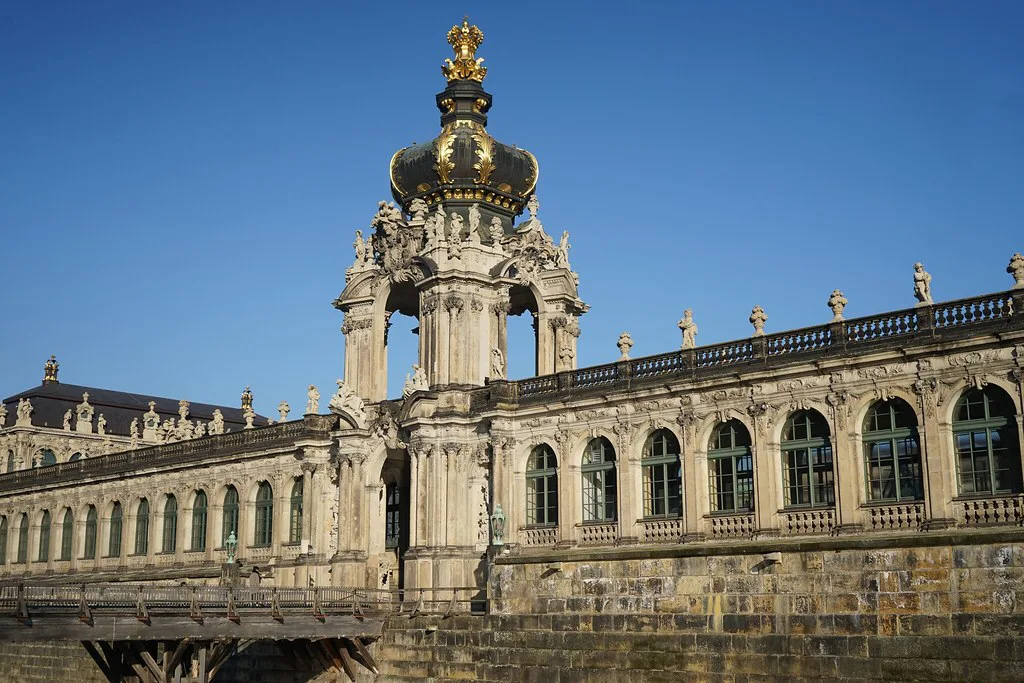
For Saxon cooking in a historic setting, the Sophienkeller sits in the Taschenbergpalais directly opposite the Zwinger and Semperoper. The dining rooms are vaulted cellars, and the kitchen turns out hearty fare such as Spanferkel vom Spieß, suckling pig roasted on a spit, with fresh bread and beer alongside.
The trade-off is atmosphere over quiet. The Sophienkeller presents itself as a step back into the Baroque era of August the Strong, and the evening comes with entertainers, jugglers and musicians rather than a calm conversation. If you want a lively, dressed-up night near the main sights, it fits; if you want a hushed dinner, look elsewhere. The same operator listing gives the address as Taschenberg 3 and a daily service window from 11:00 to 01:00, useful when you are deciding how late to eat.
For a plainer Saxon meal at a lower price point, look at smaller Gasthäuser away from the Zwinger, where the menu is shorter and the room quieter. Plates of roast pork with Sauerkraut, beef rouladen and simple dumplings are the things to order; they tell you more about the local kitchen than any international dish on the same menu. Our guide to cheap eats Dresden lists the addresses where that kind of dinner stays affordable.
Beer Halls and Brewery-Style Dining: Casual Tables for Beer and Hearty Food
Beer-hall dining in Dresden means long tables, big plates and a local lager to go with them. Order a Helles, the pale, softly bitter Munich-style lager, or a Pilsner if you want more hop bite, and pair it with roast pork, sausages or a bread-based snack rather than a full multi-course meal. A beer garden is for exactly this: a drink, a plate and an unhurried hour.
The Platzhirsch am Schlosseck runs a summer garden in the Altstadt with a direct view of the Residenzschloss, open from midday in good weather. It is the most practical option before or after a visit to the castle quarter, since you can eat and then walk to the museums without another tram ride.
Inside, the Platzhirsch keeps a modern kitchen that mixes regional specialties with international dishes, so a group with mixed tastes can order Saxon food and something familiar at the same table. The trade-off is that this broad menu is not the place for the deepest traditional cooking in the city; come for the location, the terrace and an easy, comfortable meal.
Modern and International Kitchens: Contemporary Rooms in the Altstadt and Neustadt
The Platzhirsch am Schlosseck also works as a contemporary restaurant rather than only a beer garden. Its menu deliberately pairs specialties from the region with dishes from other cuisines, served in a stylish room with large windows onto the street. It suits a first evening in Dresden when you want a solid meal and a short walk back to a hotel in the Altstadt.
For a more modern, international evening, head to the Neustadt, where the dining rooms are smaller and the cooking leans on seasonal and international ideas. Vegetarian travelers have more room to maneuver here than in the traditional cellars; our vegan Dresden guide maps out the addresses that build a menu around plants rather than around a side dish.
Fine Dining: Dresden's Michelin-Starred and Upscale Tables
Dresden's fine-dining tier is small and books up. Four restaurants in Dresden and the surrounding Elbland region were awarded a Michelin star in 2025, and demand for those tables is high enough that you should reserve well ahead rather than walk in.
Three addresses cover most of what a visitor is looking for: the Genuss-Atelier and elements in the Neustadt, and the Heiderand on the edge of the Dresden Heath. Expect long menus, a serious wine list and a bill to match; these are evenings to plan around rather than to fit into a sightseeing day.
Platzhirsch am Schlosseck: A Summer Garden Next to the Residenzschloss
The Platzhirsch am Schlosseck sits at Schloßstraße 10 between the Dresdner Schloss, the Kulturpalast and the Neumarkt, so it is close to nearly every Altstadt sight. In good weather the beer garden opens daily from midday and looks straight at the Residenzschloss, which is the reason to choose it over a basement room on a warm evening.
Book by phone or through the online reservation form; the restaurant asks for both an email address and a phone number to confirm a table. That makes it a sensible pick for a group dinner, when showing up without a booking near the castle quarter can leave you walking.
Sophienkeller im Taschenbergpalais: A Baroque Cellar for Saxon Cooking
The Sophienkeller occupies the vaulted cellars of the Taschenbergpalais, a short walk from the Zwinger and Semperoper. It is the most theatrical of the traditional addresses: the room is styled after the court of August the Strong, food arrives from the spit and the evening runs long with performers moving between the tables.
Come here for the setting and the Saxon dishes rather than for a quiet talk. It suits families and groups who want a full evening out near the main sights; couples after a calm dinner should book one of the Neustadt rooms instead.
Genuss-Atelier: A Michelin-Starred Table in the Neustadt
The Genuss-Atelier on Bautzner Straße in the Neustadt is run by Marcus Blonkowski, a Michelin-starred chef, and his sister Nicole, who handles the wine. The room is a restored sandstone vault, and the menu is seasonal, offered à la carte or as a surprise menu of four to eight courses. Ask for the longer version if you want the full picture of the kitchen.
The wine list stays regional, drawn from Elbland and Saale-Unstrut, which is a deliberate match to the cooking rather than a tour of France. Book by phone or online in advance; the room is small and the reputation does the rest.
Heiderand: Silesian-Saxon Cooking on the Edge of the Dresden Heath
The Heiderand, on Ullersdorfer Platz at the edge of the Dresden Heath, earned its first Michelin star in June 2025 under Martin Walther, who took over the family restaurant in 2020. The cooking blends modern technique with the Silesian-Saxon dishes of his parents and grandparents, which gives the menu a character you will not find in the Altstadt.
This is a destination dinner rather than a stop on a walking route, so build the evening around the trip out and reserve by phone or online. The setting is quieter than the center, and the family history gives the room a warmth that the grander addresses lack.
Elements: Fine Dining in the Neustadt
Elements in the Neustadt combines a deli with a fine-dining room, so you can eat lightly at one end or settle in for the full menu at the other. Stephan Mießner and Martina Starovičová-Mießner have held a Michelin star here since 2014, with the star retained again in 2025.
The kitchen describes its style as regional cooking with a cosmopolitan twist alongside classic French dishes, which makes it a good bridge for a group where one person wants a refined menu and another wants something simpler. Reserve ahead; the deli side fills up as well.
Where to Eat by Neighborhood: Altstadt vs. Neustadt
Stay in the Altstadt if you want to eat within sight of the Residenzschloss, the Zwinger or the Frauenkirche, and if you would rather not take a tram after dinner. The Platzhirsch and Sophienkeller both sit in that compact core, which makes them easy to pair with a museum visit or an evening at the Semperoper.
Choose the Neustadt for modern cooking, small rooms and the fine-dining addresses. The Genuss-Atelier and elements are both there, and the neighborhood rewards a booked table with a calmer evening than the tourist core. Crossing the river is part of the night out, not a detour.
How Reservations, Ordering and Paying Work in Dresden Restaurants
Reserve by phone or through a restaurant's online form, especially for the fine-dining rooms and for any group. The Platzhirsch asks for an email and phone number to confirm, which is typical of city-center places that hold tables for booked guests.
At a traditional Gasthaus, order a main dish and a beer rather than several courses; portions are generous and the kitchen expects you to eat properly. In a fine-dining room, choose between the set menu and à la carte, and take the pairing if you want the wine side handled for you.
Carry some cash even though cards are widely accepted, since smaller rooms and beer gardens are the likeliest places to ask for it. Tipping is done by rounding up or adding a few euros and telling the server the total you want to pay.
What to Order First: Saxon Dishes to Look For
Start with Sauerbraten, the marinated beef with a sweet-sour sauce, and Käsespätzle, the cheese-baked noodles with fried onions. Both are the dishes that tell you whether a kitchen knows the regional repertoire, and both are usually on the menu in traditional rooms.
Leave room for something sweet: Dresdner Eierschecke, a layered cake of yeast dough, quark custard and a thin egg topping, is the local classic to look for in a café or Konditorei. Dresdner Christstollen, the dense fruit bread dusted with powdered sugar, belongs to the winter season and appears in shops and bakeries around the holidays.
Which Dresden Table Should You Book First?
Book the Sophienkeller or the Platzhirsch if you want a first night in the Altstadt with Saxon food and no travel; book the Genuss-Atelier, Heiderand or elements if the meal itself is the reason for the evening and you are willing to plan ahead. Between those two ends, the Neustadt holds the modern and international rooms that suit travelers with dietary needs or mixed groups.
Sort the rest of your eating by area and budget before you go, and lock in the fine-dining table first since those seats are the hardest to get. Travelers comparing German cities can also look at the best restaurants in Aachen for a western German counterpart.
Explore more Dresden guides
Sources
Notes for your next German food trip
Optional updates to our guides.
You might also like
Continue reading
More guides you'll find useful