Saumagen: The Palatinate Stuffed Stomach, Explained
Saumagen is a Palatinate specialty of pork, potato, and sausage meat simmered in a pig's stomach, then sliced and pan-fried. Here's what to expect on the plate.
On this page
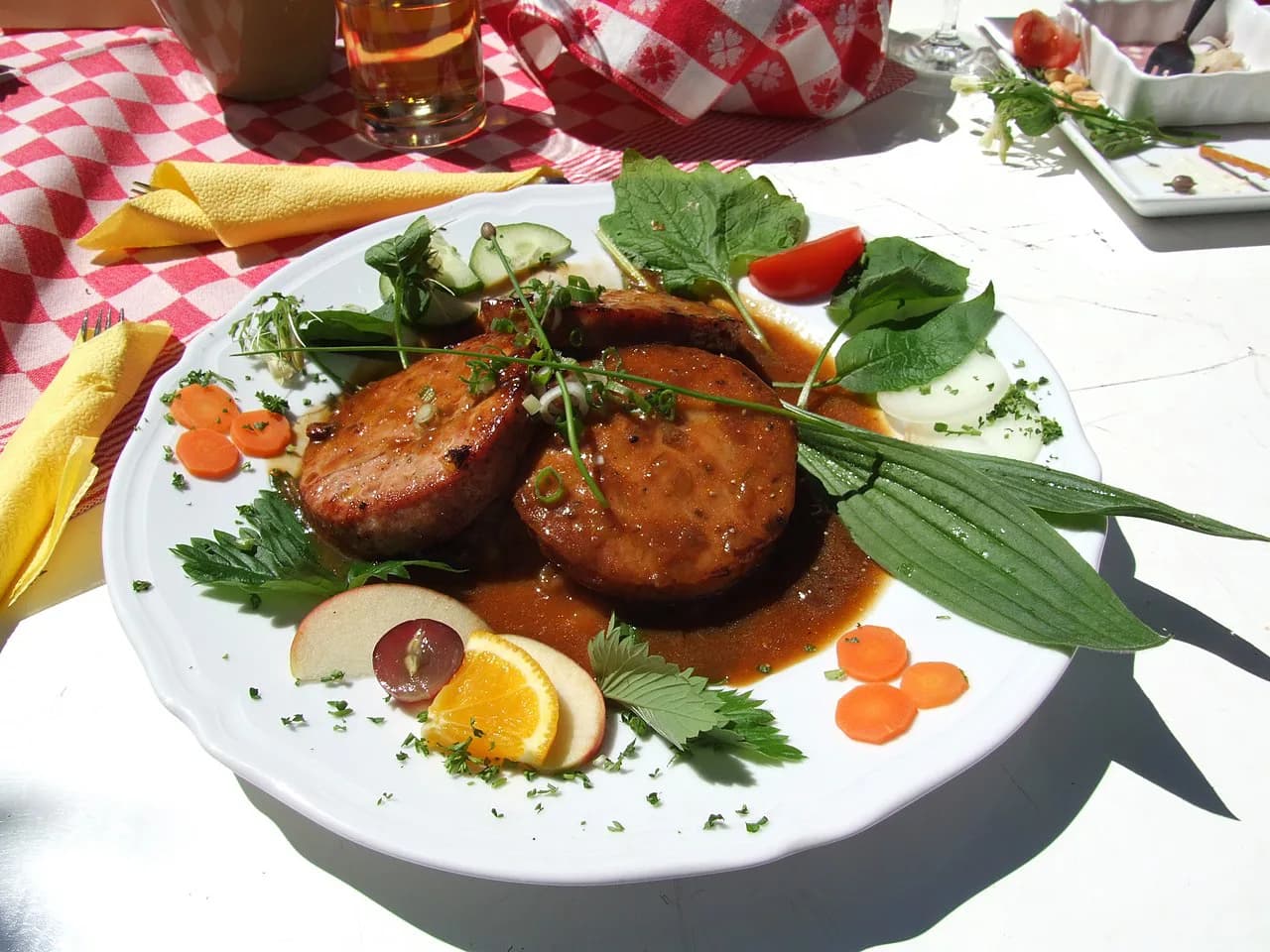
Saumagen is a Palatinate specialty of pork, potato, and sausage meat stuffed into a pig's stomach, simmered slowly, then sliced and pan-fried. The name literally means "sow's stomach," and the dish is a regional specialty of the Rhineland-Palatinate, not a nationwide German staple.
This guide covers what goes into the filling, how the stomach is cooked without bursting, and how the dish arrives at the table. It also explains where Saumagen fits among German regional cuisine and what to order when you see it on a Palatinate menu.
What Saumagen is and what the name means
Saumagen translates as "sow's stomach," and the name describes both the casing and the method. A pig's stomach is filled with a seasoned mixture of pork, potatoes, and sausage meat, then simmered and served in thick slices.
It is a regional specialty of the Rhineland-Palatinate, the western German state that includes the Palatinate. Think of it as a Palatinate dish first and a German dish second, in the same way that other regional specialties stay tied to their home territory within German regional cuisine.
What goes into the filling
The filling is a coarse mixture of pork, potatoes, and Bratwurst meat, seasoned with herbs and spices. The Palatinate tourism board's recipe uses lean pork belly (Schweinebauch), pork shoulder, Bratwurst filling (Brät), cooked potatoes, eggs, onions, parsley, garlic, marjoram (Majoran), nutmeg, and pepper.
What goes into the filling. The filling is a coarse mixture of pork, potatoes, and Bratwurst meat, seasoned with herbs and spices.
How it is made: stuffed, simmered, then sliced. The stomach is cleaned and tied at two of its three openings, then filled through the third and tied shut.
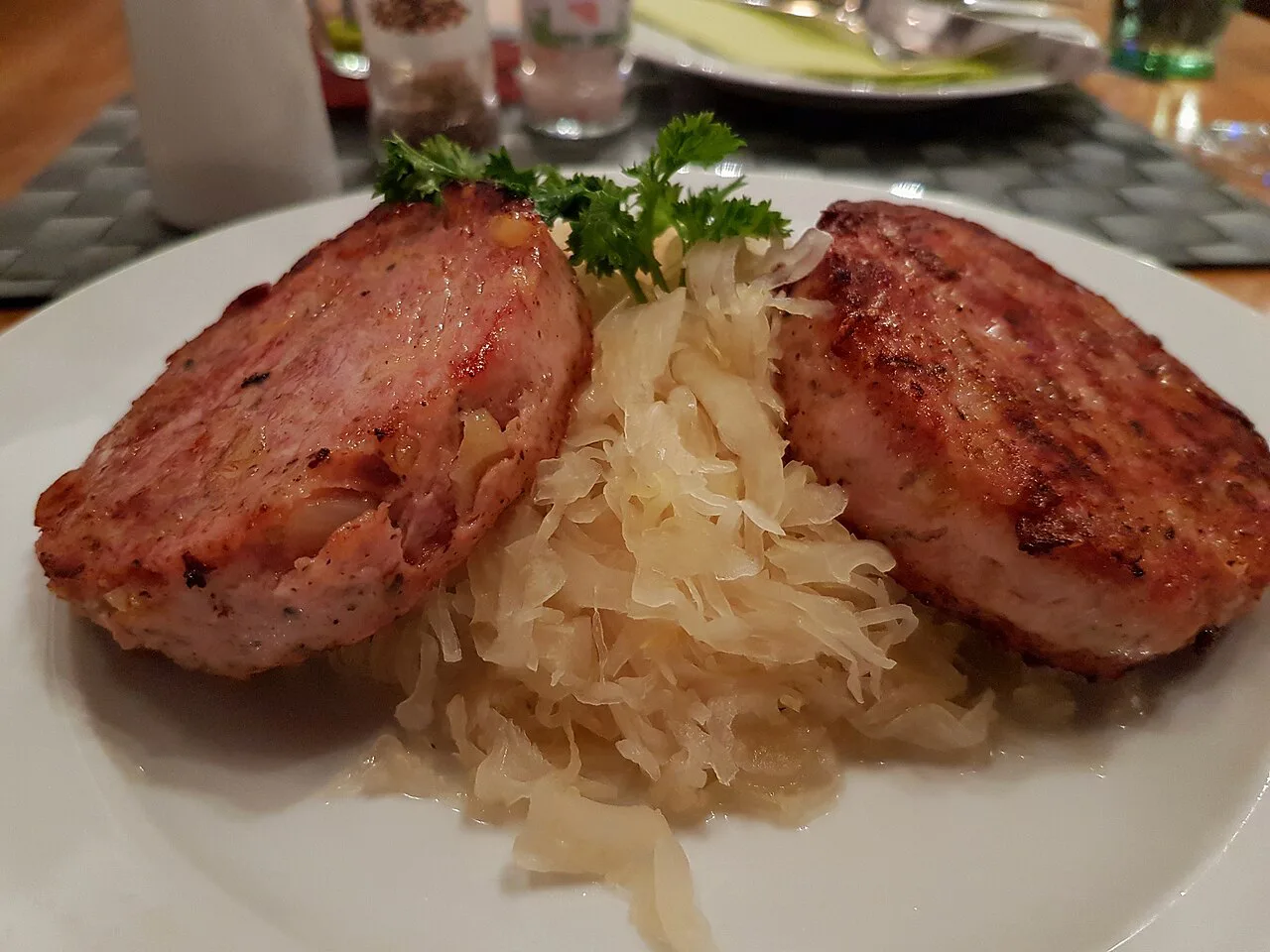
How it is served. Expect thick slices, not a sausage in a casing.
Marjoram is the herb that gives Saumagen much of its aroma, and it appears in both the tourism board's recipe and other versions. The amounts vary from kitchen to kitchen, so no single recipe is definitive; treat any proportions you see as one cook's approach rather than a fixed standard.
The mixture is bound with eggs and soaked bread rolls, which keep the slices from crumbling after cooking. The result is dense and savory, closer to a coarse country terrine than to a sausage.

How it is made: stuffed, simmered, then sliced
The stomach is cleaned and tied at two of its three openings, then filled through the third and tied shut. It goes into a large pot of salted water and simmers for roughly two to three hours. The key rule is that the water must never come to a rolling boil, which can split the stomach and scatter the filling.
After simmering, the stomach is lifted out, drained, and cut into slices about two centimeters thick. Some cooks serve the slices straight from the pot; others brown them in clarified butter or finish them in a hot oven until the edges crisp.
How it is served
Expect thick slices, not a sausage in a casing. The slices are usually pan-fried or warmed before serving, which gives the cut faces a browned crust and keeps the interior moist. The classic accompaniments are sauerkraut and farmhouse bread (Bauernbrot), a sturdy rye-and-wheat loaf; some versions add creamy mashed potatoes.
Saumagen is a hearty, savory dish, and a portion of thick slices is substantial enough to serve as a main course. If the kitchen offers a smaller starter portion, sharing one order is a sensible way to try it alongside other Palatinate dishes.
Palatinate identity and how the dish is regarded
Within the Palatinate, Saumagen functions as a marker of regional identity, a dish that locals point to as distinctly their own rather than as part of a national German menu. That local pride is part of why it appears so prominently on Palatinate menus and in the region's food writing.
The dish carries the same kind of local pride that other German regions attach to their own specialties, from Black Forest ham to Thuringian rostbratwurst. Ordering it is a way to eat something that belongs to a specific place rather than to a national menu.
Where Saumagen fits among German regional specialties
Germany's food map is a patchwork of regional dishes, and Saumagen belongs to the Rhineland-Palatinate rather than to Bavaria or the north. If you are building a trip around regional eating, compare it with Swabian cuisine and Franconian food, each with its own dumplings, sausages, and baking traditions.
Bavarian food runs to veal sausage, sweet mustard, and roast pork, none of which has much in common with a simmered stomach stuffed with potato and pork. Saumagen rewards the same curiosity you would bring to a Munich beer hall, but the payoff is a Palatinate dish, not a Bavarian one.
Saumagen is not a sausage in the everyday sense, even though Bratwurst meat goes into the filling. It is a cooked, sliced terrine-like dish, which puts it closer to head cheese or meatloaf than to a grilled bratwurst. For travelers building a trip around regional eating, it sits alongside the dishes covered in the guide to German Regional Cuisine.
What to order and how to eat it
Look for "Pfälzer Saumagen" on menus in the Palatinate and in Palatinate-themed restaurants elsewhere in Germany. The word Pfälzer means "of the Palatinate," so the full name is the clearest signal that you are getting the regional version.
Ask whether the slices are pan-fried or served straight from the pot; both approaches appear in Palatinate recipes. Either way, the dish is traditionally served with sauerkraut and Bauernbrot, so those are the sides to look for.
Portions are generous, so if you are ordering several courses, consider sharing one portion of Saumagen as a starter. Because the dish is rich and savory, it pairs well with the lighter, sharper flavors of pickled vegetables or a simple salad on the same table.
Should you order Saumagen?
Order Saumagen if you want to taste a dish that is genuinely tied to one region and you are comfortable with a coarse, savory meat terrine. Skip it if you want something light; the pan-fried slices are rich and filling.
The best place to try it is a Palatinate restaurant that lists Pfälzer Saumagen by name, with sauerkraut and farmhouse bread on the side. Treat it as a regional specialty to seek out rather than a dish you will find everywhere in Germany.
Explore more Germany guides
Sources
Notes for your next German food trip
Optional updates to our guides.
You might also like

Continue reading
More guides you'll find useful