
Black Forest Food: What to Eat in Germany's Southwest
Black Forest food means cake, ham, Swabian dumplings and Spätzle. Learn the dishes, the drinks and how a Gasthof meal works in Germany's southwest.
On this page
Black Forest food comes down to four things: cake, smoked ham, Swabian pasta and noodles, and whatever the forest gives up in season, from chanterelles to venison. Get those right and a single meal here tells you more about the region than a week of menu-scanning. This guide sorts the dishes by what they are, names where to order them, and explains how a rural Gasthof meal runs.
The Black Forest sits in Baden-Württemberg, in Germany's southwest, and its cooking leans Swabian: egg pasta, filled dumplings, cream cakes and dark beer. It is a rural food culture built around farm kitchens and village inns rather than city restaurants, so the best eating tends to happen in small towns with a family running the place.
Black Forest Food: The Quick Answer
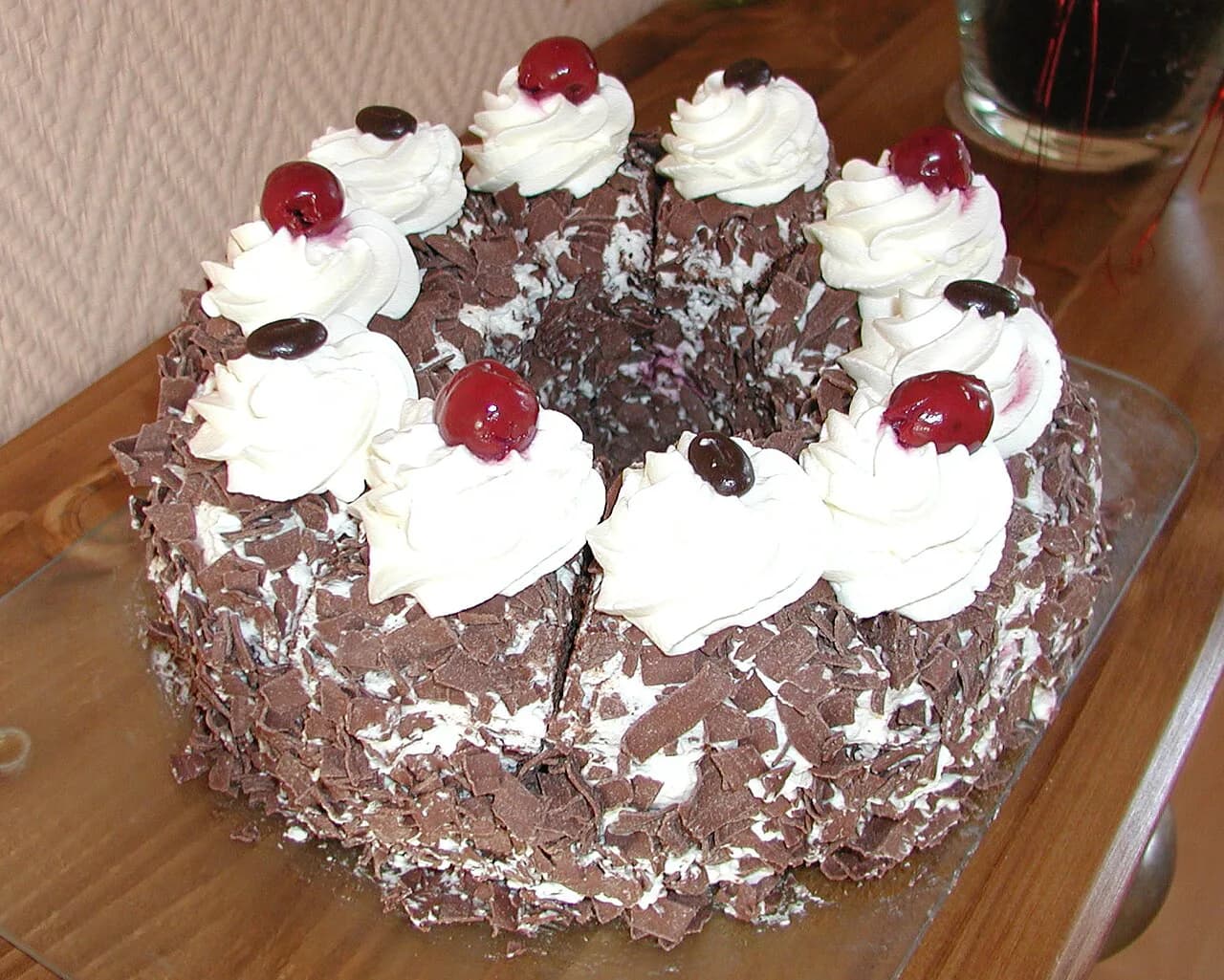
If you order one thing, make it Schwarzwälder Kirschtorte, the Black Forest cake: chocolate sponge, whipped cream, cherries and a hit of kirsch, a clear cherry brandy. If you order a second, make it Schwarzwälder Schinken, the region's smoked ham, sliced thin and eaten cold with bread.
For a full meal, look for Maultaschen (Swabian filled pasta dumplings), Spätzle (soft egg noodles scraped into boiling water) and Knöpfle (the same dough pressed into small buttons). Around them sit forest ingredients: Pfifferlinge (chanterelles), Steinpilze (ceps) and game.
The region's food is often described as Swabian, and the same dishes turn up across the southwest. Across Germany, German regional cuisine splits along old state lines, and the Spätzle habit continues into Bavaria, though the seasoning and the sides change as you cross the border.
What Makes a Cake a Black Forest Cake
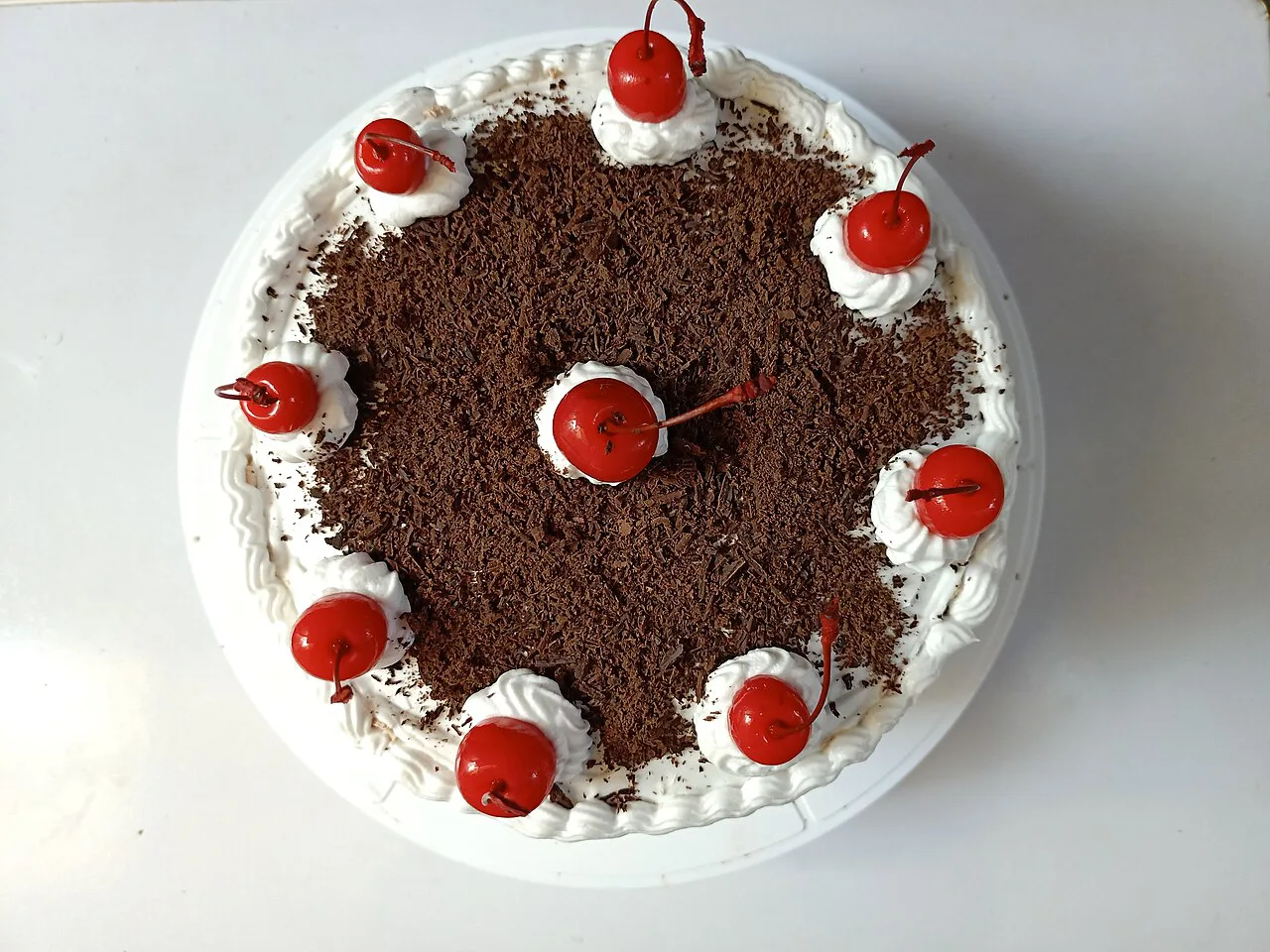
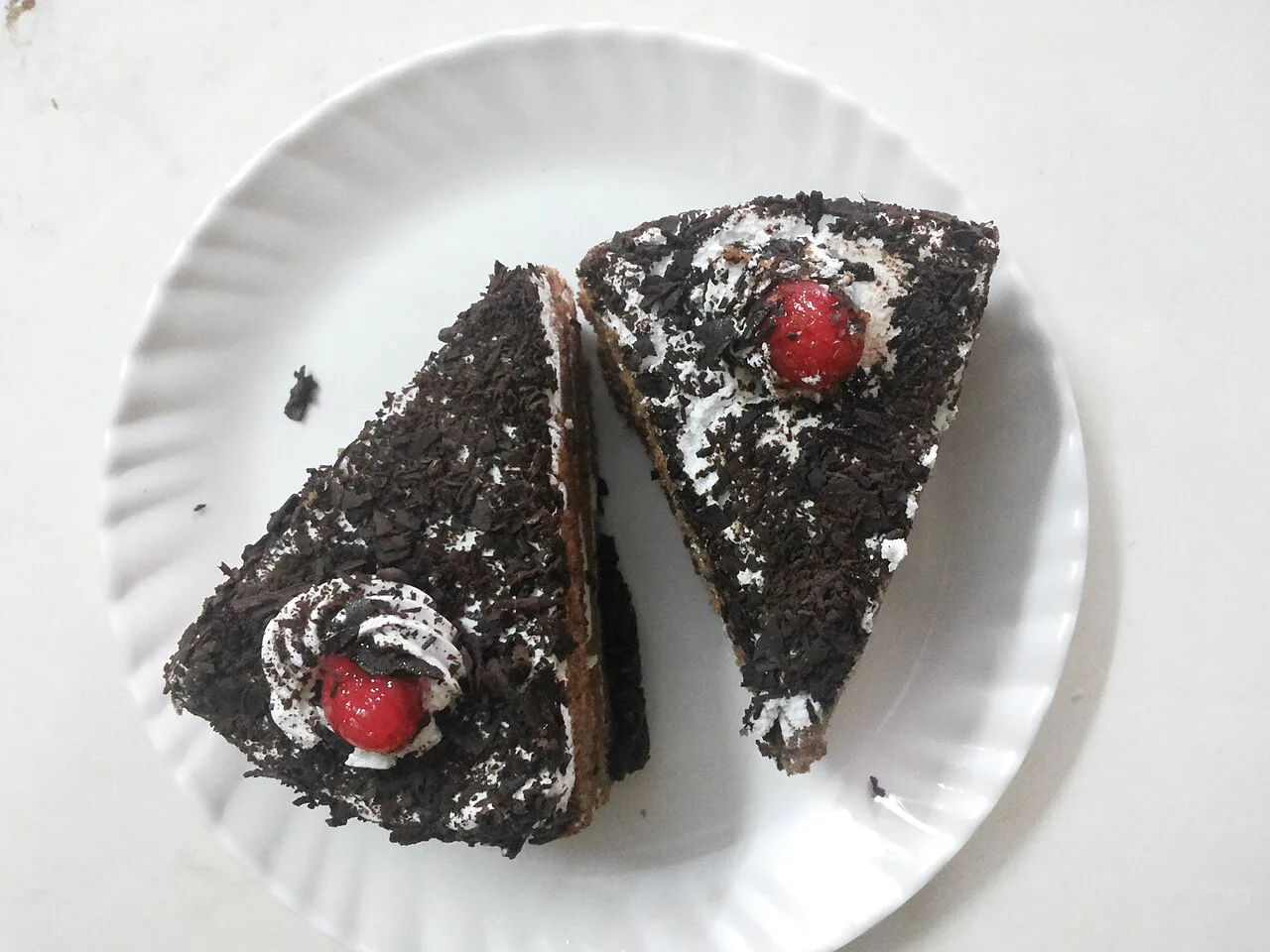
The Black Forest cake is a cream cake that spread from the 1930s and is now treated as the classic German cake, known well beyond the region. Its structure is what matters: dark chocolate sponge, whipped cream between the layers, sour cherries and chocolate shavings on the outside. That is the standard to judge any slice against.
Does Black Forest cake have nuts? Not in the standard version. The cake is built on chocolate sponge, whipped cream and sour cherries, with chocolate shavings on the outside and kirsch in the layers.
Is Black Forest cake the same as chocolate cake? No. A plain chocolate cake has no cream layers, no cherries and no kirsch.
What is the Black Forest region known for besides food? It is a wooded upland in Germany's southwest, known for its dark fir forest, its traditional dress with the red-pommel Bollenhut hat, and its cuckoo clocks and woodcarving. The food follows the same rural pattern: smoked ham, cream cakes and forest mushrooms.
Where the name comes from is unsettled. One explanation points to the black chocolate shavings that resemble a dark forest, another to the kirsch made in the region, and a third to the traditional Black Forest dress with the Bollenhut, the hat with red wool pompoms, whose black skirt, white blouse and red trim match the cake's colors. None of the three is confirmed, and locals will happily argue all evening.
Practically, the kirsch explanation is the one that shapes the flavor. A good slice tastes of cherry and cream with a sharp alcoholic edge, not just chocolate. If you want a plain chocolate cake, order something else; if you want the regional classic, this is it.
Black Forest Cake's Kirsch and the Region's Other Drinks
Kirsch is a clear brandy distilled from cherries, and much of it is made in the Black Forest. It goes into the cake and can also be served neat in small glasses, often after a meal. Treat it as a digestif to sip, not a drink to work through.
Beer is the everyday drink with food. Fürstenberg, a brewery in the region, lists pilsener, export and hefeweizen among its beers, which covers the standard range you will see on tap: a crisp pilsener, a maltier export and a cloudy wheat beer. A pilsener suits ham and a hefeweizen suits a plate of Spätzle.
Baden wine, mainly white and often dry, is a lighter alternative with trout or a mushroom dish when you do not want beer.
Schwarzwälder Schinken: The Ham of the Black Forest
Schwarzwälder Schinken is the region's cured, smoked ham, sliced paper-thin and served cold, often on a wooden board with bread, butter and a few pickles. It is a snack or a starter, not a main course, and it is the thing to order with a beer in the late afternoon.
The smoking is what defines it: the ham is cured and then smoked, which gives it a dark edge and a firm, dry texture. It is sold sliced at butchers and markets, and it keeps best eaten soon after buying.
Other German regions build their own snacks around sausage and cured meat, and the same logic applies: order it cold, with bread, and share it.
Swabian Maultaschen: Pasta Dumplings With Sausage or Spinach
Maultaschen are large, square pasta parcels, a little like a big ravioli, filled and then either boiled in broth or sliced and fried in butter with onions. They are the region's comfort food and the single best dish for a cold, wet day in the forest.
The filling comes in two main versions: a meat one with sausage meat, onions and soaked bread rolls, and a vegetarian one with cheese and spinach. Ask which one the kitchen makes before you order if you are avoiding meat, because both are common and the menu may list only one.
You will see them boiled in broth or sliced and fried in butter with onions; fried versions often come with a side salad, which makes them a full lunch rather than a starter.
Spätzle and Knöpfle: The Region's Everyday Noodles
Spätzle and Knöpfle are the same soft egg dough, handled two ways: scraped off a board into boiling water for Spätzle, or pressed through a sieve into small buttons for Knöpfle. Both have a long tradition in Swabian cooking and are on the table constantly, as a side, as a base for cheese and onions, or fried with butter and crumbs.
The version to know is Käsespätzle: the noodles layered with grated cheese and topped with fried onions. It is the German southwest's answer to macaroni and cheese, and it is heavy. One portion is usually enough for two as a side.
Bavaria makes the same dish with its own cheese, and the Allgäu is known for it. If you are traveling east, order Allgäuer Käsespätzle there and compare; the cheese changes the whole plate.
Kaffee und Kuchen: The Afternoon Cake Stop
Kaffee und Kuchen, coffee and cake, is the fixed afternoon ritual: somewhere between mid-afternoon and early evening, you sit down for a slice and a cup. In the Black Forest this is where the cake economics work, because country Gasthöfe bake for walkers and skiers passing through rather than for a dinner crowd.
At one rural Gasthof in the southern Black Forest, cakes and quark tortes come out all day for hikers and skiers who stop in, and the kitchen treats the cake table as a serious part of the business, not a sideline. Expect a choice of cream cakes, fruit tarts and a quark-based torte as well as the Black Forest classic.
Order at the table and pay when you leave, and do not rush: the point is the pause. If you are walking, the cake stop is the reason to plan a shorter route rather than a longer one.
Game, Mushrooms and Trout From the Forest
Autumn is mushroom season, and the forest kitchens build menus around what has been picked: Pfifferlinge (chanterelles) and Steinpilze (ceps) turn up in ragouts, omelettes, crêpes and soups. In early summer, chanterelles are the thing to look for, and in autumn the ceps take over.
Game comes next: venison and wild boar from local shoots, served with Spätzle, red cabbage or a dark sauce. Trout from the streams is the lighter option, often pan-fried with butter and almonds. If you want one plate that sums up the forest, order the venison.
These are seasonal dishes, not year-round fixtures, so a menu in July will look quite different from one in October. When a Gasthof writes the day's mushrooms on a hand-written sheet, that is the signal to order them.
Where to Eat: A Country Gasthof and a Village Inn
Two places show the range. Berggasthof Hotel Sonnhalde sits at Untere Sonnhalde 37 in Bürchau, part of Kleines Wiesental in the southern Black Forest, and runs as an unassuming country Gasthof with a dining room and a tree-shaded terrace. The menu mixes seasonal vegetable and mushroom soups, game, trout and lamb from nearby farms, with a strong cake table.
Gasthaus Krone Biengen, at Hauptstrasse 18 in Bad Krozingen-Biengen, is a village inn with a pared-down dining room of bare wooden tables and a creative menu that carries a Michelin red bib symbol, the mark for good food at moderate prices. The cooking is playful, and the kitchen sends dishes out itself.
The trade-off is straightforward: the country Gasthof gives you the forest and the cake, the village inn gives you a sharper kitchen and a shorter menu. Book ahead for the inn, and treat the Gasthof as a lunch stop on a walking day.
How a Meal at a Black Forest Gasthof Works
A Gasthof is an inn with rooms, and the restaurant usually serves both guests and walk-ins. You sit where you like in the dining room or on the terrace, order from a menu that may be partly hand-written, and pay at the end at the table or at the counter.
Menus are shorter than in city restaurants and follow the season, so expect soups, a few meat mains, one or two vegetarian dishes and cake. Ask what is local that day; the kitchen will tell you.
Portions are generous and the pace is slow, so plan a two-hour lunch rather than a quick stop. Cash is worth carrying in small villages, and a reservation helps on weekends in season.
Prices: What a Meal Costs in the Region
The euro figures published for these two inns come from a 2009 article, so treat them as history rather than a budget. It put a three-course à la carte meal for two without wine at about sixty euros at the country Gasthof and about a hundred at the village inn, with set menus in a similar range. Read the menu posted outside the door for today's numbers.
A plate of Spätzle or Maultaschen is the cheaper end of the menu, game and fish the higher end, and cake with coffee sits in between. Ask when you book if you want to know the range before you commit to a long lunch.
Beer With Your Meal: What to Order
Order a pilsener with ham, sausage or a fried dish, and a hefeweizen with Käsespätzle or anything creamy. Export, a slightly maltier lager, sits between the two and suits game. A small glass of kirsch after the meal is the local finish.
Breweries in the region sell the standard German range rather than anything experimental, and the beer list at a Gasthof is usually short and local. Ask for the brewery's name if it is not on the menu, and order a half-liter rather than a full one if you are walking afterward.
Beer culture in this part of Germany is calm and food-led: a beer with lunch, a beer with dinner, and no particular ceremony. Keep it to one or two and the meal stays the point.
How Eating in the Region Compares to the Rest of Germany
The Black Forest is richer and heavier than northern German food, which leans on fish, potatoes and rye bread, and it is less beer-hall-driven than Bavaria. Where Bavarian food gives you roast pork and dumplings in a big hall, the southwest gives you pasta, cream and cake in a family inn.
The one thing that unites German regions is the afternoon cake habit and the seasonal menu. In Franconia, just to the east, the focus shifts to sausage and beer, and the food gets simpler and saltier; the Black Forest keeps the cream and the kirsch.
If you are building a trip around food, this region fits best as a two- or three-day stop with one long lunch and one long cake afternoon. Do not try to eat your way through it in a day; the portions and the pace will beat you.
Which Black Forest Meal Should You Plan First?
Plan one long Gasthof lunch and one cake afternoon. For the lunch, pick a country inn in the southern forest and order the seasonal mushroom dish if it is on, with Spätzle on the side and a pilsener. For the cake, go to the Black Forest cake first and a quark torte second.
If you want the sharper kitchen, book the village inn in Bad Krozingen-Biengen instead, and keep the country Gasthof for the walking day. Either way, carry cash, book ahead on weekends, and read the posted menu for today's prices.
Explore more Germany guides
Frequently Asked Questions
Does Black Forest cake have nuts?
Not in the standard version. The cake is built on chocolate sponge, whipped cream and sour cherries, with chocolate shavings on the outside and kirsch in the layers. Some bakers add nuts or a nut base, so ask if you have an allergy, but nuts are not what defines the cake.
Is Black Forest cake the same as chocolate cake?
No. A plain chocolate cake has no cream layers, no cherries and no kirsch. The Black Forest version is a cream cake with a sharp cherry-and-brandy edge, and it is treated in Germany as its own classic rather than a chocolate cake variant.
What is the Black Forest region known for besides food?
It is a wooded upland in Germany's southwest, known for its dark fir forest, its traditional dress with the red-pommel Bollenhut hat, and its cuckoo clocks and woodcarving. The food follows the same rural pattern: smoked ham, cream cakes and forest mushrooms.
What should I drink with a Black Forest meal?
A pilsener with ham or sausage, a hefeweizen with Käsespätzle, and a small kirsch after the meal. Local Baden white wine is the lighter alternative with trout or mushrooms. Keep the beer to one or two and the meal stays the focus.
Sources
Notes for your next German food trip
Optional updates to our guides.
You might also like



Continue reading
More guides you'll find useful





