
Allgäu Food: The Dishes to Order in Bavaria's Alpine South
Allgäu food runs on flour, eggs and cheese: Käsespätzle, cabbage fritters, elderflower fritters and plum dumplings. Here is what to order and how it tastes.
On this page
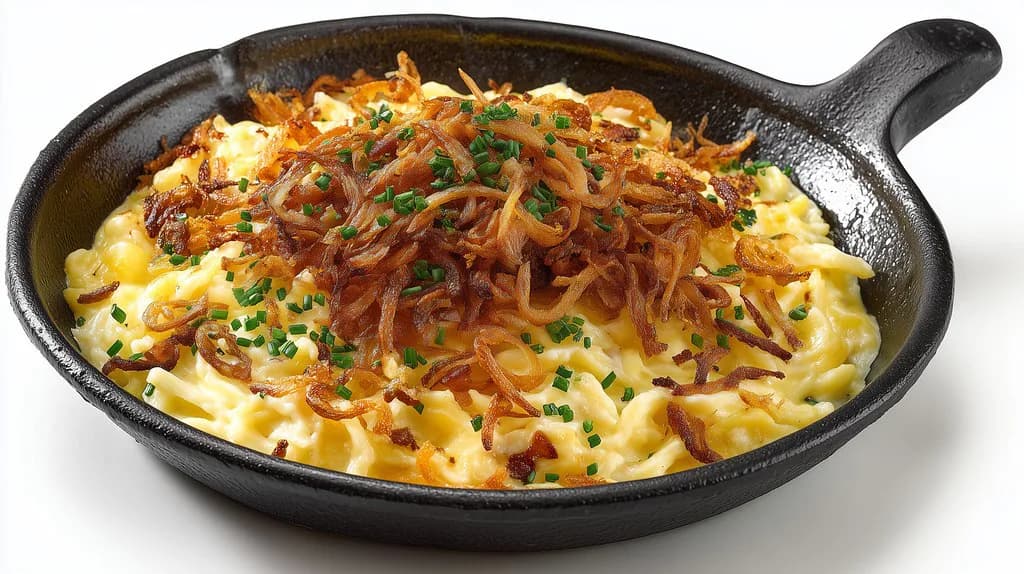
Käsespätzle is the dish to order first in the Allgäu: soft egg noodles layered with mountain cheese and topped with fried onions, hearty enough to carry a whole lunch after a hike. The region's cooking is built on a short list of staples, and knowing which dish does what makes a mountain menu much easier to read. This guide walks through the cheese noodles, the roasts, the soups and the sweets, with the flavors and serving styles to expect.
Allgäu is the alpine south of Bavaria, the hill and dairy country around Füssen where flour, eggs and cheese are the base of most meals and meat traditionally appeared at festivities. That gives the food a clear rhythm: cheese and noodles on ordinary days, roasts and game for celebrations, and something sweet to finish. The dishes below are the ones a visitor will actually meet on hut and hotel menus.
What Allgäu Food Is: A Mountain Cuisine Built on Flour, Eggs and Cheese
Allgäu cooking grew out of agriculture and livestock, especially on the higher slopes, so it leans on dairy and grain rather than on imported ingredients. A Füssen chef describes the staples as flour, eggs and cheese, with mushrooms joining in the fall, and argues that the limited pantry is exactly what makes the region's taste recognizable. Cows and dairy farming shape the landscape as much as the kitchen.
That means the everyday food is cheese noodles, dumplings, fritters, soups thickened with noodles or pancakes, and simple roasts. Meat was a festive dish, and a classic butcher's platter or a cut of game still signals a special occasion more than a daily habit. As you read a menu, look at what carries the plate: if it is cheese, batter or dumpling dough, you are in the core of the cuisine.
The regional pantry also reaches for what grows at the edges of meadows and farmyards: elderflower and elderberry are typical aromas, and a farm elderberry bush is traditionally left standing. For a broader map of how this fits with the rest of the country, see the guide to German regional cuisine, which places the alpine south alongside the country's other food regions.
Käsespätzle: The Cheese Noodle Dish to Order First
Käsespätzle starts as a fresh dough of flour and eggs, scraped in small strips into boiling water, then sautéed in a pan with onions and cheese and finished with black pepper and chives. The result is a layered, savory pile where the cheese ties the noodles together rather than sitting on top as a sauce. It is the single best introduction to the region's cooking.
Käsespätzle: The Cheese Noodle Dish to Order First. Käsespätzle starts as a fresh dough of flour and eggs, scraped in small strips into boiling water, then sautéed in a pan with onions and cheese and finished with black pepper and chives.
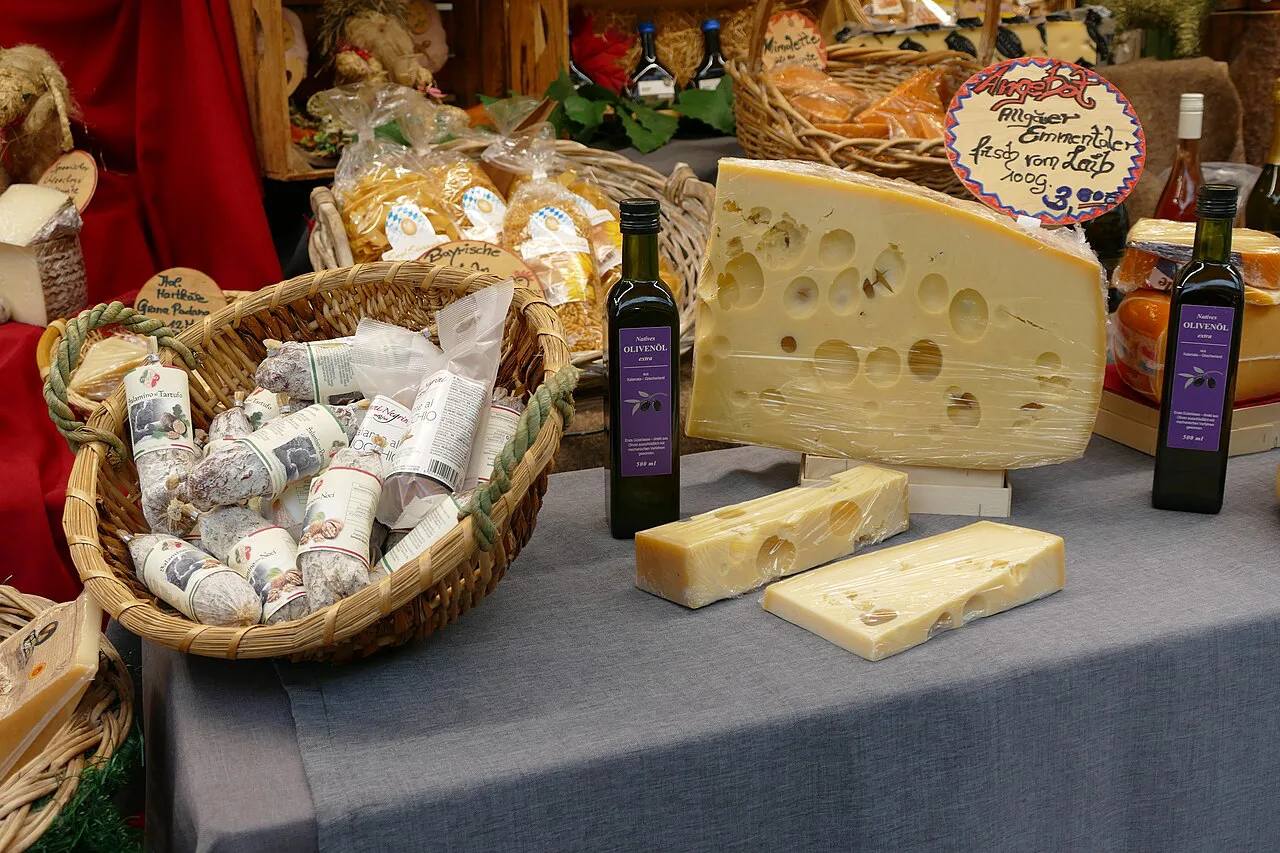
Weißlacker and Mountain Cheese: What Gives the Dish Its Flavor. The noodles are only half the story; the cheese choice decides how the plate tastes.
Krustenbraten: Pork Roast with Crackling and Dumplings. Krustenbraten is a pork roast with a crisp crackling rind, usually served with a dark sauce and potato dumplings.
Fried onions are not a garnish to push aside; they supply the sweetness and crunch that balance the cheese. A portion is filling, so consider sharing a plate as a starter if you also want a main course, or order it as your main after a long walk. Homemade Spätzle takes practice to shape by hand, though many kitchens use a spaetzle press, which is why texture varies from one kitchen to another.
In some parts of the Allgäu the dish also appears as Kässpatzen. Either way, you are ordering the same cheese noodles. For a wider look at the cheese-and-noodle tradition elsewhere in Bavaria, the Bavarian food guide covers the related dishes and where they sit on the menu.
Weißlacker and Mountain Cheese: What Gives the Dish Its Flavor
The noodles are only half the story; the cheese choice decides how the plate tastes. A Füssen chef names Weißlacker, a full-bodied cow's milk cheese, as his base for Käsespätzle and adds a milder Romadur, a soft cow's milk cheese also made in the region, to soften the edge. Both come from Allgäu dairies.
Allgäuer mountain cheese is the other name worth recognizing on a menu or in a shop, usually as an aged wheel served with bread, and it is a good thing to take home if you want a taste of the region later. Cheese is a major product here and a serious local point of pride. If a menu mentions a specific cheese in the dish, that is a sign the kitchen is making a deliberate choice rather than using a generic melting blend.
Krustenbraten: Pork Roast with Crackling and Dumplings
Krustenbraten is a pork roast with a crisp crackling rind, usually served with a dark sauce and potato dumplings. It is the richest plate on a traditional menu, and the crackling is meant to be eaten rather than left behind. If you have a long walk planned after lunch, this is the meal to schedule around it rather than before it.
Portions of this kind of roast are generous, and dumplings make it heavier still, so it works well as the main meal of the day. Pair it with a beer rather than anything sweet, and skip a starter if you intend to finish the plate. Look for it on lunch and dinner menus in Gasthäuser and hotel restaurants.
Zwiebelrostbraten: Roast Beef with Fried Onions
Zwiebelrostbraten is roast beef topped with deep-fried onions, and in the Allgäu it is typically served alongside Käsespätzle instead of the usual fried potatoes. That makes it a smart order if you want to try both the meat and the cheese noodles in one sitting. Some kitchens in the Ostallgäu serve it as a rump steak with a rich sauce, roasted onions and a side of Spätzle.
It sits in the same festive category as the pork roast: a cut of beef, a sauce and a substantial side. If you are comparing it with Krustenbraten, choose this one for a lighter, more beef-forward plate and the pork roast for crackling and dumplings. Both are main-course orders, not starters.
Wildfleisch and Wild Goulash: Venison and Boar on Allgäu Menus
Game is a strong suit of the region. If you see venison or boar steak on a menu, it is worth serious consideration, served with a sauce and often with a fruit component such as pear or lingonberry jam. The character is dark meat, gentle cooking and a sweet-sour edge from the fruit.
Bavarian wild goulash is the other form to look for: pieces of game in a deep sauce. It is a good choice in cooler weather and a more forgiving order than a steak if you are unsure how you like game cooked. Ask what animal the goulash is made from, since the term covers several kinds of game.
Cabbage Fritters: Sauerkraut, Onion and Bacon in a Sliced Dough Roll
Cabbage fritters come from a roll of dough filled with sauerkraut, onion, apple and bacon, sliced and fried in oil until the cut sides brown. They are savory and tangy, sold in mountain huts and sometimes on hotel dinner menus, and they are built to fuel a hike. The sauerkraut keeps the filling sharp against the fat of the dough.
A vegetarian version is now part of the picture, with pan-fried smoked tofu standing in for the bacon, which shows how hut cooking is shifting without dropping its classics. Order one or two as a snack or a light lunch rather than as a full meal.
Soups to Start: Festtagssuppe and Flädlesuppe
Festtagssuppe, the name literally meaning celebration soup, is a clear broth of chicken or beef that varies by region and kitchen. In Bavaria it is served with a mix of additions: noodles, meatballs, bread dumplings, semolina dumplings, liver dumplings, Spätzle or roasted peas. Order it when you want a starter that leaves room for dessert, since it is light despite the assortment.
Flädlesuppe is the simpler cousin: a clear beef broth with thin pancakes cut into strips, found in the Allgäu and across Swabia. The pancakes soften in the broth and give it body without much richness. It is a good opener if Käsespätzle is coming next.
Sweet Endings: Zwetschgenknödel, Dampfnudeln and Apfelküchle
Zwetschgenknödel are dumplings of flour and curd cheese wrapped around plums, served with cream, red berry compote, breadcrumbs and often ice cream. They are soft, tart-sweet and one of the region's best-loved desserts, so they are worth saving room for. If you only order one sweet dish in the Allgäu, this is the one.
Dampfnudeln are large sweet yeast rolls cooked in a covered pot with milk and butter until a brown crust forms on the bottom. In Bavaria they come as a dessert with vanilla sauce and stewed fruit. Apfelküchle, apple fritters, appear with vanilla ice cream, so the sweet side of the menu is built on dough, fruit and dairy rather than chocolate.
A note on ordering: these desserts are substantial, and one plate can be more than one person wants after a main course, so sharing is a sensible option.
Elderflower in Early Summer: Holderkiachla and Elderberries with Vanilla Ice Cream
Holderkiachla are elderflowers dipped in a light batter and fried crisp, then dusted with powdered sugar or served with elderflower syrup. The window is early summer, when elder bushes flower at the edge of meadows and farmyards. They are the sweet dish to look for in June rather than in fall.
Later in the year, elderberries are cooked down and served with vanilla ice cream, cream and cinnamon, so the same plant gives two different desserts across the season. Both are light enough to follow a cheese-heavy main course. If you are traveling in summer, ask which of the two is on the menu.
Where Allgäu Food Is Served: Mountain Huts and Hotel Restaurants Near Füssen
The classic setting is a mountain hut after a climb. The Rohrkopfhütte on the Tegelberg, near Füssen, is one such stop for Käsespätzle after a hike. Hut menus tend to be short and focused on the dishes that can be produced quickly in quantity, which is why fritters, soups and cheese noodles dominate.
The other setting is the hotel restaurant. Restaurant Louis II at Hotel Das Rübezahl near Füssen is open to guests from outside the hotel, cooks with regional ingredients and small local producers, and reworks Allgäu classics with international spices and a local spice blend. That means you can find a refined version of the same dish alongside a vegetarian cabbage fritter. The castles at Neuschwanstein and Hohenschwangau are the obvious sightseeing anchor of the area.
For the wider regional picture, the guide to Swabian cuisine covers the neighboring tradition, which shares the Spätzle and pancake-soup vocabulary with the Allgäu.
How to Order and Eat It: Portions, Shared Plates and Mountain Menus
Allgäu portions are generous, and a plate of Käsespätzle or a pork roast with dumplings is a full meal rather than a course. A practical approach is to order one soup or a shared fritter to start, then one main each, and decide on dessert after the plates are cleared.
Hut service is casual, so settle in at a table and order from the server. Lunch is a popular time for a full plate, and a long hike built around a mountain lunch is a good way to spend the day. Drinking is part of the culture but should stay moderate if you are driving the alpine roads afterward.
If you want to compare the Allgäu with the rest of Bavaria, the Bavarian food guide covers the Munich beer-hall side of the cuisine, where the dishes and the setting are quite different.
Which Allgäu Dish Should You Order First?
Order Käsespätzle first, with the cheese and fried onions as the kitchen intends, and use it as your measure for everything else. On a second meal, choose between the Krustenbraten for crackling and dumplings or the Zwiebelrostbraten for beef with fried onions, then finish with Zwetschgenknödel. In early summer, swap the dessert for Holderkiachla.
If you are staying near Füssen, a hut lunch and a hotel dinner give you both ends of the range: the plain, quick version on the mountain and the refined one in a dining room. Check current hours and menus directly with the hut or restaurant before you set out, since mountain service is weather-dependent.
Explore more Germany guides
Sources
Notes for your next German food trip
Optional updates to our guides.
You might also like



Continue reading
More guides you'll find useful



