
German Sausages: The Main Types and How to Eat Them
German sausages explained: bratwurst, Weißwurst, Knockwurst, Leberkäse and more, what each one is made of, how it is served, and what to order with it.
On this page
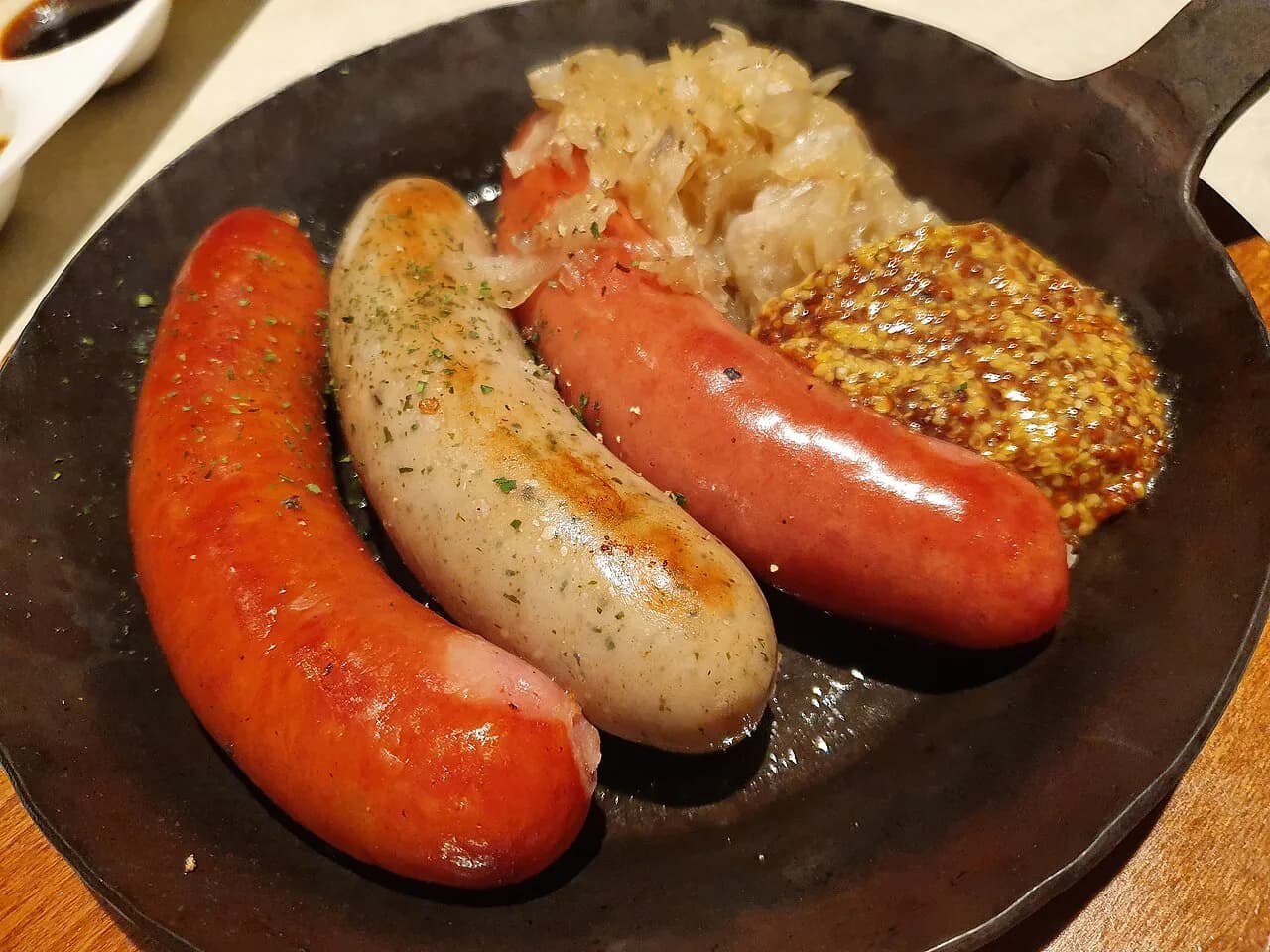
German sausage names look like a list of unrelated products, but they follow two logics: how the sausage is made and where it comes from. Learn those two rules and a Wurst counter stops being guesswork, because you can tell a fresh grilled bratwurst from a smoked, sliceable loaf before you point at anything. This guide covers the main types you will meet, what each is made of, what to order alongside, and how ordering works at a stand versus a sit-down restaurant.
The short version: if you want the classic grilled sausage, order a bratwurst; if you are in Munich in the morning, order a Weisswurst with sweet mustard and a pretzel; if you want a thick smoked sausage with sauerkraut, order a Knockwurst; and if you want a slice of warm pork loaf in a roll, order Leberkäse. Each of those is a different production style, not a brand, which is why the same word can taste different from one region to the next.
What Makes a German Sausage a Wurst: Brühwurst, Kochwurst and Rohwurst
German sausages are classified by production method rather than by shape, and the names Bratwurst, Kochwurst, Rohwurst, Brühwurst, Blutwurst and Leberwurst describe types made in a particular way, not single recipes. Brühwurst is the largest family: the meat is cured and then heated, which gives the firm, snappy sausages most visitors picture. Rohwurst is raw and cured or fermented for slicing, while Kochwurst is cooked and often spreadable or sliceable, the family that includes liver sausage and blood sausage.
The naming then stacks on top of that: a sausage may be named for its meat, its filler or spice, or the region or city that made it famous. That is why Thüringer Rostbratwurst and Nürnberger Rostbratwurst are both bratwurst yet look and taste nothing alike once you get past the shared family name. Estimates of distinct German varieties run well past a thousand, and the exact number is impossible to pin down, so treat any round figure as an approximation.
Bratwurst: The Grilled Standard, and Why Thüringer and Nürnberger Taste Different
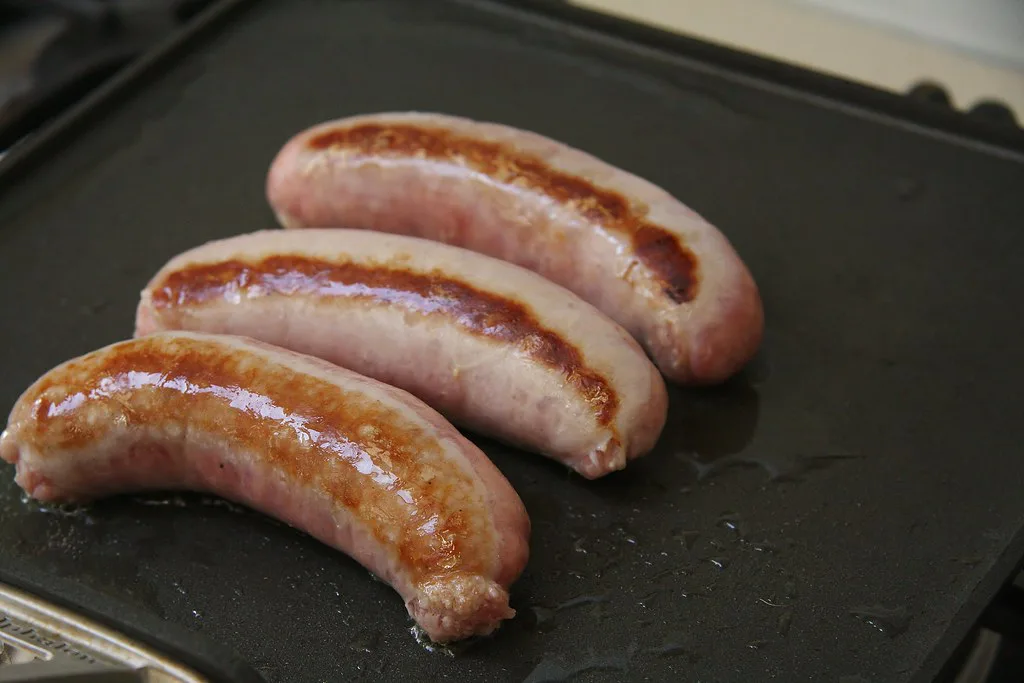
Bratwurst is the sausage most travelers meet first, usually pork and sometimes veal, seasoned with marjoram, nutmeg or caraway depending on where it is made. The word itself comes from an old term for finely chopped meat, which describes the texture rather than the shape. Grilled until the casing snaps and served with mustard and a bread roll, it is the benchmark against which other German sausages get judged.
Is a bratwurst the same as a sausage? No. Bratwurst is one family of German sausage, normally pork and sometimes veal, seasoned and grilled or fried.
What are the main types of German sausage? The practical shortlist is bratwurst, Weisswurst, Knockwurst, Leberkäse, Bauernwurst and Currywurst. Behind them sit production families — Brühwurst, Kochwurst and Rohwurst — which describe how the sausage is made and explain why the names behave so differently on a menu.
Where do names like Frankfurter and Wiener come from? They are the thinner smoked sausages rather than the coarse grilled bratwurst, and their names point to Frankfurt and Vienna. Treat the name on the menu as a claim about style and origin, and order by name to see what arrives.
The two regional versions behave completely differently on the plate. Nuremberg's bratwurst is small, roughly finger-sized, and sold by the half dozen, so it arrives as a cluster of short sausages rather than one long link. Thuringia's is long and smoky, and it is a protected name under European law, which is why the sign matters if you want the real thing. Compare the two in the same week and you will understand why Germans argue about this.
For the grill, look for a stand or Gasthaus with a visible griddle and a short menu. A bratwurst that has been sitting in a warming tray tastes flat next to one taken off the grate, so order where you can see them cooking. If you are weighing the fried-in-fat version against the grilled one, the grilled sausage is the safer first order.
Weißwurst: The Munich Veal Sausage Eaten Before Noon
Weisswurst is a pale Bavarian sausage of veal and pork back bacon, seasoned lightly with parsley, lemon and cardamom. The old custom is that it should not hear the church bells strike noon: it was made fresh each morning in the days before refrigeration and eaten before midday, which is why Munich tables order it at breakfast time with a pretzel and a wheat beer. Treat that as a tradition rather than a rule; plenty of places serve it later, and it is a morning dish in spirit.
The technique is the part visitors get wrong. You peel the skin off before eating, then dip the sausage in sweet mustard — süßer Senf — and eat it alongside the pretzel. The casing is not meant to be swallowed, and trying to eat a Weisswurst with the skin on is the giveaway that you have not ordered one before.
Pale and delicate means Weisswurst does not sit well; it is at its best shortly after it is heated and should not be reheated once the skin has been removed. Order it where it is clearly a house staple rather than one item on a very long menu.
Knockwurst (Knackwurst): Smoked, Garlicky and Built for Sauerkraut
Knockwurst, often spelled Knackwurst, is shorter and plumper than a bratwurst, and it is built around garlic and a firm bite. The name comes from the sound of the casing cracking when you bite into it, which is also the texture test: a proper one snaps, it does not sag. It is smoked and beefy, which is why it stands up to sauerkraut and warm potato salad.
Treat Knockwurst as the plate you order when you want a full meal rather than a snack: sausage, kraut and potato salad together, usually with mustard on the side. It is a solid choice in a traditional restaurant where the menu is short and the sausage is simmered to order rather than fried in advance.
Leberkäse: The Baked Pork Loaf Sliced Into a Roll
Leberkäse translates as liver cheese, but the Bavarian version famously contains neither. It is a finely ground pork loaf baked until it forms a crackly brown crust, then sliced thick — served in a roll, or with a fried egg on a plate. Think of it as a refined meatloaf, and you have the right idea of its texture and weight.
At a counter, the useful choice is between a thick slice in a Semmel for a quick lunch and a plated version with egg and mustard for something more substantial. Ask for the slice from the end if you want more crust, or from the middle if you prefer the softer interior; both are standard orders.
Bauernwurst and Other Coarse, Smoked Country Sausages
Bauernwurst means farmer's sausage, and there is no single standard recipe for it; the common version is coarsely ground pork and beef, often smoked for a robust flavor. Because it is made in small batches at home as well as commercially, the texture is the tell: expect a rougher grind than a bratwurst and more smoke.
The same coarser, smoked style shows up across the German counter in sausages meant to be sliced and eaten cold with bread, or warmed and served with mustard. If you like the smoky end of the spectrum, this is where to explore after the bratwurst.
Currywurst in Brief: How a Sausage Becomes a Street Snack
Currywurst is the street-food form of the German sausage: a fried or grilled pork sausage cut into pieces and dressed with a curry-spiced sauce, usually eaten standing up with a paper fork. It is Berlin's signature snack rather than a regional sausage style, and it is a different kind of order from the mustard-and-roll bratwurst. Expect a paper tray, a small wooden fork and no ceremony.
Order it with fries if you want the full version, or with a bread roll if you want to keep it light. It is the easiest sausage to eat on the move, which is why it fits a lunch stop rather than a sit-down meal.
What to Order With Your Sausage: Mustard, Roll, Pretzel, Sauerkraut, Potato Salad
The sides are where a sausage order becomes a meal, and they are not interchangeable. Sweet mustard belongs with Weisswurst, a sharp mustard or none with a grilled bratwurst in a roll, and sauerkraut with warm potato salad under a smoked Knockwurst. Getting the pairing right is most of the reason one plate tastes better than another.
Bread choice matters too: a crusty roll for a bratwurst, a pretzel alongside Weisswurst, and rye bread if you are eating sliced sausage from a counter. If you are choosing between a quick counter stop and a full plate, the side list is the honest signal — a place with kraut and potato salad wants you to sit down.
How to Order a Sausage in Germany: Counter, Imbiss or Gasthaus
An Imbiss is the counter stand where you order at the window, pay, and either eat standing at a ledge or take it away; a Gasthaus is the sit-down version where the sausage comes as a plated meal with sides. The counter is faster and usually the better value for a single bratwurst, while the Gasthaus is where you get the kraut-and-potato-salad plate. Pick by how much time and appetite you have, not by how famous the place is.
Ordering language is simple: name the sausage, then the side. Ask for mit Senf if you want mustard, and if you are ordering in a butcher's shop rather than a stand, point and ask for the weight you want, since cold sausage is sold by weight rather than by portion.
Sausage Names Worth Knowing: Thüringer Rostbratwurst, Frankfurter and Wiener
A few names carry meaning beyond the sausage itself. Thüringer Rostbratwurst is a protected regional name for the long, smoky Thuringian sausage, and Nürnberger Rostbratwurst is the small Nuremberg version served by the half dozen. Both names point to a place and a style, so the name on the menu is a claim about origin and recipe.
Frankfurter and Wiener are the names that confuse people most, because what Germans mean by a Frankfurter is not what an American hot dog bun suggests. In Germany these are the thinner, more delicate smoked sausages rather than the coarse grilled bratwurst, so a roll with mustard at a stand is more likely to hold a bratwurst than a frankfurter.
Vienna, Frankfurt and Thuringia all give their names to sausages, and the German counter treats them as distinct products rather than synonyms. Order by the name and see what arrives — that is the honest way to learn the difference.
Is Kielbasa a German Sausage?
No. Kielbasa is the Polish word for sausage, and in English it usually refers to a Polish smoked pork sausage with its own regional styles. It is a category in Polish usage, not a German product. You will find sausages of similar style on German counters, but calling one kielbasa is a Polish reference, not a German one.
If you want the German equivalent of the smoked, sliceable sausage you associate with kielbasa, look for the coarse smoked country sausages on a butcher's cold counter and ask to have one sliced. The flavors are cousins, but the names and the styles are separate traditions.
How to Read a Wurst Counter: Casing, Color and Cut
A butcher's or market counter tells you most of what you need before you read a single label. Pale, thin-skinned sausages are the fresh Brühwurst type meant to be heated and eaten soon; dark, dry, wrinkled ones are the cured and smoked kind meant to be sliced. A thick, brown-crusted loaf is Leberkäse, and it will be cut to order.
The cut matters as much as the type. Ask for a thick slice of a coarse sausage to judge it properly, and ask for a thin slice of a spreadable one for bread. If the counter is busy and the staff are working through a queue, ordering two or three different slices is normal and gives you a proper sample of the regional range.
Cold sausage from a counter is also practical travel food: it needs little more than bread and mustard. A small piece of Landjäger in a bag is a sound backup when the next meal is hours away.
Which German Sausage Should You Order First?
Start with a grilled bratwurst in a roll with mustard, because it is the benchmark and the easiest order at any counter. Then try the regional pair — the small Nuremberg sausages and the long Thuringian one — on separate days, and you will taste why Germans treat them as different foods rather than flavors of the same thing.
Add a morning Weisswurst if you are in Munich, a Knockwurst plate when you want a full meal, and a slice of Leberkäse in a roll for lunch. That short list covers the main production styles and leaves you able to read any German sausage counter with confidence.
Explore more Germany guides
- Bockwurst
- Frankfurter Sausage
- Knockwurst vs Bratwurst: What This German Sausage Is and How to Eat
- Landjäger: What This German Dried Sausage Is and How to Eat
- Liverwurst: What It Is, How It Tastes, and How to Eat
- Mett: Germany's Raw Ground Pork Spread and How to Eat
- Thuringian Sausage
- Weißwurst
- What Is Teewurst? A German Sausage Spread Explained
Frequently Asked Questions
Is a bratwurst the same as a sausage?
No. Bratwurst is one family of German sausage, normally pork and sometimes veal, seasoned and grilled or fried. Sausage is the general English word for the whole category, which in Germany includes smoked, cooked and spreadable types as well as the grilled bratwurst.
What are the main types of German sausage?
The practical shortlist is bratwurst, Weisswurst, Knockwurst, Leberkäse, Bauernwurst and Currywurst. Behind them sit production families — Brühwurst, Kochwurst and Rohwurst — which describe how the sausage is made and explain why the names behave so differently on a menu.
Where do names like Frankfurter and Wiener come from?
They are the thinner smoked sausages rather than the coarse grilled bratwurst, and their names point to Frankfurt and Vienna. Treat the name on the menu as a claim about style and origin, and order by name to see what arrives.
Do Germans eat sausage with ketchup?
Ketchup turns up mainly with Currywurst, where the sausage is cut up and served with a curry-spiced sauce. A grilled bratwurst is normally eaten with mustard and a roll, and a Weisswurst with sweet mustard and a pretzel, so ketchup is the street-snack choice rather than the standard pairing.
Sources
Notes for your next German food trip
Optional updates to our guides.
You might also like



Continue reading
More guides you'll find useful



