
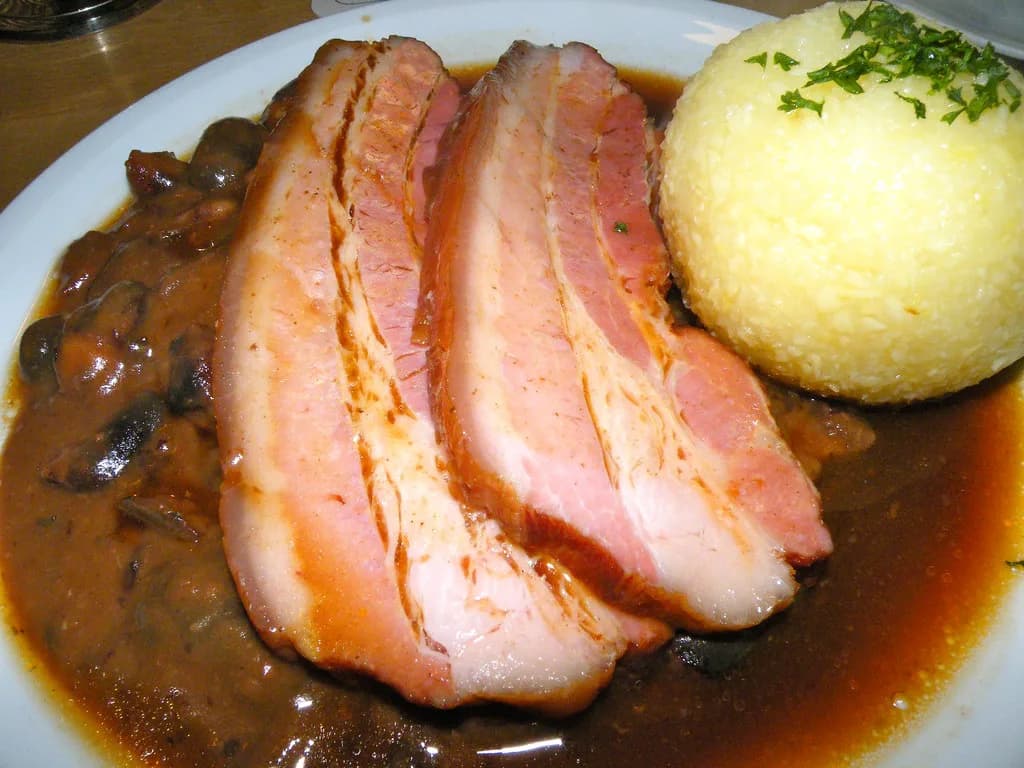
Franconian Food: What to Eat in Franconia, Dish by Dish
Franconian food means Schäufele, bratwurst, Blaue Zipfel and Küchle. Here is what each dish is, how it is served and where to order it in Würzburg.
On this page
Franconian food is hearty, pork-led cooking from the northern Bavarian region around Würzburg, Nuremberg and Bamberg, built on Schäufele, bratwurst, Blaue Zipfel and fried Küchle. This guide names the dishes you will see on menus, explains what arrives on the plate and points you to a Würzburg restaurant where you can order them.
Franconia is a cultural region within Bavaria, not an administrative one, and its cooking leans on pork, sausage, carp and river fish rather than the dumplings-and-cream repertoire outsiders associate with Bavarian food. Expect coarse farmhouse bread, sauerkraut and potato dumplings alongside, and a glass of local wine or unfiltered beer to go with it.
What Franconian food is and where Franconia sits in Bavaria
Franconia covers the northern part of Bavaria, including the cities of Würzburg, Nuremberg, Bamberg and Bayreuth, and its food is usually described as rustically meat-based with a strong sausage and dumpling tradition. The region's cooking is distinct enough that locals call it Fränkische Küche rather than Bavarian, and menus in Würzburg and Nuremberg list it as a separate category.
The everyday base is pork in many cuts, sausage in several sizes, sauerkraut, potato dumplings and dark bread, with carp and river fish appearing on seasonal menus. Franconian food is also wine country cooking: the region produces white wines that locals drink with the same dishes that beer drinkers pair with Kellerbier. If you want the wider German picture, see the guide to German regional cuisine, which shows how Franconian cooking differs from neighboring traditions.
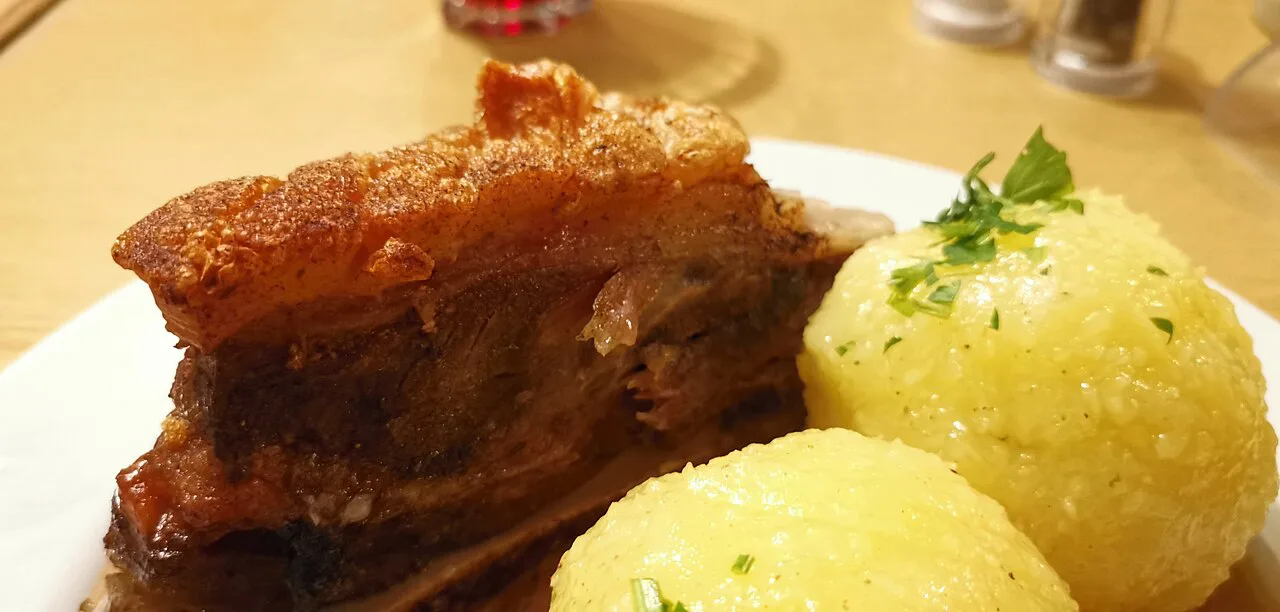
Schäufele: pork shoulder with a diamond-scored crust
Schäufele is baked pork shoulder with the rind scored in a diamond pattern and roasted until it turns crisp, which is the signature look of the dish. The meat underneath is rich and soft, and the crackling is the point: if the diamond scoring is visible on your plate, you have ordered the right thing. It is the dish most associated with Franconian cooking and the one to order first.
What is Franconian food known for? Franconian food is known for Schäufele, the diamond-scored pork shoulder, for large marjoram-seasoned bratwurst, for Blaue Zipfel simmered in vinegar broth, for Ghacktsbrot on farmhouse bread and for fried Küchle. Carp and Main-Zander show the fish side of the regional table.
What is the difference between Franconian bratwurst and Nuremberg bratwurst? The large Franconian bratwurst is a coarse, marjoram-seasoned sausage served in a bun or with sauerkraut. The Nuremberg bratwurst is small and thin, usually served several to a portion, often on sauerkraut as "three on kraut." They are different sausages, not two sizes of the same recipe.
Where can I eat Franconian food in Würzburg? Backöfele in Würzburg, at Ursulinergasse 2, serves Franconian specialties including Schäufele, bratwurst with wine sauerkraut and sourdough bread, Blaue Zipfel, Ghacktsbrot and pork shank in dark beer sauce. It has been serving regional cooking for more than 40 years.
Order it and you will usually get a thick slice with potato dumplings and sauerkraut or a dark sauce. The portion is large, so a couple can reasonably split one Schäufele and add a sausage or a starter rather than ordering two main courses. At Backöfele in Würzburg, Schäufele appears on the Franconian specialties list alongside the restaurant's other regional dishes.
Franconian bratwurst: the large marjoram sausage
The large Franconian bratwurst is a coarse pork sausage seasoned with marjoram and grilled or pan-fried, and it is the version to picture when a menu says simply Bratwurst. It is substantial, not a small snack sausage, and is often served in a bun with mustard or horseradish, or on a plate with sauerkraut. Marjoram gives it an herbal, slightly resinous flavor that sets it apart from the Thuringian and other German bratwurst styles.
The small Nuremberg bratwurst is a different sausage: short, thin and usually served several to a portion, often on a bed of sauerkraut as "three on kraut" or in a bun. When a menu lists "Nürnberger Rostbratwürstchen," you are ordering the small ones, not the large Franconian sausage. Knowing this saves you from expecting the wrong plate and lets you compare the two styles on the same trip.
At Backöfele, the bratwurst option is served with wine sauerkraut and sourdough bread, which makes a smaller meal than the Schäufele plate. That is useful when you want a taste of the sausage without committing to a full main course before a long walk through Würzburg.
Blaue Zipfel: sausages simmered in vinegar and onion
Blaue Zipfel are sausages cooked for at least 15 minutes in a broth of water, vinegar, onion rings, carrots, juniper berries, salt and pepper, which turns the casings pale blue-grey and gives them a sharp, sour flavor. The dish is served warm in its broth, often in a bowl, and the tang is unlike anything most American eaters have met under the name sausage. It is the one Franconian dish that reliably surprises first-timers.
Order Blaue Zipfel when you want something lighter and more acidic than the roasted pork dishes, and expect the vinegar to dominate: bread on the side is there to soak up the broth, not just to fill the plate. Backöfele lists freshly prepared Blaue Zipfel among its Franconian specialties.
Ghacktsbrot: raw sausage meat on farmhouse bread
Ghacktsbrot is raw seasoned sausage meat spread on hearty farmhouse bread and topped with diced onions, salt and pepper. It is a snack, not a cooked dish, and it is served cold or at room temperature as a starter or a small bite with a drink. The texture is soft and the flavor is savory and onion-forward, closer to a pâté than to a grilled sausage.
Order it if you are comfortable eating raw pork, which is a normal part of the Franconian table but not something every visitor wants. It is also a good shareable starter before a main course of Schäufele, since the portion is modest and the bread fills you less than dumplings would.
Main-Zander and carp: the fish side of the Franconian table
Main-Zander is pike-perch from the Main river, usually served as a fillet, and it appears on Franconian menus alongside the meat dishes as a lighter alternative. Carp is the other fish to know, traditionally eaten in the region and served in several styles, often during the colder months. Both show that Franconia's table is not only pork.
If you want a break from sausage and roast pork, order the fish and pair it with a local white wine rather than a dark beer. The fish dishes are usually plated with potatoes or vegetables rather than dumplings, so they are also the lighter option if you have a long afternoon ahead.
Küchle: the fried dough sweet that ends the meal
Küchle are small fried dough pastries, a Franconian sweet that turns up at the end of a meal or as a snack from a bakery or market stall. They are crisp outside and soft inside, usually dusted with sugar, and they are the regional answer to a dessert menu. Order one shared at the table rather than a full portion after a heavy Schäufele.
Backöfele lists Küchle among the typical Franconian specialties on its menu, so you can finish a savory meal there with the sweet. If you are eating elsewhere, look for them in bakeries and at market stalls, since not every restaurant serves them.
Franconian wine and beer with the meal
Franconia is a white-wine region, and local wines are the traditional partner for Schäufele and the fish dishes. Beer drinkers should look for Kellerbier, the unfiltered, slightly cloudy lager style that is common in Franconia, especially in the beer cellars around Bamberg and Nuremberg. A single glass alongside the meal is the normal way to drink here, not a long session.
At Backöfele, the restaurant serves Franconian wines from an annually updated list, so the exact bottles change from year to year. Order a glass of the local white with the Schäufele or a Kellerbier with the bratwurst, and keep the drinking moderate if you are driving or walking between towns.
Where to eat it: Backöfele in Würzburg
Backöfele is a Franconian restaurant in Würzburg that has served regional specialties for more than 40 years, with a menu built around Schäufele, bratwurst, Blaue Zipfel, Ghacktsbrot and other Franconian dishes. It is a sit-down restaurant rather than a beer hall or market stall, so it suits a planned dinner rather than a quick bite between sights. The address is Ursulinergasse 2 in central Würzburg, within walking distance of the river and the old town.
At Backöfele you can order Franconian bratwurst with wine sauerkraut and sourdough bread, Schäufele, pork shank in dark beer sauce with potato dumplings and sauerkraut, roast pork with crust, Blaue Zipfel and Ghacktsbrot. The menu also includes Franconian wines by the glass and a seasonal rotation, so ask what is in season when you order. A meal here is a good single stop for a visitor who wants to try several Franconian dishes in one sitting.
How a Franconian meal runs: ordering, portions and sharing
Franconian main courses are large, and the starch on the plate, usually potato dumplings or bread, is part of the weight. A common approach is to order one main course and one starter or sausage plate between two people, then add Küchle or another sweet at the end if you still have room. Ordering two full mains per person often leaves food on the table.
Table sharing is normal in Franconian restaurants: dishes come out as they are ready, and bread is put on the table for everyone. If you want to try several specialties, plan a route through the menu rather than a single dish: a sausage starter, a Schäufele to share and a Küchle to finish covers the region's range in one meal.
Which Franconian dish should you order first?
Start with Schäufele if you want the defining Franconian plate, or the large marjoram bratwurst if you want something smaller and easier to share. Add Blaue Zipfel or Ghacktsbrot as a starter to taste the vinegar and raw-sausage side of the region, and finish with Küchle.
For a single sit-down meal that covers several dishes, book a table at Backöfele in Würzburg and order the Schäufele and the bratwurst with wine sauerkraut, sharing both. That gives you the pork, the sausage and the local wine in one evening without over-ordering.
Explore more Germany guides
Frequently Asked Questions
What is Franconian food known for?
Franconian food is known for Schäufele, the diamond-scored pork shoulder, for large marjoram-seasoned bratwurst, for Blaue Zipfel simmered in vinegar broth, for Ghacktsbrot on farmhouse bread and for fried Küchle. Carp and Main-Zander show the fish side of the regional table.
What is the difference between Franconian bratwurst and Nuremberg bratwurst?
The large Franconian bratwurst is a coarse, marjoram-seasoned sausage served in a bun or with sauerkraut. The Nuremberg bratwurst is small and thin, usually served several to a portion, often on sauerkraut as "three on kraut." They are different sausages, not two sizes of the same recipe.
Where can I eat Franconian food in Würzburg?
Backöfele in Würzburg, at Ursulinergasse 2, serves Franconian specialties including Schäufele, bratwurst with wine sauerkraut and sourdough bread, Blaue Zipfel, Ghacktsbrot and pork shank in dark beer sauce. It has been serving regional cooking for more than 40 years.
Sources
Notes for your next German food trip
Optional updates to our guides.
You might also like



Continue reading
More guides you'll find useful



