
Königsberger Klopse: German Meatballs in Caper Sauce
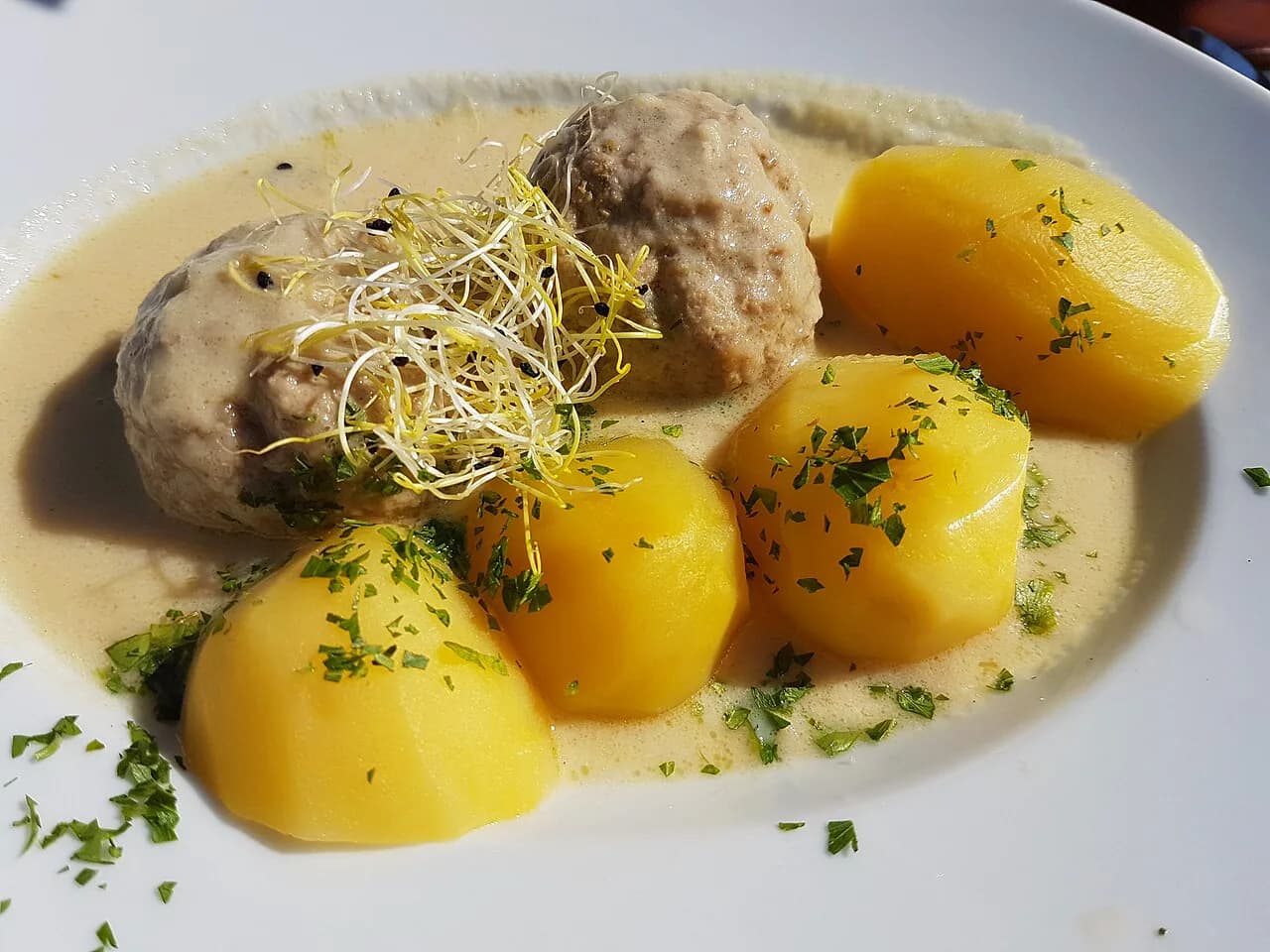
Königsberger Klopse are German meatballs simmered in broth and served in a creamy white caper sauce. Here is what is in them and what to order.
On this page
Königsberger Klopse are German meatballs simmered in seasoned broth and served in a creamy white sauce with capers, lemon and sour cream. If you see them on a menu, order them when you want something mild, tangy and comforting rather than browned and crisp. This guide covers what is in the meatballs, how the sauce is built from the cooking liquid, what to eat alongside, and how the dish differs from other meatballs you may know.
The name comes from Königsberg, the former East Prussian city known today as Kaliningrad, and predecessors of the dish date back to the Middle Ages. You will find them across Germany as a home-style main course, usually under the meatball or classic-dishes part of the menu.
What Königsberger Klopse are, in one answer
They are poached meatballs in a white caper sauce, not meatballs in a brown gravy. The dish is served as a main course with boiled potatoes or Spätzle and often a spoonful of red cabbage on the side. The overall flavor is creamy and briny rather than spicy, with the capers and lemon doing most of the work.
Because the meatballs are cooked in liquid rather than fried, they stay soft and moist all the way through. That texture is the point of the dish: if you are after a crisp crust, order a schnitzel instead.
Why they are also called Soßklopse
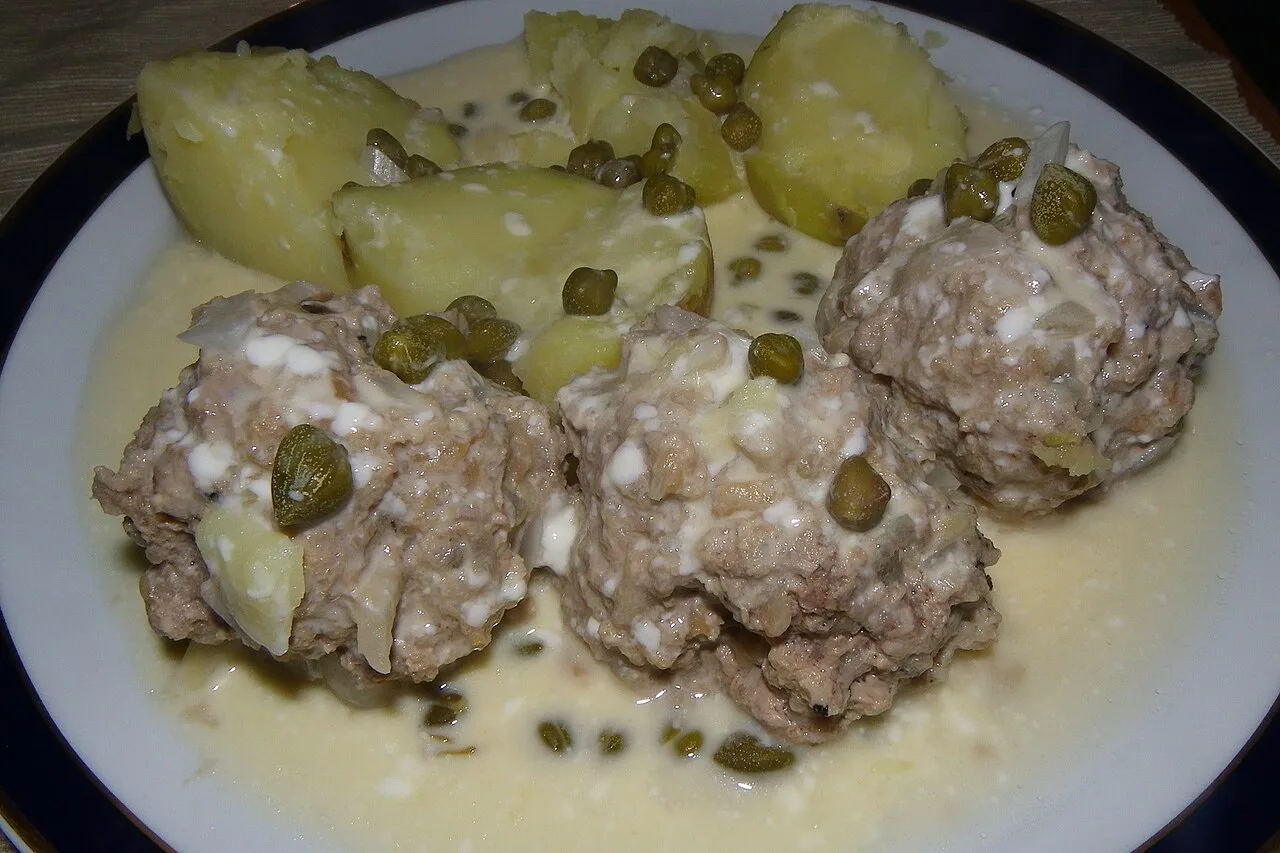
Soßklopse simply means meatballs in sauce, and it is the plainer name for the same dish. If a menu lists Soßklopse rather than Königsberger Klopse, you are looking at the meatballs-and-caper-sauce combination.
What is Königsberger Klopse in English? It translates as Königsberg meatballs: poached meatballs of veal, beef and pork served in a creamy white sauce with capers and lemon. The dish is named after the former East Prussian city of Königsberg, today Kaliningrad.
Are Königsberger Klopse the same as Swedish meatballs? No. Swedish meatballs are typically browned and served with a light cream sauce and lingonberry, while Königsberger Klopse are poached and served in a sauce made from their own cooking broth, sharpened with capers and lemon.
Do Königsberger Klopse contain anchovy? Traditional recipes include a small amount of anchovy in the meatball mix, along with veal, beef, pork, onion, bread crumbs, eggs and lemon. It is there to add depth rather than to make the dish taste of fish.
The regional name is the more specific one, pointing back to Königsberg, while the generic name describes what actually arrives on the plate. Either way, expect a shallow bowl with the meatballs sitting in sauce and the potatoes or Spätzle alongside.
What goes into the meatballs: veal, beef and pork, with anchovy
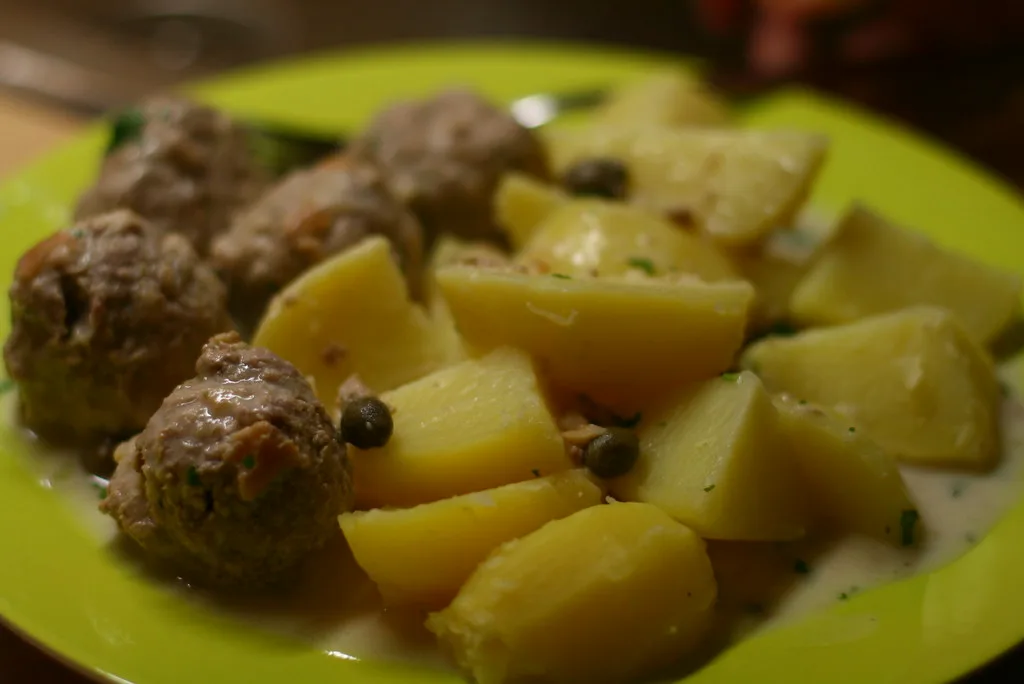
A typical mix combines ground veal, beef and pork with eggs, bread crumbs, milk and finely chopped onion. The seasoning includes lemon zest and juice, capers and a small amount of anchovy, which adds depth without making the dish taste fishy. The anchovy is traditional rather than a surprise ingredient; it is there to deepen the flavor of the meat.
The mixture is formed into balls about the size of a golf ball and rolled lightly in flour before cooking. The flour helps thicken the broth as the meatballs go in, which is the first step toward the sauce.
The caper sauce: how it is built from the braising broth
The meatballs are slipped into a simmering broth of stock, bay leaf, white wine, vinegar and peppercorns, and they cook gently in it until firm. That same liquid is then finished with sour cream, lemon juice and zest, and more capers to make the sauce. This is why the sauce tastes of the meat and the poaching liquid, not of a separate cream gravy.
The broth thickens naturally from the flour on the meatballs, so the sauce comes together without a heavy roux. The result is lighter than it looks, with a clear tang from the lemon and capers cutting through the cream.
How the dish is cooked: simmered, not fried
The meatballs are poached, never browned, and the broth should stay at a gentle simmer rather than a rolling boil. That keeps them tender and stops them from breaking apart. Cooks usually work in batches so the pot is not crowded.
At the table, this means a soft meatball that gives way easily under a fork and soaks up the sauce. If you like a bit of resistance and a browned crust, the same kitchen will usually have a schnitzel or a roast on the menu. The trade-off is texture: soft and saucy here, crisp and dry there.
What to order alongside: Salzkartoffeln, Spätzle and Rotkohl
Boiled salted potatoes, Salzkartoffeln, are the classic partner, and buttered Spätzle show up just as often. Both are mild, which lets the caper sauce do the talking. A spoonful of Rotkohl, braised red cabbage, adds a sweet-sour note on the side.
If you want a second German classic at the same table, a Schweinshaxe is the opposite kind of dish: a roasted pork knuckle with crackling, crisp outside and rich inside. Sharing one between two and adding the Klopse gives you both ends of the spectrum.
Bitter, briny and creamy: how the dish actually tastes
Expect cream first, then a sharp lift of lemon, then the briny pop of capers, with the anchovy sitting quietly underneath. The meatballs themselves are mild, so the sauce is where most of the flavor lives. It is a dish that tastes richer than its ingredients suggest, without being heavy.
People who dislike capers or lemon will find the sauce aggressive, and it is not a good pick for anyone who wants a plain cream sauce. Anyone who enjoys tart, salty flavors will usually finish the plate.
Königsberger Klopse on a German menu: where to look for them
Look on the main-course pages of a traditional Gasthaus or a home-style restaurant, often under headings such as Klassiker or Hausmannskost. The dish is a standard part of the German repertoire rather than a seasonal specialty, so it appears year-round on many menus. If a menu lists Soßklopse, that is the same dish under its plain name.
Caper sauce also turns up in other German dishes, so read the description carefully if you are ordering by name alone. If you want a different braised classic instead, Sauerbraten is beef marinated in vinegar and spices and served with a dark sauce, a sharper, meatier alternative.
Klopse versus Swedish meatballs and Frikadellen
Swedish meatballs are usually browned in a pan and served in a light cream sauce with lingonberry on the side. Königsberger Klopse are poached instead, and their sauce is built from the cooking broth with capers and lemon, so it tastes brinier and more tart. The two look similar on the plate but are different dishes.
Frikadellen are the everyday German answer to a meatball: flattened, pan-fried and eaten in a roll or with potato salad, with no sauce at all. Klopse are the sit-down, sauced version. If you want something to eat on the go, a Frikadelle is the better choice; if you want a plate and a fork, order the Klopse.
Should you order the Klopse?
Order Königsberger Klopse if you want a mild, creamy German classic with a genuine briny edge from capers and lemon, and you are happy with soft poached meatballs rather than browned ones. Skip them if capers, anchovy or a tangy cream sauce are not for you, and choose a schnitzel or a roast instead.
When you sit down, check whether the menu says Soßklopse or Königsberger Klopse, and confirm whether the potatoes or Spätzle come with the dish or have to be ordered separately. That one question tells you what will actually land on the table.
Explore more Germany guides
Frequently Asked Questions
What is Königsberger Klopse in English?
It translates as Königsberg meatballs: poached meatballs of veal, beef and pork served in a creamy white sauce with capers and lemon. The dish is named after the former East Prussian city of Königsberg, today Kaliningrad.
Are Königsberger Klopse the same as Swedish meatballs?
No. Swedish meatballs are typically browned and served with a light cream sauce and lingonberry, while Königsberger Klopse are poached and served in a sauce made from their own cooking broth, sharpened with capers and lemon.
Do Königsberger Klopse contain anchovy?
Traditional recipes include a small amount of anchovy in the meatball mix, along with veal, beef, pork, onion, bread crumbs, eggs and lemon. It is there to add depth rather than to make the dish taste of fish.
What is served with Königsberger Klopse?
Boiled salted potatoes, Salzkartoffeln, or buttered Spätzle are the usual partners, often with braised red cabbage on the side. The mild sides balance the creamy, briny sauce.
Sources
Notes for your next German food trip
Optional updates to our guides.
You might also like



Continue reading
More guides you'll find useful




