German Beer Guide: What to Order in Germany by Region
German beer explained for travelers: Pils, Weissbier, Märzen and Schwarzbier, the regions known for Alt and Kölsch, and how to order a round.
On this page
German beer is dominated by Pils, a pale, crisp, hop-forward lager that holds roughly half the German market, but the glass in front of you changes with the region. Order wheat beer in Bavaria, Altbier in Düsseldorf, Kölsch in Cologne, and you are drinking what locals actually drink rather than a national average. This guide walks through the styles you will meet, the regional map behind them, and the words that get a round onto your table.
Two facts do most of the explaining. Brewing here follows the Reinheitsgebot, the 1516 purity law announced in Ingolstadt that limits beer to water, malt, hops and yeast, and the south of the country has by far the thickest concentration of breweries. That combination produces both the clean lagers sold nationwide and the small, local specialties worth seeking out on a trip.
What German beer is: lagers and wheat ales under one brewing law
German brewing splits into lagers, fermented cool and stored for weeks, and ales, including the wheat beers that define Bavarian drinking. Lager brewing was established around Munich by 1600, when brewers made beer in winter and stored it in cool caves through the warm months; the word lager comes from lagerung, the German word for storage. That cold conditioning is why German lagers taste clean and let malt and hops do the talking.
The Reinheitsgebot, announced in Ingolstadt in 1516, allows only water, malt, hops and yeast and stands as the oldest food-law regulation still valid today. It is a brewing fact rather than a guarantee about every glass you will be handed, so treat it as context for why German beer menus stay close to a handful of recognizable styles.
The scale is real: Germany has around 5,000 beer brands and a new one appears most weeks, so no trip covers the range. You do not need to try. Learn five style names and you can order confidently almost anywhere in the country.
Pils: the country's default glass
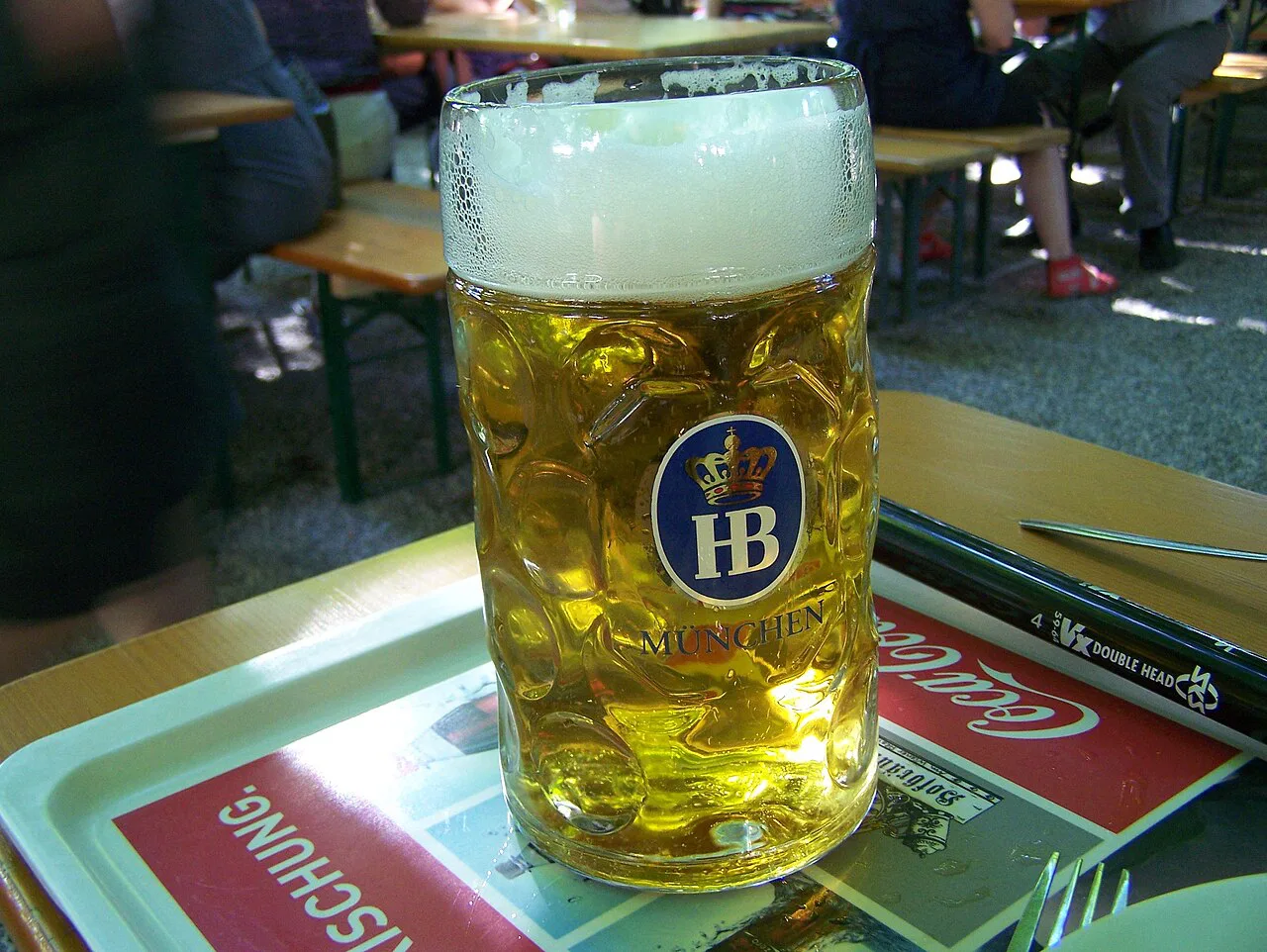
Pils is the beer Germany drinks most, with a market share of roughly 50 percent, and it is what you get if you simply ask for ein Bier in many places. Expect pale gold, a light body, and a firm, floral hop bitterness that keeps it refreshing rather than sweet. German Pils is lighter in color and body than the Czech original it imitates, with the hop character pushed forward.
What is Germany's most popular beer? Pils, by a wide margin: it holds roughly half the German beer market. That is why a plain request for a beer often lands you with a pale, hoppy lager unless you name another style.
What is the difference between Helles and Pils? Both are pale lagers, but Helles is softer and more malt-forward with low bitterness, while Pils is crisper and more hop-forward. Helles dominates Munich drinking; Pils dominates almost everywhere else.
Do I need to know German to order beer? No. The style names are the same words on the menu, so ein Pils, ein Helles or ein Weizen gets the job done.
Bitburger, founded in Bitburg in 1817, is one of the dominant brands in the German market and the country's leading draft beer, so its premium Pils turns up on taps well beyond its Rhineland home. Order Pils when you want something cold, dry and easy with a plate of sausage, and expect the glass to be refilled rather than nursed.
Helles: Bavaria's softer lager
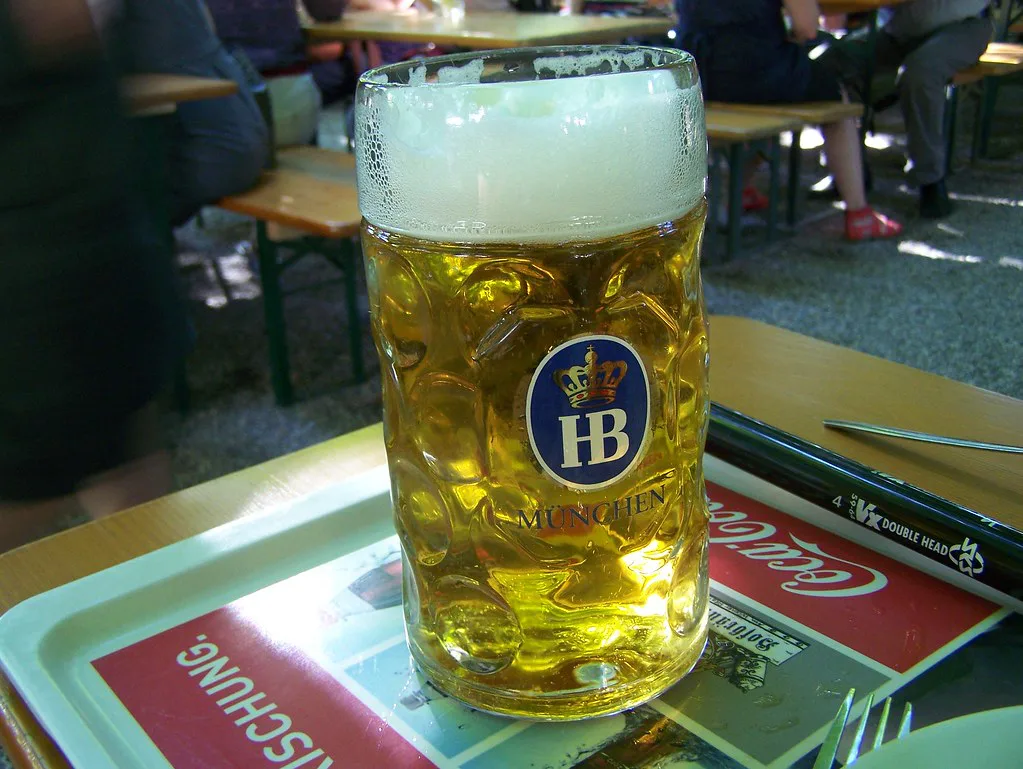
Helles is the Munich answer to Pils: pale, gentle, malt-forward and low in bitterness, built for drinking by the liter in a beer garden. If Pils tastes too sharp, ask for a Helles and you will get something rounder that still finishes clean. It is the everyday lager around Munich, and the style rewards a long afternoon more than a quick round.
The classic pairings are the Munich beer-garden plates: roast chicken, pretzels, radishes and Obatzda, the soft cheese spread. Read the menu for halbes Hendl if you want half a roast chicken, and keep the beer order simple while the food does the work.
Weissbier: cloudy wheat beer with banana and clove
Weissbier, also sold as hefeweizen or weizen, is an ale brewed with malted wheat, and it looks the part: hazy, highly carbonated, and served with a thick foam head. The yeast gives it its signature flavors of banana and clove, with low bitterness and a soft, bready body that reads like white bread.
Erdinger, based in Erding, is one of the wheat-beer names you will find widely, and it brews a range of Weißbier styles rather than a single bottle. Order it in its tall curved glass and drink it before it warms too much.
Schwarzbier: the dark lager that surprises people
Schwarzbier is a black lager with roasted malt character, closer to a clean dark beer than a heavy stout. Köstritzer has brewed its Schwarzbier in Bad Köstritz, Thuringia, since 1543, making it one of the oldest examples of the style, and it is the version most travelers meet first.
Order it with hearty food: roast pork, dark bread with cold cuts, or a plate of smoked sausage. The roasted notes match the crust and smoke, while the light body keeps the meal from feeling heavy.
Märzen and Oktoberfest beer: amber, malty, seasonal
Märzen is the amber, malt-forward lager behind Oktoberfest beer. Brewers once made the last batches in March stronger so they would keep through summer, which is where the name comes from, and the classic version shows toast and bread-crust flavors with little hop aroma.
Ayinger and Hacker-Pschorr are two brands that make Märzen, and Hacker-Pschorr also appears among Oktoberfest-Märzen labels. Treat it as a food beer: it stands up to roast chicken, pork and cheese dishes better than a sharp Pils does.
Altbier and Kölsch: the two regional styles worth a detour
Altbier and Kölsch are top-fermented, copper-to-pale beers tied to two neighboring cities, and they are not interchangeable. Düsseldorf pours Altbier, darker and maltier with a clean bitterness; Cologne pours Kölsch, pale, light and delicate, served in small glasses that get replaced as soon as they empty. Diebels and Frankenheim are Düsseldorf Altbier names.
Ask for Alt or Kölsch by name, not for a generic beer, and let the server keep the small glasses coming until you put your coaster over the top. It is one of the few places where the beer, the city and the glass size all carry meaning.
Bock and Doppelbock: stronger lagers for cold weather
Bock and Doppelbock are stronger lagers with deeper malt flavor, traditionally brewed for the colder months and sipped rather than gulped. They come in dark and pale versions, and a Doppelbock can be almost a meal, so order a small glass before committing to a full one.
Look for them on winter menus in Bavaria and Franconia, often beside the dark beers. If you are ordering food, pair a Bock with roasted meat or strong cheese rather than anything delicate, because it will bury lighter dishes.
Non-alcoholic beer: a real option, not an afterthought
Non-alcoholic beer is everywhere in Germany now. Production has more than doubled since 2007, reaching about 670 million liters in 2023, and there are more than 800 different non-alcoholic brands, including regional styles like Kölsch and Alt.
Ask for ein alkoholfreies Bier, or name the brand: Bitburger's Drive 0.0% is one of the widely available options, and most menus list at least one alcohol-free choice beside the regular beers. It is the right order when you are driving or pacing yourself through a long lunch.
Beer regions at a glance
Bavaria had 631 breweries in 2021, followed by Baden-Württemberg with 212 and North Rhine-Westphalia with 143, which tells you where variety is thickest on the ground. Franconia, inside Bavaria, is the heartland of small village breweries and Kellerbier, the unfiltered lager served straight from the cellar.
The Rhineland gives you Altbier and Kölsch in Düsseldorf and Cologne, and the East has its own traditions, with Köstritzer in Thuringia and Wernesgrüner in Saxony, whose Pilsner became popular during the GDR era. Traveling between regions is the fastest way to see how differently one country can drink.
How to order in a beer hall, brewery tap or beer garden
Order by style and size: ein Pils, ein Helles, ein Weizen, or ask for a small pour with klein if you want less. Vom Fass means draft, and a bottle order is fine anywhere, though brewery taps and beer halls push their own beer on draft.
In a beer garden, order at the counter or from a server depending on the setup, then pay when the server brings the bill or when you leave. Say Zahlen, bitte when you are ready to pay.
In Cologne and Düsseldorf, order the local beer by name and let the server replace the glass without asking; a coaster on top stops the flow. In Munich, a liter of Helles is normal, so pace yourself accordingly.
Reading a menu or chalkboard
Menus usually list the style first and the brand second: Pils, Helles, Dunkel, Weizen, plus a seasonal line such as Märzen or Bock. Dunkel is a dark lager, maltier and softer than a Pils, and it is a good middle ground if Schwarzbier feels too roasted.
Seasonal labels are worth asking about, since a chalkboard may show a beer brewed for a few weeks only. If you cannot read the handwriting, ask was empfehlen Sie? (what do you recommend?) and let the server pick.
Beer with food: what to drink with pretzels, sausage and roast pork
Pretzels and Weisswurst belong with Weissbier, whose soft sweetness balances the salt and the mustard. Roast pork and dark bread go with Schwarzbier or Dunkel, and a Munich beer garden's roast chicken is happiest with a liter of Helles.
Cheese dishes such as Obatzda or Käsespätzle, the German macaroni-and-cheese-style egg noodles with melted cheese, can overwhelm a delicate Kölsch. Reach for a Pils or a Bock instead, since bitterness and malt both cut through fat better than a light ale does.
The big names on taps across Germany
Bitburger, Köstritzer, Erdinger, Paulaner, Spaten and Radeberger are the labels most likely to appear far from home, and each comes from a specific region. Paulaner and Spaten are Munich breweries, Köstritzer is Thuringian, and Erdinger is Bavarian wheat beer from Erding.
Seeing a familiar name is not a reason to stop looking: the regional beers are where a trip gets interesting. Order the local one first, then compare it with the national brand if you are curious.
Which German beer should you order first?
Start with the regional beer wherever you are: Pils in the north and west, Helles or Weissbier in Bavaria, Altbier in Düsseldorf, Kölsch in Cologne. Once that glass is empty, try a dark lager or a Bock if the menu has one, and finish with a non-alcoholic option if you are driving or calling it an early night.
Order by style name, ask for a small pour if you are unsure, and keep the pace moderate: German servings are generous and the point is the meal and the room, not the volume.
Explore more Germany guides
- Berliner Weisse
- Bock Beer
- Dunkel Beer
- Hefeweizen Explained: What This German Wheat Beer Is and How to Drink
- Helles Beer: What It Is, How It Tastes and How to Order
- Kellerbier in Germany: What It Is and How to Drink
- Kölsch Beer: What It Is, How It Tastes, and How to Order
- Oktoberfest Beer
- Pils Beer in Germany: What It Is and How to Order
- Schwarzbier
- The German Beer Purity Law
Frequently Asked Questions
What is Germany's most popular beer?
Pils, by a wide margin: it holds roughly half the German beer market. That is why a plain request for a beer often lands you with a pale, hoppy lager unless you name another style.
What is the difference between Helles and Pils?
Both are pale lagers, but Helles is softer and more malt-forward with low bitterness, while Pils is crisper and more hop-forward. Helles dominates Munich drinking; Pils dominates almost everywhere else.
Do I need to know German to order beer?
No. The style names are the same words on the menu, so ein Pils, ein Helles or ein Weizen gets the job done. Zahlen, bitte covers the bill.
Sources
Notes for your next German food trip
Optional updates to our guides.
You might also like



Continue reading
More guides you'll find useful