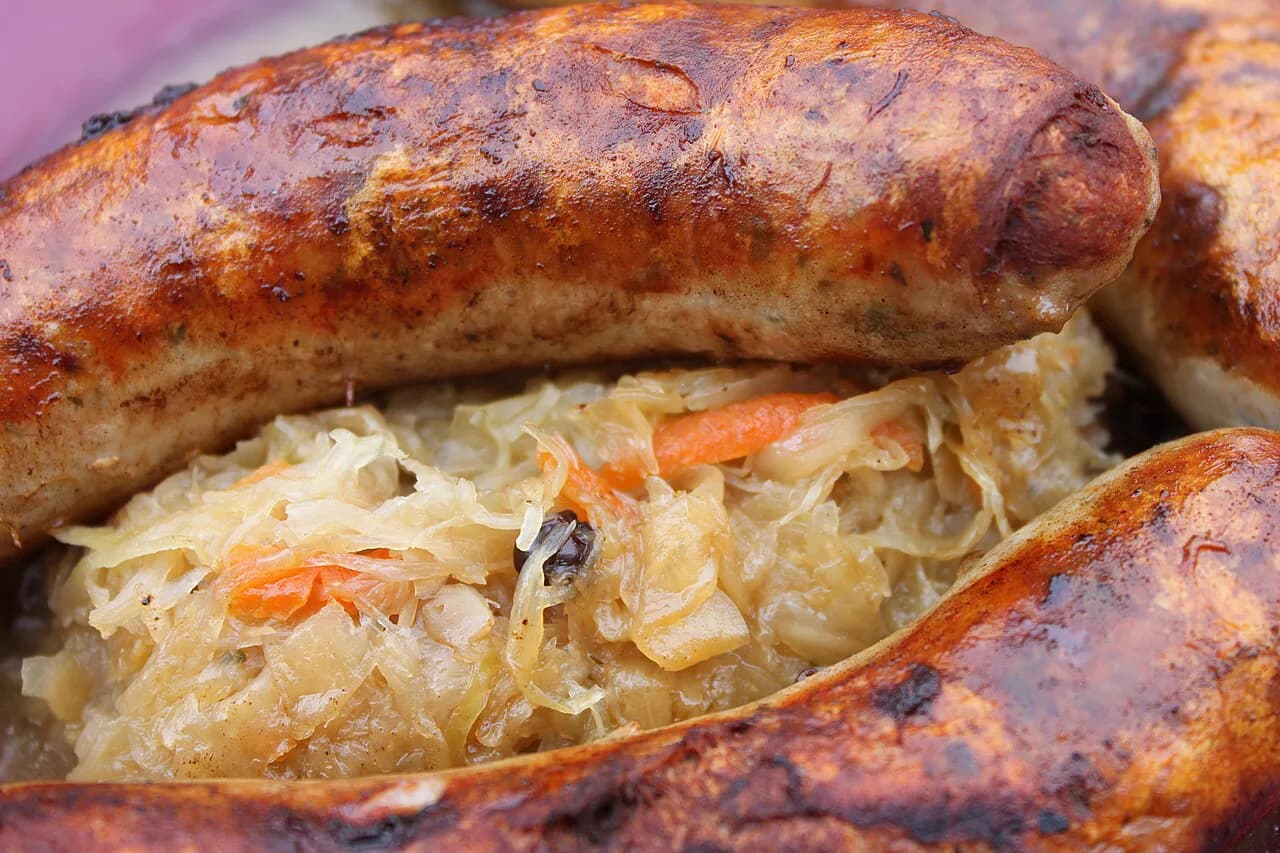
German Cakes: What to Order at Kaffee und Kuchen
A plain-English guide to German cakes, from Schwarzwälder Kirschtorte to Pflaumenkuchen, plus how the afternoon coffee-and-cake ritual works.
On this page
The cake to order in Germany depends on the month: plums in late summer, strawberries in June, rhubarb in spring, and a slice of Black Forest cake or cheesecake any time of year. Germans eat it in the afternoon at Kaffee und Kuchen, the coffee-and-cake pause that turns a bakery stop into a small event. This guide works through the cakes you will actually see in the case and explains how the counter, the slice and the coffee fit together.
Comfort food in Germany is often a piece of cake rather than a plate of something heavy. Kaffee und Kuchen is the afternoon coffee-and-cake tradition, and it is how these bakes are usually eaten. The German word for cake is Kuchen, and a Torte is the layered, filled kind.
Kaffee und Kuchen and what German cakes are
Kaffee und Kuchen runs through the afternoon and is treated as a proper occasion rather than a snack grabbed on the move. That is why cafés and Konditoreien put real effort into the cake case and expect you to sit down with a coffee alongside your slice. The pleasure is in the combination of a piece of cake and a hot drink.
German cakes tend to be less sweet than American ones and lean on fruit, dairy and good ingredients rather than frosting. If you are used to a thick buttercream finish, expect more whipped cream, more fruit and a lighter crumb. The result is a cake you can order in the afternoon without ruining dinner.
The baking repertoire runs wide: apple cakes, plum cakes, cheesecake, sheet cakes with streusel, layer tortes and rolls. That variety is why reading the case properly matters more than memorizing one recipe.
Schwarzwälder Kirschtorte: the Kirsch is the point
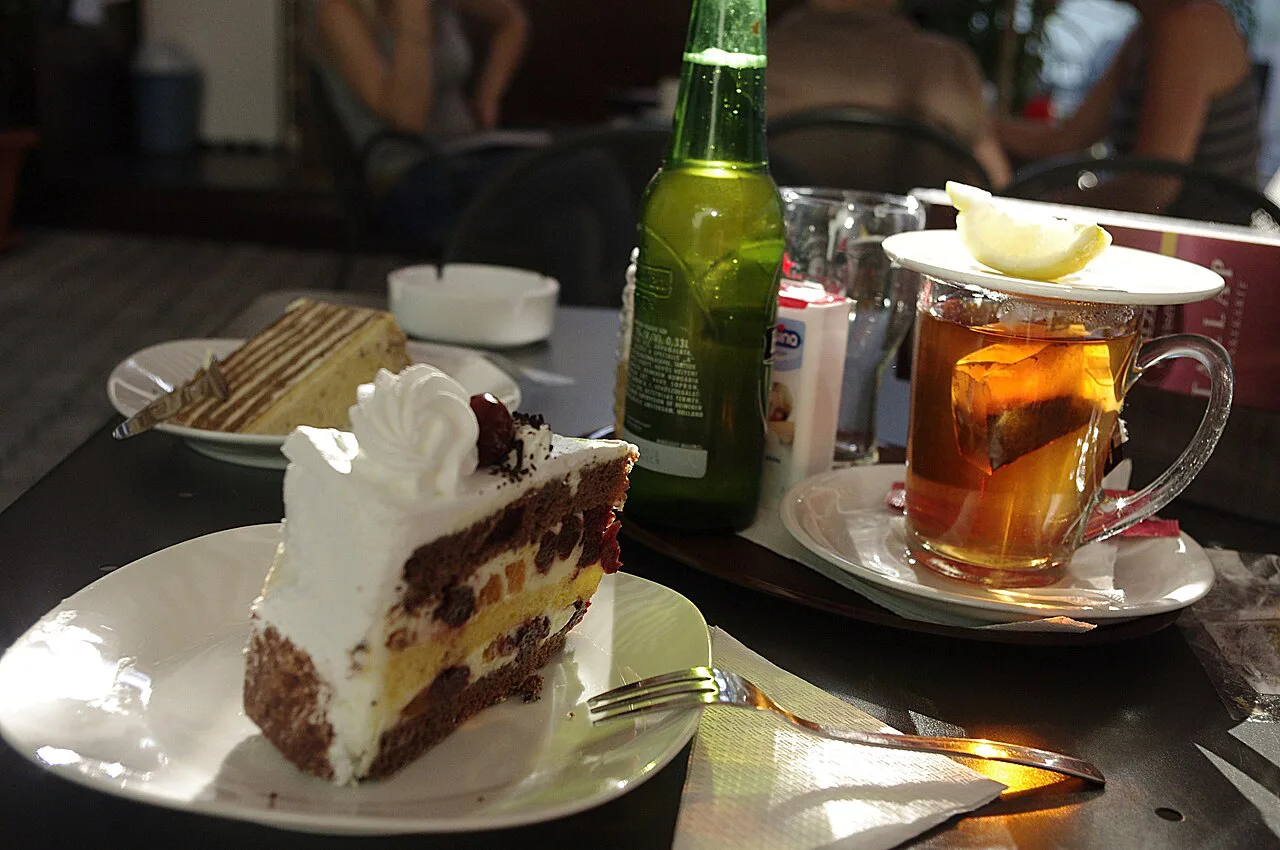
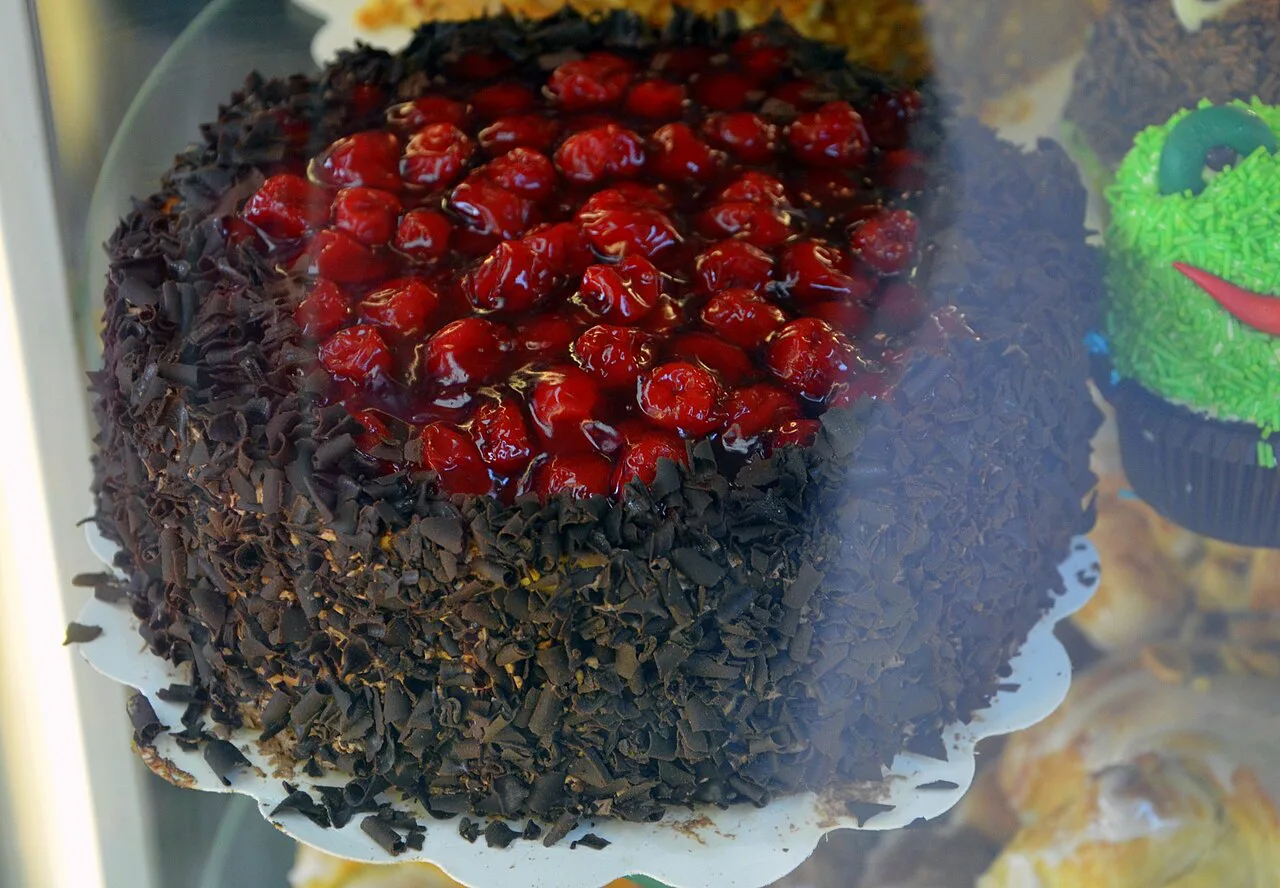
Schwarzwälder Kirschtorte, Black Forest cake, layers a cocoa sponge with whipped cream and sour cherries and soaks the cake in Kirsch, a cherry brandy. The boozy edge from the Kirsch is what sets it apart from a plain chocolate-and-cream cake. Purists argue the brandy should come from cherries grown in the Black Forest region, though the cake is now made everywhere.
What is the German word for cake? Kuchen is the general German word for cake. A Torte is a layered, filled cake, and a Blechkuchen is a sheet cake baked on a tray.
What are some traditional German desserts beyond cake? Apfelstrudel, Windbeutel cream puffs and Baumkuchen count as desserts or pastries rather than everyday cakes. Spiced winter bakes like Lebkuchen and Gewürzkuchen belong to the cold months.
Why is German cheesecake lighter than American cheesecake? Käsekuchen is made with quark rather than cream cheese, and stiff egg whites are folded in. That gives it a fluffier texture and a tangier flavor than the dense American version.
For non-drinkers, versions that swap the brandy for cherry syrup and cherries exist, so you can still order it without the alcohol. Ask when you order whether the version on the counter contains Kirsch. The cake itself is a chocolate sponge with whipped cream and cherries, and the shavings on top are chocolate, not cocoa.
Käsekuchen: quark instead of cream cheese
Käsekuchen looks like its American cousin but tastes noticeably lighter. The texture comes from stiff egg whites and from quark, a fresh dairy product closer to ricotta than to cream cheese. The base is more shortbread than graham cracker.
The flavor is built on vanilla sugar and vanilla pudding powder, and the tang comes from the quark rather than from cream cheese. If you want the closest thing to a New York slice, you will find it, but the German version is the one Germans grew up with. Look for it in a plain ring or as individual slices.
Bienenstich: yeast dough, caramelized almonds, custard
Bienenstich, or Bee Sting Cake, starts with a thick yeasted dough similar to brioche. Before baking, the top is covered with honey, sugar, butter and slivered almonds, which caramelize into a golden crust. The cake is then split lengthwise and filled with vanilla custard or buttercream.
That combination of soft yeast crumb, crunchy almond top and cool custard is what makes it a favorite afternoon slice, and the filling sits somewhere between a plain custard and a richer pastry cream. If you see it, take a slice and a coffee.
Pflaumenkuchen and Zwetschgenkuchen: the late-summer plum cakes
Plum cake appears when Italian plums come into season, late summer into fall. There are two common styles: a yeasted sheet cake packed with plum halves, and a simpler batter cake topped with halved plums and streusel. The fruit is firm enough that the cake stays moist without turning mushy.
Zwetschgenkuchen is the same idea and the name you will see for the Italian plum version. A little cinnamon sugar or a layer of streusel may go on top. Look for it in cafés and bakeries in September and October, and order it with whipped cream if the café offers it.
Apfelkuchen in its main forms
Apple cake comes in several forms. Gedeckter Apfelkuchen is a covered apple cake, a shortcrust shell filled with cinnamon-spiced apples and sealed with a top crust. Versunkener Apfelkuchen is the simple one, apple wedges pressed into a soft butter batter. Apfelkuchen vom Blech is the sheet-cake version on a shortbread base with a thick layer of butter streusel, cut into squares.
Apfelstrudel belongs in the same conversation even though it is pastry rather than cake. Thin dough is wrapped around spiced apples, raisins and breadcrumbs, and the strudel comes out flaky under powdered sugar. Serve it with Vanillesoße, a warm vanilla sauce, or vanilla ice cream.
Erdbeerkuchen and Biskuitrolle: the strawberry season cakes
Once strawberry season hits, Strawberry cake appears in almost every bakery. The classic Erdbeerkuchen is a sponge base topped with fresh strawberries and a shiny glaze. The Biskuitrolle is a light sponge rolled around whipped cream and strawberries, a staple of German baking that can be filled with whatever fruit is in season.
Both belong to the summer half of the year, when the fruit is at its best. Order a slice with coffee and you have the classic warm-weather Kaffee und Kuchen. The same warm-weather pause pairs with a cold drink instead of coffee at a Biergarten in Germany.
Rhabarberkuchen: the spring rhubarb cake
Rhabarberkuchen, rhubarb coffee cake, is a spring bake. Tangy rhubarb goes onto a soft cake base and under a buttery streusel topping, which balances the sourness of the stalks. It is a good cake to order in April and May, when the stalks are in season.
Baumkuchen and Windbeutel at a Konditorei
Baumkuchen, tree cake, is built by painting thin layers of batter onto a rotating spit and browning each one. The result is a cake with rings that look like tree rings, which is where the name comes from. It is usually a Konditorei item, sold by the slice or as a whole cake.
Windbeutel are cream puffs, known in Germany as windbags. The choux pastry is filled with whipped cream and sometimes with fruit or custard. A Konditorei is the shop to look for both.
How a German bakery and café counter works
Bakery counters sell two main shapes: whole cakes, sold by the slice, and sheet cakes, sold as squares cut from a tray. A Torte is the layered, filled kind, often with cream and fruit, and is the most expensive thing in the case. A Blechkuchen is a sheet cake, and a Streuselkuchen is a sheet cake with a crumb topping.
When you order, point to the slice you want and say how many. At a café you can sit down and order a coffee with it. If you are taking it away, say zum Mitnehmen. Payment varies by venue, so carry some cash as a backup.
Reading the menu and cake case
The menu and the case use a small vocabulary. Kuchen is cake, Torte is a layered torte, Blechkuchen is a sheet cake, and Streuselkuchen is a sheet cake with streusel. Marmorkuchen is a marble cake, and it is a good everyday choice if you want something simple.
Some cakes carry a regional name, and some are seasonal. If you see a cake you do not know, ask what is in it. The staff are used to explaining the case one slice at a time.
Which cake for which season
Strawberries mark early summer, rhubarb marks spring, and plums mark late summer into fall. Spiced winter cakes like Gewürzkuchen, a spice cake with cinnamon, cloves and allspice, and Christmas bakes like Stollen appear in the cold months. Lebkuchen, the spiced cookie, belongs to the same winter window. Ordering by season means the fruit in your cake is at its best.
Outside those windows, the everyday cakes carry the case: Käsekuchen, Marmorkuchen, Black Forest cake and a few tortes. A good bakery keeps a seasonal cake going for as long as the fruit lasts. If the fruit is gone, the cake will be too.
A few more cakes worth knowing
Donauwelle is a German sheet cake named for the Danube wave, and it pairs cherries with a layered finish. It is one more example of the layered sheet cakes you will see at a Konditorei counter alongside the fruit and streusel bakes.
Frankfurter Kranz is a ring cake named for Frankfurt, built up with buttercream and finished with crushed nuts. It is a Konditorei classic that shows how far German bakers push the layered torte beyond a plain slice.
Which slice to order first
If you have one afternoon for cake in Germany, order a slice from the seasonal case and a coffee, then ask what else is in the case that day. In late summer, that means plum cake; in June, strawberry cake; in spring, rhubarb. If nothing seasonal appeals, Black Forest cake and Käsekuchen are the safe orders.
Explore more Germany guides
Frequently Asked Questions
What is the German word for cake?
Kuchen is the general German word for cake. A Torte is a layered, filled cake, and a Blechkuchen is a sheet cake baked on a tray. A Konditorei is the shop where you buy the fancier ones.
What are some traditional German desserts beyond cake?
Apfelstrudel, Windbeutel cream puffs and Baumkuchen count as desserts or pastries rather than everyday cakes. Spiced winter bakes like Lebkuchen and Gewürzkuchen belong to the cold months.
Why is German cheesecake lighter than American cheesecake?
Käsekuchen is made with quark rather than cream cheese, and stiff egg whites are folded in. That gives it a fluffier texture and a tangier flavor than the dense American version.
Sources
Notes for your next German food trip
Optional updates to our guides.
You might also like



Continue reading
More guides you'll find useful