
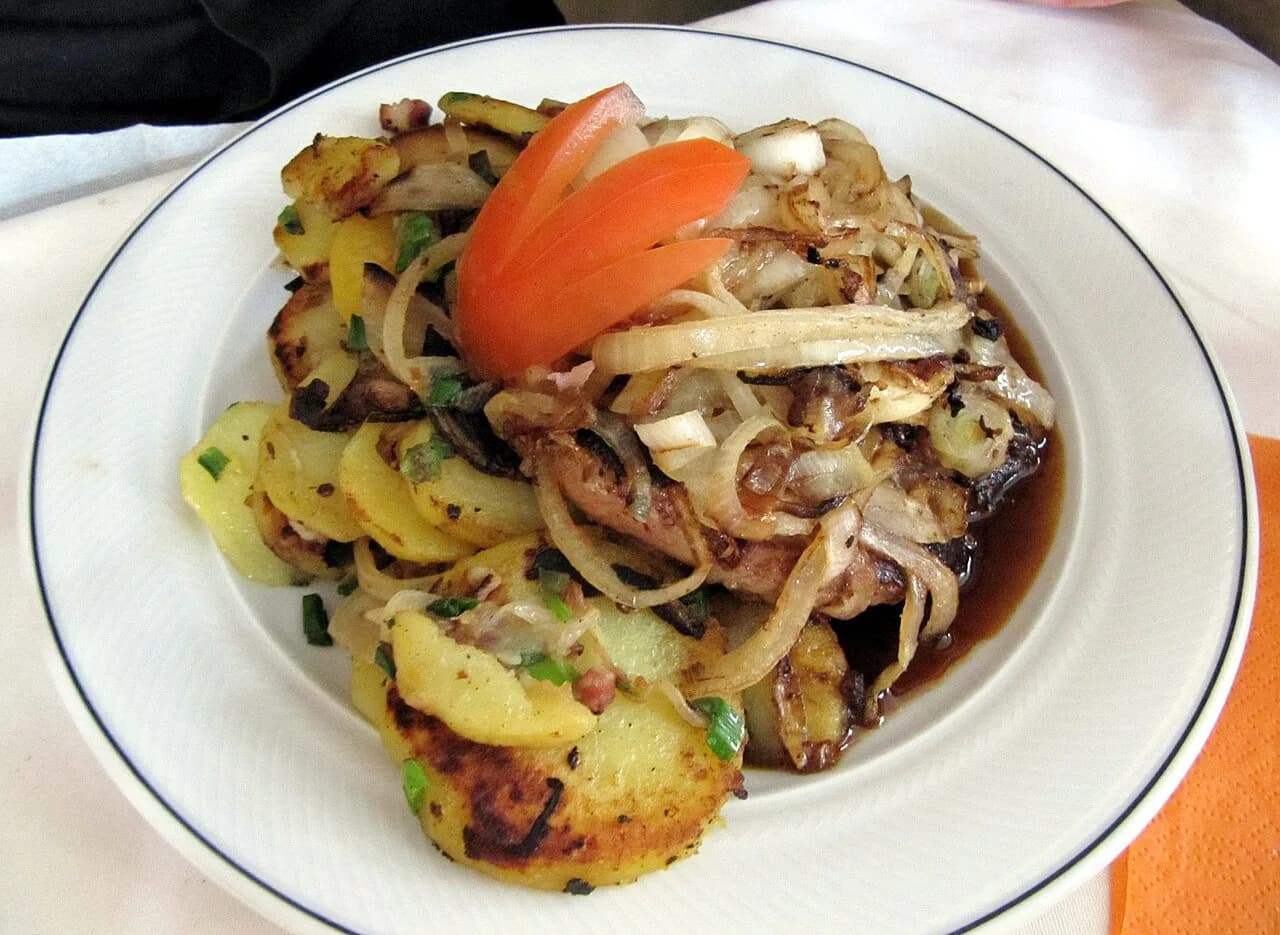
Thuringian Food: What to Eat and How It's Served
Thuringian food centers on potato dumplings called Thüringer Klöße and grilled Thuringian rostbratwurst. Here is what each dish is and how it is served.
On this page
Thuringian food comes down to two things you should order first: Thüringer Klöße, potato dumplings made from a mix of grated raw potato and cooked potato, and the Thuringian rostbratwurst, a thin grilled sausage eaten with a roll or on a plate. Around those two sit the hearty plate meals that define the region, above all dumplings with meat, red cabbage and gravy. This guide explains what each dish is, how it is made and served, and which German menu terms to recognize.
Thuringia is the state between Hesse, Bavaria, Saxony and Saxony-Anhalt, with Erfurt as its capital and Weimar as its best-known small city. The cooking is filling and built for cold weather, and it sits within a broader German regional cuisine where the dumpling is the dish locals across the state agree on.
What Thuringian food is known for
The short answer: dumplings and sausage. Thüringer Klöße are the region's signature side and often the main event, served in generous numbers next to roast meat, game or a meatless stew. The Thuringian rostbratwurst is the other pillar, a long, thin, finely textured sausage that belongs to the grill and to the snack counter rather than to a sit-down dinner.
Beyond those two, expect plate meals built on pork, root vegetables and gravy, plus soups that show up as a first course or a light lunch. The cooking overlaps with Franconian food to the south and Saxon food to the east, so a menu in Erfurt or Weimar can feel familiar if you have eaten your way through those regions.
For a traveler, the practical split is by time of day. The dumpling plate is a lunch or early-dinner dish, served hot in a Gasthaus and best ordered when you have an appetite. The rostbratwurst is a between-meals or market snack, quick enough to eat standing up.
Thüringer Klöße explained
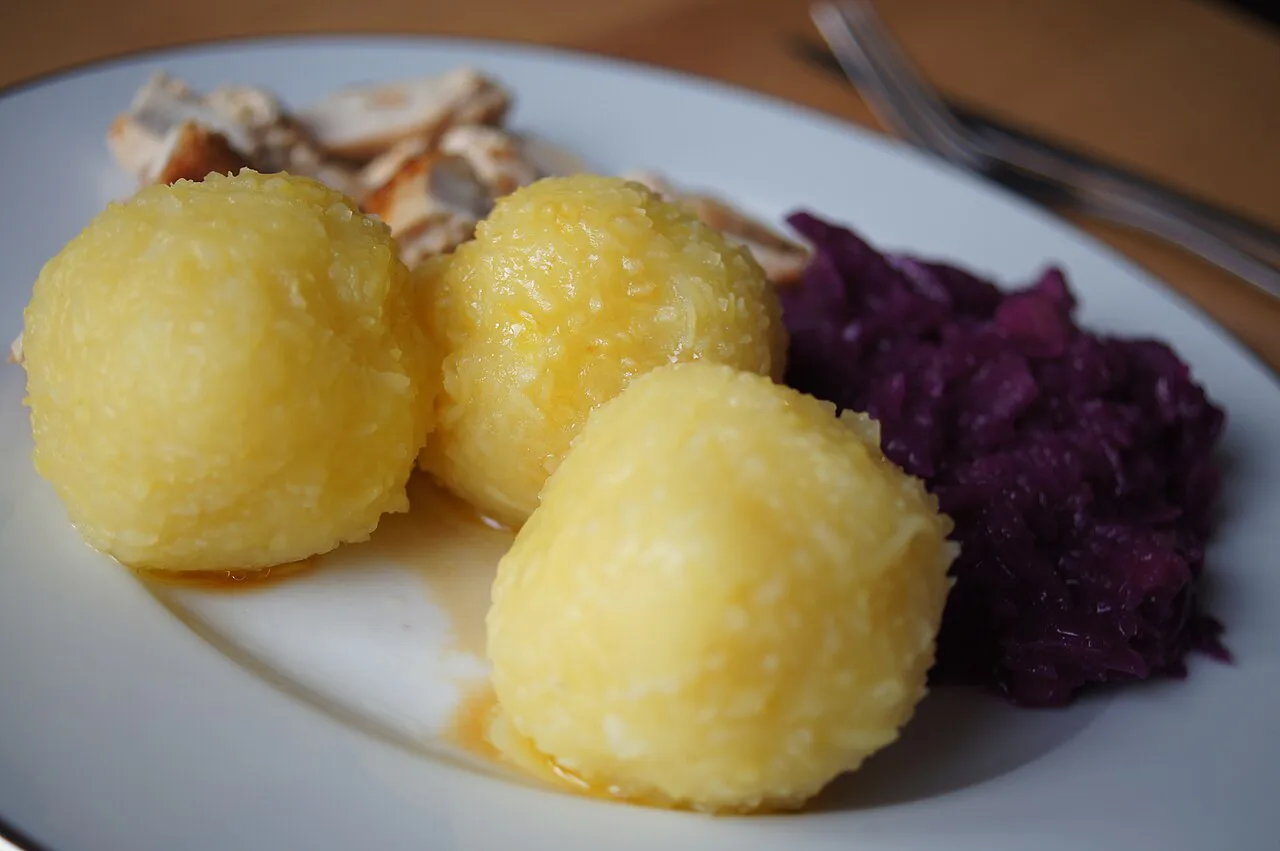
Thüringer Klöße are round potato dumplings with a slightly uneven, handmade look and a texture that sits between fluffy and chewy. They are not the compact, uniform potato dumpling you may know from a packet or from other German regions; the Thuringian version is lighter and more irregular, and it soaks up gravy rather than sitting dry on the plate.
Is German food spicy? Thuringian cooking is not spicy in the chili sense. The heat comes from mustard, caraway, pepper and vinegar in the red cabbage, so the flavors are sharp and savory rather than hot.
What is a traditional German Christmas dinner? In Thuringia, the festive plate follows the same pattern as the Sunday plate: dumplings, a roast and red cabbage, with Klöße doing the work that potatoes or noodles do elsewhere. The region's Christmas table is a family meal rather than a restaurant set menu, and the dumplings are the part that takes the most time to make.
The classic plate pairs them with a roast, red cabbage and a pour of gravy, which is how they appear at family tables and in traditional restaurants across the state. Order them as a side to a meat dish or as the starch under a stew, and expect a generous portion rather than a single dumpling.
If you only try one Thuringian dish, make it this one, because it is the item that separates the region's cooking from the rest of Germany. It is also the dish most likely to be made in-house rather than bought in, so a Gasthaus that serves good Klöße is usually taking its kitchen seriously.
How Klöße are made and why they take time
The technique is the reason Thüringer Klöße taste different: the dough combines grated raw potato with boiled potato. Most of the potatoes are grated finely and squeezed dry in a cloth, while the rest are boiled and mashed, then the two are combined into a smooth, slightly shiny dough.
Potato starch helps bind the mixture, and the dumplings are formed by hand and slipped into hot water that is kept just below a boil so they hold together. That raw-and-cooked split is what gives the dumplings their lighter bite, and it is also what makes them labor-intensive: grating, pressing and shaping take real time, which is why they are a weekend and special-occasion dish at home.
Some home cooks shortcut the process with a ready-made dumpling dough from the supermarket, a habit the recipe notes as common locally. In a restaurant you are usually eating the long version, which is worth knowing when you wonder why a simple plate of dumplings costs more than you expected.
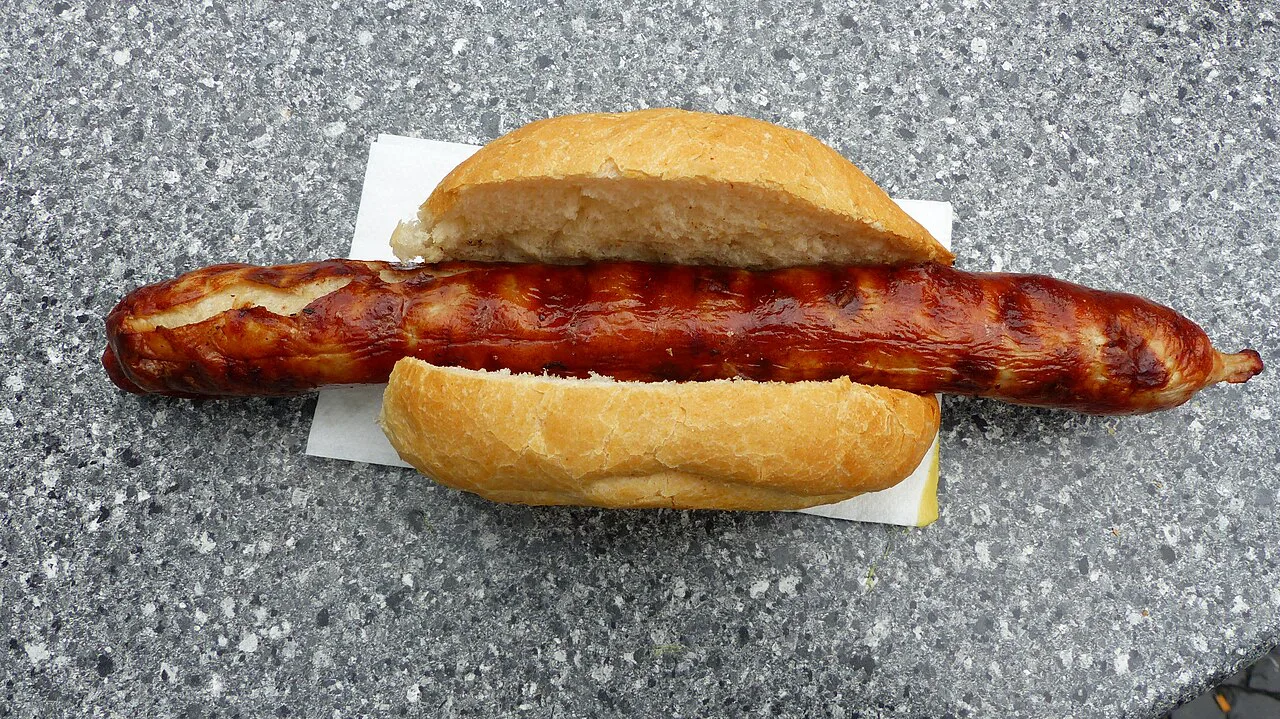
Thuringian rostbratwurst: what it is and how it is served
The Thuringian rostbratwurst is a long, slender, finely ground pork sausage, usually seasoned with salt, pepper, caraway and sometimes marjoram, then grilled over charcoal or on a flat grill until the skin blisters. It is thinner and longer than most German bratwurst, which changes how it eats: more crust per bite, less bulk in the middle.
You will see it two ways. At a grill stand it comes in a sliced roll with mustard, eaten on the spot with your hands. In a Gasthaus it arrives on a plate, often with potatoes, sauerkraut or a salad, sometimes as a pair of sausages.
It is a different sausage from the short, coarsely textured Franconian Bratwurst you find around Nuremberg, so do not treat them as interchangeable; if you want the comparison, the Franconian version is served smaller and often in threes.
Red cabbage and the plate pattern
The standard Thuringian plate has three parts: dumplings, meat and red cabbage, with gravy tying it together. Rotkohl, as red cabbage is called, is braised until soft and sweet-sour, usually with apple, vinegar and a little spice, and it is the acidity that keeps a heavy plate from feeling stodgy.
Meat is typically roast pork, beef or game, sometimes smoked pork with sauerkraut instead of cabbage. Look for the word "mit" on the menu, which tells you what comes alongside, and for "Rotkohl" or "Blaukraut" as the vegetable.
Order this plate at lunch if you can, because it is a full meal and a heavy one to carry into an afternoon. It is also the dish to share in a mixed group when not everyone wants a large portion.
Mushroom goulash as a meatless pairing with Klöße
Thuringian cooking is pork-heavy, but the dumplings carry a meatless meal well. Pilzgulasch, a mushroom goulash with onion, paprika, a little tomato paste and a spoon of mustard, is the plant-based partner the dumpling recipe itself suggests, served with red cabbage on the side.
On a restaurant menu, look for the vegetarian section or for dishes described as "vegetarisch"; a mushroom stew with Klöße is a common meat-free option in the region. If the menu only lists dumplings as a side, ask whether you can order them with the vegetable dish instead of the roast.
This is the route for mixed groups and for anyone eating meat-free for a day without settling for a salad. The gravy-based mushroom stew carries the same flavors as the classic plate, so nobody at the table feels like an afterthought.
Other Thuringian dishes and soups to look for
Beyond the dumpling plate, Thuringian menus lean on soups, potato dishes and simple pork cooking. Onion soup appears in the German repertoire and is worth ordering in the cooler months, and potato dishes in general are treated as a main event rather than a side.
Watch for seasonal and regional specials on a chalkboard or a printed insert, which is where Gasthäuser put dishes that are not on the standing menu. If you cannot read the board, ask the server which dish is typical for Thuringia; the answer is usually a dumpling plate or a sausage.
Game dishes belong to the autumn and winter menu in this wooded state, and you will see them paired with Klöße and red cabbage rather than with pasta or rice. That combination is the clearest way to eat the region's cooking in one order.
Where Thuringian cooking fits in a day
Lunch is the main meal in this part of Germany, and Thuringian restaurants treat it that way. A Gasthaus at midday serves the dumpling plate and the roast, often at a better value than the same dish in the evening, so plan your big meal for lunch and keep dinner light.
Brewery food fits the same pattern: hearty, plate-based and built for beer rather than for a quick bite. Order a local beer alongside the sausage or the roast, and keep the pace moderate if you have a full afternoon ahead.
In Weimar and Erfurt, the choice usually comes down to a traditional Gasthaus or a more modern kitchen, and the traditional room is the better bet for dumplings. If you want a different regional register for another day, Bavarian food to the south runs to different dumplings and different sausages.
How to order and eat it
Portions are generous, so decide early whether you are ordering a main or a main plus a side of dumplings; a plate of Klöße on its own is a legitimate order and often enough with a soup. If the menu is only in German, the key words are enough to get by: "Klöße" for dumplings, "Rotkohl" for red cabbage, "Braten" for roast and "vom Grill" for anything off the grill.
Payment habits vary by venue, and smaller Gasthäuser may prefer cash, so carry some euros alongside a card. Ask for the bill with "zusammen" if you are paying as one group and "getrennt" if you want to split it, and tip by rounding up rather than calculating a percentage.
If you are unsure what a dish comes with, ask whether the dumplings are included or a separate side; menus sometimes list them under "Beilagen" rather than in the dish description. That one question prevents the surprise of a plate arriving with potatoes when you expected Klöße.
Reading a Thuringian menu: the terms to know
A handful of words covers most of a Thuringian menu. Klöße are dumplings, Rotkohl or Blaukraut is red cabbage, Braten is roast meat, Soße is gravy, and Rostbratwurst is the grilled sausage. "Mit" means with, so "Braten mit Klößen und Rotkohl" is the classic plate in one line.
For meatless choices, look for "vegetarisch" and for Pilze, mushrooms, which signal a mushroom dish rather than a meat one. "Tagesgericht" is the dish of the day, usually the best value on the board and often a traditional plate.
If a dish description is still unclear, ask the server to explain it rather than ordering blind. German servers are used to the question, and a short explanation of what comes on the plate is faster than a translation app.
Dumpling plate or sausage in hand?
If you have one meal in Thuringia, order the Klöße plate with red cabbage and gravy at lunch, and treat the rostbratwurst as the snack you eat standing at a grill later in the day. That split gives you both of the region's signatures without turning either into a heavy second dinner.
For a meat-free version, ask for the mushroom goulash with dumplings, and if the menu is only in German, the terms above are enough to order with confidence.
Explore more Germany guides
Frequently Asked Questions
Is German food spicy?
Thuringian cooking is not spicy in the chili sense. The heat comes from mustard, caraway, pepper and vinegar in the red cabbage, so the flavors are sharp and savory rather than hot. If you want more bite, ask for mustard on the side with the rostbratwurst.
What is a traditional German Christmas dinner?
In Thuringia, the festive plate follows the same pattern as the Sunday plate: dumplings, a roast and red cabbage, with Klöße doing the work that potatoes or noodles do elsewhere. The region's Christmas table is a family meal rather than a restaurant set menu, and the dumplings are the part that takes the most time to make.
Sources
Notes for your next German food trip
Optional updates to our guides.
You might also like



Continue reading
More guides you'll find useful





