
Northern German Food: Dishes to Eat and Their Origins
Northern German food leans on fish, kale, potatoes, and rye. Learn the dishes to order, what each one is, and how to eat them the way locals do.
On this page
Northern German food is built on fish, potatoes, kale, and ingredients preserved against a short growing season, and the dish most visitors should know first is Labskaus, a corned beef and potato mash served with rollmops, a fried egg, pickled gherkin, and beetroot. The section below explains the dishes that define the region, from kale with smoked sausage to the fish kitchens of the coast, and how to order them course by course.
The north is not the Bavaria of beer halls and Weißwurst, and treating it that way is the fastest way to order badly. A few plain-English translations of the key terms will carry you through most menus in Hamburg, Bremen, and the coastal towns.
What northern German cooking is built on
The northern table leans on what the land and sea reliably supply: fish, potatoes, kale, and preserved meat and vegetables. Labskaus, a mixture of corned beef and mashed potato traditionally served with rollmops, a fried egg, a pickled gherkin, and beetroot, is a textbook example of that pantry logic — a filling dish assembled from things that kept well.
Kale does the same job in winter, and in Bremen it is so central that locals simply call it cabbage, or brown cabbage, and serve it with smoked sausages known locally as pinkel. If you see a kale plate on a menu in the north, that pairing is the version to try.
For a wider map of how these dishes sit next to the rest of the country's cooking, including the Rhineland's Reibekuchen mit Apfelmus (potato fritters with apple sauce), the regional overview is a useful companion.
Labskaus: the plate that surprises first-timers
Labskaus looks nothing like the sum of its parts. The base is a mash of corned beef and potato, and it arrives with rollmops (rolled pickled herring), a fried egg, a pickled gherkin, and beetroot on the same plate.
Labskaus: the plate that surprises first-timers. Labskaus looks nothing like the sum of its parts.
Grünkohl with Pinkel: kale season in Bremen. Grünkohl is kale, and in Bremen it is served with pinkel, the local smoked sausage, in a combination the city treats as a signature winter dish.
Weißwurst is not northern. Weißwurst, the pale veal sausage eaten with sweet mustard and a pretzel, is a Bavarian breakfast tradition and not a northern staple.
The pink color comes from the beetroot, not from the meat, so don't read it as a sign of something unusual. Eat a little of everything in one forkful rather than working through the components separately; the sweet-sour beet and gherkin are there to cut the richness of the mash.
It is a full main course, not a starter, so order it as your plate and add a soup only if you are genuinely hungry. Northern portions are generous, and Labskaus is one of the heaviest dishes in the repertoire.
Grünkohl with Pinkel: kale season in Bremen
Grünkohl is kale, and in Bremen it is served with pinkel, the local smoked sausage, in a combination the city treats as a signature winter dish. The kale is the point of the plate as much as the sausage, so expect a generous mound of it rather than a garnish.
Kale is a cold-weather crop, and the dish belongs to the colder half of the year; treat it as a seasonal order rather than something to expect in midsummer. The accompanying sausage is smoked and firm, closer to a cooking sausage than to a thin grilled bratwurst.
If you are building a tour of the country's regional plates, this is the northern counterpart to the sausage culture you find further south in Franconian food, where small grilled sausages dominate instead.
Weißwurst is not northern
Weißwurst, the pale veal sausage eaten with sweet mustard and a pretzel, is a Bavarian breakfast tradition and not a northern staple. It is traditionally eaten without a knife and fork: you cut a corner of the skin and suck the filling out, a technique called zuzeln in the local dialect.
That breakfast plate belongs to Munich and the surrounding countryside, and the details of how it is served are set out in the Bavarian food guide; in Hamburg or Bremen, order the north's own sausage and fish dishes instead. The same logic applies to the south's noodle dishes: Swabian food gives you Maultaschen, a German ravioli-like pocket, and Käsespätzle, a cheesy noodle-style dumpling dish closer to mac and cheese than to pasta.
Fish on the coast: order it plain
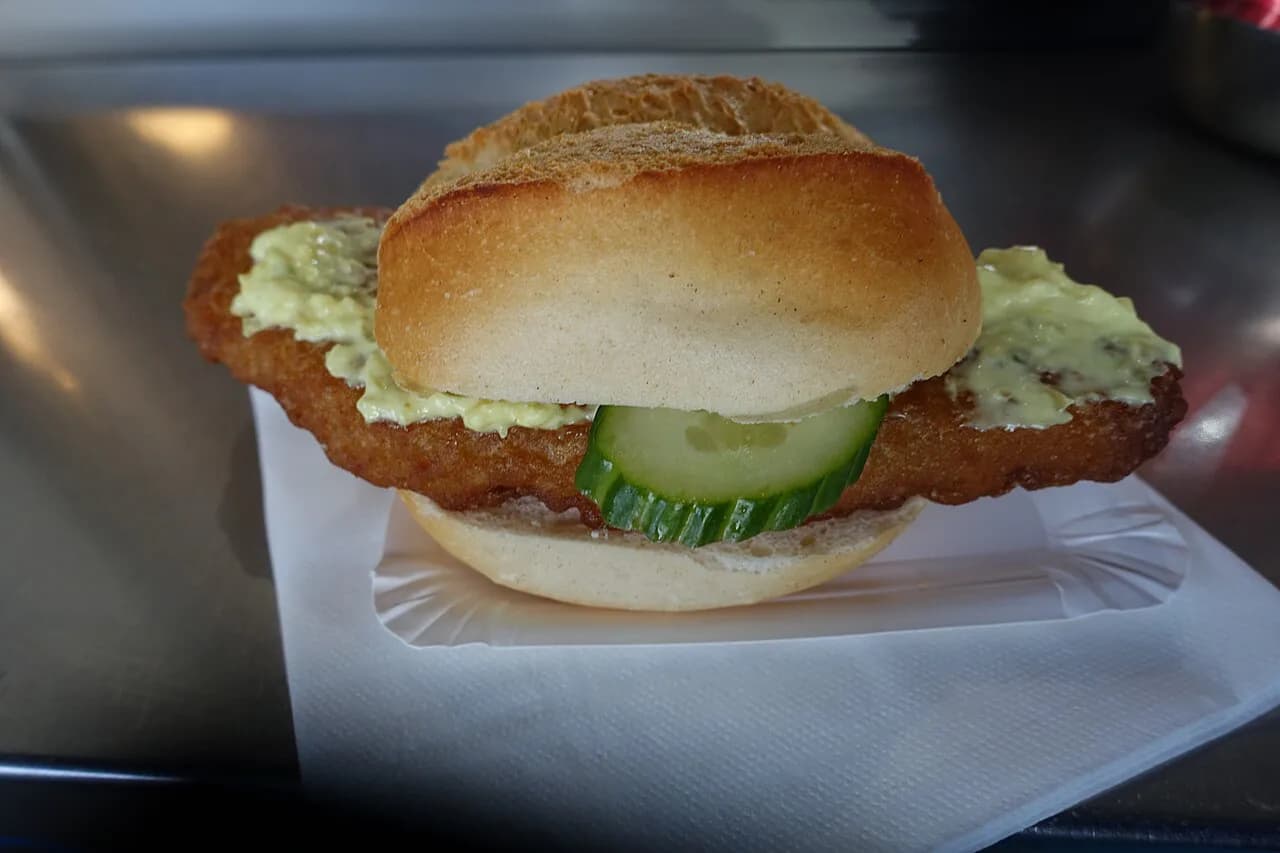
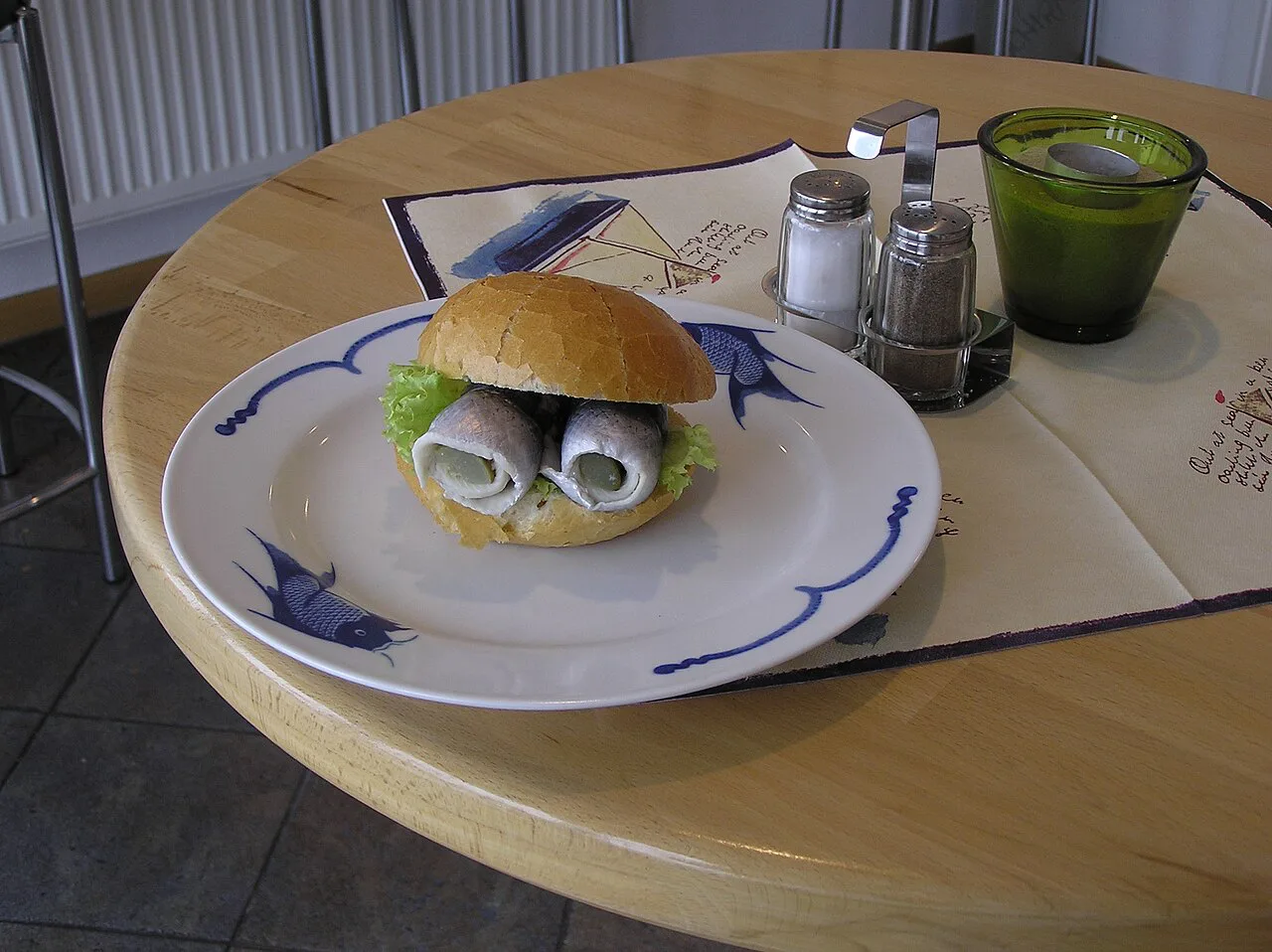
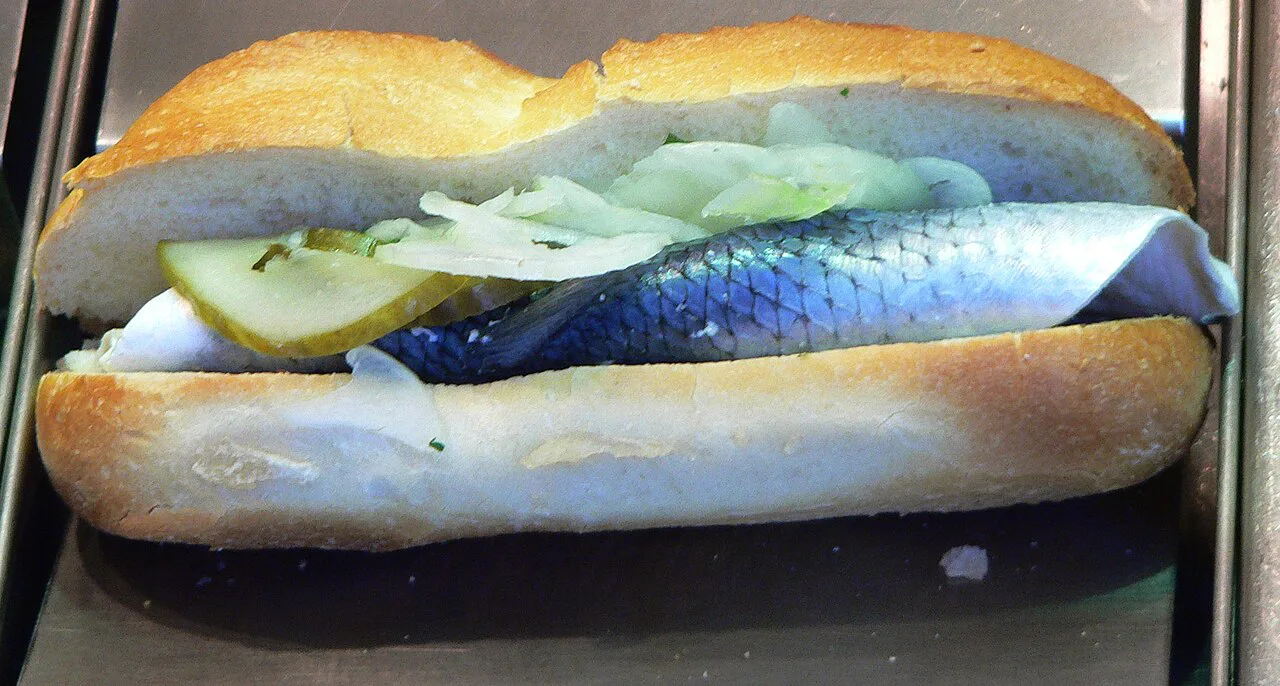
On the coast, fish is treated simply: fried, smoked, or pickled, and served without elaborate sauce so the fish itself carries the plate. Rollmops, the rolled pickled herring you meet alongside Labskaus, is the most common cold preparation and a good entry point if you are unsure about herring.
Herring appears in several guises across the north, from pickled to smoked, and the menu will usually name the preparation rather than just the fish. If you want a broader picture of how freshwater and sea fish are cooked around the country, from trout to carp, the fish guide covers the styles and the regional habits behind them.
A plain fried fish with potatoes is the safest order if you are wary of pickled flavors, and it is also the plate that best shows what the northern kitchen does well. Ask for the fish of the day rather than committing to a fixed dish before you know what came in.
Bread and rolls: rye and sourdough country
German bread is a serious subject, and the northern table runs on rye and sourdough loaves rather than the soft white rolls you might associate with breakfast elsewhere. Bread often arrives as an accompaniment to soup or cold plates, so it is worth paying attention to rather than treating it as filler.
A Butterbrezel — a pretzel sliced, buttered, and put back together — is a standard snack, and a Käsebrezel is the same idea covered in cheese. These are bakery-counter items rather than restaurant dishes, so buy one mid-morning and you will understand the local snack rhythm quickly.
Bread also sets up the meal that follows: the northern habit of a cold plate with good bread and something smoked or pickled is closer to the region's everyday eating than a heavy cooked lunch.
Käsekuchen, Franzbrötchen, and the northern sweet tooth
Käsekuchen, a baked quark cheesecake, is the safe bet in any café, and it is the cake most likely to be made well wherever you stop. In Hamburg, look for a Franzbrötchen, a caramelized cinnamon pastry that sits somewhere between a croissant and a cinnamon roll.
Cake and coffee in the afternoon is a real institution rather than a tourist ritual, so plan an hour for it instead of squeezing it in. Order at the counter if the café is busy and take a seat afterwards; that is the normal pattern in most bakeries and Konditoreien.
How a northern meal is ordered and paced
Northern menus usually run soup, a main plate, and sides rather than a long sequence of small courses. A typical order is one soup or a cold starter, one main, and one side, which is enough food for most visitors.
Sides come separately and are often potato-based; if a dish already reads as potato-heavy, adding another potato side is unnecessary. Ask whether the main includes sides before you order extras, since a Labskaus or a kale plate is usually complete on its own.
A smaller appetite can order a soup and a starter, or a single main to share, and most kitchens will not blink at it. Asking for the bill when you are ready is normal; splitting it across cards can be awkward in smaller places, so carry some cash as a backup.
What to drink alongside
Beer is the default drink with northern food, and the local styles are built for the table: crisp, moderately bitter lagers that cut through smoked sausage and fried fish. Order a small glass if you are unsure, and try the local brewery's pilsner before moving on to anything darker.
If you want the full picture of how the country's beer styles fit with its food, the German regional cuisine overview walks through the main families. For a specific northern stop, the Rhineland's Cologne food tradition, with dishes like Himmel un Ääd (apple and potato mash with blood sausage), shows how beer and plate pair outside the coast.
Water and coffee are always available, and a coffee after the meal is standard if you are not continuing to beer. Drink at a pace you would at home; the point of the table is the food and the company, not the volume.
Dishes visitors most often misunderstand
The most common mix-up is treating Weißwurst as a national dish rather than a Bavarian one, and expecting the north to serve it as a matter of course. The fix is simple: read the region on the menu before you order.
Currywurst, a bratwurst with curry sauce and curry powder, is a Berlin street-food staple rather than a coastal dish; it has been part of German eating since the 1950s, and it is attributed to the Berliner Herta Heuwer in 1949. Treat it as a city snack in Berlin, not as northern home cooking.
Spreewald gherkins, the pickled cucumbers from the Spreewald region near Berlin, carry an EU-protected designation, so the name on a jar means something specific. If a menu lists them, it is telling you where the pickle came from; if it just says gherkin, it isn't making that claim.
Which northern dish should you order first?
Order Labskaus first if you want to understand the northern pantry in one plate, because it puts corned beef, potato, herring, gherkin, and beetroot together in a way nowhere else in Germany quite does. If you are in Bremen in the colder months, Grünkohl with pinkel is the more local choice.
Pair whichever you choose with a plain fried fish if the coast is close, and finish with a slice of Käsekuchen and a coffee. One good northern meal will teach you more about the region than a week of beer-hall menus.
Explore more Germany guides
Sources
Notes for your next German food trip
Optional updates to our guides.
You might also like



Continue reading
More guides you'll find useful





