
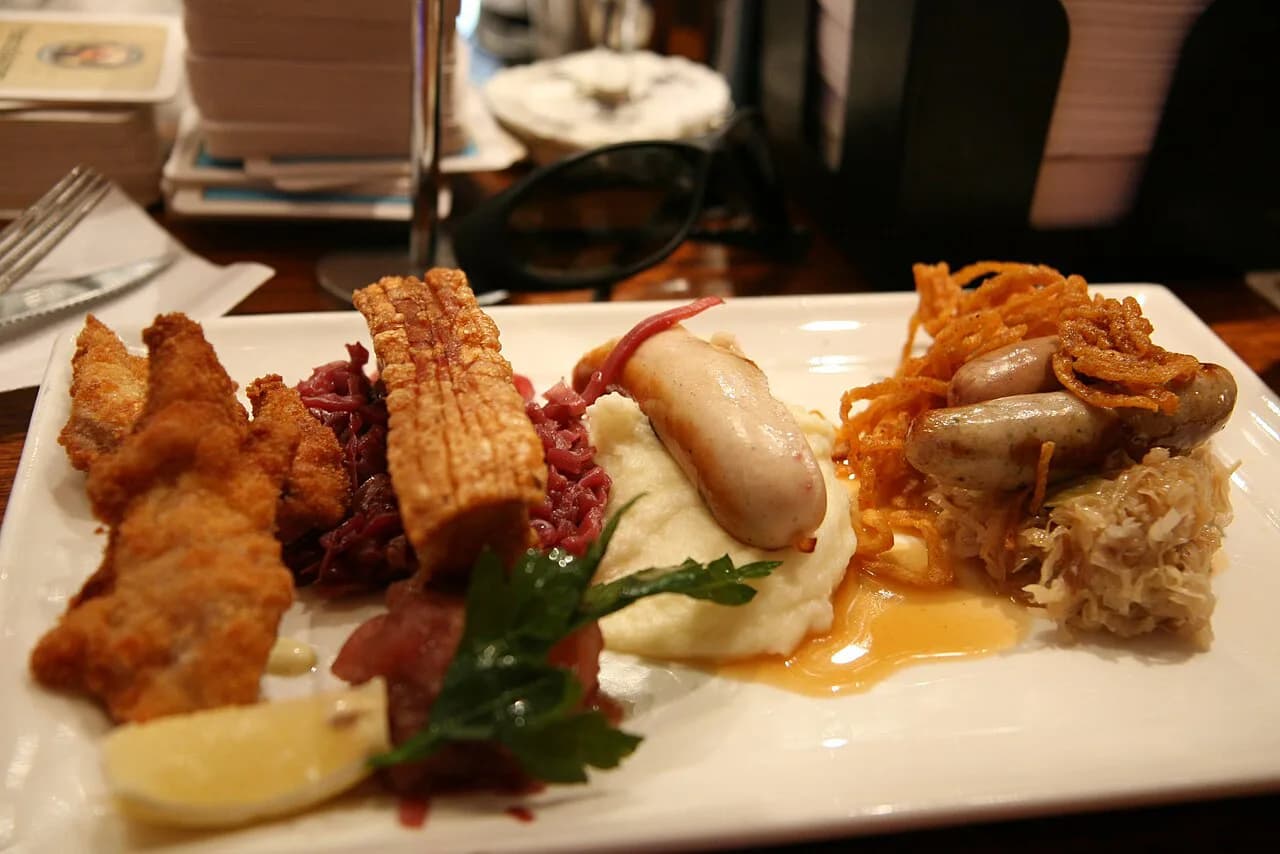
Bavarian Food: What to Eat, What It Is, and How to Order
Bavarian food explained for travelers: Weißwurst, Käsespätzle, Schweinshaxe, Brezel and more, with the beer to drink alongside and how to order and pay.
On this page
Bavarian food is hearty Alpine and beer-hall cooking: pork in several forms, egg noodles and dumplings, pretzels, and pastries with coffee. It shares sausage and bread traditions with the rest of German regional cuisine, but leans harder on veal sausage, sweet mustard and lager than the north does. This guide covers the dishes to order first, the snacks that fill the gaps between meals, the beer to drink with them, named Munich places where a few of these dishes are the point, and how ordering and paying work.
Plan the day around meal size rather than around a list. A Leberkäsesemmel or a Brezel is a between-meals stop, Schweinshaxe or Käsespätzle is a sit-down meal, and a Schmalznudel with coffee sits somewhere in the morning. Knowing which is which keeps you from ordering a plate of pork knuckle at 11 a.m. and then having no appetite for dinner.
What Bavarian Food Is and How It Differs from the North
Bavaria's cooking is shaped by the Alps and by centuries of beer brewing, so the pantry runs to pork, beef, flour, eggs, milk and cabbage rather than to the fish and root vegetables that define northern German food. Veal sausage eaten before noon, sweet mustard, and a wheat beer at the same table are habits you rarely meet in Hamburg or Berlin. For the broader map of how Germany eats region by region, the guide to German regional cuisine is the place to start.
The nearest neighbor in style is Swabian food to the west, which shares the love of egg noodles and dumplings but dresses them differently and puts more emphasis on lentils and spaetzle in broth. If you cross into Franconia around Nuremberg, the sausages get smaller and the beer gets smokier. Keeping those three in mind is enough to read most menus in southern Germany.
The Dishes to Order First
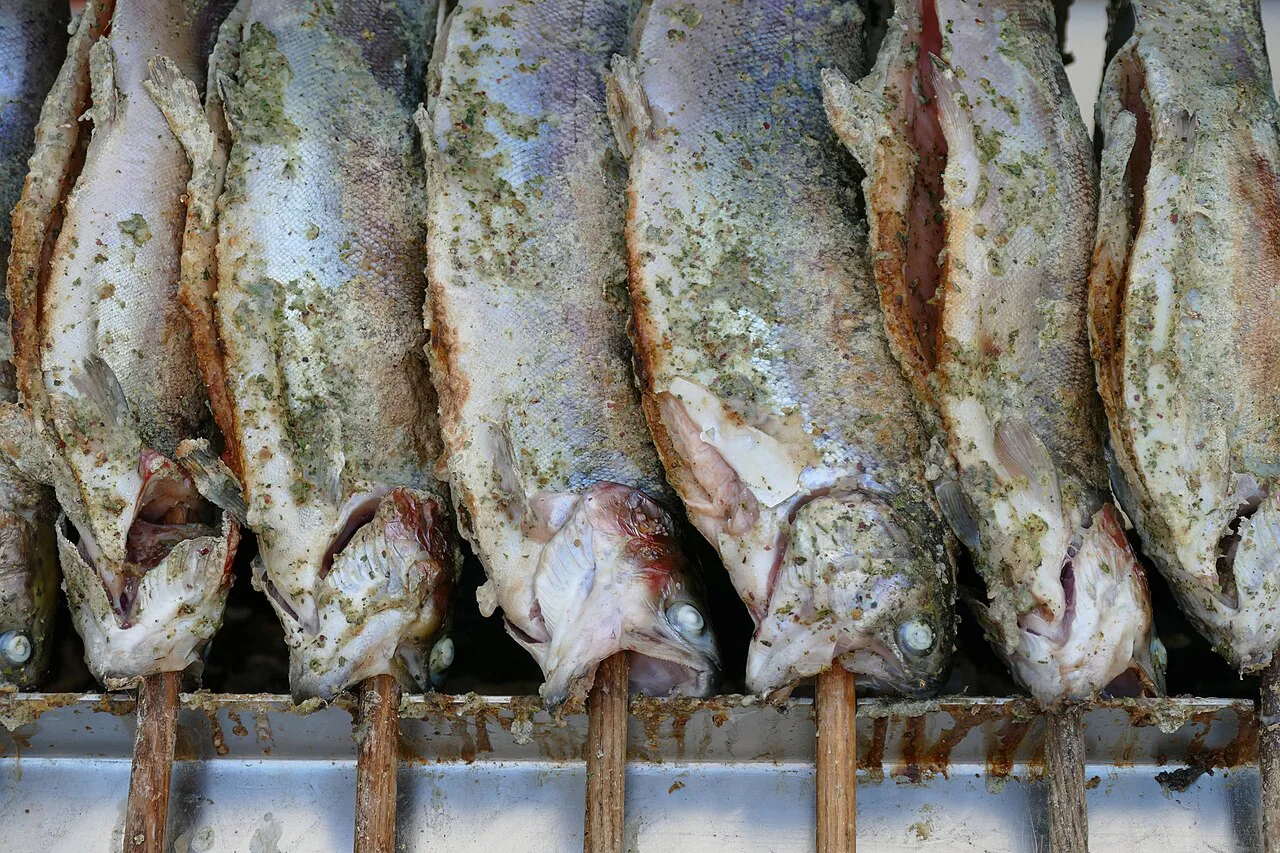
Weißwurst is a pale veal sausage simmered rather than fried, traditionally eaten in the morning with sweet mustard, a pretzel and a wheat beer; you peel off the skin or suck the meat out. Leberkäsesemmel is a thick slice of finely ground meat loaf in a crusty roll, the closest thing Bavaria has to a fast-food sandwich and the right choice when you want to eat standing up. Schweinshaxe is roast pork knuckle with crackling skin, a full meal that one person rarely finishes alone.
What are some traditional foods from Bavaria? The core set is Weißwurst (veal sausage), Leberkäsesemmel (meat-loaf roll), Schweinshaxe (roast pork knuckle), Käsespätzle (cheese egg noodles), Kartoffelsuppe (potato soup), Brezel (pretzel) and Apfelstrudel (apple strudel), with Schmalznudel as the fried-dough pastry of choice.
What is Bavaria most famous for? For beer, above all, and for the food that goes with it: pork knuckle, veal sausage with sweet mustard, pretzels and cheese noodles. Beer halls and beer gardens are the settings where most visitors meet this food.
Are Bavarians different than Germans? Bavaria is a German state with its own strong regional identity, and the difference shows on the plate: veal sausage, sweet mustard and wheat beer are everyday habits here in a way they are not in the north. The food traditions also sit closer to Alpine Austria than to the Baltic coast.
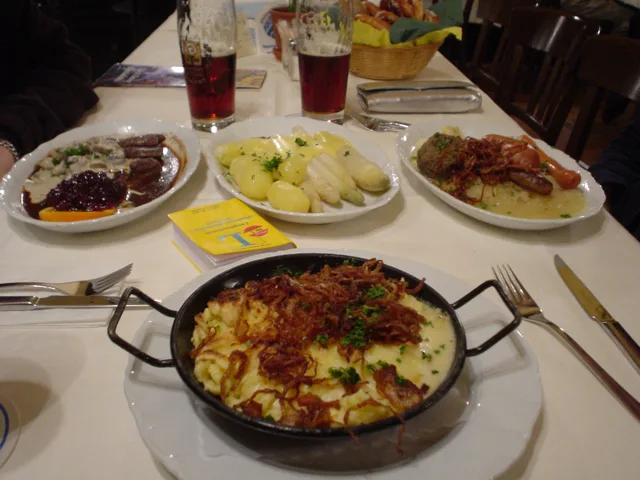
Käsespätzle, listed on many menus as Allgäuer Käsespätzle, is soft egg noodles layered with mountain cheese and topped with fried onions, Bavaria's answer to macaroni and cheese. Kartoffelsuppe is a creamy potato soup with bacon and spring onion, filling enough to serve as a light lunch with bread.
Brezel, Brotzeit and the Snack Side of a Bavarian Day
A Brezel is the chewy, dark-crusted lye pretzel that turns up at breakfast, in beer halls and at bakery counters, and it is the cheapest way to eat well in Bavaria. The related habit is Brotzeit, a cold spread of bread, cheese, cold cuts, radishes and butter eaten between meals or as a light supper. Ordering a Brotzeit plate in a beer hall is a sensible move if you want to try several things without committing to a hot main.
Bakeries are the practical backbone of this: a roll with cheese or a slice of cold roast in the morning, a pretzel mid-afternoon. If you are heading further afield later in the trip, northern German food covers the fish, kale and rye side of the country, which is a different set of snacks entirely.
Sweet Bavaria: Schmalznudel, Apfelstrudel and the Konditorei Counter
A Schmalznudel is a Bavarian fried dough pastry, thin rather than bready, closer to a funnel cake than to a filled doughnut, and it comes sugared and best eaten warm with coffee. Cafe Frischhut, near the Viktualienmarkt in Munich, makes them fresh and has the pastry kitchen visible at the entrance; the café is small and homey, with a terrace on sunny days, and it does not accept cards, so bring cash. Apfelstrudel is the other reliable order, a thin pastry roll filled with spiced apple, served warm.
A Konditorei is a cake shop with a sit-down counter, and its display case is the place to point at what looks good rather than to work through a menu. Expect tortes, fruit cakes and cream slices rather than savory food.
What to Drink with Bavarian Food
Helles is the pale, clean lager that most beer halls pour by default, and it is the right match for roast pork, sausage and cheese noodles because it cuts through the fat. Weißbier is a cloudy wheat beer with a fruity yeast character, traditionally paired with Weißwurst in the morning. Order a half-liter unless you know you want a full one; the beer is strong enough that a second liter changes the shape of the afternoon.
Beer halls serve the same food as restaurants, usually at long shared tables with table service, and the pace is unhurried. Outside Bavaria, Cologne food comes with its own small glasses of Kölsch, so the drinking rhythm changes when you travel west.
Munich Places Where These Dishes Are the Point
Cafe Frischhut is the Schmalznudel stop, close to the Viktualienmarkt and easy to fold into a morning of market browsing. At Haxnbauer, a short walk from Marienplatz inside the Scholastikahaus, the orders to know are the Kartoffelsuppe and the Allgäuer Käsespätzle, and the room is done up in old-Bavaria style with waiters in black and white. Both are single-dish destinations rather than places to work through an entire menu.
Pick one of these per day rather than both, because each is a full stop with a sit-down rhythm. For a different regional day, Black Forest food covers the southwest, where ham and cherry cake replace pork knuckle and pretzels.
How Ordering Works in a Bavarian Restaurant or Beer Hall
In a restaurant or beer hall you sit down and a waiter comes to you; there is no counter ordering unless you are at a bakery or a fast-food stand. Menus are usually in German with some English, and the sections split into soups, cold plates, roast meats and noodles, so read the Vorspeisen and kalte Platten first if you want a light meal. Ask for the bill rather than waiting for it, and say separately if you want to pay by card.
Smaller cafés and stands work differently. Cafe Frischhut does not take cards, so carry euros for coffee and pastry there. Beer halls and sit-down restaurants generally take cards.
What a Simple Bavarian Meal Costs
Prices vary by city and by how close you are to the main square, so use documented examples as a scale rather than a quote. A Munich food guide recorded a Kartoffelsuppe at Haxnbauer at €7.50 (about $8) and a Schmalznudel with two coffees at Cafe Frischhut at €12.10 (about $12.93), both noted on that trip rather than as current menu prices. Treat those as the order of magnitude for a soup or a pastry-and-coffee stop.
A sit-down main of Schweinshaxe or Käsespätzle costs more than a soup, and a beer hall dinner for two with beers lands well above a bakery lunch. If you want to keep a day cheap, eat a bakery breakfast, one sit-down meal, and a pretzel in the evening.
Touristy vs Local Around Marienplatz
Restaurants within a few minutes of Marienplatz, including Haxnbauer, are convenient and set up for visitors, which is what you want on a first day or in bad weather. The trade-off is that you are eating among other tourists and paying for the address. A Gasthaus a short walk into a residential neighborhood usually brings a shorter menu, more locals and often better value, but less English and possibly a Ruhetag, the restaurant's weekly rest day.
A workable split is one convenient meal near the center and one neighborhood meal, so you get the beer-hall room you came for and a sense of how the city eats on a normal evening. For a Franconian counterpoint within Bavaria, Franconian food is a short train ride from Munich and a different plate entirely.
Bavarian Food by Season
Bavarian menus shift with the calendar: spring brings asparagus, summer puts beer gardens and cold plates at the front, and autumn and winter turn to heartier roast meats and soups.
Ask what is seasonal rather than ordering the same dish year-round, and in spring look for the Spargel (asparagus) menu, which restaurants advertise heavily for a few weeks. Beer gardens are a summer setting for the same food you find indoors in January.
Ordering Mistakes Visitors Make
The most common slip is treating Weißwurst as an evening dish; it is a morning food, and ordering it at dinner marks you as a visitor in a harmless way. The second is eating the skin of the Weißwurst, which is meant to be removed. The third is waiting for a bill that will not come until you ask.
The fourth is assuming one pretzel equals one portion; they are sold per piece and are bigger than they look. The fifth is drinking a liter of beer on an empty stomach before the food arrives. Order the food first, then the beer, and the afternoon stays usable.
Which Bavarian Dishes to Order on Your First Day
Start with a Weißwurst morning if you want the signature Bavarian experience, or a Leberkäsesemmel if you want to keep moving. Put one sit-down meal of Schweinshaxe or Käsespätzle in the middle of the day, fill the gaps with a Brezel and a Schmalznudel, and drink helles with the pork and Weißbier with the sausage.
If you only have one day in Munich, use Cafe Frischhut for the morning pastry and Haxnbauer for the soup or the Käsespätzle, and let the rest of the day be bakery stops. The menu patterns, ordering rhythm and cash habit carry across Bavaria, so a second city needs no new learning curve.
Explore more Germany guides
Frequently Asked Questions
What are some traditional foods from Bavaria?
The core set is Weißwurst (veal sausage), Leberkäsesemmel (meat-loaf roll), Schweinshaxe (roast pork knuckle), Käsespätzle (cheese egg noodles), Kartoffelsuppe (potato soup), Brezel (pretzel) and Apfelstrudel (apple strudel), with Schmalznudel as the fried-dough pastry of choice.
What is Bavaria most famous for?
For beer, above all, and for the food that goes with it: pork knuckle, veal sausage with sweet mustard, pretzels and cheese noodles. Beer halls and beer gardens are the settings where most visitors meet this food.
Are Bavarians different than Germans?
Bavaria is a German state with its own strong regional identity, and the difference shows on the plate: veal sausage, sweet mustard and wheat beer are everyday habits here in a way they are not in the north. The food traditions also sit closer to Alpine Austria than to the Baltic coast.
Sources
Notes for your next German food trip
Optional updates to our guides.
You might also like



Continue reading
More guides you'll find useful





