Biergarten in Germany: How to Choose and What to Order
A Biergarten is a shaded German beer garden where you order at a self-service counter, often bring your own food, and share long tables under the trees.
On this page
A Biergarten is a German beer garden: a shaded outdoor space where you sit at long shared tables, buy beer from a counter or server, and often bring your own food. The formula grew out of brewery cellars, where underground storage was topped with gravel and rows of chestnut trees were planted for extra shade, with tables and benches following under the trees. This guide covers how the self-service system works, which dishes to order with a Maß, and how to tell a garden from a beer hall before you sit down.
What a Biergarten Is: Beer, Shade, and Long Tables
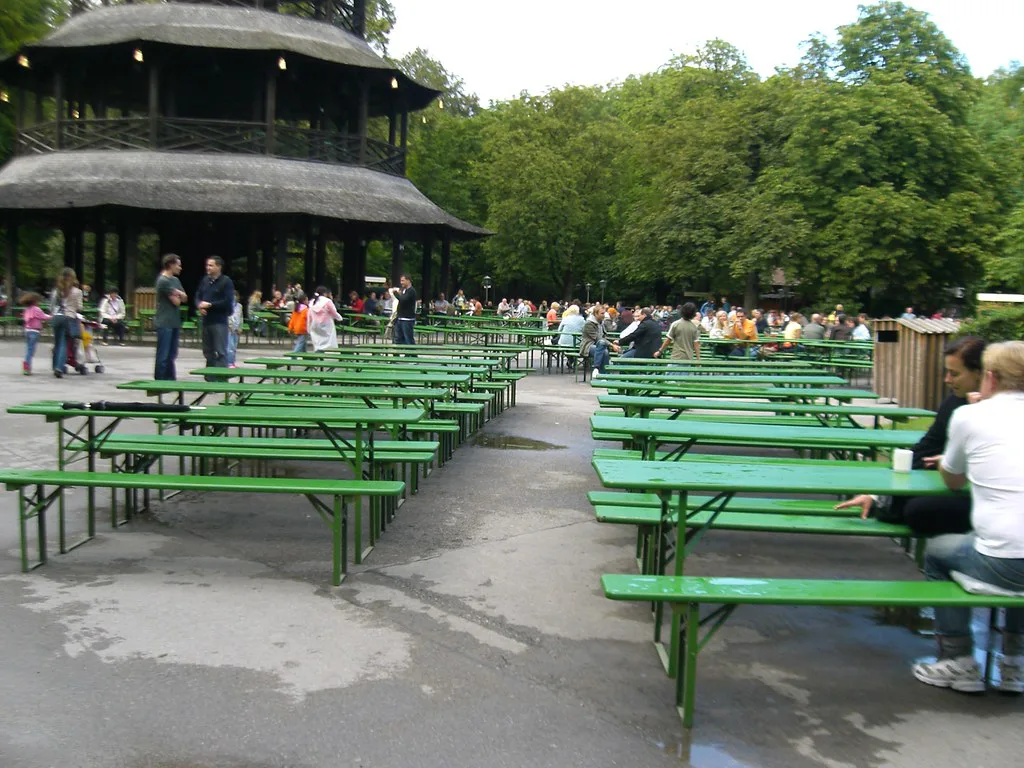
The word literally means beer garden, and the garden half matters. Old brewery cellars were covered with gravel and rows of chestnut trees were planted to keep the stored beer cool and shaded, and simple benches and tables followed under that shade. Today the essential furniture is still a tree canopy, a long table, and a steady supply of cold beer. For the low-alcohol side of the menu, see What Is a Radler? Germany's Beer-and-Lemon Soda Drink.
Two things make a garden different from a restaurant. You usually serve yourself from a food and beer counter rather than ordering a full meal at a table, and many gardens let you carry in your own food, a right that dates to a petition by small breweries and food vendors against the gardens' own kitchens. Treat a Biergarten as a place to sit for an hour or two, not a quick stop.
Why Beer Gardens Exist: Cold-Cellared Lager and Chestnut Trees
Summer brewing was banned in 16th-century Bavaria by Duke Albrecht V, between the feast of St. George on April 23 and St. Michael's Day on September 29, because warm weather spoiled the beer, so production shifted to the cooler months. The beer then needed months of cold storage, which is where the German word lagern, to store, gives us lager. Breweries dug cellars, planted trees for extra shade, and eventually set out tables on the gravel above.
Why Beer Gardens Exist: Cold-Cellared Lager and Chestnut Trees. Summer brewing was banned in 16th-century Bavaria by Duke Albrecht V, between the feast of St.
Self-Service, Deposit Glasses, and the Counter System. Expect a split between getting beer and getting food.
Bringing Your Own Food and the Pretzel, Radish, and Cheese Plate. The classic garden snack plate is built for sharing and needs no translation beyond a few words.
The food fight came later. When gardens began serving meals, smaller breweries and taverns asked King Maximilian I to stop them, and the compromise let guests bring their own food instead. That is why walking into a garden with a bag of bread and cheese is normal rather than rude.
Self-Service, Deposit Glasses, and the Counter System
Expect a split between getting beer and getting food. At many gardens you order beer and plates at a counter rather than from a server at your table, and the layout differs from one garden to the next. Watch what the regulars near you are doing before you queue.
Glasses and mugs often carry a deposit, called Pfand, which you get back when you return them to the collection point. Keep your receipt if you are handed one, and never leave a Maß on the table expecting it to be cleared for free.
If you want a smaller pour than the standard liter, ask for a halbe Maß or check what sizes the counter lists. The liter is the classic order, but nobody expects you to finish one quickly. Drink at the pace of the table, and switch to water or a Radler if you want to keep the afternoon going.
Bringing Your Own Food and the Pretzel, Radish, and Cheese Plate
The classic garden snack plate is built for sharing and needs no translation beyond a few words. Radi is a spiral-cut radish, Obatzda is a soft cheese spread seasoned with paprika and onion, Brezel is the chewy lye pretzel, and a plate of all three plus a slice of rye bread is the standard opener with a first beer. Pick up the bread from a bakery on the way in if the garden allows outside food.
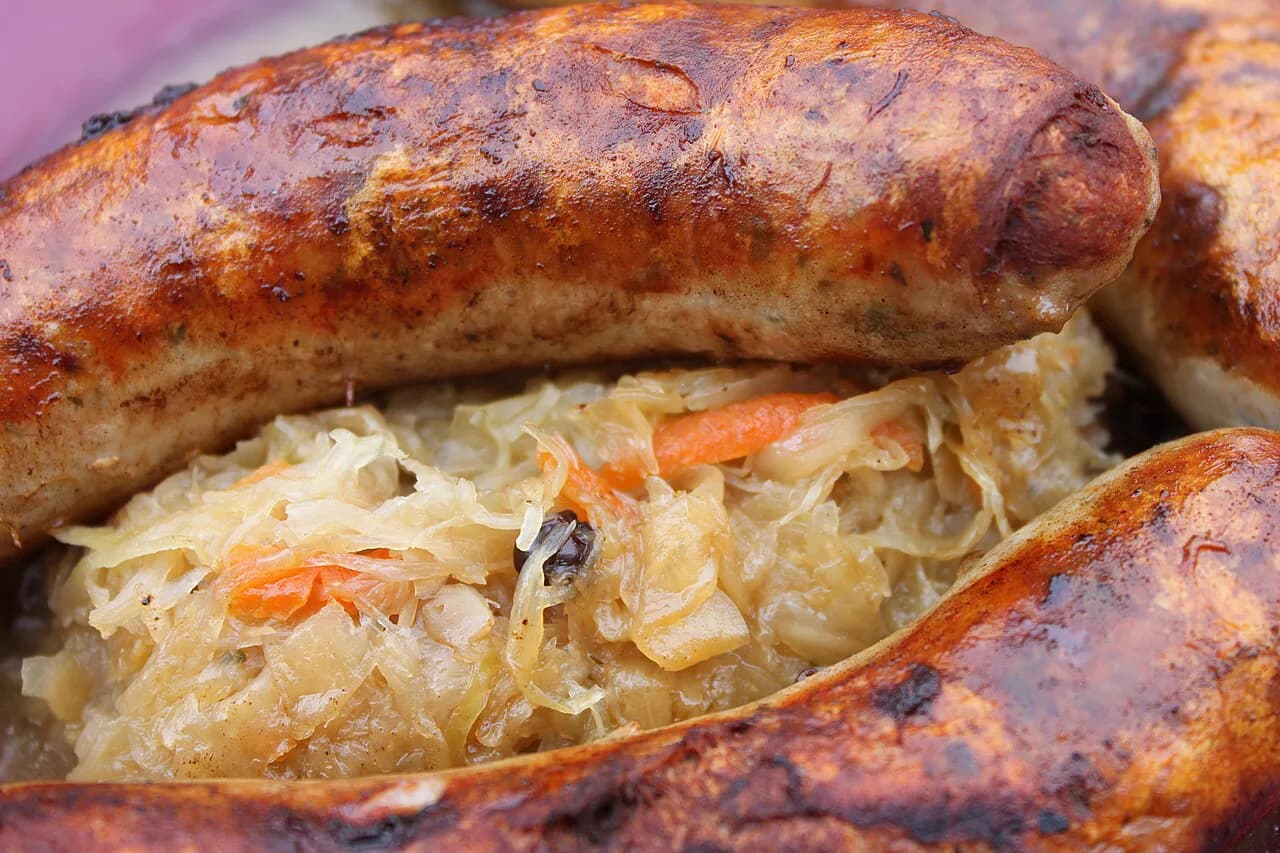
Bigger appetites move on to halbes Hendl, a half grilled chicken, Schweinshaxe, pork knuckle with crackling, or Bratkartoffeln, pan-fried potatoes with bacon. Steckerlfisch is a whole fish grilled on a stick and eaten with your hands, and Schupfnudel are finger-shaped potato dumplings often served with sauerkraut. Order one or two plates for the table and add more as people get hungry.
What to Order: Beer by the Maß and the Bavarian Classics
The Maß is a one-liter glass or stoneware mug, and it is the default unit at a Bavarian garden. Helles, a pale, softly bitter lager, is the easiest match for pretzels and cheese, while a darker Dunkel suits grilled meat and pork. Ask what is poured on tap locally before you order, since many gardens serve regional brewery beers rather than a Munich brand. Check current prices and opening dates with the garden before you set out, as these vary through the year.
If you are driving or pacing yourself, the non alcoholic beer in Germany is genuinely drinkable and sold at most counters. A Radler, beer mixed with lemon soda, is the other low-alcohol route and is served in smaller glasses. For a sober option, ask for Apfelschorle, apple juice with sparkling water.
The stoneware mug is what most visitors picture, and a thick stoneware stein holds the cold of the beer. Whether you will be handed one depends on the brewery, so take the glass or stein the counter gives you rather than requesting a specific vessel.
Inside or Outside: Weather, Shade, and Finding a Seat
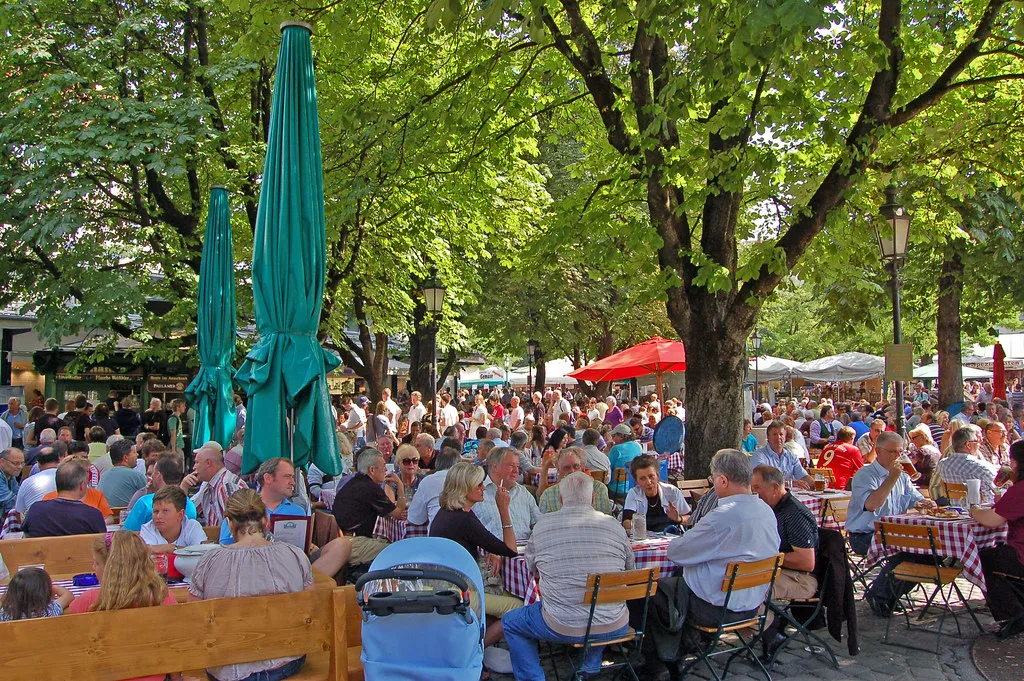
Seating is first come, first served in most gardens, and you may end up sharing a bench with strangers, which is the point rather than an inconvenience. Scan the far edges near the trees for open spots before hovering by the entrance, and remember that a half-empty bench usually has room if you ask.
When rain rolls in, gardens with an indoor room or covered arcade keep serving while open-air benches empty fast. Cloudy afternoons are often the easiest time to find shade without a wait, and a light jacket matters more than an umbrella once the sun drops behind the trees.
Beer Gardens with Families and Groups: Tables, Timing, and Noise
Families are a normal sight at German gardens, and children are usually welcome at the table with a juice or a pretzel. Long tables make groups easy, but arriving with eight people at peak lunch on a sunny weekend means splitting up or waiting. Late afternoon tends to be calmer for a family meal before the after-work crowd builds.
Noise rises with the crowd, and the peak hours are loud rather than conversational. If you want a quieter table, aim for a weekday lunch or sit away from the counter and the stage area. Drinking is part of the setting, not a competition, so order at the pace that suits your table and stop when you have had enough.
Beer Gardens Beyond Bavaria: Kölsch in Cologne and Regional Beer
Gardens outside Bavaria adapted to the local pour. In Cologne, Kölsch, the pale top-fermented beer served in small glasses, is the beer you will see at garden tables, and the oldest garden in the city is Hellers Volksgarten, dating to 1891 and set on a small lake in the park. Expect a very different rhythm from a Munich Maß: small glasses refilled often rather than one huge mug.
In the Rhineland and North Rhine-Westphalia generally, ask what the local brewery pours before ordering, because the regional style sets the tone of the garden. The Bräustüberl Weihenstephan, on the Weihenstephaner Berg beside the Weihenstephan brewery near Freising, traces its brewery's founding to a monastery brewing license granted in 1040 and serves beer with hearty plates.
What a Biergarten Is Not: Beer Halls, Brewery Taps, and Restaurant Service
A beer hall is indoors, often vaulted and loud, with table service and a full menu, which suits a cold evening or a proper sit-down meal. A brewery tap is usually smaller and attached to the brewery itself, closer to a pub than a garden. A garden is outdoors, self-service, and built around long, unhurried afternoons. On sizes and ordering, see Mass Beer in Germany.
Restaurant service is the other difference to keep straight. At a garden you may carry your own tray, share a table, and bring in bread or a pretzel from outside, while at a restaurant you order from a menu and pay at the end. If you want a full dinner with courses served to you, pick the restaurant or the hall instead.
How Biergarten Etiquette Works: Toasting, Tipping, and Paying
Toast with eye contact and a clink of glasses, and say Prost as you do it, because looking away while clinking is considered bad luck. Wait for the others at the table to raise their glasses before your first sip, and keep the toast short rather than making a speech.
Many gardens are cash-friendly, though card acceptance is spreading, so carry some euros and small notes for the counter and the deposit return. Round up or leave a small tip when you pay, and if you are running a tab, settle it before the group leaves.
Sharing a table comes with small courtesies: ask before sitting at a bench with empty-looking spaces, keep bags off the seats, and greet the people you join with a short Grüß Gott in Bavaria or a plain Hallo elsewhere. These habits do more for your afternoon than any menu knowledge.
Which Kind of Beer Stop Fits Your Day?
Pick a Biergarten when you want shade, a cold Maß or a small Kölsch, a shared table, and the freedom to build your own plate from a pretzel, radish, and Obatzda. Pick a beer hall or restaurant when you want table service, a full meal, and a roof over your head.
Check the garden's own board or website for the day's opening before you go, since seasonal hours shift with the weather. Then sit down, order a first round at the counter, and let the afternoon run at garden speed.
Explore more Germany guides
Sources
Notes for your next German food trip
Optional updates to our guides.
You might also like



Continue reading
More guides you'll find useful