Kaiserschmarrn in Germany: What It Is and How to Order
Kaiserschmarrn is a caramelized, torn pancake served with applesauce or plum compote. Here's what it is, where it comes from and how to order it.
On this page
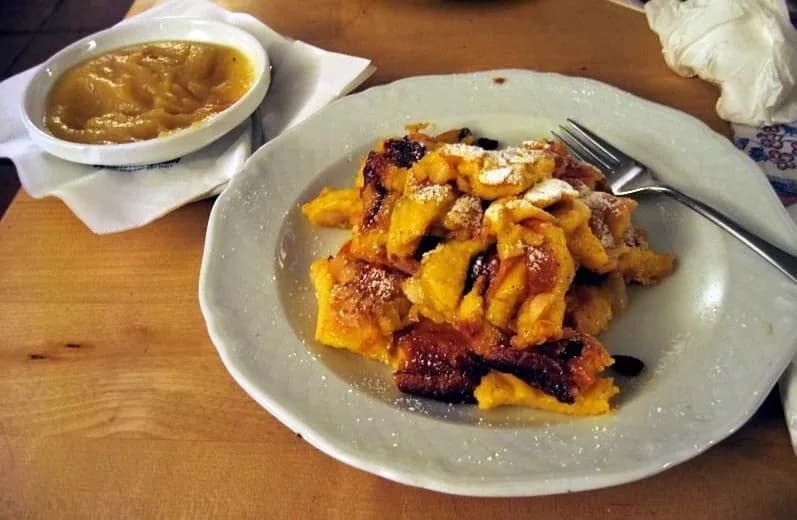
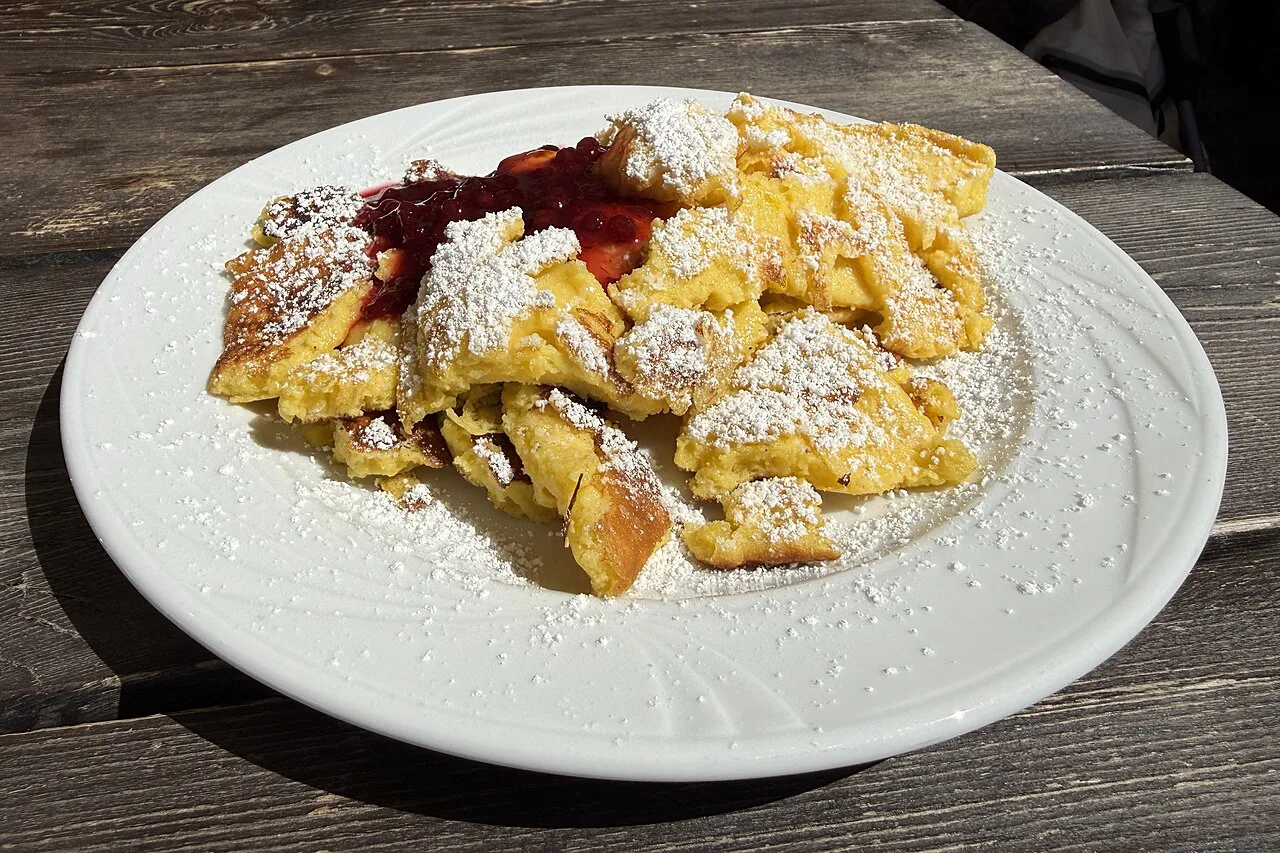
Kaiserschmarrn is a thick, airy pancake that is torn into bite-sized pieces, caramelized in butter and sugar, and dusted with powdered sugar. It is an Austrian creation that has become a standard dessert around Bavaria and the alpine parts of Germany, and it is served warm from the pan with fruit on the side. This guide covers what makes it different from a plain pancake, the story behind the name, what it tastes like and how to order it without over-facing yourself.
What Kaiserschmarrn Is: Torn, Caramelized Pancake
The batter is a simple pancake mix of flour, milk, egg yolks, butter, sugar and a pinch of salt, with stiffly beaten egg whites folded in to give it lift. There is no baking powder; the whipped whites do the raising work, which is why Kaiserschmarrn is noticeably taller and fluffier than a flat breakfast pancake.
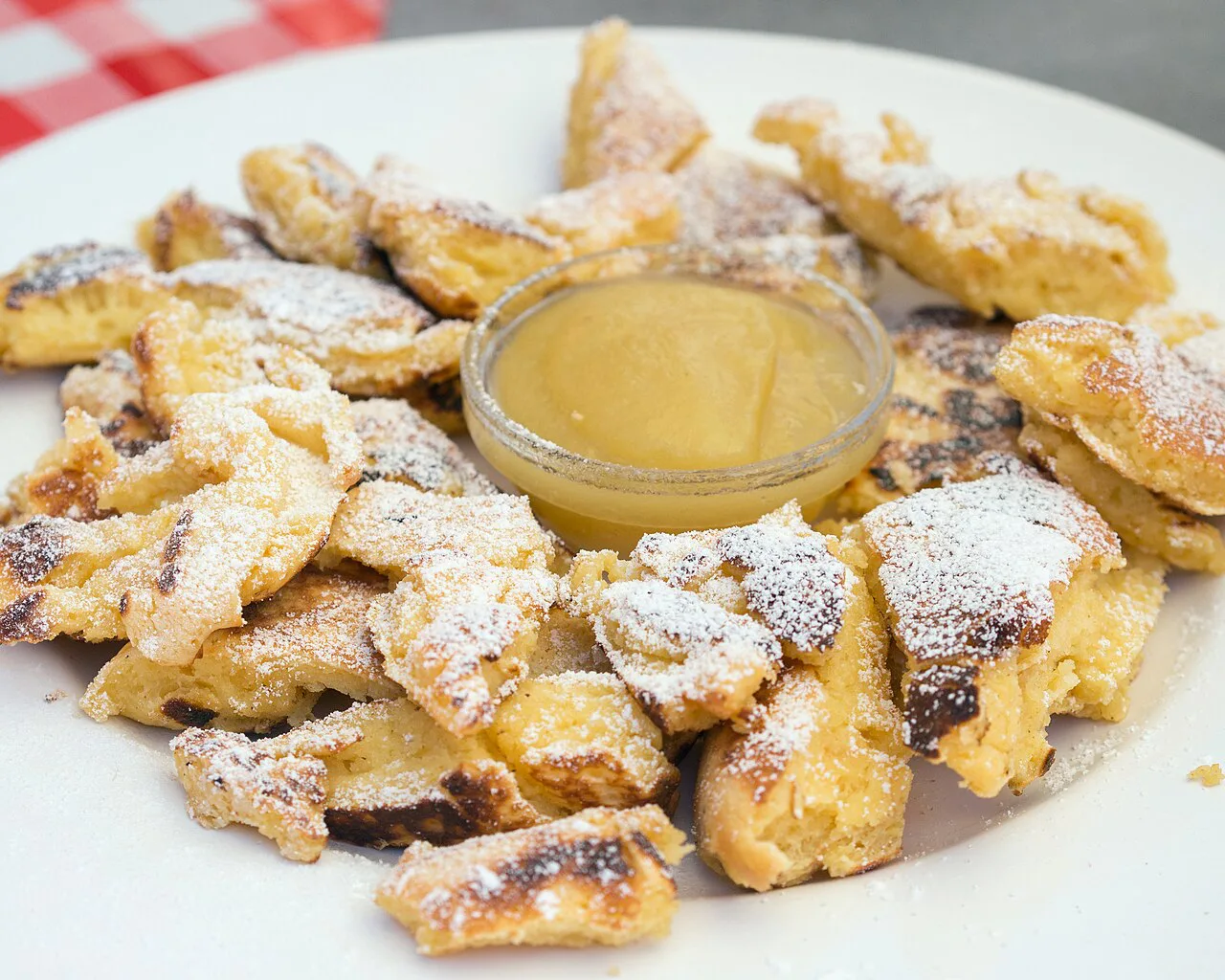
The pancake is baked in butter, then torn into irregular chunks with two spatulas or forks rather than sliced. Those chunks go back into the pan with more butter and sugar so the edges caramelize and turn golden, and the finished dish is finished with a heavy dusting of powdered sugar.
That tearing step is the whole point: a cut pancake would brown evenly, but torn pieces present many rough surfaces to the butter and sugar, so you get crisp caramelized edges against soft, custardy middles. It is also what makes the dish look like a delicious accident rather than a neat dessert.
Why It Is Called Emperor's Mess
The name is a compound of Kaiser, meaning emperor, and Schmarrn, which translates roughly as a scrambled or messy dish. English-language menus sometimes call it Emperor's Mess, scrambled pancake or shredded pancake, so the same dessert can appear under several names on one trip.
Why It Is Called Emperor's Mess. The name is a compound of Kaiser, meaning emperor, and Schmarrn, which translates roughly as a scrambled or messy dish.
Austrian or German: Where You Will See It. Kaiserschmarrn is an Austrian dish first, but it is popular throughout Bavaria and the former Austro-Hungarian regions, including northern Italy, Hungary and Slovakia.
What It Tastes Like. Expect an egg-forward, buttery flavor with a distinct caramel note from the sugar in the pan, and a texture that shifts between crisp edges and soft, almost soufflé-like interior.
The story attached to the dish credits its invention to the kitchen of Emperor Franz Joseph I of Austria, which is why it carries an imperial name despite being a homely farmhouse-style dish. Treat that as the origin story rather than documented fact; it explains the name, not the recipe.
Austrian or German: Where You Will See It
Kaiserschmarrn is an Austrian dish first, but it is popular throughout Bavaria and the former Austro-Hungarian regions, including northern Italy, Hungary and Slovakia. So it appears on menus well beyond Austria, and in Germany you will most often meet it in the south and in the alpine resorts.
If you are planning meals around traditional German food, Kaiserschmarrn fits naturally into the dessert slot after a breaded schnitzel, or as a mid-afternoon stop when you want something sweet and warm rather than a full meal.
What It Tastes Like
Expect an egg-forward, buttery flavor with a distinct caramel note from the sugar in the pan, and a texture that shifts between crisp edges and soft, almost soufflé-like interior. It is sweet but not cloying, and the powdered sugar layer on top adds a faint vanilla sweetness rather than a heavy frosting.
Many versions fold in raisins plumped in rum, which add little pockets of boozy fruitiness and a slight chew. The rum is optional in home recipes, so if you would rather avoid alcohol, ask before ordering, because the raisins are stirred in during cooking rather than served alongside.
What It Is Served With
The classic pairing is applesauce, called Apfelmus in German, whose tartness cuts through the butter and sugar. A plum compote known as Zwetschgenröster is the other traditional accompaniment, and menu listings usually name one or both.
Plum compote is darker, richer and slightly more tart than applesauce, so choose according to whether you want a light contrast or a deeper, jammy one. Some servings come with fresh berries or a scoop of vanilla ice cream instead, though these are additions rather than the classic set.
How It Is Made
The core technique is whipping the egg whites to stiff peaks and folding them gently into the yolk mixture, which traps air and gives the pancake its height. Over-whipping or stirring too hard collapses that structure, so the batter has to be treated gently right up to the moment it hits the pan.
After the pancake sets on the first side, it is flipped, then torn and caramelized with an extra knob of butter and a spoonful of sugar. The torn pieces stay in the pan for that final caramelization, which is when the rough edges pick up their color and crispness.
When to Order It and How It Is Served
In Bavaria and Austria, Kaiserschmarrn is usually served as a dessert, though it is filling enough to work as a late lunch or a brunch dish. Order it when you have appetite to spare, since the egg and butter content makes it far more substantial than its light, airy texture suggests.
Restaurant portions often arrive in the skillet it was cooked in, dusted generously with powdered sugar, with the applesauce or compote in a separate small bowl. Ask for extra plates if you are sharing, because the pan comes to the table as one dish rather than plated individual servings.
One Pan, Many Spoons: How to Share It
A home recipe for this dish serves up to four people when it is served as a dessert with applesauce, so portions can be generous. If you are eating alone, consider ordering it as your main course rather than adding it on top of a full meal.
At a table of four, one Kaiserschmarrn plus a couple of coffees makes a sensible end to a long lunch, while a table of two may want to share a single portion and add a lighter dessert on the side. If a menu quotes the dish per person, clarify before ordering whether that means a whole pan or a plate.
Order It As a Shared Dessert
Treat Kaiserschmarrn as one pan for the table: order it after a lighter main course, ask whether the raisins have been soaked in rum, and let the applesauce or plum compote do the balancing. It is a rich, eggy dessert that rewards sharing rather than a solo challenge.
Menus change with the season and the kitchen, so if you are counting on a specific version, glance at the current menu when you sit down or ask the server how it is served that day.
Explore more Germany guides
Sources
Notes for your next German food trip
Optional updates to our guides.
You might also like
Continue reading
More guides you'll find useful