
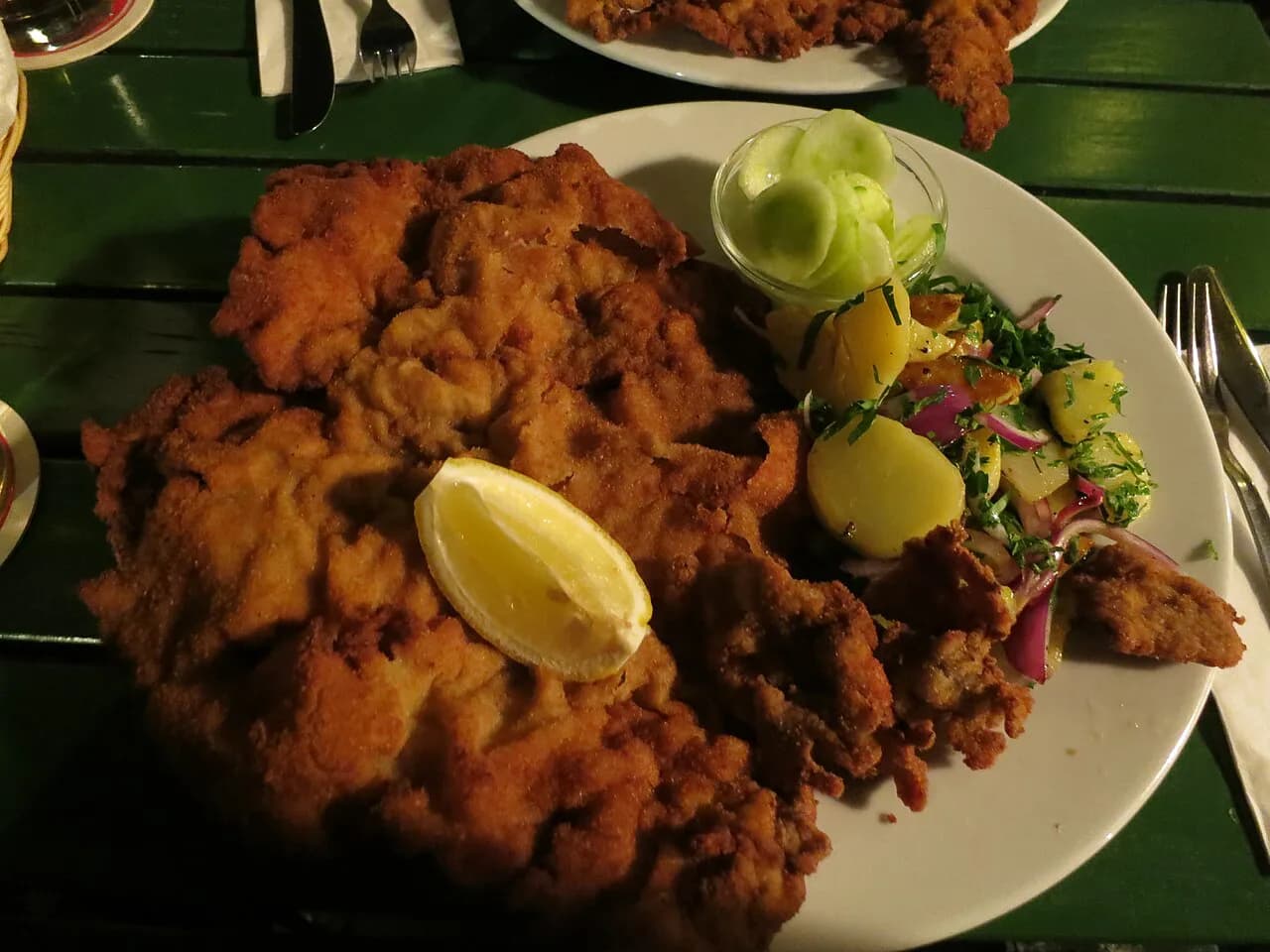
Schnitzel in Germany: Wiener, Jäger and Other Styles
Schnitzel in Germany comes breaded and fried, from veal Wiener schnitzel to pork with mushroom gravy. Here are the main styles and how to order them.
On this page
Order the Wiener schnitzel if you want the classic version: a thin veal cutlet, breaded and fried until the crust turns crisp and golden, served with a wedge of lemon and a starch on the side. If you would rather spend less and eat the cutlet most German kitchens turn out every day, pick the Schweineschnitzel, made from pork. This guide explains the styles you will meet on menus across Germany, what the sauce names mean, and what actually lands on your plate.
What schnitzel is
A schnitzel is a boneless cutlet pounded thin so it cooks evenly, then breaded and fried to a crispy golden coating. Veal, pork, chicken and turkey all turn up under the name, and the meat is usually flattened until it spreads well past the edges of the plate. The name comes from the German word for a slice, which is exactly what you get: a broad, flat piece of meat rather than a thick chop.
The classic plate is plain: the fried cutlet with lemon and parsley, plus a starch such as fries, potato salad or Spätzle, the soft German egg noodles often translated as dumplings. A small salad or green beans may appear alongside. Squeeze the lemon over the crust before you start, because the acidity cuts through the fried coating and keeps the whole plate from tasting heavy.
The story that schnitzel began as gold-coated meat in the Byzantine Empire is legend, not documented history, so treat it as a good table anecdote. What matters at the table is simpler: a thin cutlet, a crisp coat and a short list of garnishes. If you want the wider map of German cooking, from stews to cakes, the German food overview covers the dishes that share a menu with schnitzel, including Königsberger Klopse and Schwarzwälder Kirschtorte.
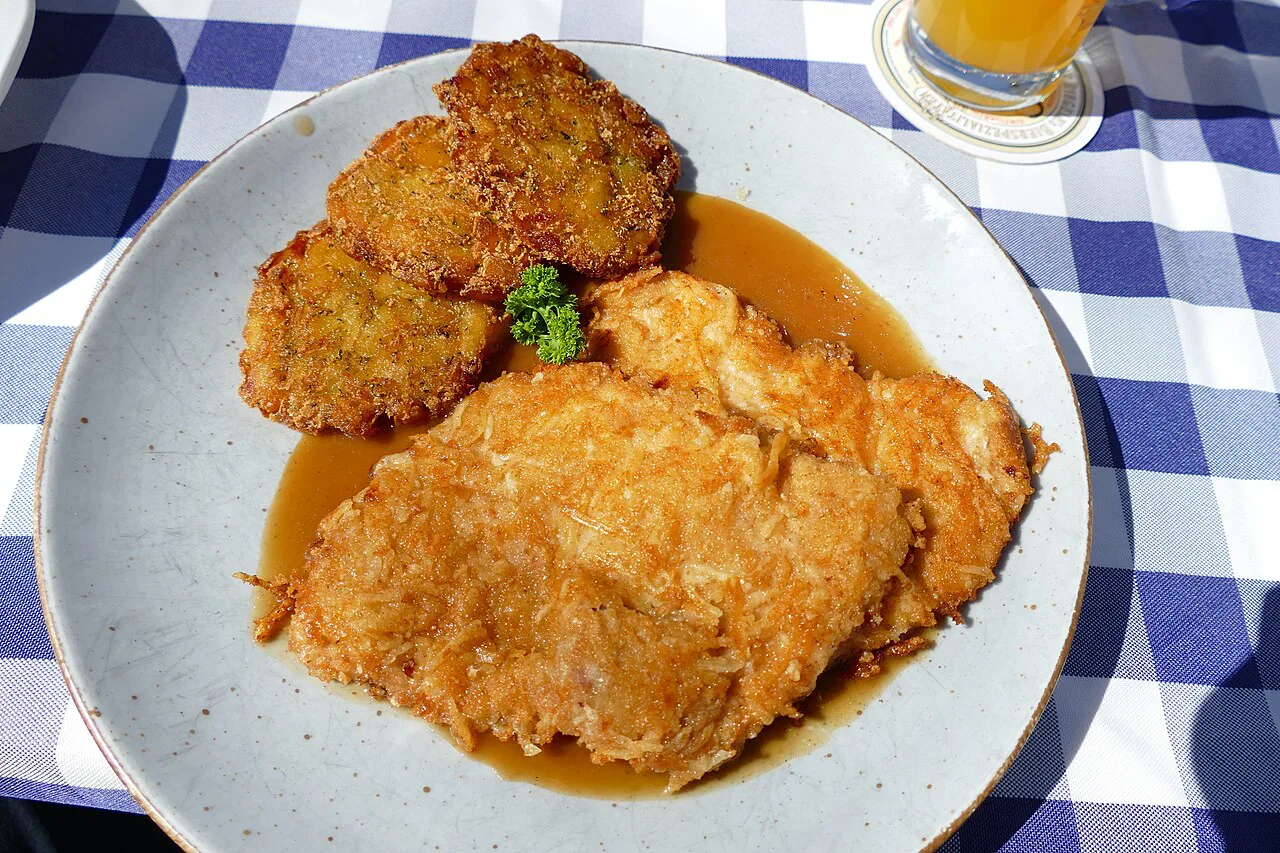
Wiener schnitzel vs. Schweineschnitzel
Wiener schnitzel is the Viennese version and is made from veal, which is why it costs more than the pork cutlet beside it on the menu. Schweineschnitzel is the pork version and is the everyday German plate, milder in flavor and usually the cheaper choice. Both arrive breaded and fried the same way, so the difference is the meat under the crust and the price line.
What is the most popular schnitzel in Germany? The pork version, Schweineschnitzel, is the everyday plate, while the veal Wiener schnitzel is the classic special-occasion order. Many menus also list Jägerschnitzel with mushroom gravy as a favorite sauce variant.
What is the difference between schnitzel and a cutlet? A cutlet is simply a thin slice of meat. A schnitzel is that cutlet pounded flatter, breaded and fried, which is what gives it the crisp golden coating and the name on German menus.
How do I know if a menu's schnitzel is veal or pork? Look for the meat word in front of -schnitzel: Kalb means veal, Schwein means pork, Pute means turkey and Hähnchen means chicken. A label reading Schnitzel Wiener Art signals the Viennese preparation made with pork rather than veal.
In Austria a Wiener schnitzel must be made from veal, and German menus follow the same logic by labeling pork versions differently. If a menu says Schnitzel Wiener Art, literally "schnitzel in the Viennese style," read it as a pork cutlet prepared the Wiener way rather than veal. That label is your signal to expect the cheaper meat even though the preparation looks identical.
This is the single most useful distinction for a visitor: veal for the classic experience, pork for the everyday one. Neither is a lesser dish, and a well-fried pork schnitzel with lemon is what most Germans order without a second thought. Decide by appetite and budget rather than by prestige.
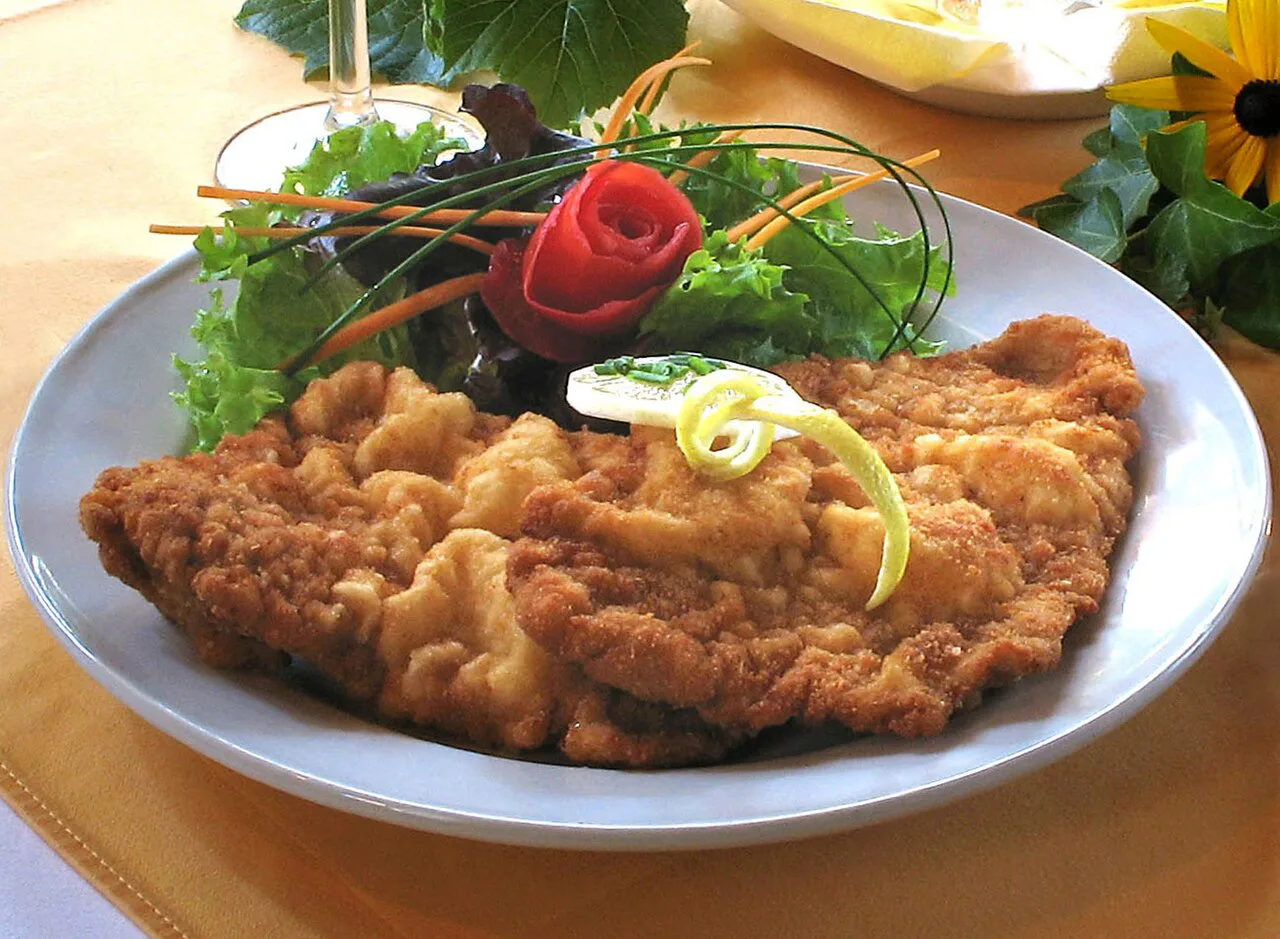
How German menus label veal and pork
Menus name the animal, so learn four words and you can read any schnitzel listing in the country. Schwein means pork, Kalb means veal, Pute means turkey and Hähnchen means chicken, and each can sit in front of -schnitzel. When the menu just says Schnitzel, assume pork unless the price tells you otherwise.
The sauce words matter just as much, and they usually appear as a prefix rather than a separate line. Jäger means hunter, Rahm means cream, Zigeuner refers to a paprika-and-tomato sauce, and Käse means the cutlet arrives under melted cheese. Read the prefix first, then the meat word, and you have the whole dish before the waiter reaches the table.
Schnitzel with sauce: Jägerschnitzel, Rahmschnitzel and Zigeunerschnitzel
Jägerschnitzel comes under a brown mushroom gravy, the hunter's style, and it is the sauce version you will see most often in German Gasthäuser. Rahmschnitzel is covered in a creamy sauce, often mushroom-based but different from the brown Jäger gravy. Both soften the crust, so order them knowing you are trading crispness for sauce.
Zigeunerschnitzel is topped with a sauce of tomatoes, bell peppers and onions, which gives the plate a sweet-sour lift and a bit of heat depending on the kitchen. Käseschnitzel arrives under melted cheese, closer to a hearty bake than a plain fry. If you want to taste the breading itself, skip the sauces and order the plain cutlet with lemon.
Portions in this style run large, and a sauced schnitzel with a starch side is a full meal rather than a light lunch. A lighter drink can sit better with a plate this size. The rest of the German table has similar weight, which is why a Schweinshaxe, the roasted pork knuckle, is the other dish to plan a slow meal around.
Turkey and chicken schnitzel on German menus
Putenschnitzel is turkey and Hähnchenschnitzel is chicken, and both are pounded, breaded and fried exactly like the pork version. They appear as the lighter option on many menus and are common in casual restaurants and canteens. The coating is the same, so expect the same crisp edge and the same lemon wedge.
Chicken schnitzel has spread well beyond Germany and Austria and is now a comfort dish in many countries, often made with chicken or turkey instead of veal and sometimes seasoned with paprika or sesame. That makes it a safe order for anyone who does not eat pork or veal but still wants the schnitzel experience. It is also the version least likely to surprise you.
What comes on the plate
The starch is the real decision, because it changes the whole meal. Potato salad, usually the warm southern kind with vinegar and broth, keeps the plate tangy; fries make it crisp and familiar; Spätzle makes it soft and rich. A green salad or beans may come alongside, and the lemon wedge is there to be used, not admired.
If the plate feels heavy, remember that German menus often run in the same register: roasts, dumplings and dark sauces. A Sauerbraten, the vinegar-marinated pot roast, sits on that same list, and Rouladen, rolled beef with dill pickle and mustard, is another order built for a long lunch. Knowing that helps you pace a day of eating rather than ordering two heavy plates back to back.
How to order schnitzel in a Gasthaus
Say the full name you want, meat word and sauce word together, so there is no ambiguity: Schweineschnitzel, Jägerschnitzel, Wiener Schnitzel. Ask for the starch if the menu offers a choice, since fries, potato salad and Spätzle often sit as alternatives on the same line. If you want the crust crisp, order the plain version and ask for the lemon on the side.
Portions can be generous, and many kitchens offer a smaller plate for lunch or for children, so ask rather than assume. If you are sharing, one schnitzel plus a starter is often enough for two lighter appetites. German restaurants commonly take cash, and card acceptance varies by place, so carry euros as a backup.
Which schnitzel should you order?
Order the Wiener schnitzel if you want the veal classic and are willing to pay for it, and the Schweineschnitzel if you want the everyday German plate at a lower price. Add a Jäger or Rahm sauce only when you want a richer, softer dish, and pick your starch deliberately: potato salad for tang, fries for crunch, Spätzle for comfort.
Read the meat word first and the sauce prefix second, and the menu stops being a puzzle. That single habit covers veal, pork, turkey and chicken versions, and it leaves you free to enjoy the plate instead of translating it.
Explore more Germany guides
Frequently Asked Questions
What is the most popular schnitzel in Germany?
The pork version, Schweineschnitzel, is the everyday plate, while the veal Wiener schnitzel is the classic special-occasion order. Many menus also list Jägerschnitzel with mushroom gravy as a favorite sauce variant.
What is the difference between schnitzel and a cutlet?
A cutlet is simply a thin slice of meat. A schnitzel is that cutlet pounded flatter, breaded and fried, which is what gives it the crisp golden coating and the name on German menus.
How do I know if a menu's schnitzel is veal or pork?
Look for the meat word in front of -schnitzel: Kalb means veal, Schwein means pork, Pute means turkey and Hähnchen means chicken. A label reading Schnitzel Wiener Art signals the Viennese preparation made with pork rather than veal.
Sources
Notes for your next German food trip
Optional updates to our guides.
You might also like



Continue reading
More guides you'll find useful





