German Pancakes: Pfannkuchen, Dutch Babies and What to Order
German pancakes are not one dish. Learn what Pfannkuchen are, how the oven-baked American version differs, and what to order in Germany.
On this page
German pancakes, properly called Pfannkuchen, are thin pan-fried pancakes cooked in a skillet and served either sweet or savory. They are not the puffed, oven-baked pancake many American families call a German pancake. This guide explains the batter, the toppings, the menu names, and how to order a plate without ending up with a dessert when you wanted dinner.
What German Pfannkuchen Actually Are
A Pfannkuchen is a thin pancake cooked in butter or oil in a pan over medium heat until golden brown on both sides. One family recipe for Omas Pfannkuchen (Grandma's pancakes) uses just eggs, sugar, salt, flour, milk, and a little baking powder, then serves the finished pancakes with Apfelmus, meaning applesauce. The batter stays loose and pourable, so the pancakes spread wide and thin rather than stacking up thick.
That same recipe includes a step worth knowing when you order: the eggs are separated, the whites are beaten into Eischnee (stiff egg white foam), and the foam is folded gently into the batter. The result is a pancake that stays light without the thick, cakey crumb of an American buttermilk stack. If you want the wide picture of German cooking beyond pancakes, see the guide to German food.
German Pancakes vs American Pancakes
The difference is in the batter logic rather than the name. American pancakes rely on buttermilk and baking powder for a tall, fluffy rise; the German family recipe linked here uses plain milk, a small amount of sugar, and only a pinch of baking powder, so the pancakes cook flat and pliable. A thin pancake bends, which is exactly what makes it possible to roll it around a filling.
Do Germans eat pancakes for breakfast? Pfannkuchen are more often a lunch, dinner, or weekend home dish than a standard breakfast. A typical German breakfast is bread, cold cuts, cheese, and eggs, so do not expect a stack of pancakes on a morning menu.
What is the difference between a Dutch baby and a German pancake? In American home cooking the two names describe the same oven-baked, puffed pancake made from a thin egg batter. The pancake Germans actually eat, the Pfannkuchen, is pan-fried and flat, so neither name matches the German restaurant dish.
What are traditional German pancakes called? The usual word is Pfannkuchen, with Eierkuchen used in some regions for the pan-fried version. In Berlin and parts of eastern Germany, Pfannkuchen can also mean a jam-filled pastry, so check the context on the menu or in the bakery.
Think of it as closer to a French crêpe than to a diner short stack, though German cooks are particular about their own version. If you order Pfannkuchen expecting a fluffy breakfast pancake, the plate can feel underwhelming; order it expecting something closer to a rolled, filled crêpe and it makes sense.
Why American "German Pancakes" Are Oven-Baked
The pancake Americans call a German pancake is baked, not fried: a blender batter of eggs, milk, flour, and butter goes into a hot baking dish, puffs up around the edges, and falls once it leaves the oven. One home recipe describes the slices as golden and crispy at the rim, softer and custardy in the middle, and tops them with maple syrup, powdered sugar, or fruit. That is a United States home-kitchen adaptation, not a dish you will find listed as German pancakes in Germany.
The high egg ratio is what drives the puff, and the dramatic rise is the appeal. It behaves almost like a thick, baked crêpe, which is a satisfying weekend project at home but a different eating experience from a pan-fried Pfannkuchen.
Dutch Baby or German Pancake?
The oven-baked version is essentially a Dutch baby under another name. Both are baked in a hot buttered pan until the batter climbs the sides, and both collapse shortly after baking. If a recipe card calls it a German pancake or a Dutch baby, expect the same puffed, eggy result and the same toppings: lemon, powdered sugar, syrup, or fruit.
The naming is a home-cooking quirk rather than a regional German tradition. Germans do not call a baked pancake a German pancake; the everyday pancake is the pan-fried Pfannkuchen. Keep the two separate when you read menus or recipes.
What Traditional German Pancakes Are Called
The standard word is Pfannkuchen, though the same or similar names shift by region and can mean different things. In Berlin and parts of eastern Germany, Pfannkuchen is also the word for a filled, jam-centered pastry that other regions call Berliner. Order carefully: in a bakery, ask for the pastry by description; in a restaurant, Pfannkuchen on a menu means the pan-fried pancake.
You will also see Eierkuchen (egg cakes) in some regions for the pan-fried version, and Palatschinken in Bavarian and Austrian contexts for a thin rolled pancake. None of these names guarantees a specific filling, so read the rest of the menu line for what comes with it.
Sweet Versions: Apfelmus, Sugar and Jam
The most common sweet serving is a plain pancake sprinkled with sugar and cinnamon or folded around apple compote. The German family recipe here serves them with Apfelmus or Apfelkompott, both meaning applesauce or stewed apple. Jam, fresh berries, and powdered sugar are all normal toppings at home and on menus.
For an American table, a sweet Pfannkuchen reads more like a dessert or a weekend breakfast than a main course. That makes it a good shared plate at the end of a meal or a light afternoon stop rather than the entrée you build a dinner around.
Savory Versions and Rolled Pfannkuchen
Savory Pfannkuchen are rolled around cheese, ham, or mushrooms and often finished with a sauce or a quick bake. The thin, pliable pancake is built for this: it folds without cracking, so the filling stays inside. On menus, look for words like herzhaft (savory), mit Käse (with cheese), mit Schinken (with ham), or mit Pilzen (with mushrooms).
If you are deciding between a savory Pfannkuchen and a breaded cutlet, consider that the pancake is the lighter plate. For a heavier German classic, a schnitzel is the other obvious direction, and Schnitzel in Germany explains the cuts, the breading, and how to order one.
How to Order a First Plate
For a first visit, choose the savory rolled version if you are eating a main meal, and the sweet version with Apfelmus if you want something closer to a dessert. Ask whether the pancake comes as one large rolled portion or several smaller ones, since that changes how much you get on the plate. Pair a savory plate with a green salad or a small beer; pair a sweet one with coffee.
The sweet-or-savory call is the whole decision with German pancakes. If the table is split, order one of each and share, which is a normal way to eat in a German Gasthaus and avoids committing to a single direction.
When Germans Eat Pfannkuchen
Pfannkuchen turn up as a quick lunch, a weeknight dinner, and a weekend home meal rather than as a fixed breakfast dish. That is why you will see them on lunch and dinner menus more often than on a morning card. If you want a real German breakfast, the spread is bread, cold cuts, cheese, and boiled eggs, which the guide to German breakfast covers.
Restaurant menus change by season and by kitchen, so a Pfannkuchen listed last month may not be there today. Read the current menu at the door or ask the server which pancake-style dish is on that day.
Pfannkuchen vs Kaiserschmarrn and Kartoffelpuffer
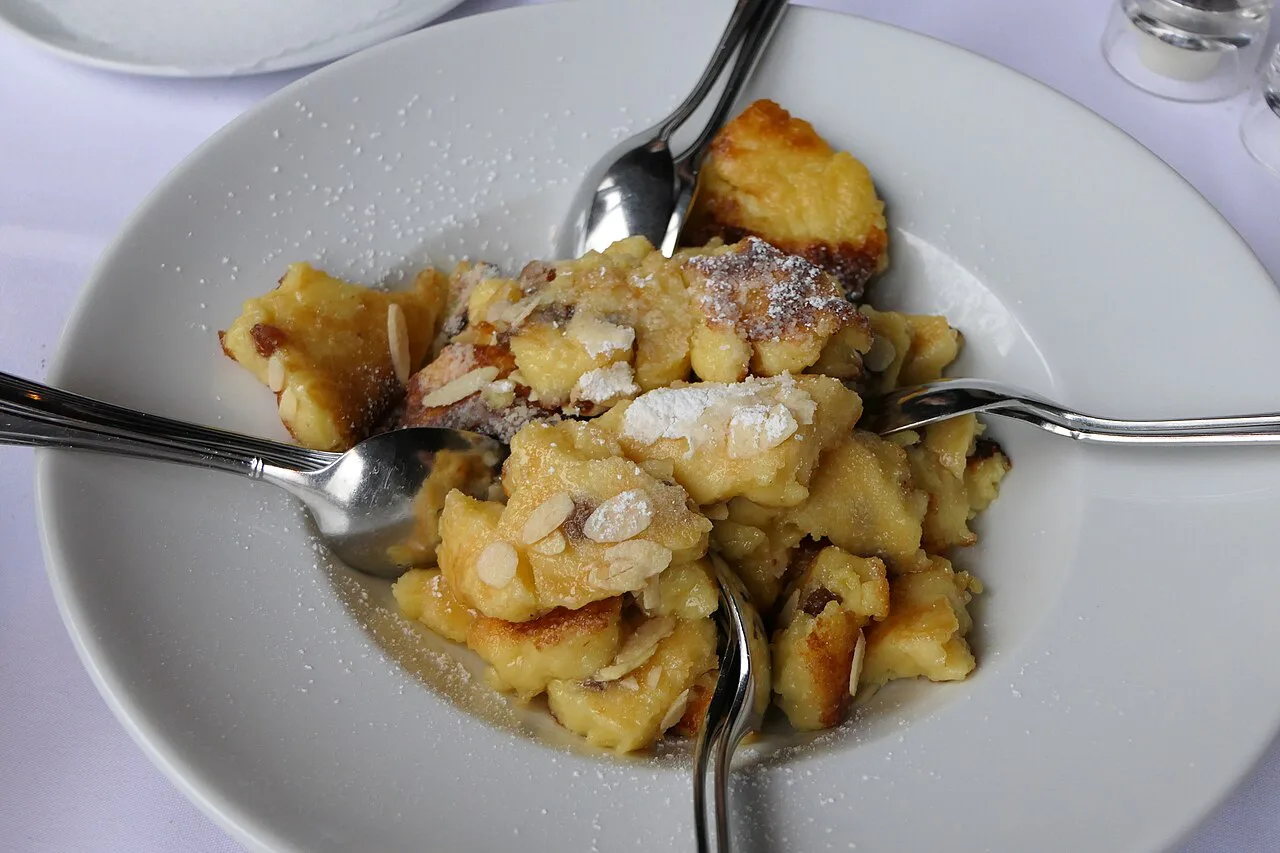
Kaiserschmarrn is the Austrian pancake dish you will also see in southern Germany: a thick, torn pancake dusted with powdered sugar and often served with fruit compote. It is richer and sweeter than a plain Pfannkuchen and usually eaten as a dessert or a sweet main. If you want the full background, Kaiserschmarrn covers the dish and its history.
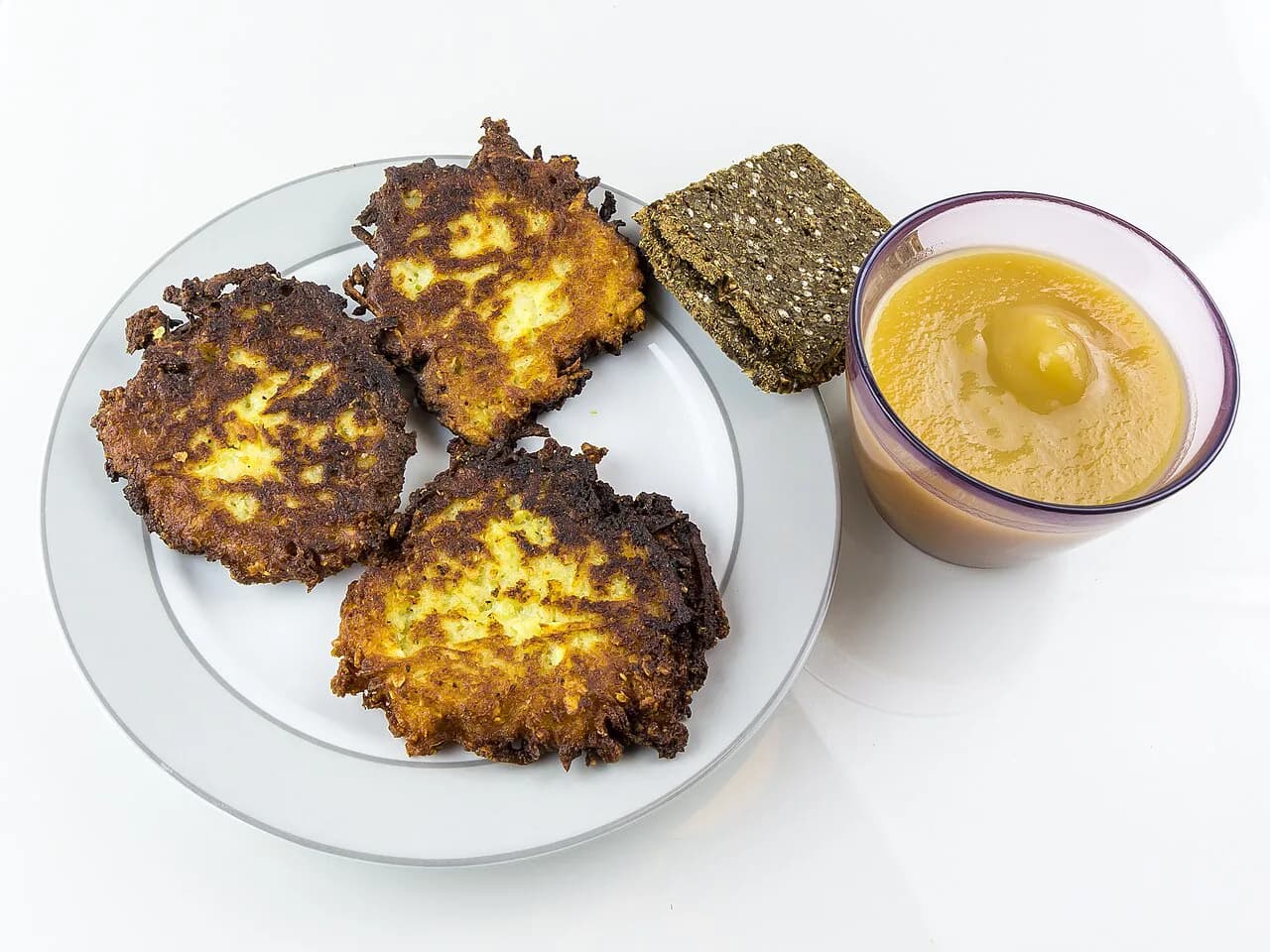
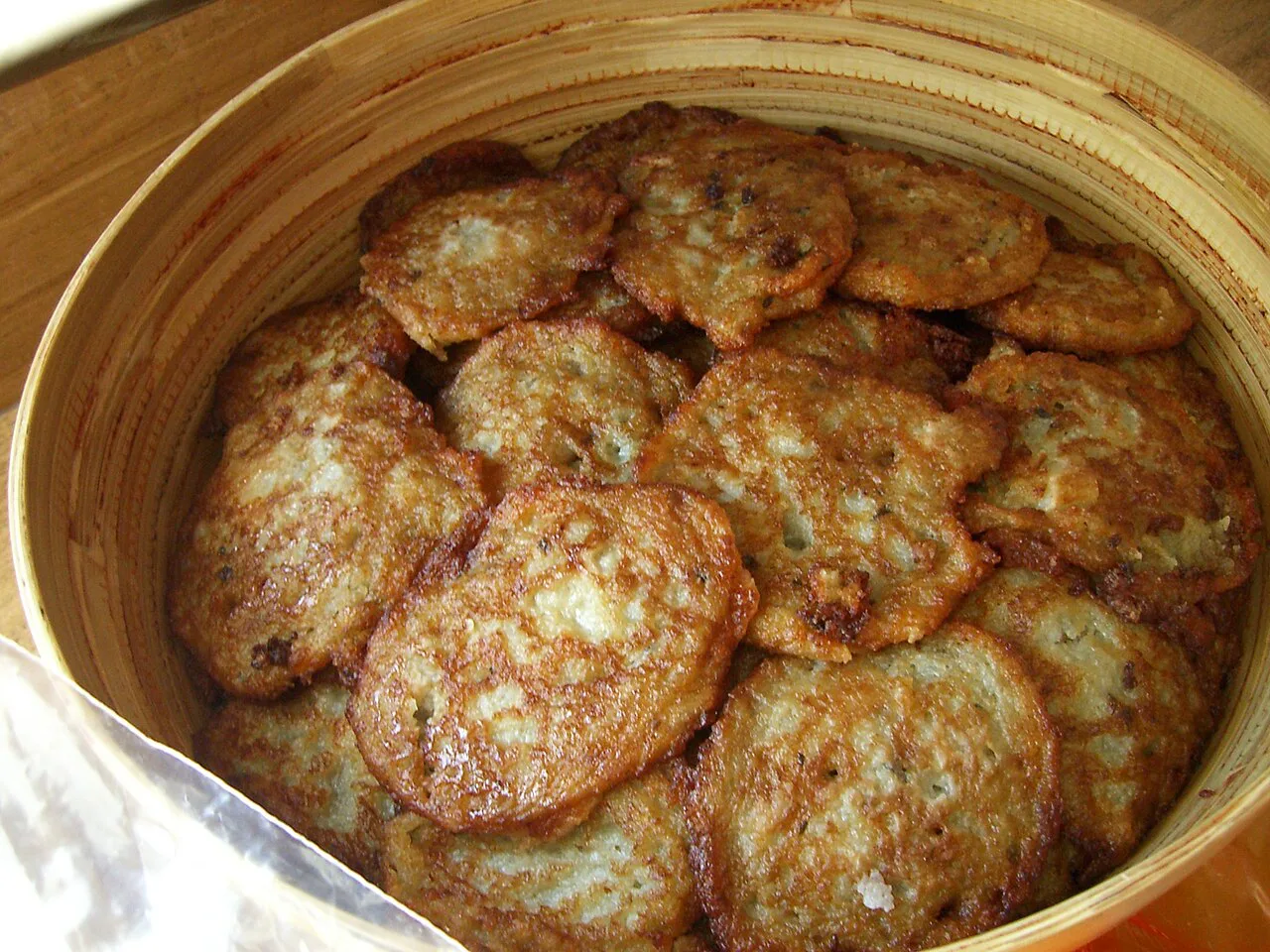
Kartoffelpuffer are potato pancakes, grated potato fried into crisp, golden rounds and served savory with applesauce or sour cream. They are a different dish entirely, made from potato rather than a flour batter, and they appear as a side or a light main.
What to Drink with Them
Coffee is the expected partner for a sweet Pfannkuchen, and a milky coffee or a plain filter coffee both work. A glass of apple juice or Apfelschorle, apple juice mixed with sparkling water, is the other common nonalcoholic choice and matches the Apfelmus topping.
With a savory rolled pancake, a light lager or a Helles is the easy call, and a small pour is enough. If you are eating a heavier German main instead, a Schweinshaxe, the roasted pork knuckle, is the classic beer-hall plate and needs a different plan.
Which German Pancake Should You Order?
Order the savory rolled Pfannkuchen if you want a main meal, and the sweet version with Apfelmus if you want dessert or a light stop. Skip the American oven-baked version when you are in Germany; it belongs to home kitchens, not restaurant menus, and a Dutch baby is the same idea under a different name.
If you only have room for one pancake-style dish and want something crisp and savory with beer, take the Kartoffelpuffer instead. Either way, read the menu line for the filling before you order, because the name alone does not tell you whether cheese, ham, or apples are coming.
Explore more Germany guides
Frequently Asked Questions
Do Germans eat pancakes for breakfast?
Pfannkuchen are more often a lunch, dinner, or weekend home dish than a standard breakfast. A typical German breakfast is bread, cold cuts, cheese, and eggs, so do not expect a stack of pancakes on a morning menu.
What is the difference between a Dutch baby and a German pancake?
In American home cooking the two names describe the same oven-baked, puffed pancake made from a thin egg batter. The pancake Germans actually eat, the Pfannkuchen, is pan-fried and flat, so neither name matches the German restaurant dish.
What are traditional German pancakes called?
The usual word is Pfannkuchen, with Eierkuchen used in some regions for the pan-fried version. In Berlin and parts of eastern Germany, Pfannkuchen can also mean a jam-filled pastry, so check the context on the menu or in the bakery.
Are German pancakes sweet or savory?
Both. Sweet versions come with sugar, cinnamon, jam, or Apfelmus, while savory versions are rolled around cheese, ham, or mushrooms and served as a main course.
Sources
Notes for your next German food trip
Optional updates to our guides.
You might also like
Continue reading
More guides you'll find useful