Labskaus: Germany's Sailor's Dish, Explained
Labskaus is a northern German sailor's dish of mashed potatoes, beef, beetroot and pickles, often topped with a fried egg and served with herring.
On this page
Labskaus is a hearty northern German mash of potatoes and beef, sharpened with pickled beetroot and gherkins, and it usually arrives looking rougher and pinker than anything else on the menu. Treat it as a filling lunch dish, not a delicate starter. This guide covers what goes into it, how it tastes, what comes alongside, and how to order it in the harbor cities where it belongs.
The name sounds harder than it is. Say it roughly as "LAHBS-kows," with a clear short a and a soft s at the end, and any server in northern Germany will know what you mean.
What Labskaus Actually Is
At its core, Labskaus is a potato mash with beef and beetroot worked in, and it is eaten across northern Germany as well as in Norway, Denmark and Sweden. Recipes vary from kitchen to kitchen and from town to town, so do not expect one fixed formula. What holds steady is the idea: sturdy ingredients, mashed and minced into a coarse porridge.
That porridge texture is the point, not a shortcut. The components are finely chopped or put through a grinder, then bound with mashed potatoes, which is why a good Labskaus holds together in a rough heap rather than sitting smooth like a purée. If you were expecting a neat slice of meat with vegetables beside it, this is a different kind of plate altogether.
You will also see the name spelled Labskausch in older German usage, and the dish turns up on menus far beyond the coast. In the south it can read as a curiosity; in Bremen, Hamburg, Kiel or Lübeck it reads as everyday regional cooking.
The Sailor's Pantry Behind the Dish
The dish grew out of what a sailing ship could actually carry through long weeks at sea. Cured meat kept without spoiling, pickled beetroot and gherkins added something sharp and vitamin-rich, and potatoes filled people up after hard physical work. Those three pillars are still what you taste in the bowl.
What do Germans call corned beef? Germans generally use the English term corned beef rather than a German equivalent, so you can ask for it by name when shopping or reading a menu. In Labskaus it is one of the two usual meats, alongside cured beef.
How do you pronounce Labskaus? Roughly LAHBS-kows, with a short clear a in the first syllable and a soft s at the end. Stress the first syllable and most servers in northern Germany will understand immediately.
Is Labskaus served hot or cold? It is served hot, as a warm potato and beef mash, with the pickles, beetroot and herring usually arranged cold on the side. The mix of temperatures is part of the plate.
That history explains the flavor profile better than any recipe does. Nothing in the classic dish is fresh in the market sense; everything is preserved, salted, soured or stored. The result is a plate built for endurance rather than elegance, which is exactly why it suits a cold-weather lunch.
Grünkohl comes from a similar northern pantry logic, and the two dishes often share menu space in the same region, so a harbor-city Gasthaus that serves one frequently serves the other. If you want to compare northern German cooking at its plainest, order both on separate days.
What It Tastes Like and How It Looks
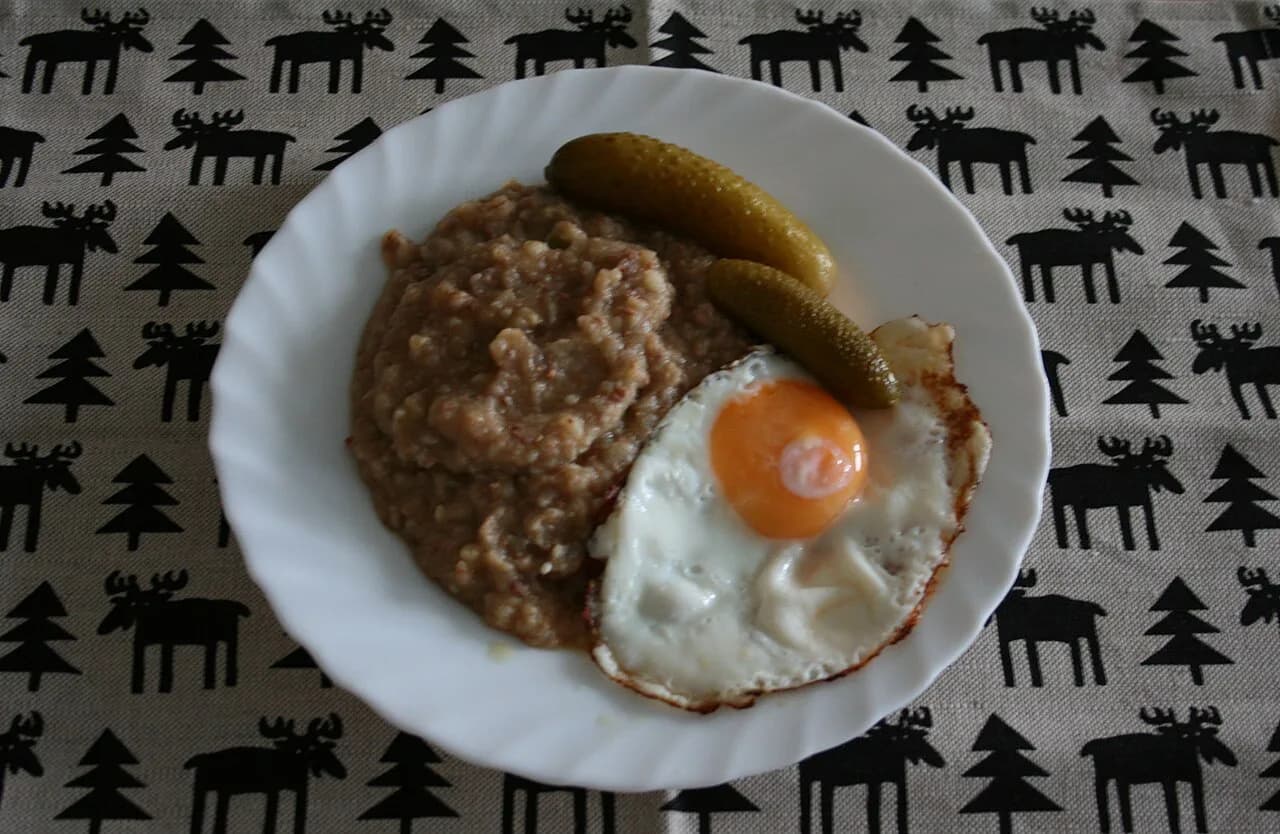
Expect a coarse, salty-sour mash with a distinct pink cast from the beetroot. The beef gives it weight, the pickles give it a vinegary edge, and the potato keeps it from turning into a paste. It is savory and a little tangy rather than spicy, and it is heavy in the way that a long walk afterward fixes.
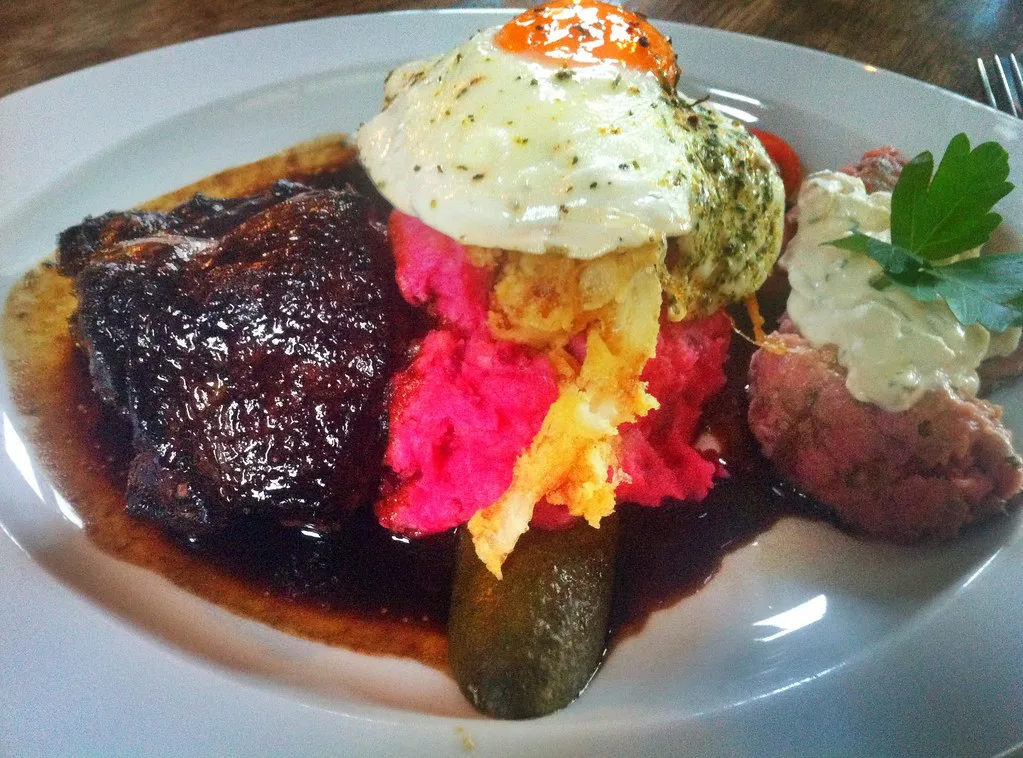
The color surprises first-time eaters most. A pink-flecked mound on a white plate does not look like typical German fare, and some versions come out deeper red than others depending on how much beetroot the kitchen works in. Judge it by the seasoning, not by the shade.
Textures are deliberately uneven: some kitchens grind everything fine, others leave more bite in the meat and pickles. Neither is wrong, and the variation is part of ordering it in different towns.
Corned Beef or Cured Beef?
Modern versions most often use corned beef or cured beef, cooked and mixed with beetroot and pickles before being ground and combined with mashed potatoes. Some recipes call for freshly minced beef instead, roasted with onion and folded into the mash. Both routes produce the same family of dish.
Germans generally call corned beef by the English name rather than a German one, which makes it easy to ask about. If you are cooking at home, note that corned beef is already salty, so taste before you season. Home recipes also vary widely in fat and dairy, with milk and butter going into the potatoes in generous amounts.
Some versions swap the meat for a vegetarian substitute, and the potato-beetroot base carries that reasonably well. If that matters to you, ask your server whether the version is meat-free.
The Classic Plate: Egg, Herring, Pickles, Beetroot
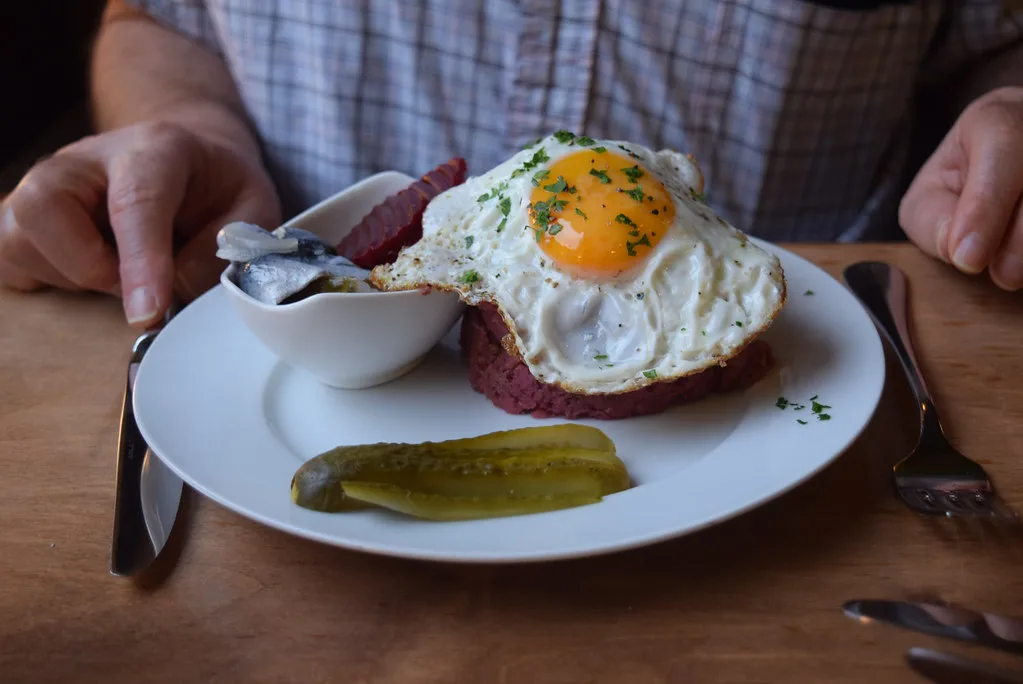
A full Labskaus plate usually means more than the mash itself. A fried egg often sits on top, sometimes with a dash of Worcestershire sauce, and pickled herring is a common companion, as are gherkins and beetroot on the side. The plate reads as a small composition rather than a single scoop.
The herring in question is typically Rollmops, a rolled pickled herring, which brings a sharp briny note that cuts through the mash. If you are unsure about herring, ask for the plate without it; the egg and pickles alone still give you the full texture and flavor.
Home cooks finish the plate with a sunny-side-up egg, a little Worcestershire sauce, pickles and ketchup alongside, which shows how flexible the garnish is. In a restaurant, expect the kitchen's own arrangement rather than a fixed set.
Where to Order Labskaus
Look for it in northern harbor cities and coastal towns: Bremen, Hamburg, Kiel, Lübeck and Rostock are the obvious starting points, and the dish appears on many traditional menus there. Away from the coast it is less reliable, and a kitchen that offers it inland is making a statement about its regional focus.
The setting matters as much as the city. Old harbor-quarter Gasthäuser and brewery-linked restaurants tend to serve it as a plate of the house, while smarter places may dress it up. Either way, the dish is the same sturdy northern staple at heart.
For a broader map of regional cooking, the site keeps a German food hub that runs from hearty stews to cakes, useful if you are building a menu across several cities.
How Germans Eat It
Labskaus is lunch food in its natural habitat, or an early, filling dinner. It is not the sort of plate you order before a long evening, because the potato and beef sit heavily. Order it at midday with a beer or a glass of wine if you like, and keep the rest of the day light.
Drinks with it are plain and unfussy. A Pils or an Alt fits the northern setting, and a glass of wine works just as well for a slower lunch. There is no ceremony around it.
If you want a comparison point for German heartiness, order a Schweinshaxe elsewhere in the trip and note how differently the two dishes handle richness; the pork knuckle is crisp and roasted, while Labskaus is soft and soured.
How to Order It Without Fuss
Order by saying the name clearly and adding what you want alongside: "Labskaus mit Spiegelei" gets you the fried egg, and "mit Rollmops" adds the herring. If you would rather skip the egg, say so directly and the kitchen will usually leave it off.
Most versions come with beetroot and pickles already portioned on the side, so you control how much goes into the mash. The mistake is stirring everything together at once; taste the mash first, then add beetroot or pickle a little at a time.
Do not treat the beetroot juice as an ingredient to mix in. Many recipes warn against tipping it into the mash, because it changes both the color and the balance of the dish. Keep it at the edge of the plate.
Portions are generous, so it is a poor choice as a small first course before a big dinner. Order it as the main event and plan a lighter meal later.
Common Mistakes to Avoid
The biggest misstep is expecting a steak dinner. Labskaus is a mash by design, and judging it against a seared piece of meat misses what it is for. The second is skipping the pickles and beetroot, which supply the acidity that keeps the plate from turning flat.
If you only have one northern meal in you and you want a dish with more contrast, a schnitzel is the safer crowd-pleaser. Labskaus rewards curiosity about plain, preserved, working food.
Finally, do not chase a single authentic version. Recipes differ by town, by kitchen and by generation, and that flexibility is a feature of the dish rather than a flaw in it.
Should Labskaus Be on Your Northern Germany Shortlist?
Order it if you want to eat what the northern coast actually eats: sturdy, sour, cheap in spirit and served in heaps. Skip it if you want a crisp, tidy plate or a light starter.
Choose a harbor-city Gasthaus at lunchtime, say the name out loud, and keep the beetroot on the side until you have tasted the mash. That is the whole method.
Explore more Germany guides
Frequently Asked Questions
What do Germans call corned beef?
Germans generally use the English term corned beef rather than a German equivalent, so you can ask for it by name when shopping or reading a menu. In Labskaus it is one of the two usual meats, alongside cured beef.
How do you pronounce Labskaus?
Roughly LAHBS-kows, with a short clear a in the first syllable and a soft s at the end. Stress the first syllable and most servers in northern Germany will understand immediately.
Is Labskaus served hot or cold?
It is served hot, as a warm potato and beef mash, with the pickles, beetroot and herring usually arranged cold on the side. The mix of temperatures is part of the plate.
Sources
Notes for your next German food trip
Optional updates to our guides.
You might also like
Continue reading
More guides you'll find useful