
German Christmas Food Guide: What to Eat in Germany
German Christmas food explained: Advent baking like Stollen and Spekulatius, Christmas Eve potato salad, and the goose or carp served on the holiday itself.
On this page
German Christmas food splits into two halves: the Advent baking and sweets that fill bakeries and supermarket shelves from early September, and the holiday meals themselves, which center on the family evening of December 24 rather than the 25th. The two Christmas Days that follow are when the bigger meal usually comes out. This guide separates the baking from the dinner table and explains what to buy, what to order and how a December menu is put together.
German Christmas food in brief: what lands on the table from Advent through the 26th
December has two separate food seasons. The Advent weeks belong to cookies, Stollen and gingerbread, while the holiday itself, December 24 to 26, belongs to a sit-down family meal. Christmas is mainly a family occasion: around 80 percent of the population marks it, while church attendance at Christmas stood at 16 percent in 2024.
Germany has two Christmas Days, the 25th and the 26th of December, and the 26th is still a full public holiday rather than a leftover day. That matters if you are planning restaurant meals, since both days tend to carry holiday menus in place of ordinary weekday service. Build your December eating plan around three meals: Christmas Eve on the 24th, Christmas Day on the 25th and Second Christmas Day on the 26th.
Advent baking: Stollen and Spekulatius, and why they hit supermarket shelves in early autumn
The first taste of German Christmas arrives long before December: gingerbread and Spekulatius biscuits, thin spiced shortbread pressed into shapes, appear on supermarket shelves in early September. By the time you land in December the selection has already thinned out and the best tins are gone. If Stollen or Spekulatius is the thing you came for, treat early Advent as the deadline, not the starting gun.
What are some popular Christmas traditions in Germany? Decorating a Christmas tree is the most widespread custom, with more than eight out of ten people in Germany putting one up, and one in three saying the smell of fresh fir is what makes the season feel real. Families gather on Christmas Eve, eat together, then unwrap presents under the tree.
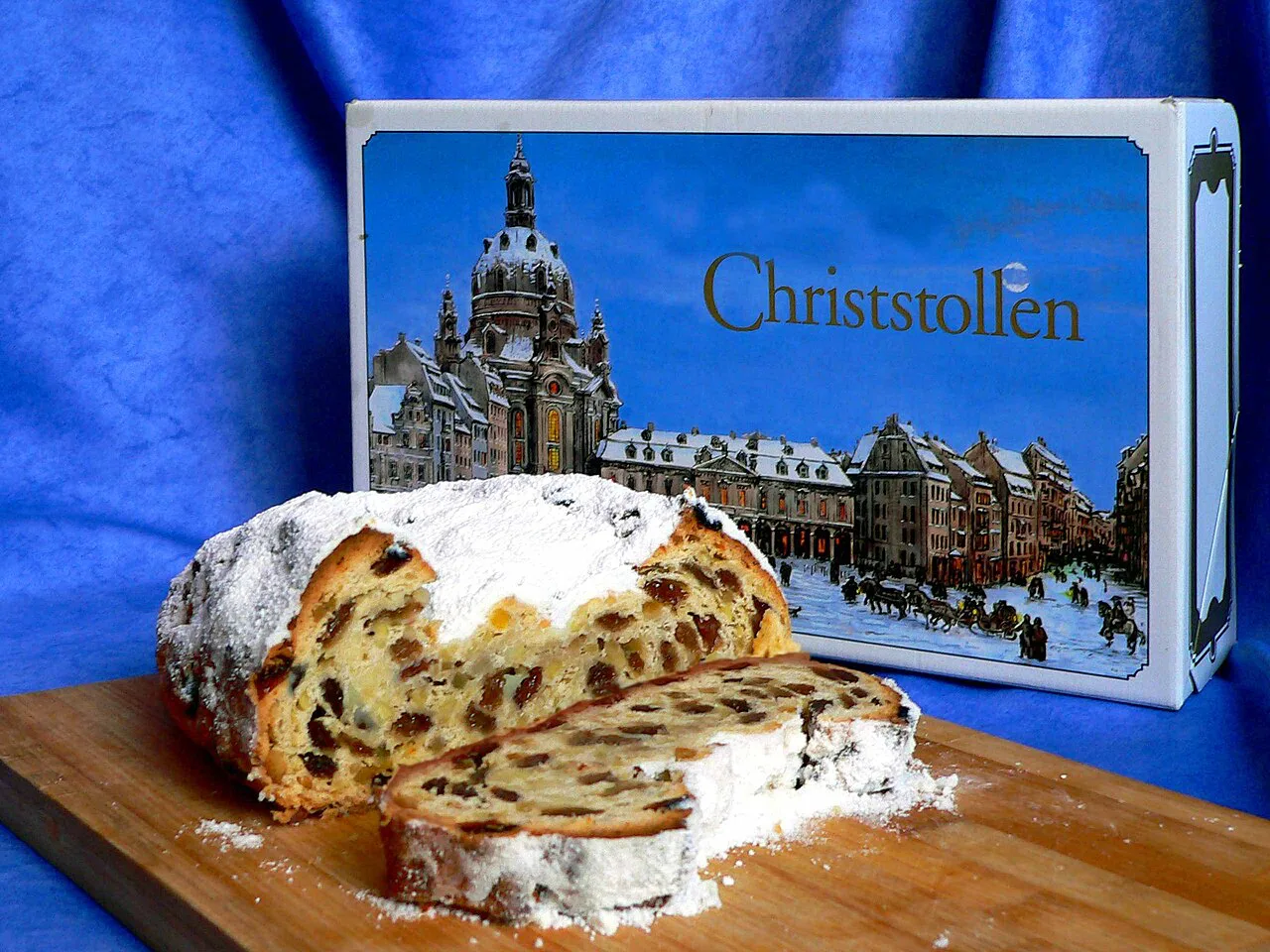
Stollen is the heavier Advent bake: a dense yeast fruit bread packed with dried fruit, often with a core of marzipan, dusted thickly with powdered sugar and sold by weight in loaves. Buy it sliced at a Konditorei or bakery counter, or in sealed boxes at supermarkets. Spekulatius is the opposite: crisp, caramelized and spiced with cinnamon, cardamom and cloves, sold in paper bags and eaten by the handful with coffee.
Christmas Eve: potato salad and why the main celebration happens on the 24th
Christmas Eve is the emotional center of the German Christmas, and the day splits in two: a hectic morning and a festive evening. If December 24 falls on a weekday, shops stay open until noon and are typically packed with people buying final presents or food for the evening meal, so do your shopping earlier in the week. Families gather in the early evening, and some sing or play music together before eating.
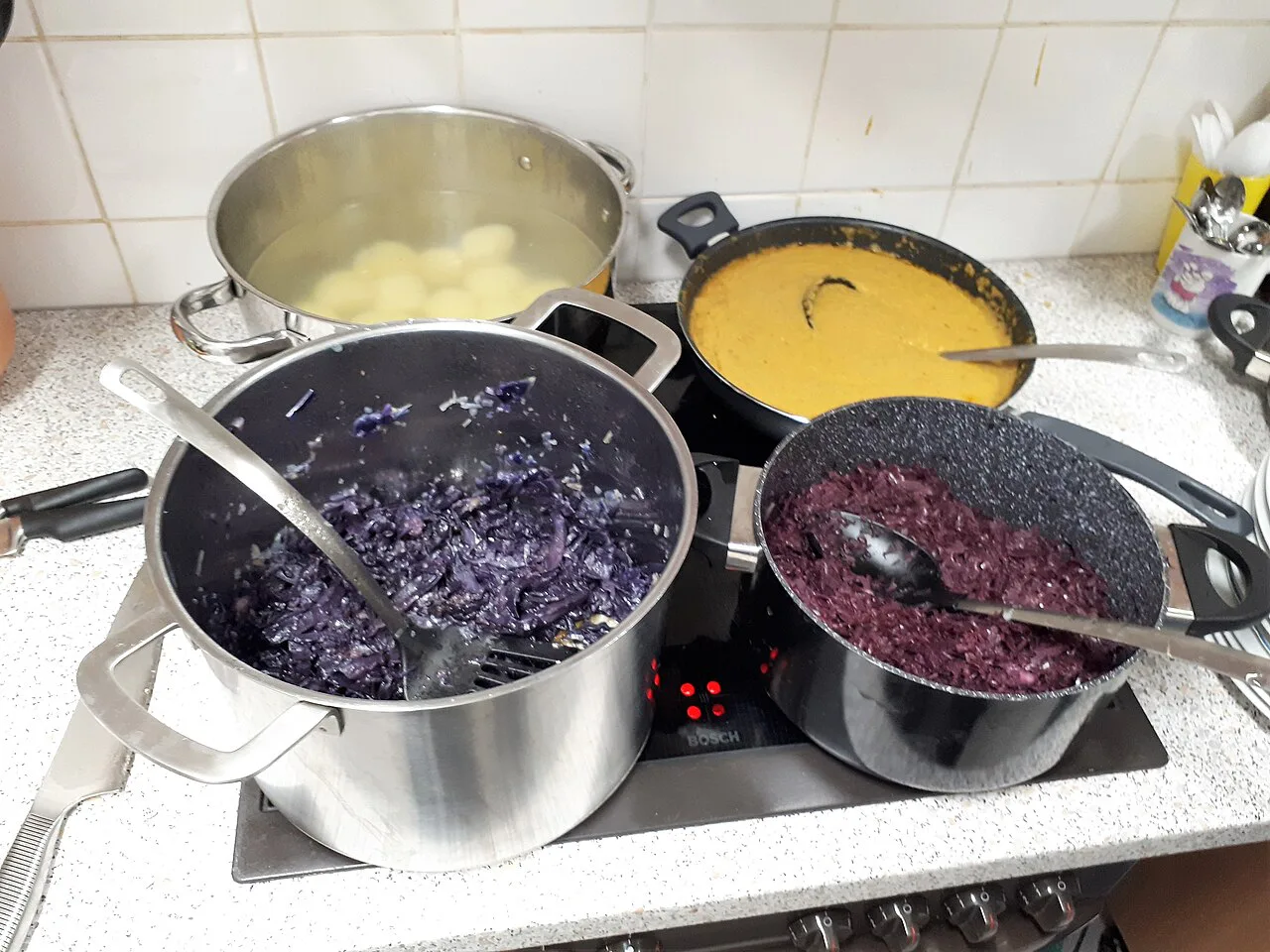
The Christmas Eve plate is famously modest: potato salad, served alongside sausages, rather than a roast. The logic is practical. Christmas Eve is the one night of the holiday when nobody wants to spend hours in the kitchen, so the meal is assembled quickly and eaten before the presents are unwrapped. If you order potato salad in a Gasthaus in December, you are eating the holiday's most recognizable home dish.
The two Christmas Days: the 25th and 26th and the big holiday meal
The 25th and 26th are when the bigger meal typically happens, and families tend to sit down together for it. Presents are unwrapped on Christmas Eve after the meal, not on Christmas morning, which leaves the two Christmas Days for visiting relatives and eating well.
The structure of a German holiday meal follows the same arc as the rest of the year: a light first course, a roast or fish as the main event, and something sweet to finish. Traditional dishes such as Königsberger Klopse, veal meatballs in a creamy caper sauce, or a slice of Schwarzwälder Kirschtorte for dessert show how those menus are built. Knowing the wider repertoire of German food helps you read a holiday menu quickly and pick the dish a kitchen actually cares about.
Christmas goose: the centerpiece roast and what goes with it
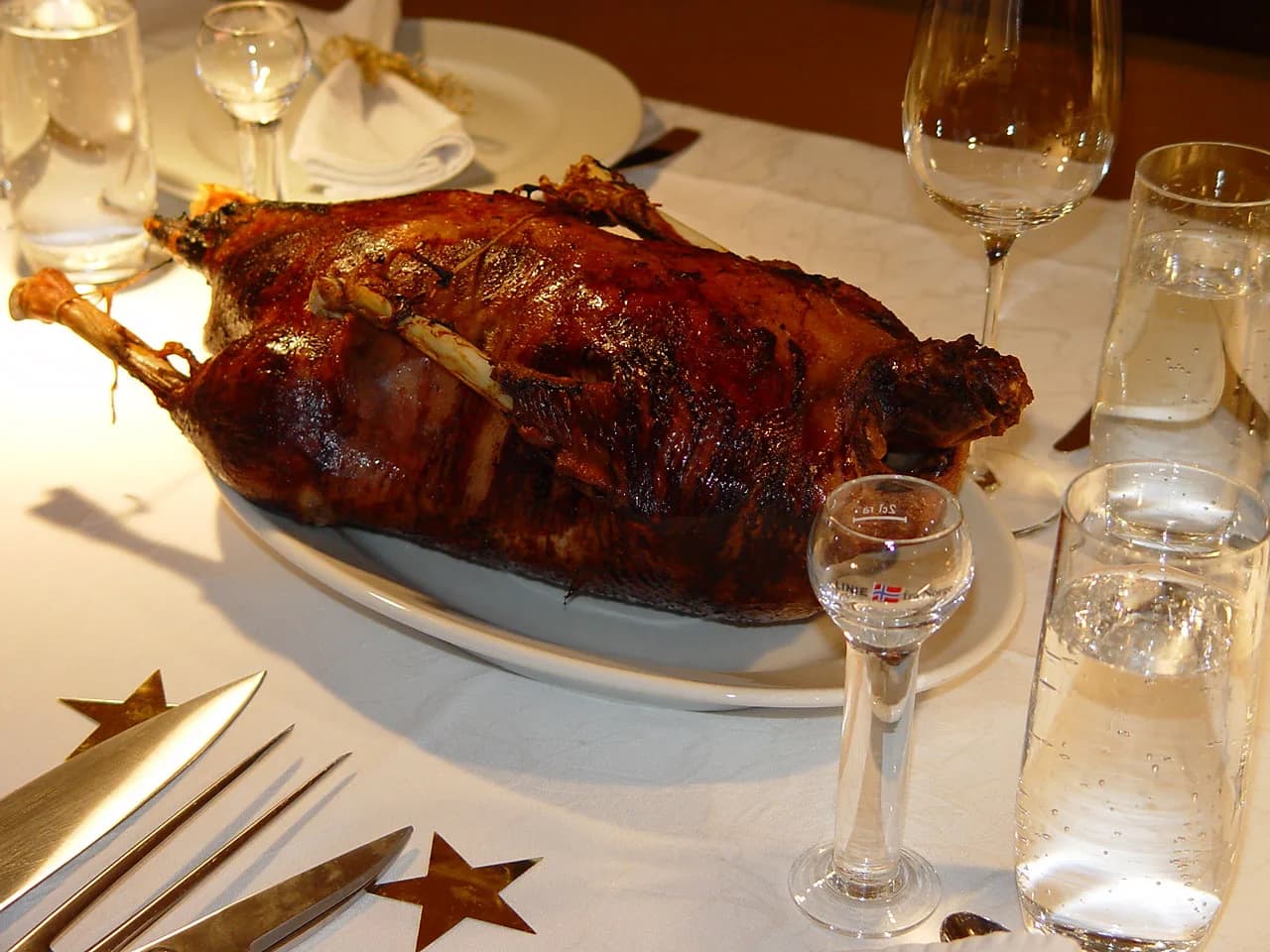
Roast goose is the classic centerpiece of the German Christmas table, and it usually shows up on the 25th or 26th rather than Christmas Eve. A whole goose is a project: it roasts for hours, releases a lot of fat, and is typically served with red cabbage, dumplings or potatoes and a dark gravy. Restaurants and Gasthäuser often offer goose only as a set holiday menu, especially on the Christmas Days, so it is worth asking your server about the goose option when you arrive instead of counting on it being available at any time.
If goose is not on the card, the roasts that turn up on German winter menus include pork knuckle and braised beef, both of which suit a cold December evening better than a light summer plate. Knowing how Schweinshaxe is cooked and served helps you judge whether the version in front of you is the crisp-skinned kind or a softer braised take. A slow-braised Sauerbraten, marinated in vinegar and spices before cooking, is another reliable holiday choice when you want something other than poultry.
Carp and fish on German Christmas menus
Carp is the other great German Christmas main, and it appears on holiday menus in the weeks around Christmas rather than as an everyday dish. It is usually served whole or in pieces, breaded and fried or baked, with potatoes and a sharp sauce, and it carries a strong freshwater flavor that divides people. If you have never eaten it, order it as your main rather than as a starter so you get a full portion and can judge it properly.
Fish in general plays a bigger role in German holiday eating than visitors expect, which is one reason a December menu looks so different from a July one. When a Gasthaus prints a Christmas card, scan the fish section first: that is often where the kitchen puts its effort. Ask whether the carp is available that day, since holiday fish dishes can be limited to certain dates.
Christmas cookies and sweets to buy or bake: what to look for in a Konditorei or bakery
A German December is measured in cookie tins, and the selection is wider than most visitors realize. Beyond Spekulatius and gingerbread, you will find butter cookies, cinnamon stars, almond crescents and macaroons, often sold by weight in bakeries and Konditoreien. Buy a mixed bag from a Konditorei rather than a supermarket box if you want to taste the difference, and ask for a small selection so you can compare textures.
Stollen deserves its own stop. In a good Konditorei it is sold in thick slices or small loaves, and the best versions are dense, moist and heavy for their size, with a clear marzipan center and a thick sugar crust. Avoid loaves that feel light and dry, and check whether the bakery sells its Stollen already sliced, which is easier if you are traveling and do not want a whole loaf in your bag.
Gingerbread and its place in the German Christmas season
Gingerbread, Lebkuchen in German, is the sweet that defines the season, and it appears in two main forms: soft, glazed hearts and rounds sold at stalls, and boxed, often chocolate-covered rounds sold in supermarkets. The soft stall version is chewy and heavily spiced with cinnamon, cloves and ginger; the boxed kind is firmer and sweeter. Buy a single piece from a stall to taste before committing to a box, because the spice level varies enormously between bakers.
Gingerbread also makes a practical souvenir because it travels well and keeps for weeks, unlike a Stollen that dries out quickly once cut. If you are buying gifts to take home, a decorated gingerbread heart or a sealed tin of Lebkuchen survives a flight better than almost anything else on a December table. Pair it with a bag of Spekulatius and you have the two most recognizable German Christmas sweets in one purchase.
What Germans give and share: food and confectionery as a common gift
Food is a serious gift category in Germany. Gift vouchers or cash are the most popular present at 48 percent, but food and confectionery come second at 36 percent, ahead of toys at 33 percent and printed books at 31 percent (with clothing at 30 percent). That single statistic explains why December shops devote so much shelf space to chocolates, biscuits and Stollen.
For a visitor, this is a useful shopping signal. A boxed Stollen, a decorated gingerbread heart or a tin of Spekulatius is a socially normal gift in Germany, not a lazy fallback, and it fits easily into a suitcase. Buy from a bakery or Konditorei for something that feels personal, or from a supermarket for volume and predictable packaging.
How the German Christmas meal is structured: evening together, presents after eating
The sequence of a German Christmas Eve is fixed enough to plan around: family gathers in the early evening, eats, and then unwraps presents under the tree. The meal is not a long tasting menu but a single plate eaten together, which is why potato salad and sausages work so well on the 24th.
On the 25th and 26th the rhythm flips: the meal becomes the event, and the afternoon is often for coffee and cookies rather than another full sitting. If you are invited to a German Christmas table, bringing a small box of sweets is the standard gesture. Do not arrive empty-handed, and plan to stay for the whole meal, because the meal is the point of the evening.
What to order in a Gasthaus or restaurant during the Christmas weeks
Holiday menus in a Gasthaus narrow quickly to roasts, fish and dumplings, with goose and carp as the headline dishes and heavier sides like red cabbage and potato dumplings alongside. Order an Advent-season specialty or a roast on a Christmas Days menu, and if you see a set Christmas menu, it usually bundles a starter, main and dessert, which sometimes works out simpler than ordering the same courses separately.
Rouladen, thin beef rolls filled with mustard, bacon and pickles, are another winter staple worth ordering when they appear on a holiday card. They are braised until tender and served with red cabbage and potatoes, which makes them a safe bet if you want a German classic without committing to a whole goose. Knowing how rouladen are built helps you spot a well-made version, where the filling is tight and the sauce is dark and glossy rather than thin.
If the menu is unfamiliar, a schnitzel is the reliable fallback; in Germany it is usually pork or veal, pounded thin, breaded and fried, and served with lemon and potatoes rather than fries. Knowing the difference between a Wiener schnitzel and the broader family of breaded cutlets keeps you from ordering the wrong plate. Order it when you want something you can eat without ceremony, and save the goose for a night when you have time.
Which German Christmas dish should you try first?
Start with the Christmas Eve plate: potato salad and sausages, because it is the one German Christmas dish that is genuinely a home tradition rather than a restaurant set piece. Then use the two Christmas Days for the bigger meal, ordering goose or carp if the kitchen has it, or a braised beef dish if you want something less demanding. Build in a bakery stop for Stollen and Spekulatius, and buy a box of Lebkuchen to take home.
The most useful planning distinction is the one between Advent and the holiday itself: sweets and baking belong to the weeks before December 24, while the 24th, 25th and 26th are about sit-down meals and family time. Reserve tables for the two Christmas Days well in advance, and keep Christmas Eve simple.
Explore more Germany guides
Frequently Asked Questions
What are some popular Christmas traditions in Germany?
Decorating a Christmas tree is the most widespread custom, with more than eight out of ten people in Germany putting one up, and one in three saying the smell of fresh fir is what makes the season feel real. Families gather on Christmas Eve, eat together, then unwrap presents under the tree. Some households sing or play music before the meal, and the 25th and 26th are spent visiting relatives and eating a long holiday lunch.
Sources
Notes for your next German food trip
Optional updates to our guides.
You might also like



Continue reading
More guides you'll find useful





