
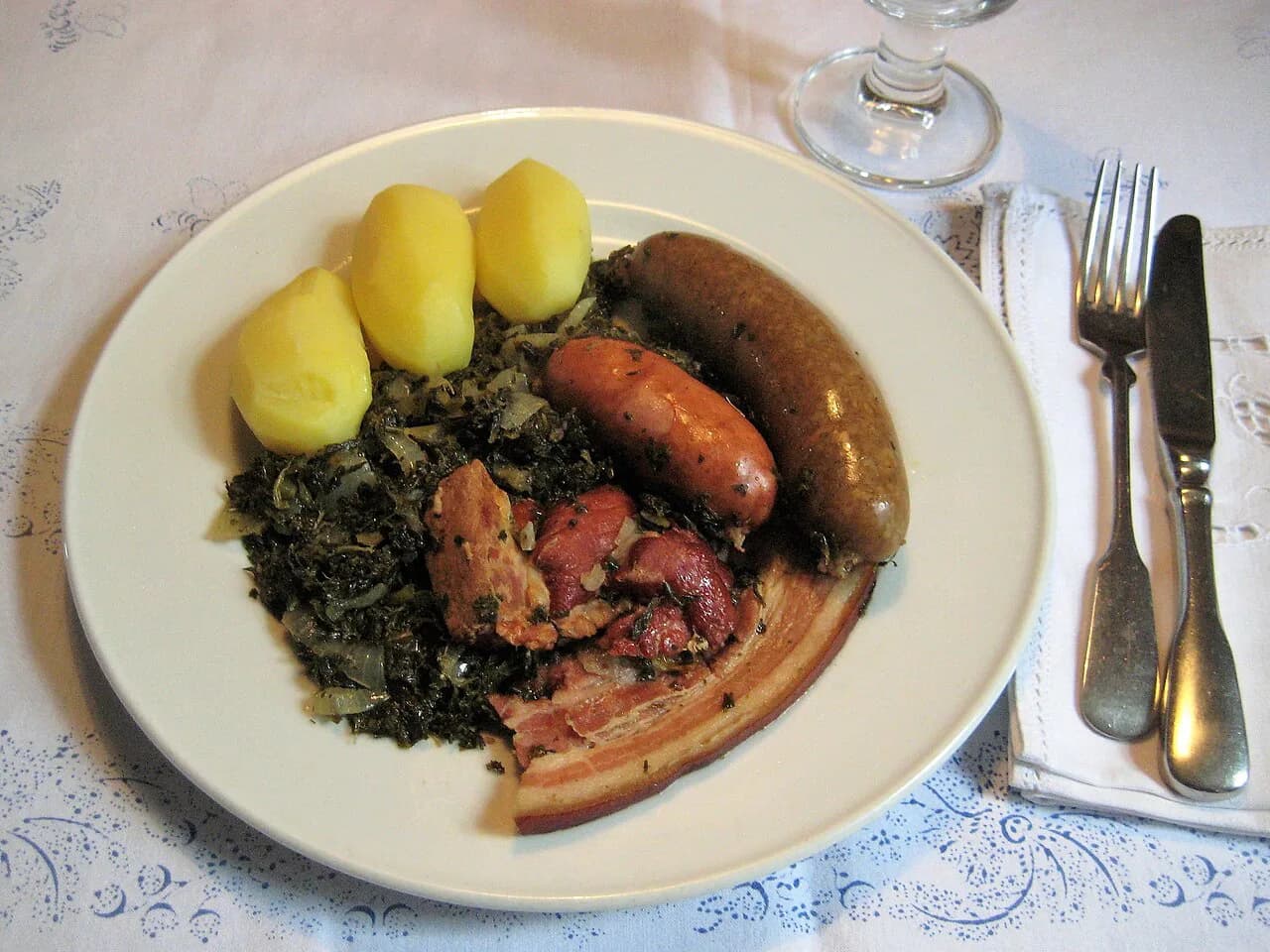
Grünkohl: Germany's Winter Kale Dish and How to Eat
Grünkohl is Germany's winter kale, cooked slow with smoked sausage and served with potatoes. Here's what the dish is and how to order it.
On this page
Grünkohl is simply German for kale, and the dish most travelers meet under that name is Grünkohl mit Pinkel, a slow-cooked northern winter plate of kale, smoked sausage and potatoes. The vegetable and the dish share a name, which is why English speakers searching for "kale in German" end up reading about sausage.
This guide separates the two: what Grünkohl the vegetable tastes like, why frost improves it, what Pinkel is made from, and how a Grünkohlfahrt turns the whole thing into a group outing. It stays with the plate and the tradition, so you know what you are ordering before it arrives.
What Grünkohl is and what the word means
Grünkohl translates literally as "green cabbage," and in English it is kale, specifically the hardy curly-leafed winter sort rather than the tender spring greens sold in American supermarkets. The leaves are stripped from their stems, chopped, and cooked for a long time until they go soft and sweet.
That long cooking is the point. Raw kale is tough and slightly bitter; simmered with onions, mustard and pork fat, it mellows into something earthy and rich that soaks up the broth around it. Expect a dark green, soft mound rather than crisp leaves, and judge it by how deep the pork and mustard flavors run.
Why the first frost matters
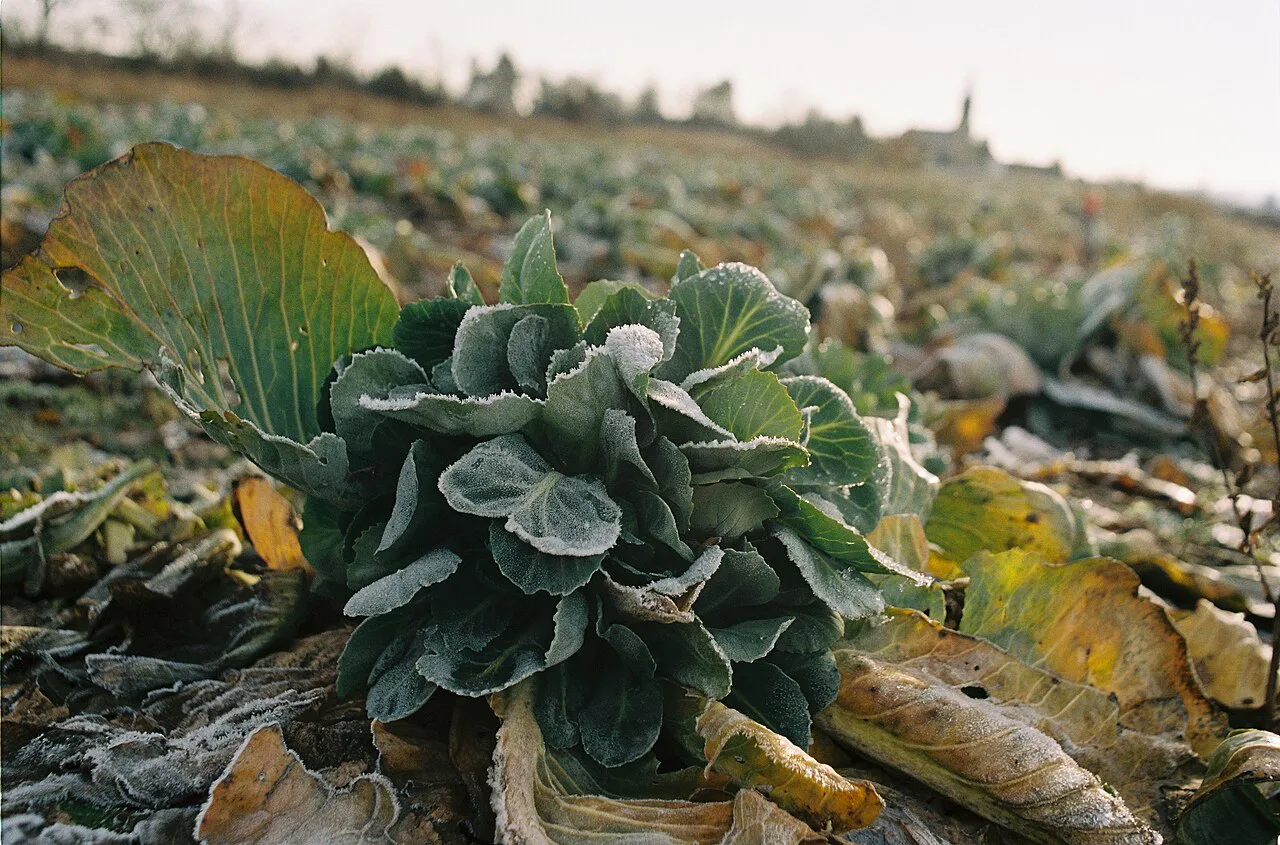
Kale is a winter crop, and the plants are left in the field until cold weather sets in. Frost helps the plant convert some starches to sugar, so kale harvested after a frost tends to taste less bitter and more rounded than an early-season head.
Is Grünkohl the same as kale? Yes. Grünkohl is the German word for kale, usually the curly winter variety.
What does Pinkel taste like? Pinkel is a smoked pork sausage with oats and spices, so it tastes smoky and savory with a denser, grainier texture than a fine bratwurst. It is heavier than a plain sausage, which is why it comes with brothy kale rather than a rich sauce.
Can I order Grünkohl without pork? Traditional Grünkohl is cooked with pork fat, bacon or sausage, so it is rarely vegetarian. Ask before ordering whether the kale was cooked with pork, and treat a vegetable dish as meat-free only once the kitchen confirms it.
For a traveler, this is a seasonal marker: Grünkohl belongs to the cold months, not to summer menus. If you are in northern Germany in late autumn or winter, the dish is in its natural season; in July, order something else and enjoy the beer garden while it is open.
Grünkohl mit Pinkel: the northern pairing
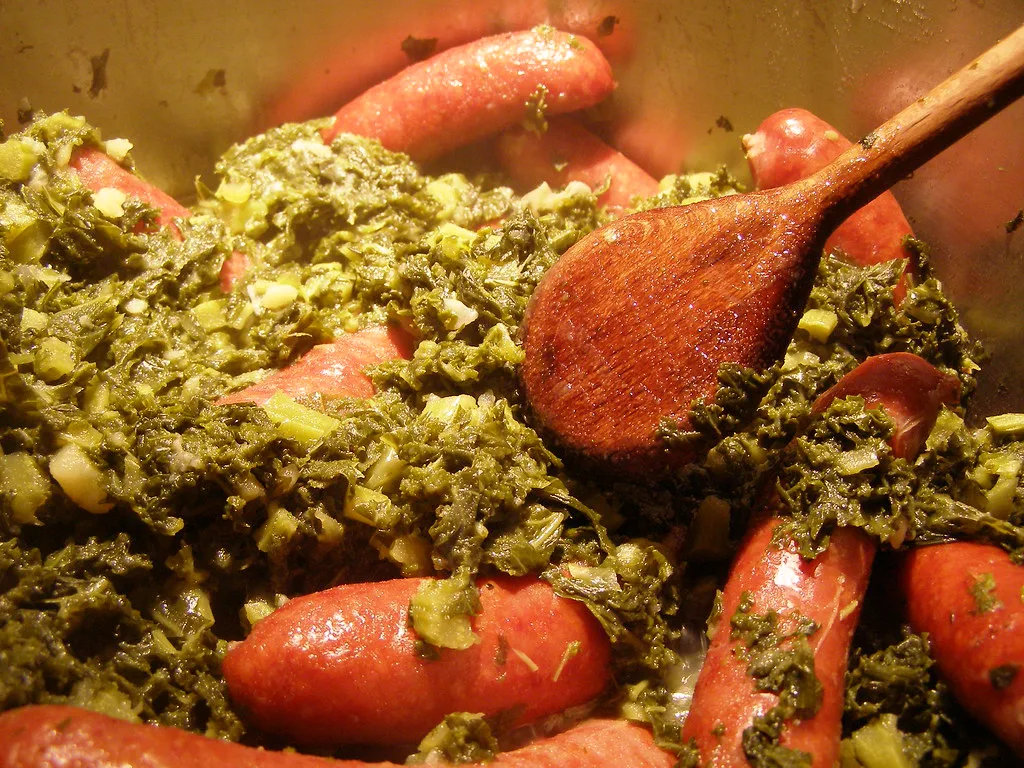
Grünkohl mit Pinkel is the classic version in northern Germany, especially around Bremen and Oldenburg. The kale is cooked with onions, mustard, broth and pork fat, then served with a smoked sausage called Pinkel and boiled potatoes.
The name trips people up because the dish and the vegetable are usually ordered as one phrase. If a menu lists Grünkohl alone, ask what comes with it; in the north the answer is almost always some form of smoked pork and potatoes.
What Pinkel sausage is made from
Pinkel is a coarse smoked sausage built on pork with oats and spices worked into the mix, which gives it a denser, grainier bite than a fine bratwurst and a pronounced smoky flavor. It is a northern specialty rather than a national one, so you are unlikely to find it in Munich or the Rhineland.
The oats matter for how it eats: Pinkel is heavier and more filling than a plain pork sausage, which is why it is paired with the relatively light, brothy kale instead of a richer sauce. If the texture sounds off-putting, order the dish with Mettwurst instead, a smoked sausage that is smoother and closer to what most visitors expect.
The other meats on the plate
Pinkel is rarely the only pork on the plate. Many versions add smoked bacon or a second sausage such as Mettwurst, both of which contribute fat and smokiness to the kale as it cooks. The greens absorb that fat, so the meat is doing double duty as flavor base and side.
If you want a lighter plate, ask whether the kale was cooked with bacon or pork fat; the answer is usually yes in the traditional version, so do not assume a vegetable dish is vegetarian. If you are avoiding pork entirely, Grünkohl is not the dish to order without asking first.
How the dish is cooked
The kale goes into a pot with chopped onion, mustard, broth and lard or clarified butter, then simmers for roughly an hour until tender. A little sugar and salt balance the bitterness and the smoke, and the potatoes often cook in the same pot so they take on the flavor.
The sausages are typically heated or browned separately and added at the end, so they keep their shape instead of dissolving into the greens. Home cooks sometimes serve a dish of mustard alongside for dipping, which is worth doing if it is not already on the table.
What it is served with
Boiled potatoes are the standard accompaniment, either plain or roughly mashed so they catch the juices. Some versions serve them pan-fried for a crisp edge, and a slice of rye bread is common on the side to mop up what is left.
This is a plate built for cold weather: heavy, savory and served hot in a deep portion. It is not a light lunch, so plan for a slower afternoon, and consider sharing a starter or skipping dessert if you have a long walk planned afterward.
Grünkohlfahrten: the winter kale tour
Grünkohlfahrten are winter group outings in northern Germany: friends and colleagues walk through the countryside, then sit down together to a large meal of Grünkohl with sausage and potatoes. The communal table is the center of the event, and the meal is served in generous portions meant to be shared over hours.
These are private, organized gatherings rather than public festivals, so a visitor should not expect to turn up at a set date and join one. If you are invited to a firm's or a friend's Grünkohlfahrt, accept: it is one of the clearest windows into northern German winter eating.
Where Grünkohl fits on a German menu
Grünkohl shows up as a main course in the cold months, most reliably in the north and in traditional Gasthäuser that cook regional dishes. It sits in the same winter repertoire as heavier meat plates, so pair it with a simple lager or an alcohol-free beer rather than a strong dark one. If you want a contrast, a breaded cutlet such as a schnitzel makes a lighter alternative on the same menu, and the wider world of German food runs from Königsberger Klopse to Schwarzwälder Kirschtorte.
When ordering, say "Grünkohl mit Pinkel" if you want the full northern version, and ask whether the kale is cooked with bacon if pork is a concern. Portions are large; a single main is usually enough for one person, and a side salad is rarely necessary.
How Grünkohl differs from other German cabbage dishes
Germany has several cabbage classics, and Grünkohl is the mildest and least acidic of them. It is not sauerkraut, which is fermented and sharply sour, and it is not the braised red cabbage served with goose and game, which is sweet and vinegary. Grünkohl is simply kale cooked soft with pork, so it tastes savory and green rather than pickled.
That distinction matters when you read a menu: if you want tang, order sauerkraut; if you want something rich and smoky without vinegar, order Grünkohl. The same logic applies to the meat alongside it, which is why the dish is almost always paired with smoked pork rather than a roasted joint.
Should you order Grünkohl mit Pinkel?
Order it if you are in northern Germany between late autumn and early spring, you like smoked pork, and you want a plate that tastes of the region rather than a generic German menu. Skip it if you are avoiding pork, want something light, or are eating in the south, where Pinkel is not a local staple.
If you only have one German winter meal in you, treat Grünkohl as the regional choice and Schnitzel in Germany as the safe one; the kale is the more distinctive experience. Ask your server how the kale was cooked and whether the Pinkel is smoked in-house, and you will learn more about the kitchen than any menu description tells you.
Explore more Germany guides
Frequently Asked Questions
Is Grünkohl the same as kale?
Yes. Grünkohl is the German word for kale, usually the curly winter variety. When it appears on a menu as Grünkohl mit Pinkel, it refers to the cooked dish with smoked sausage and potatoes, not a raw salad.
What does Pinkel taste like?
Pinkel is a smoked pork sausage with oats and spices, so it tastes smoky and savory with a denser, grainier texture than a fine bratwurst. It is heavier than a plain sausage, which is why it comes with brothy kale rather than a rich sauce.
Can I order Grünkohl without pork?
Traditional Grünkohl is cooked with pork fat, bacon or sausage, so it is rarely vegetarian. Ask before ordering whether the kale was cooked with pork, and treat a vegetable dish as meat-free only once the kitchen confirms it.
Where in Germany is Grünkohl mit Pinkel most common?
It is most typical in northern Germany, particularly around Bremen and Oldenburg, where Pinkel is a local sausage. In southern cities you are more likely to see kale cooked differently or not at all.
Sources
Notes for your next German food trip
Optional updates to our guides.
You might also like



Continue reading
More guides you'll find useful




