
Rouladen Guide: Germany's Beef Rolls and What to Order
Rouladen are thin beef rolls filled with bacon, onion and pickle, braised and served with gravy. Here is what the dish is and what arrives on your plate.
On this page
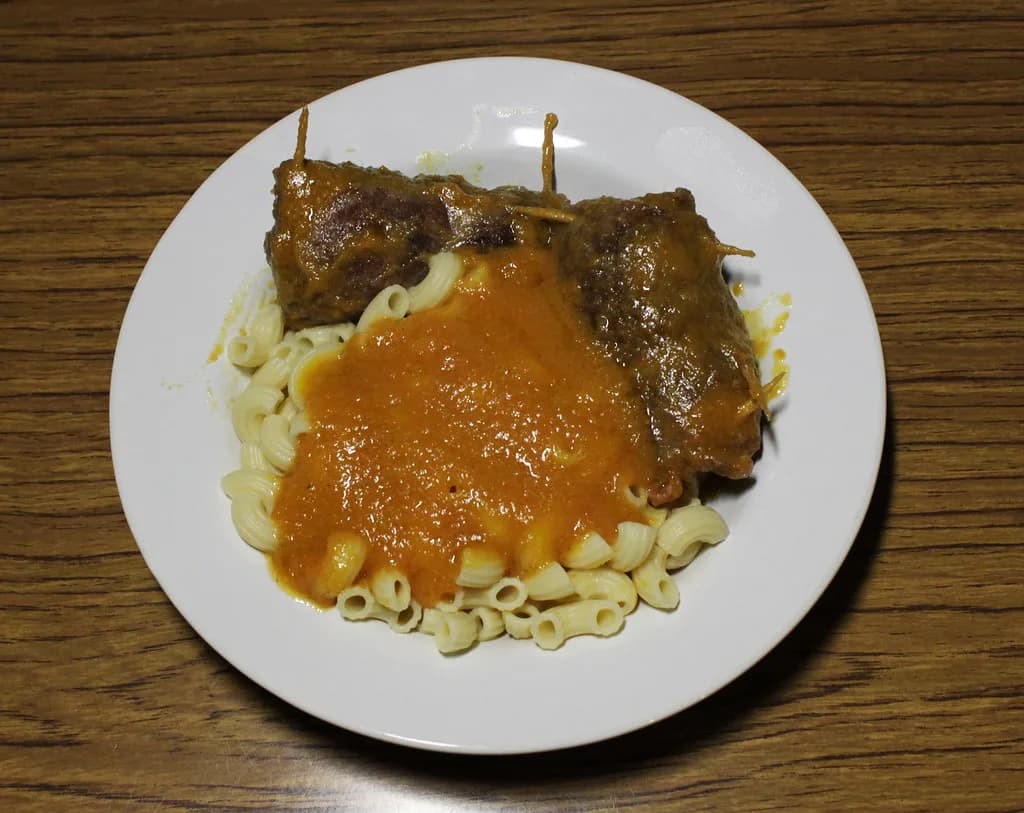
Rouladen are thin slices of beef spread with mustard, layered with bacon, chopped onion and a strip of dill pickle, then rolled up, browned and simmered in stock until tender. They arrive under a dark gravy, usually with Spätzle, noodles or mashed potatoes, and they are one of the most reliable orders on a traditional German menu. This guide covers what goes into the roll, how it is cooked, what it tastes like and how the name relates to the French roulade.
The dish sits in the same family as the braised meats you find across the country, from Sauerbraten to the pork knuckle that fills beer-hall tables. If you are building a mental map of German food before a trip, rouladen belongs near the center of it.
What rouladen are
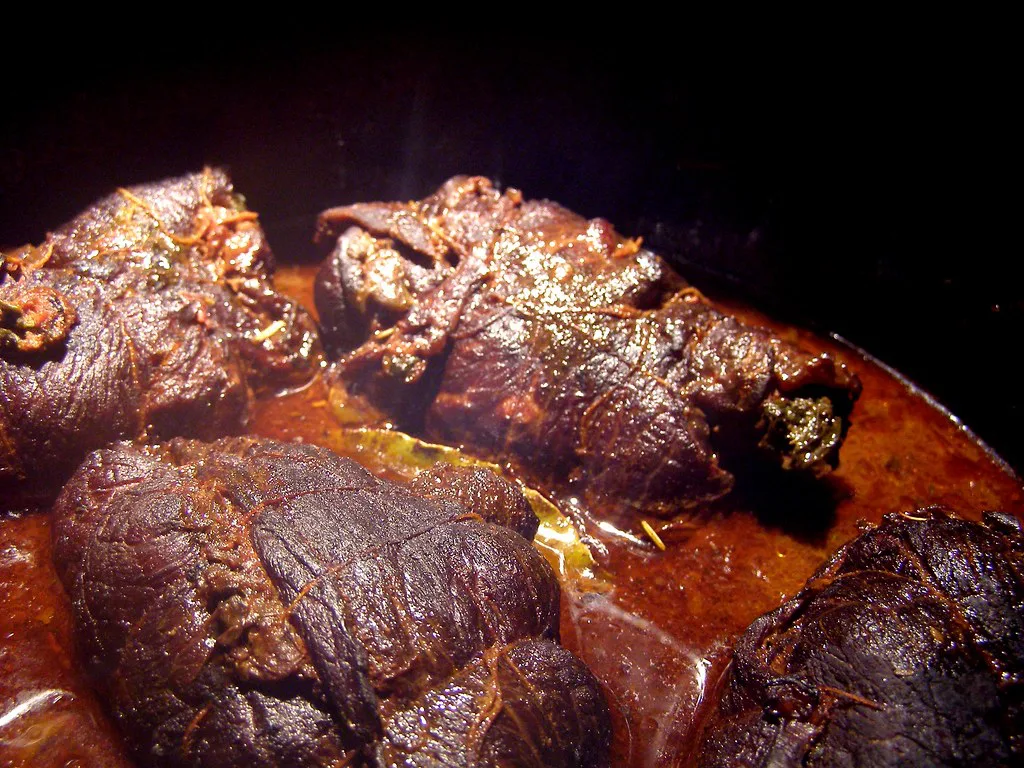
A roulade is a thin cutlet rolled around a filling and cooked, and the German beef version is the one most menus mean by the word. The roll is secured with string or toothpicks so it holds its shape while it browns, then it is simmered until the meat gives way under a fork. The kitchenproject.com recipe describes beef rolls filled with pickles, bacon and onions, and that trio is the classic build.
Think of rouladen as a Sunday dish rather than a quick lunch. Rouladen has been part of German cooking at least since the 1700s, when it was mainly a dish for nobility and royalty because beef was expensive; as beef became more affordable it moved onto household tables for a nice Sunday dinner or celebration. That history explains the format: a modest piece of beef, a generous filling and a gravy that makes the plate feel complete.
Roulade vs. Rouladen
The word roulade comes from the French rolled-and-filled idea, and it covers sweet and savory versions alike, including the sponge cakes sold in German Konditoreien. Rouladen is simply the German plural for the beef dish, so when a menu lists Rinderrouladen it is pointing you at beef rolls specifically. Rinder means beef, so Rinderrouladen is the full, precise name.
Roulade vs. Rouladen. The word roulade comes from the French rolled-and-filled idea, and it covers sweet and savory versions alike, including the sponge cakes sold in German Konditoreien.
What cut of beef goes into rouladen. The classic cut is a thin slice of round steak, pounded until it is pliable enough to roll without cracking.
The classic filling: bacon, onion, mustard and dill pickle. The filling is where rouladen earns its reputation.
The French connection is worth holding onto when you order, because it sets expectations. A roulade is a technique, while rouladen is a particular dish with a particular filling and a particular gravy. If you see a cake roulade on a café counter, that is the same rolling idea in sweet form, not a beef dish gone wrong. For a wider tour of the German table, from the rolls to the cakes, browse our guide to German Food.
What cut of beef goes into rouladen
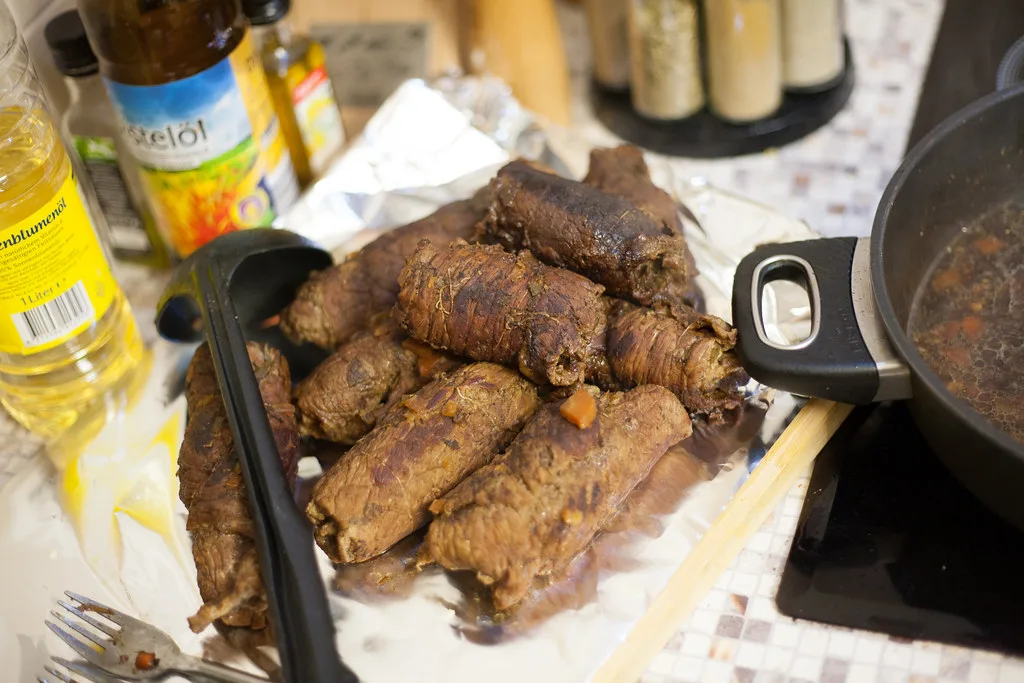
The classic cut is a thin slice of round steak, pounded until it is pliable enough to roll without cracking. The kitchenproject.com recipe calls for round steak no more than about a third of an inch thick before it is pounded thinner. Lean beef from the leg works because the long braise tenderizes it; a fattier, more expensive cut would be wasted in a pot of stock.
At the butcher counter, ask for dünne Rouladen or Rouladenscheiben, which means thin slices cut for rolling. A butcher will usually run the meat through a tenderizer for you rather than hand you a thick steak to pound at home. The pounding matters as much as the cut: a slice that is too thick will not roll tightly, and a loose roll leaks its filling into the gravy.
The classic filling: bacon, onion, mustard and dill pickle
The filling is where rouladen earns its reputation. Each slice gets a thin spread of mustard, then chopped bacon, some chopped onion and a narrow strip of dill pickle, and the three solid ingredients play different roles. Bacon brings fat and salt, onion brings sweetness as it softens in the braise, and pickle brings a sharp, sour note that cuts through the richness of the beef and gravy.
Mustard is the quiet fourth element, and recipes generally call for a sharp mustard rather than a sweet one. If you are making rouladen at home, keep the filling sparse: an overfilled roll splits, and the stuffing ends up floating in the pan instead of staying inside the meat.
How rouladen are cooked
The rolls are dredged in flour, browned in oil, then set in a pot with liquid poured around them to a depth of roughly half an inch before they are covered and simmered until tender. The kitchenproject.com version uses beef stock, sometimes with a splash of red wine, and thickens the pan liquid into gravy at the end with flour or cornstarch. A spoonful of sour cream stirred into that gravy is a common finish, giving it a slightly tangy edge.
The braise is what turns a tough cut into something you can cut with a fork. The allrecipes.com version follows the same arc, pan-frying the rolls and then simmering them in beef broth before serving them with a sour cream gravy. If you are cooking at home, the main risk is a rushed braise; the meat needs time in the liquid, not high heat.
What rouladen are served with
The default side is Spätzle, the small egg noodles you find across southern Germany, though noodles or mashed potatoes are just as common and a Klöße-style dumpling also fits the plate. The point of any of them is to catch the gravy, so the choice of starch matters more than it looks. In a restaurant the side is usually listed with the dish, so read the line under the name before you decide.
If the menu lists Spätzle with the rouladen, take it. The little noodles hold gravy better than a plain boiled potato and give you something to mop the plate with. If you are comparing braised dishes, our guide to Sauerbraten explains the marinated, vinegar-forward counterpart that often appears on the same page of a menu.
How rouladen taste and what the texture is like
Expect a soft, yielding roll rather than a steak, with the grain of the beef broken down by the braise. The first flavor is the savory gravy, then the bacon and onion inside, with the pickle arriving as a sour spike near the middle. The overall impression is rich and comforting rather than light, which is why a small side of something sharp or a simple salad balances it.
On the plate, a good roulade holds together when you cut it, and the filling stays inside rather than spilling into the gravy. If the knife meets resistance, the roll needed more time in the pot. The gravy should coat a spoon thinly, not sit in a heavy pool.
Pickles in rouladen: dill or sour, not sweet
The pickle in the roll is a dill or sour pickle, not a sweet bread-and-butter one, because the job is to add acidity rather than sugar. Recipes call for dill pickles cut into narrow strips, long enough to run the length of the roll. A sweet pickle would push the whole dish toward the wrong register and clash with the mustard and the sour cream gravy.
For cooking at home, a firm dill pickle holds its shape over the long braise better than a soft one. Taste the pickle before you commit: if it is very salty, cut back on added salt elsewhere in the filling.
Where to look for rouladen on a German menu
Look for Rinderrouladen, or simply Rouladen, among the main courses on a traditional Gasthaus menu, usually in the section with other braised and roasted meats. The dish tells you something about the kitchen: it takes time and a pot, so a place that lists it is cooking more than fried food to order. The side listed underneath is your clue to what will land on the plate, whether Spätzle, potatoes or noodles.
Rouladen often sit on a menu beside the other slow-cooked classics, so a page that offers rouladen, schnitzel and a pork roast is showing you the shape of the kitchen. If you are deciding between the fried and the braised end of the menu, our guide to Schnitzel in Germany explains the breaded cutlets and how they differ from the pot-roasted dishes.
Sunday and celebration food
Rouladen have long been a Sunday and celebration dish rather than everyday fare, which shapes when you are likely to see them. Beef was once expensive enough to keep the dish for special occasions, and the rolled format let a family serve a crowd from a modest joint. That history is why the dish keeps its place on festive menus and why it reads as home cooking when it appears in a restaurant.
If your trip falls over a weekend, a Sunday lunch of rouladen is a good use of it, but check the menu at the door or online before you commit, since a kitchen that does not serve it that day will not have it waiting.
Rouladen or the fried plate?
Order rouladen when you want the slow-cooked side of a German menu: a soft beef roll, a sour pickle in the middle and a gravy that makes the side dish worth having. It is the dish to choose if you are curious about the home cooking behind the beer-hall staples, and it pairs best with Spätzle and a simple glass of something cold.
If you are cooking at home, brown the rolls well, keep the filling modest and give the pot the time it needs. If you are eating out, look for Rinderrouladen on the main-course list and let the side dish tell you whether the kitchen is cooking for a Sunday. For the other braised classic that often shares the page, our Sauerbraten guide is the next stop.
Explore more Germany guides
Sources
Notes for your next German food trip
Optional updates to our guides.
You might also like



Continue reading
More guides you'll find useful


