
Schweinshaxe: Germany's Roast Pork Knuckle, Explained
Schweinshaxe is a roasted pork knuckle with crackling skin, served with sauerkraut and dumplings. Learn what it is and how it differs from Eisbein.
On this page
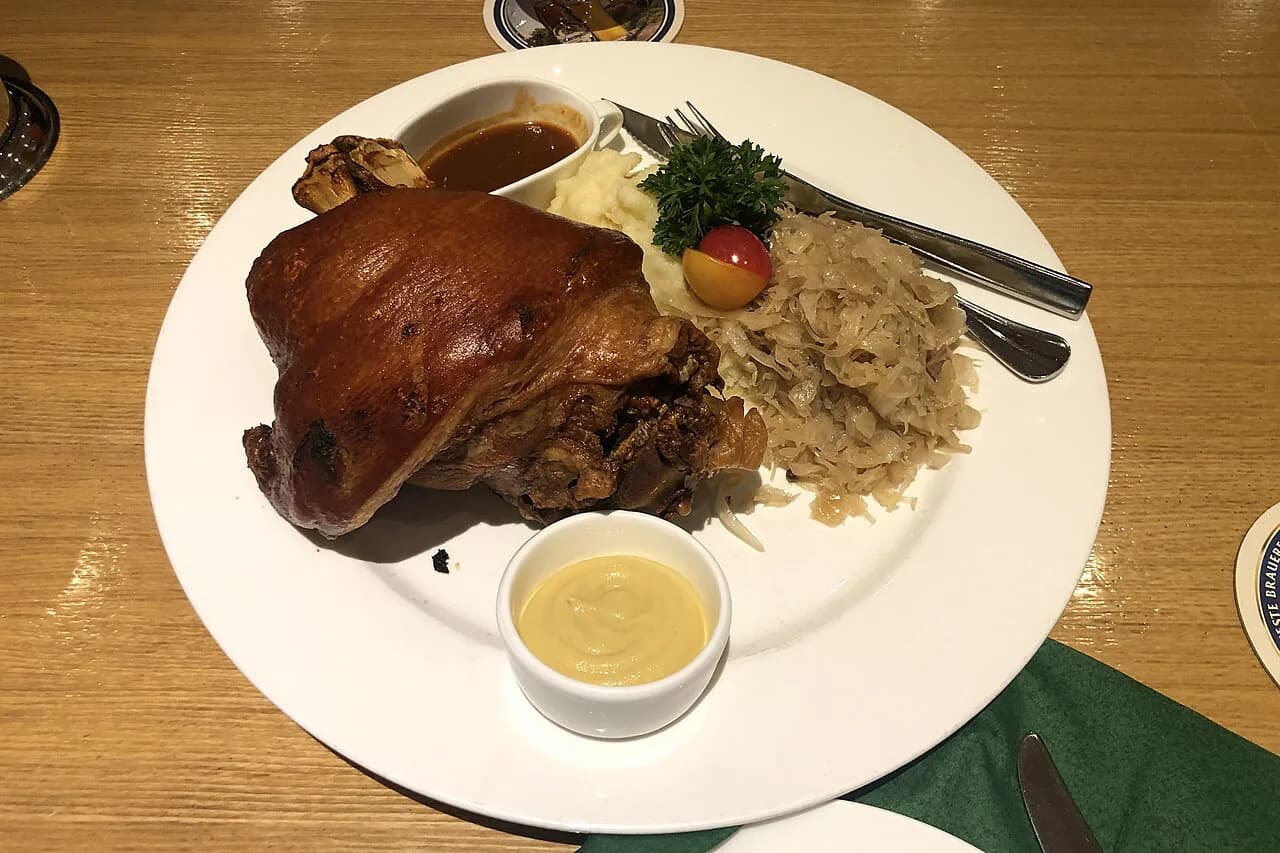
Schweinshaxe is a pork knuckle, also called a pork hock, roasted until the skin turns into crackling around tender meat. It is a southern German classic, most associated with Bavaria and the Oktoberfest table, and it arrives as a very large portion of meat. This guide explains what the cut is, how it differs from the boiled northern Eisbein, what to order with it, and how the roasting method produces that crust.
If you only remember one thing, make it this: order Schweinshaxe hungry, and expect the skin to be as much the point as the meat. The rest of this piece walks through the regional split, the sides, the beer, and the practical cooking details for anyone trying it in their own kitchen.
What Schweinshaxe actually is
The name covers a pork hock or knuckle, the joint between the pig's leg and foot, cooked skin-on so the outside can crisp while the inside stays juicy. The dish is a staple of Bavarian cooking and shows up throughout southern Germany in variations. Because the cut is bone, fat, skin and a modest amount of meat, it rewards long, slow cooking rather than a quick sear.
The portion is the first thing to adjust to. A single hock is a big order of meat, so first-time eaters often share one or skip a starter. Treat it as a main event rather than a light lunch, and keep the sides simple so the crackling stays the star.
Schweinshaxe versus Eisbein: south versus north
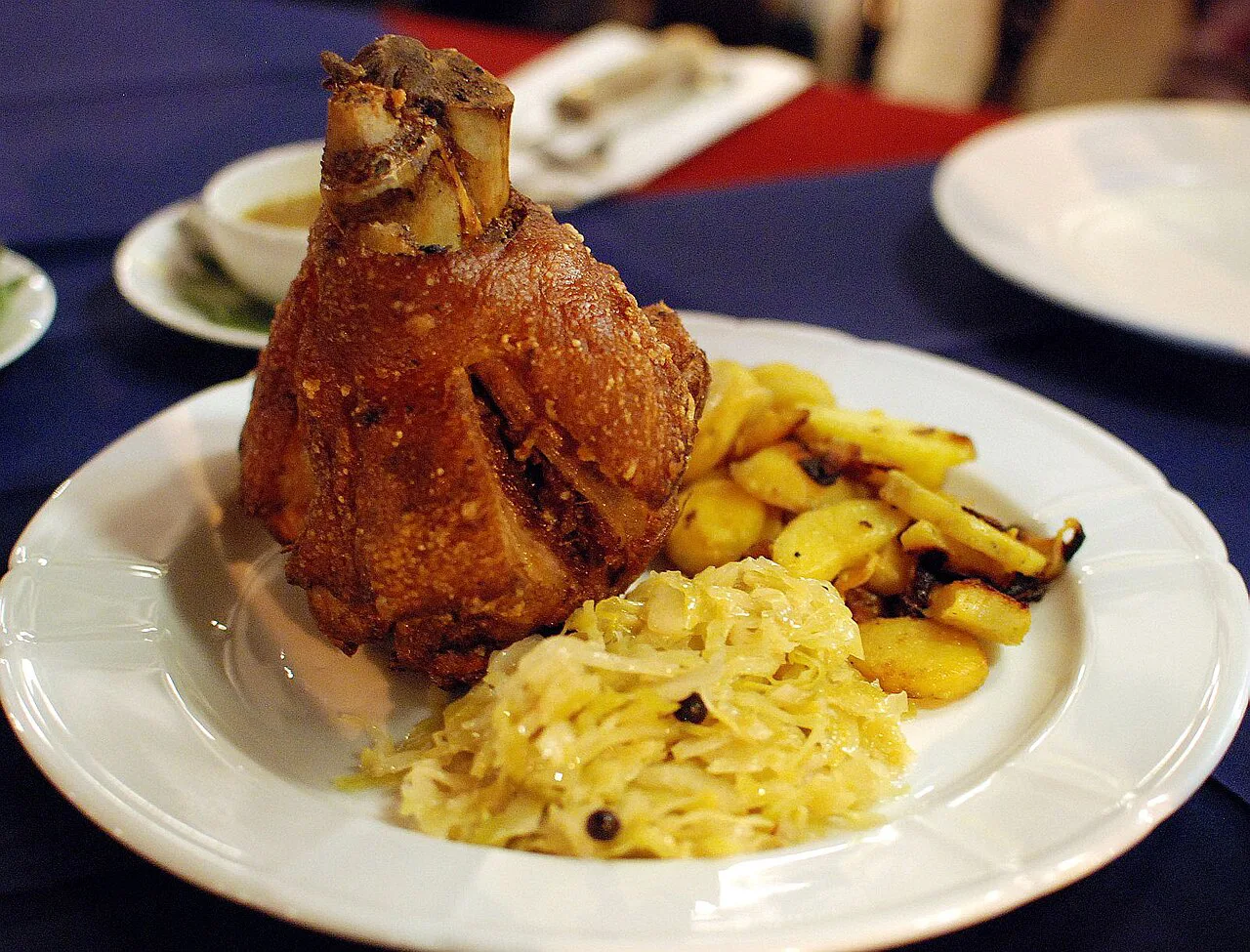
Germany cooks pork hocks two very different ways, and the names matter when you order. Schweinshaxe is the southern, roasted version with crispy skin, common in Bavaria and especially tied to Oktoberfest. Eisbein is the northern take: a boiled pork hock served with sauerkraut and puréed yellow peas, with mustard on the side, and the meat turns out very tender with a cooking broth worth spooning over.
What cut of meat is Schweinshaxe? It is a pork hock or knuckle, the joint between the pig's leg and foot, cooked skin-on. The southern German version is roasted so the skin crisps into crackling.
How do you pronounce Schweinshaxe? Roughly SHVINE-haks-eh, with the emphasis on the first syllable and a hard ks in the middle. Germans will understand it even if your accent slips.
Can you buy pork knuckle in the US? Often yes, but not always at a standard supermarket. Look for raw hocks at a butcher, a German deli or an Asian market, and avoid pre-smoked ham hocks if you want crackling.
If crackling is what you are after, you want the roasted southern style. If you prefer soft, yielding meat and a spoonful of broth, the boiled northern dish is the better call. Local menus usually name the dish plainly, but if the description mentions roasting or crisp skin you are looking at Schweinshaxe.
What it tastes like and how big it is
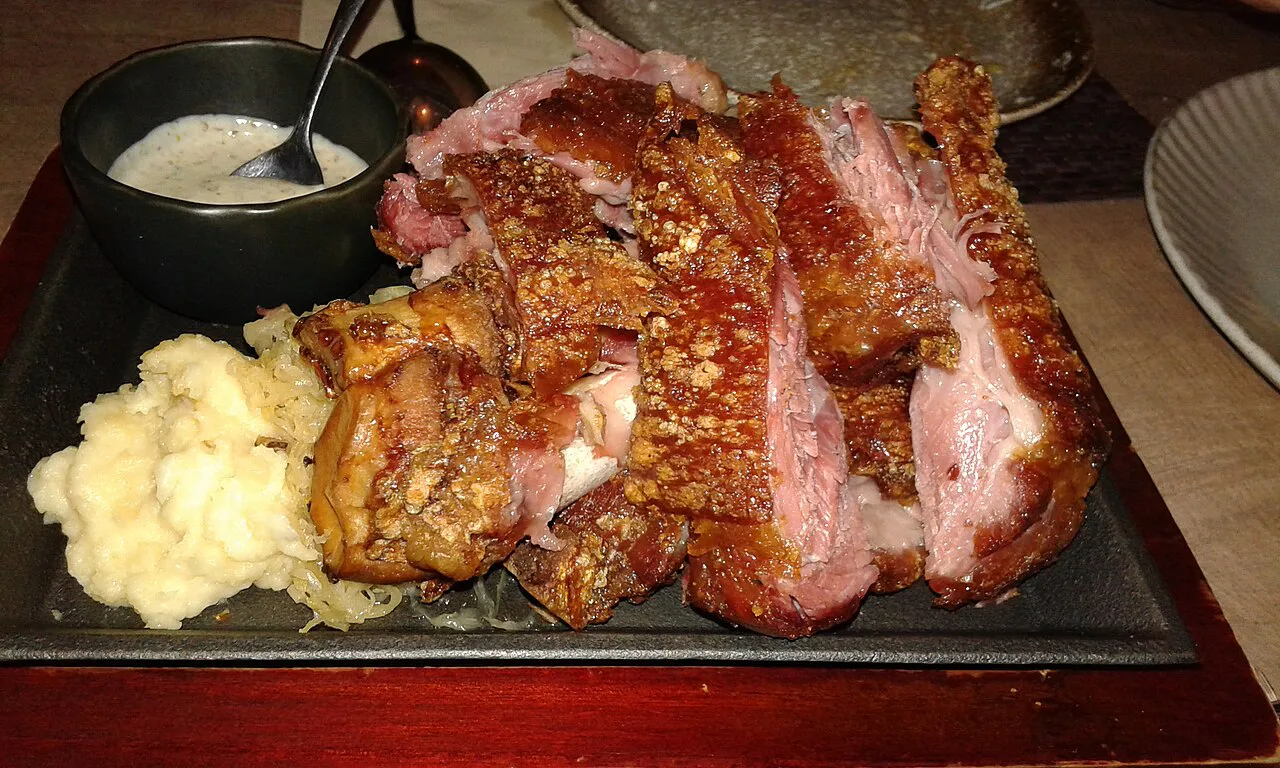
Expect deep pork flavor, a layer of fat under the skin, and a crust that should crack rather than bend. The seasoning is usually restrained, built on salt, pepper and often caraway, so the meat and crackling do the talking. When the skin is flabby and rubbery instead of crisp, the kitchen has likely rushed the final high-heat stage.
One hock is a full meal for most people and can stretch to feed two or three with sides, depending on size. Order a salad or a light soup first only if you plan to share the main. The skin is the attraction for many eaters, so do not leave it on the plate.
Where the dish comes from
Schweinshaxe belongs to Bavarian cooking, and it is one of the dishes most associated with Oktoberfest tables. It also has cousins across Germany, from roasted knuckle preparations to the boiled northern Eisbein. That regional spread explains why the same cut can arrive at the table looking completely different depending on where you are.
For travelers building a food-focused trip, the dish sits alongside other German classics such as Königsberger Klopse and Schwarzwälder Kirschtorte in the broader picture of German food. If you are choosing between hearty mains on a menu, Schweinshaxe is the heavier, more theatrical option, while schnitzel is the lighter, faster choice that appears almost everywhere.
What to order with it
The classic plate pairs the hock with sauerkraut, potato dumplings or fried potatoes, and a beer gravy. The kitchen may serve it over egg noodles or pasta instead, which works well with the pan juices. Bratkartoffeln, the fried potatoes, bring a crisp texture that balances the soft dumplings.
Mustard belongs on the table for the northern Eisbein, and many restaurants serve a small pot of it alongside. Sharp yellow mustard cuts the fat. If you want a spreadable starter before the main, Obatzda, the Bavarian beer cheese spread, is a classic partner for bread and beer.
How it is roasted to get crackling
The core method is slow cooking followed by high heat. A common home approach braises the hocks covered at low oven heat for hours, then roasts them uncovered, basting every 20 minutes, until the skin crisps and browns. Another route smokes the hock low and slow, then finishes it over a hot grill or rotisserie for about ten minutes to crisp the outside.
Two details decide whether you get crackling or a chewy hide. Dry the skin thoroughly before it goes into the heat, and score it so seasoning reaches the meat. Pull the hock once the meat is tender enough to slice, then move it to a hot fire to finish the skin.
A meat thermometer takes the guesswork out of doneness, and resting the hock for ten minutes before slicing keeps the juices in. Baking powder in a dry rub can help break down the skin proteins for a crisper result. Roasting with beer in the pan adds depth to the flavor and gives you the base for a gravy.
Beer and mustard alongside
A clean, bitter beer works best against the fat: a pilsner or a Munich helles keeps the palate fresh between bites. A German Riesling is another solid pairing if you prefer wine. Skip anything too sweet or heavy, which piles onto an already rich plate.
A sharp mustard is the traditional accompaniment on the northern table. Bread and a little Obatzda make a good opener while the hock finishes in the oven.
Buying pork hocks for cooking it yourself
Fresh, raw hocks are not always easy to find in a standard supermarket, where the closest thing may be pre-smoked ham hocks. A butcher is the first stop, followed by a German deli or an Asian market, which often sell raw pork hocks from the freezer case. Choose the meatiest hocks you can find and ask for the skin left on, since the crackling depends on it.
Check for stray hairs and singe them off before cooking. Two meaty hocks feed roughly three to four people with sides, so plan the rest of the meal around that.
Using the broth and leftovers
The braising liquid is worth keeping. It becomes a beer or stock gravy for the plate, and it makes a rich base for soups the next day. That is one reason the simmer-and-roast method pays off: you get tender meat and a flavorful broth from the same pot.
Leftover meat can go into a hash with fried potatoes, or be sliced cold for sandwiches with mustard. Keep the crackling separate and re-crisp it in a hot oven rather than a microwave, so it does not turn soft.
Schweinshaxe or Eisbein: which to order?
Order Schweinshaxe if you want crackling skin, roasted pork and the southern German experience; order Eisbein if you prefer soft, boiled meat with sauerkraut and peas. Either way, go hungry, share if the portion looks huge, and keep the mustard close. If you are cooking at home, buy raw hocks from a butcher or Asian market, dry and score the skin, cook low and slow, then finish hot.
Explore more Germany guides
Frequently Asked Questions
What cut of meat is Schweinshaxe?
It is a pork hock or knuckle, the joint between the pig's leg and foot, cooked skin-on. The southern German version is roasted so the skin crisps into crackling.
How do you pronounce Schweinshaxe?
Roughly SHVINE-haks-eh, with the emphasis on the first syllable and a hard ks in the middle. Germans will understand it even if your accent slips.
Can you buy pork knuckle in the US?
Often yes, but not always at a standard supermarket. Look for raw hocks at a butcher, a German deli or an Asian market, and avoid pre-smoked ham hocks if you want crackling.
Sources
Notes for your next German food trip
Optional updates to our guides.
You might also like



Continue reading
More guides you'll find useful





