Himmel und Erde: What to Know About Germany's Apple Dish
Himmel und Erde is a Rhineland dish of apples, potatoes, fried onions and bacon, usually served with blood sausage. Here is what the name means and how to order it.
On this page
Himmel und Erde is a warm German dish of apples and potatoes, cooked together and topped with fried onions and bacon, usually with blood sausage on the side. The name means "heaven and earth," and it is the plainest menu description you will ever read once you know the code. This guide covers what the name means, what lands on the plate, and how to order it in the Rhineland, where it goes by Himmel un Ääd.
What Himmel und Erde Is
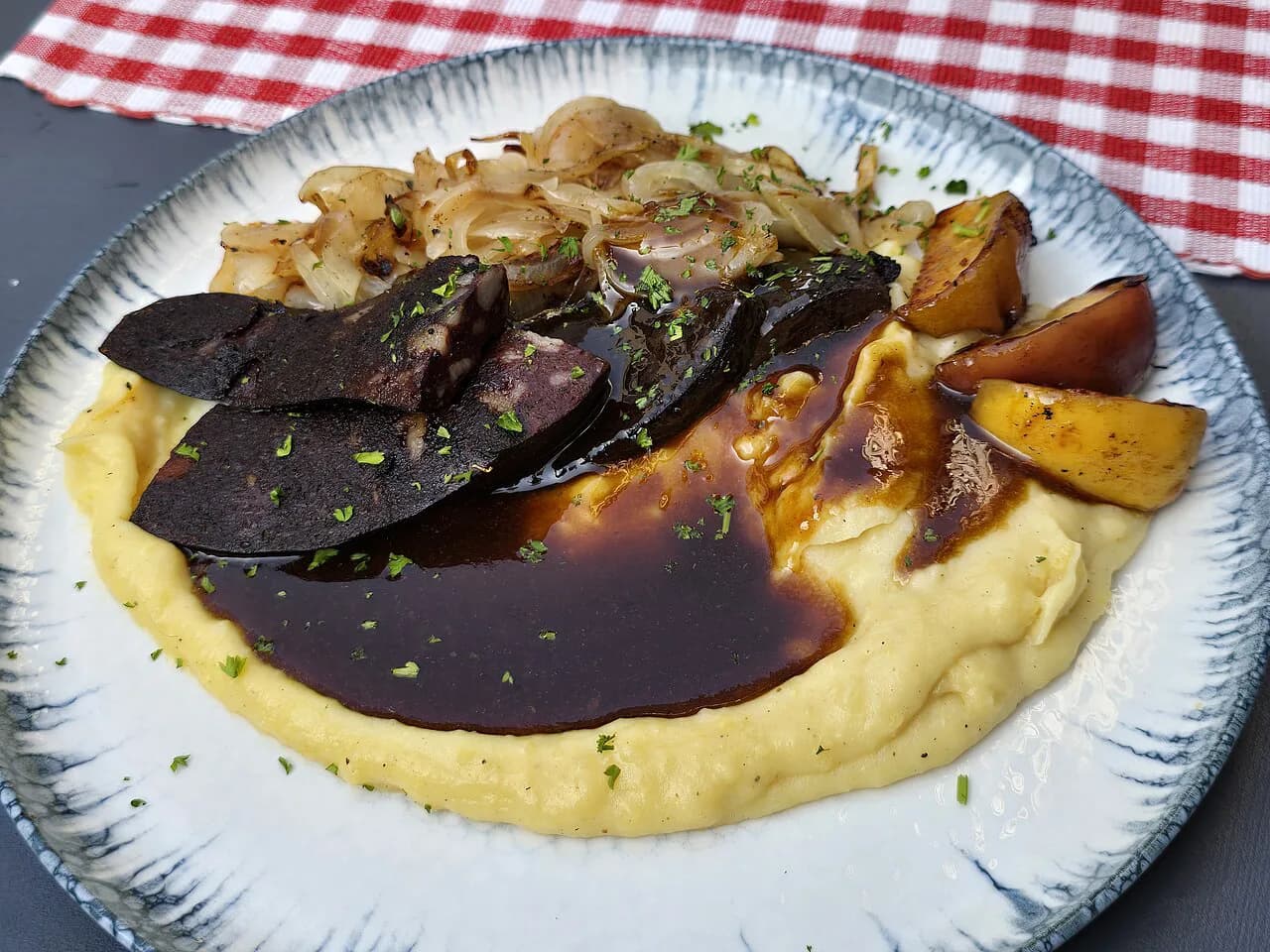
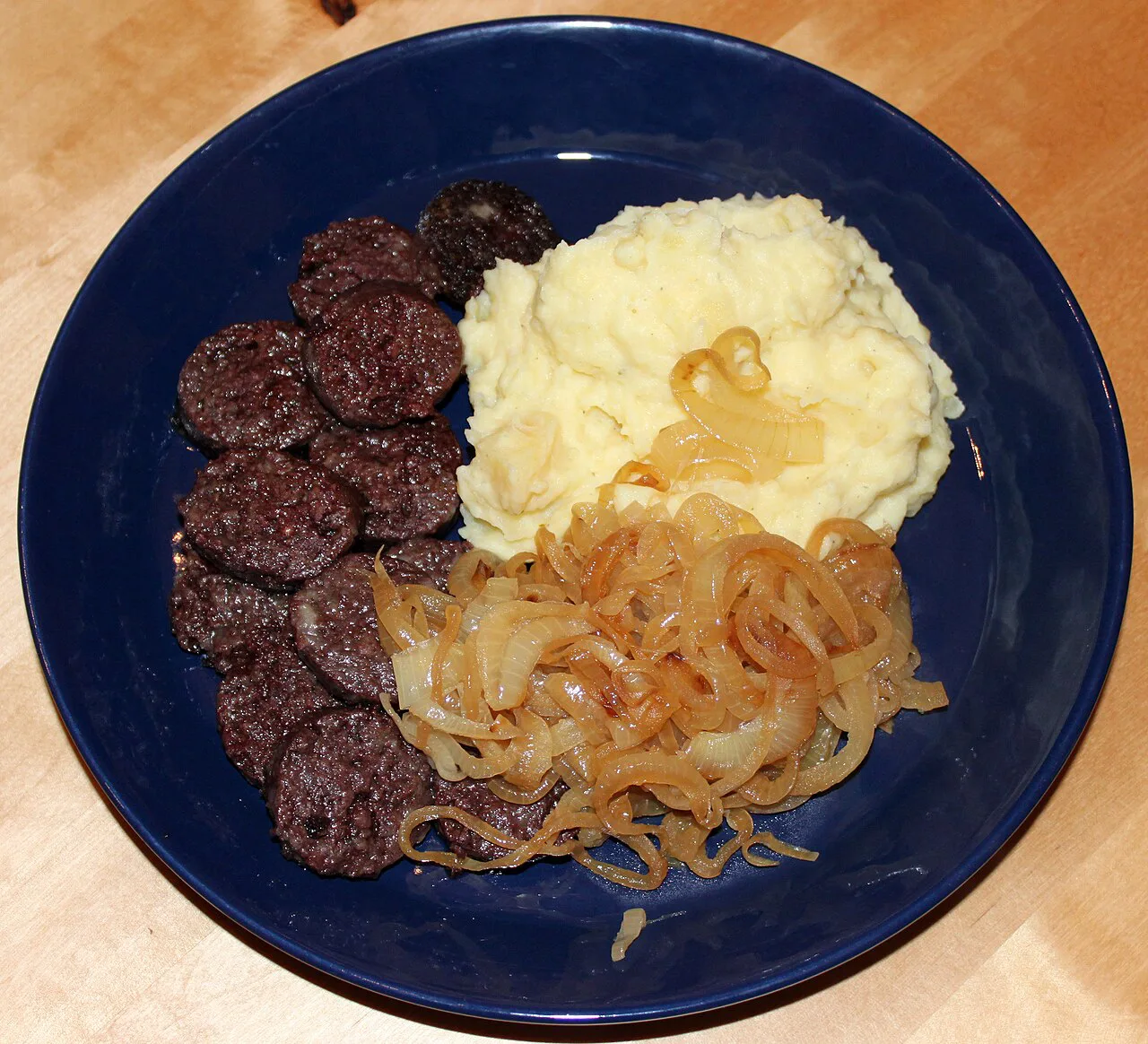
At its core, Himmel und Erde is a hot plate of apples and potatoes, boiled together until tender but still holding their shape, then finished with butter, a little sugar, vinegar, salt, pepper and nutmeg. The topping is bacon fried crisp and onion rings softened and browned in the bacon fat. It is a farmhouse dish from the Rhineland, documented as far back as the 18th century, and it reads as sweet, salty, tart and rich all at once.
Why the Name Means Heaven and Earth
The name is a small pun on where the ingredients grow. Apples hang on trees, up in the sky, so they are the heaven half; potatoes grow underground, and German dialects call them Erdäpfel, literally "earth apples," so they are the earth half. That is the whole trick. Once you hear it, the dish is easy to spot on a menu even if your German is thin.
Why the Name Means Heaven and Earth. The name is a small pun on where the ingredients grow.
What Is on the Plate. The base is roughly equal parts floury potatoes and tart apples, cut into chunks and simmered with a pinch of sugar and salt until just done.
The Sausage Question: Blutwurst or Panhas. Himmel und Erde is most often served with Blutwurst, German blood sausage, about half a kilo for four people.
What Is on the Plate
The base is roughly equal parts floury potatoes and tart apples, cut into chunks and simmered with a pinch of sugar and salt until just done. The balance is deliberately sweet-savory: the apples bring acidity, the sugar rounds it out, a splash of apple or white wine vinegar sharpens the finish, and nutmeg and butter pull the whole thing together. Crisp bacon and soft browned onions go on top for salt and depth.
Some cooks keep the potatoes and apples chunky and separate; others cook them longer so they break down into a rougher mash. Both are traditional. The chunky version lets you taste each ingredient; the mashed version is softer and reads more like a side dish than a plate. If texture matters to you, ask whether the potatoes are gestampft (mashed) or stückig (chunky).
The Sausage Question: Blutwurst or Panhas
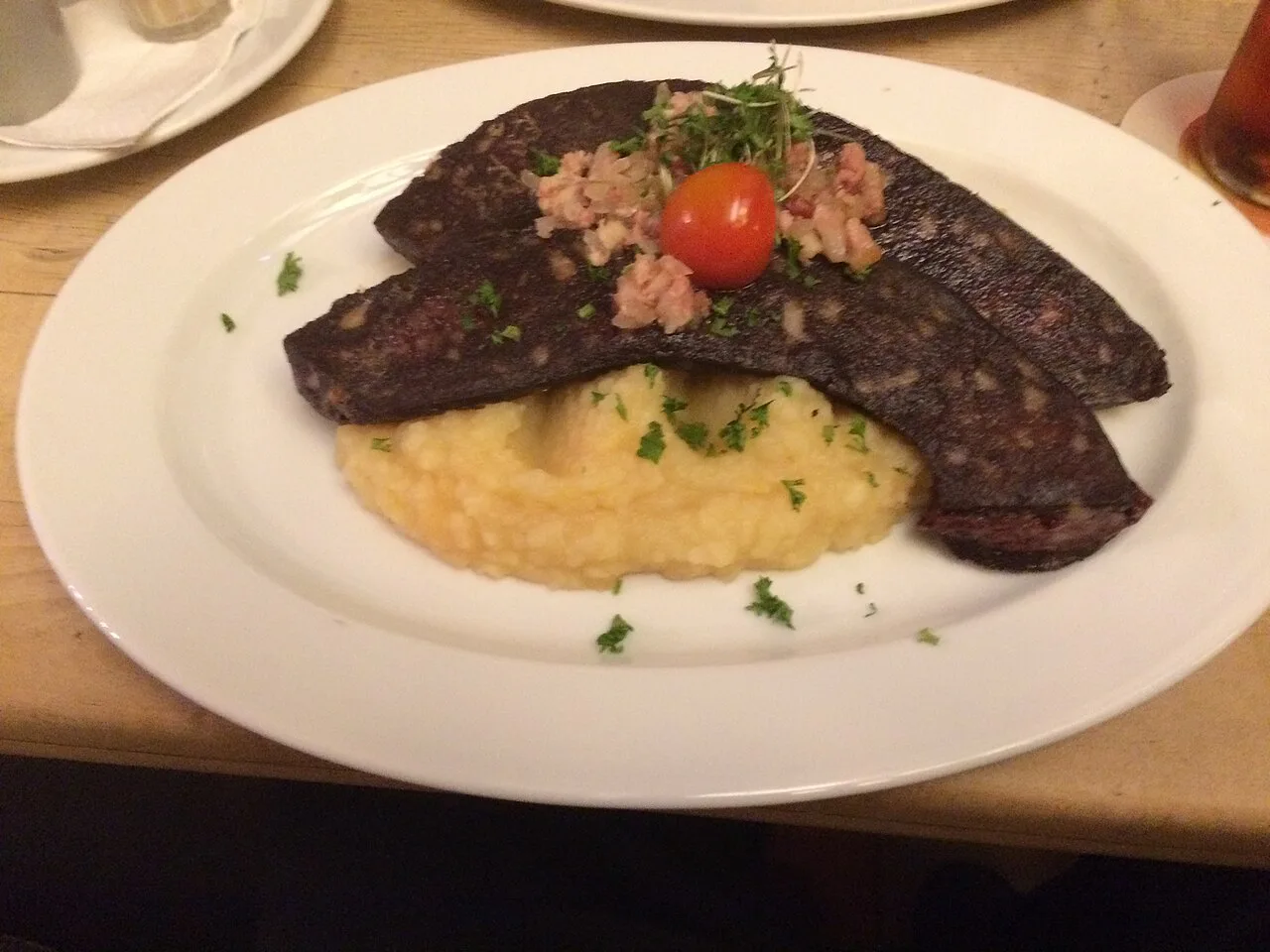
Himmel und Erde is most often served with Blutwurst, German blood sausage, about half a kilo for four people. The sausage is peeled, sliced and pan-fried with the onions until the edges crisp. Panhas, a firm Westphalian sausage made from grain and blood, is the other classic partner and holds together better in the pan; both are fried the same way.
Cooks who skip blood sausage swap in fried Bratwurst or strips of roasted chicken or turkey. The vegetarian version simply leaves the sausage off and piles on more fried onions. If you see Himmel und Erde on a menu without a sausage named, it is fair to ask what comes with it, because the plate changes a lot depending on the answer.
Himmel un Ääd: The Rhineland Name on Menus
In the Rhineland the dish appears on menus as Himmel un Äd, the local dialect spelling of the same name; shortening Erde to Äd is common in the region's dialect. If you are scanning a menu in a Rhineland pub, look for the shorter form; it is the same plate.
Variations Across Germany
The dish is known well beyond the Rhineland, and cooks in Westphalia, Lower Saxony and Silesia all have their own versions. The Dutch have a related plate called hete bliksem ("hot lightning"), and the Swiss have Schnitz und Drunder, which pairs dried apples with potatoes. The constants stay the same: apple, potato, something salty and fried on top.
How to Eat It Like a Local
In the Rhineland it arrives as a full plate with the sausage alongside, and the portion is filling. The dish is rich and soft, so a crisp beer or a dry apple cider cuts through it better than a heavy dark beer would.
If you want the classic version, ask for it mit Blutwurst; if you would rather have it plain, ohne works. It is a plain, home-style dish, so do not expect anything fancy on the plate.
Where It Sits Among German Classics
Himmel und Erde belongs to the same home-cooking tradition as Sauerbraten and schnitzel: hearty, inexpensive and built around what grows nearby. It is a good entry point if you want to eat like a local rather than chase the biggest name on the menu. If you have room for a second classic, schnitzel in Germany is the more familiar route, and the German food guide covers the wider map of dishes to try.
Himmel und Erde or Schnitzel?
Himmel und Erde is the dish to order if you want something you cannot easily get at home: tart apples, soft potatoes, crisp bacon and, if you like, blood sausage, all on one plate. If you are traveling with someone who is squeamish about blood sausage, order it with the Bratwurst swap and share a bite of each. It is a Rhineland specialty, so look for it on menus in Cologne, Düsseldorf or Aachen.
Explore more Germany guides
Sources
Notes for your next German food trip
Optional updates to our guides.
You might also like
Continue reading
More guides you'll find useful