
Sauerbraten: What It Is, How It's Made, and How to Order
Sauerbraten is Germany's tangy marinated beef pot roast, braised for hours and served with a rich sauce. Learn what it is, how it's made, and how to order it.
On this page
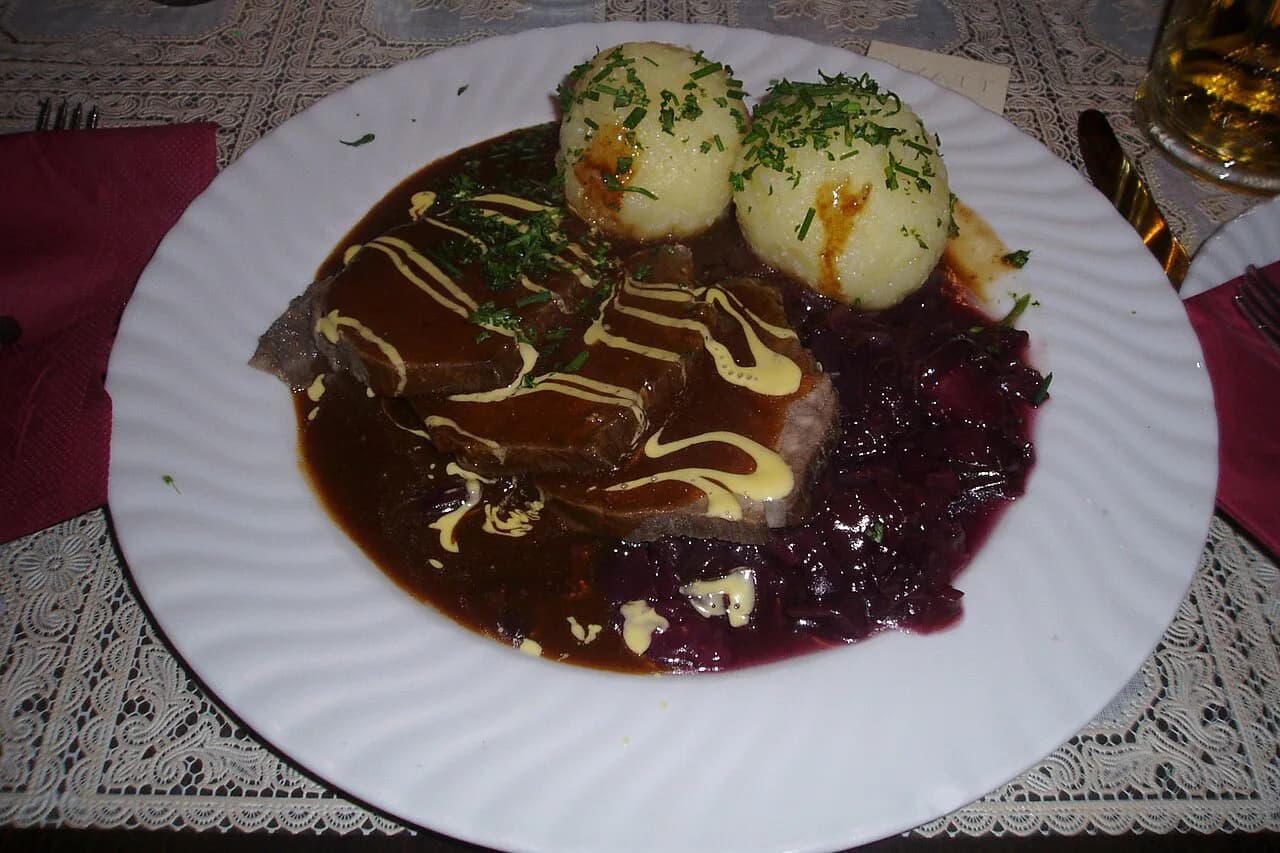
Sauerbraten is Germany's tangy beef pot roast, and the sourness in the name comes from a vinegar marinade rather than from the cooking. The meat sits in that liquid for days, then braises slowly until it pulls apart and the marinade reduces into a dark, sharp sauce. This guide covers what the dish is, what goes into the marinade, which cuts of beef work, how the sauce is finished, and how to recognize the regional versions on a German menu.
It helps to place Sauerbraten among the braised classics of German food before you order, because the plate you get varies by region and by kitchen. Some versions finish the sauce with crushed gingersnaps and raisins, others with a butter-and-flour roux, and both are documented approaches rather than one true method.
What Sauerbraten Is and Why It Tastes Sour
The dish is a marinated beef roast, usually a large joint, cooked in the marinade with aromatics until it is tender enough to slice or pull apart. Sauerbraten is treated as a national dish of Germany with regional variations in how it is prepared, which is why two plates in two towns can taste noticeably different. The sourness is the point: it cuts through the richness of the beef and gives the sauce a brightness that a plain roast lacks.
Expect a flavor closer to a sharp, winey pot roast than to a sweet glaze. The vinegar tang softens during the long braise but never disappears, and the sauce tastes of the spices that went into the marinade. If you like pickled and braised flavors, this is the German main course to order first.
The Marinating Step: Vinegar, Water, and Aromatics
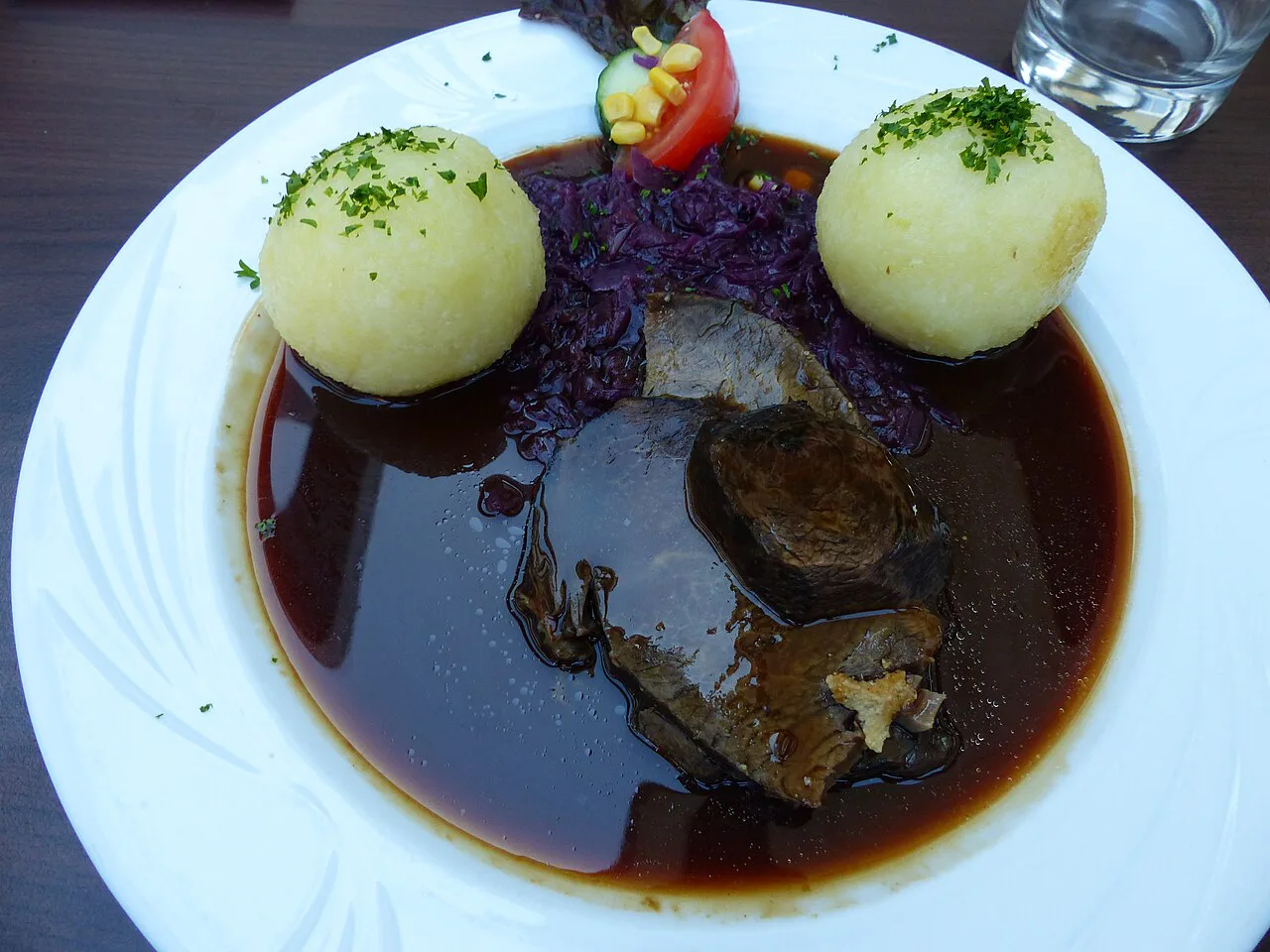
The marinade is built from vinegar and water in roughly equal volume, sometimes heated with the spices and vegetables so the flavors bloom, then cooled before the meat goes in. One widely followed home version uses a mix of cider vinegar and red wine vinegar, with the spice liquid simmered for ten minutes first. The beef then rests in that liquid in the refrigerator for three days, turned once a day so every side gets contact.
What does Sauerbraten taste like? It tastes sour first, then savory and faintly sweet. The vinegar marinade gives the meat and sauce a sharp edge, the long braise makes the beef tender, and the sugar and caramelized vegetables round out the finish.
How long does Sauerbraten need to marinate? Between three and four days is the documented range. Some recipes turn the meat once a day, others every twelve hours, so every surface keeps contact with the liquid.
What is the difference between Sauerbraten and a regular pot roast? A regular pot roast is seasoned and braised; Sauerbraten spends days in a vinegar-based marinade before it is cooked, which is where the tang comes from. The sauce is also typically thickened with a roux or crushed gingersnaps.
Another approach skips the simmering and simply combines the vinegar, water, sugar and spices before pouring them over the beef and onions, then marinates for three to four days with a turn every twelve hours. Either way, plan the dish around the calendar rather than the clock: the marinade does most of the work, and the cooking day itself is mostly unattended oven time.
Aromatics in the Marinade: Bay Leaves, Cloves, Peppercorns, Juniper, and Mustard Seeds
Bay leaves, whole cloves and black peppercorns are common in Sauerbraten marinades, along with onion, garlic and often carrot. Juniper berries and mustard seeds show up in some recipes and give the sauce a resinous, slightly sharp edge that pairs well with the vinegar.
Sugar goes into the marinade too, usually granulated at the start and brown sugar added when the vegetables and strained liquid are simmered before braising. That sugar is not there to make the dish sweet; it balances the acid and helps the sauce color. If you are cooking at home, taste the marinade before the meat goes in and adjust the sugar rather than the vinegar, since the acid will mellow in the oven.
Which Cut of Beef Works: Rump, Bottom Round, or Topside
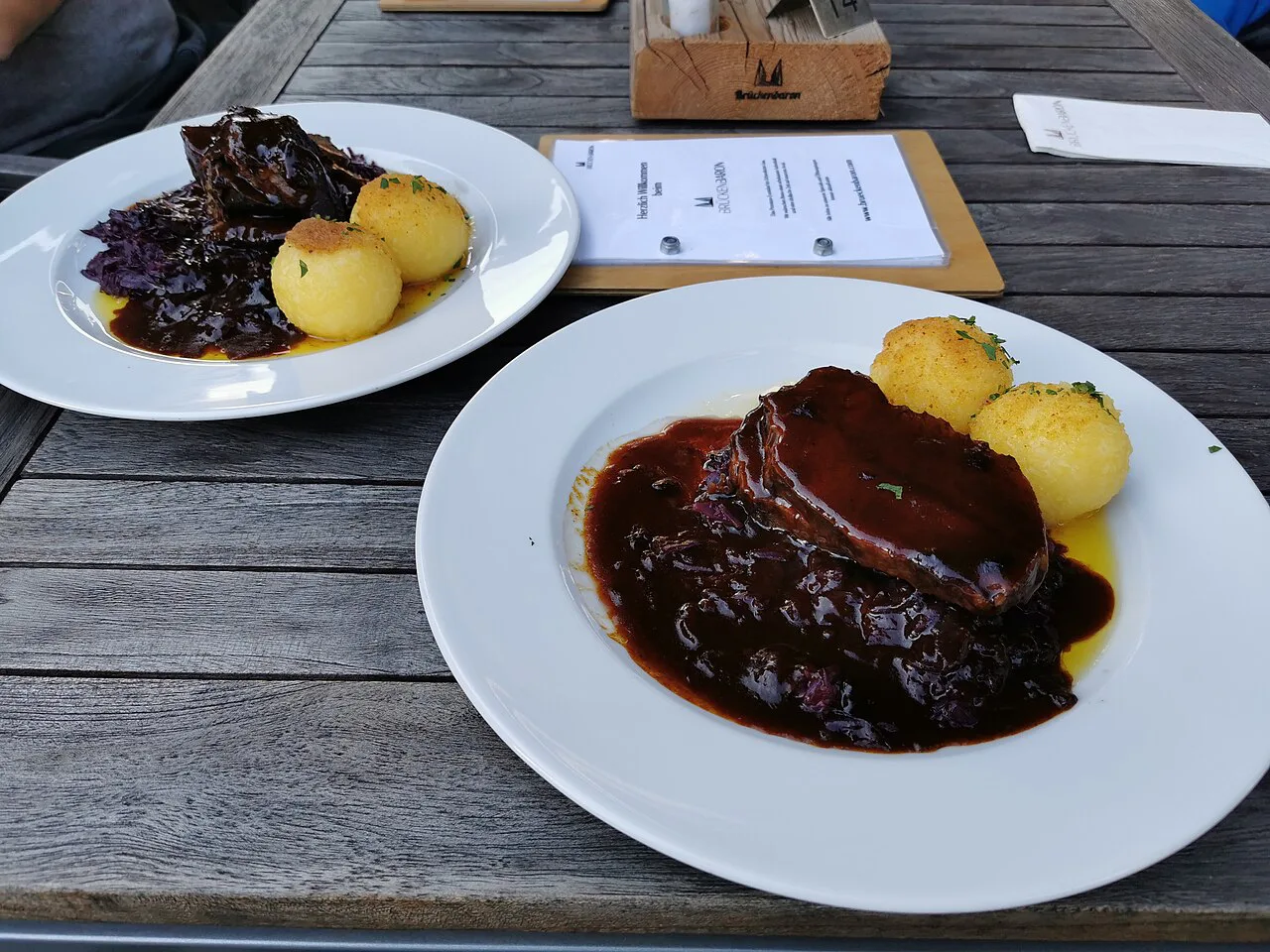
Sauerbraten suits inexpensive, lean cuts that benefit from long moist cooking. Beef rump, topside or silverside is one documented choice, and bottom round is another, both tough enough to need hours in the oven and sturdy enough to hold their shape. A five-pound rump joint serves about eight people, so it is a dish for a table of guests rather than a weeknight for two.
If the finished meat turns out tougher than you hoped, slice it thinly across the grain rather than fighting it with a knife at the table. That is a practical fix for round cuts, which have pronounced natural separations in the muscle.
Searing and Slow Braising Until the Meat Pulls Apart
The meat comes out of the marinade, gets dried, and is browned hard on all sides before braising. One home cook sears for around ten minutes to build a deep crust, calling the browning essential to flavor. The strained marinade, onions, garlic and carrots then go into the pan, simmer briefly, and the whole lot goes into a covered pot in a low oven.
Timing runs long: about four hours in a 350F oven in one version, three to four hours at 300F in another. Keep an eye on the liquid level so the sauce does not scorch, adding a splash of water if the pot looks dry. The beef is ready when it is very tender, and it should rest for about fifteen minutes before carving.
Thickening the Sauce: Roux or Crushed Gingersnaps
The two finishing routes give you very different sauces. A roux of butter and flour, cooked until golden and whisked with the strained braising liquid, produces a smooth, glossy gravy with a clean vinegar flavor. Crushed gingersnaps stirred into the reduced sauce thicken it quickly and add sweetness, spice and a faint cookie note that some cooks find essential and others find too sweet.
A roux is the safer choice if you want the meat and the vinegar to lead. Gingersnaps suit a sweeter, heavier plate and often come with raisins stirred in at the end.
Regional Variations Worth Knowing
Sauerbraten is not a single fixed recipe, and its variations map onto regions rather than one city, so the plate changes from one part of Germany to the next. Raisins and gingersnaps belong to some of the sweeter, darker interpretations, while other kitchens keep the sauce lean and sharp.
On a German menu, the word Sauerbraten alone tells you the meat was marinated; the sides and the sauce style tell you which tradition the kitchen follows. If the description mentions raisins, expect the sweeter route. If it mentions Rotkohl or a dark gravy without fruit, expect a sharper plate.
What to Order Alongside: Spätzle, Boiled Potatoes, and Braised Cabbage
The classic pairing is a mild starch that soaks up the sauce without competing with it. Spätzle, the soft southern German egg noodles, is one common side, and boiled potatoes are another, chosen because their creamy plainness balances the caramelized, pungent meat. Braised cabbage, often red, adds acidity and sweetness in the same bite.
Skip anything heavily smoked or pickled alongside, which fights the vinegar rather than complementing it. If you want a second German classic on the table, a breaded schnitzel is a different register entirely, so order one or the other as the main event.
What a Plate Tastes Like
The first bite is sour, then savory, then faintly sweet from the sugar and the caramelized vegetables. The meat should be soft enough to cut with a fork but still slice cleanly, and the sauce should coat a spoon without being gluey. Boiled potatoes are the traditional partner here, and they mop up the sauce in a way that roasted potatoes do not.
Portions in Germany tend to be generous, and a Sauerbraten plate is filling in a way that a schnitzel is not. If you are eating a big lunch, order the smaller portion or share a dessert afterward rather than adding a starter.
Eating Sauerbraten in Germany
Sauerbraten shows up on traditional German menus, from city Gasthäuser to country restaurants, and it is most often a lunch or Sunday dish. Menus usually name the sauce style and the sides, so read the description rather than assuming the plate, because the regional style varies.
Pair it with a plain lager or a dark beer rather than anything too hoppy, since the vinegar already provides the sharpness. For more on the dishes that share the table with it, from braised pork knuckle to rolled beef with mustard and pickle, the wider German food repertoire is worth a look before you order. Rouladen, thin beef rolls filled with mustard and pickle, is the other slow-braised beef classic to compare against.
Sauerbraten in the US and UK; Cooking It at Home
Outside Germany, Sauerbraten is a home-cooking project more than a restaurant staple, though German-American restaurants in the US and German pubs in the UK sometimes list it. Making it at home means starting three to four days ahead and giving the oven half a day. The reward is a dish that feeds eight and tastes better a day or two later, which makes it a practical choice for a weekend gathering.
If you are new to German cooking, start with a simpler braise such as Königsberger Klopse, veal meatballs in a caper sauce, or a cake like Schwarzwälder Kirschtorte, rather than a three-day marinade. A roast this long is best attempted when you already have the rhythm of German braising.
Should You Order Sauerbraten or Cook It?
Order Sauerbraten in Germany if you want a tangy, slow-braised beef plate that tastes unlike anything on a typical American menu. Cook it at home if you have three days to marinate and half a day in the oven, and choose the roux route for a sharper sauce or the gingersnap route for a sweeter one.
Either way, pair it with Spätzle or boiled potatoes and something braised and acidic on the side. That combination is what makes the dish work.
Explore more Germany guides
Frequently Asked Questions
What does Sauerbraten taste like?
It tastes sour first, then savory and faintly sweet. The vinegar marinade gives the meat and sauce a sharp edge, the long braise makes the beef tender, and the sugar and caramelized vegetables round out the finish.
How long does Sauerbraten need to marinate?
Between three and four days is the documented range. Some recipes turn the meat once a day, others every twelve hours, so every surface keeps contact with the liquid.
What is the difference between Sauerbraten and a regular pot roast?
A regular pot roast is seasoned and braised; Sauerbraten spends days in a vinegar-based marinade before it is cooked, which is where the tang comes from. The sauce is also typically thickened with a roux or crushed gingersnaps.
What should I drink with Sauerbraten?
A plain lager or a dark beer works well because the vinegar already provides the sharpness. Avoid heavily hopped beers that would compete with the sour notes.
Sources
Notes for your next German food trip
Optional updates to our guides.
You might also like



Continue reading
More guides you'll find useful





