
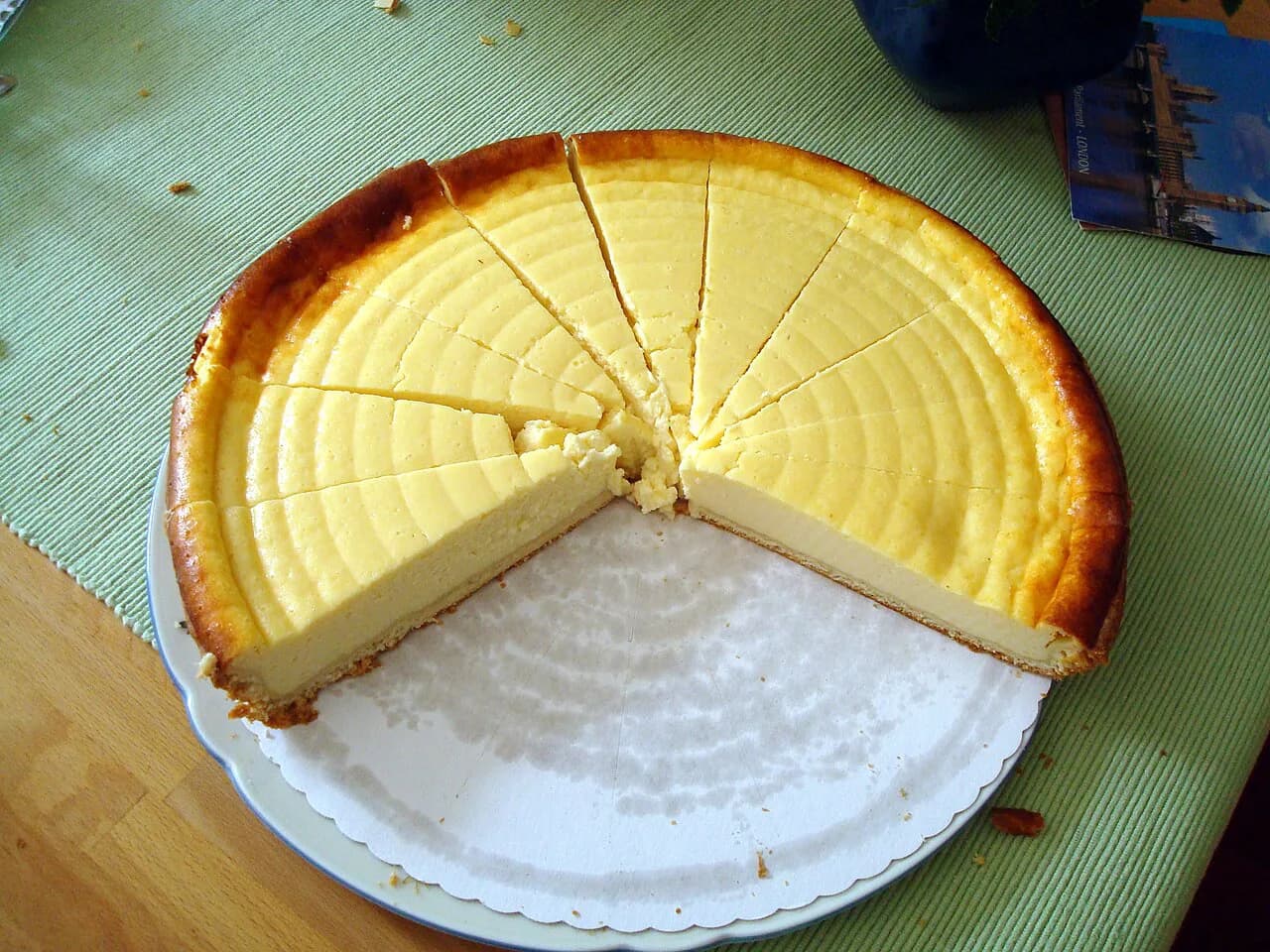
Käsekuchen: What Makes German Cheesecake Different
Käsekuchen is German cheesecake made with quark, a light tangy soft cheese, on a Mürbeteig crust. Here's how it differs from American cheesecake and what to order.
On this page
Käsekuchen is German cheesecake, and the short answer to what makes it different is quark. That strained soured-milk soft cheese gives the filling a tang and an airy set that cream cheese never quite reaches, so a German slice reads light rather than dense. This guide covers what quark actually is, how the German cake differs from the American one in cheese, crust and sweetness, the variations you will see, and how to bake one at home.
What Käsekuchen is, in one answer
Käsekuchen is a baked cheesecake built on quark, a soft fresh cheese made from strained soured milk, set on a thin shortcrust pastry rather than a cookie crumb base. The filling is sweetened but markedly less sugary than the American version, and it is usually served plain, without a sauce or a pile of topping. Think of it as a cool, tangy slice with a faint lemon edge, the kind of cake that sits on a café counter next to the coffee rather than after a heavy dinner.
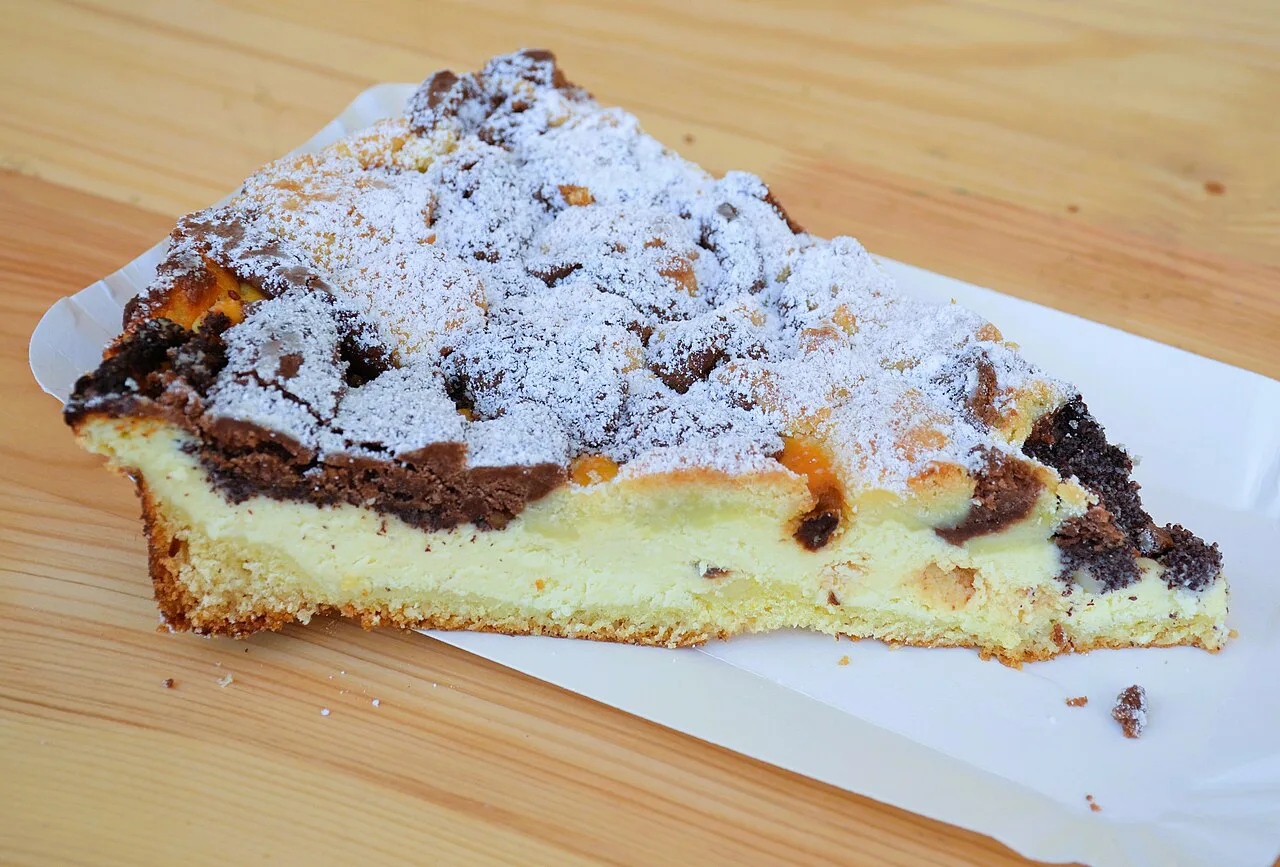
Quark: the soft cheese that makes it German
Quark is a soft cow's-milk cheese made from strained soured milk, high in protein and generally low in fat, and it is neither yogurt nor cottage cheese nor ricotta, even if it echoes all three. It is used in both sweet and savory German cooking, which is why it turns up in a cake at all. In Germany it is a cheap, ordinary grocery item; outside the country it is harder to find, so the cheese you use is the single biggest decision in your bake.
Is German cheesecake served warm or cold? It is served chilled or at room temperature, never warm from the oven. Letting a slice sit out briefly before eating brings out the flavor and softens the texture.
Can I make Käsekuchen without quark? Yes, with a change in texture. Strained Greek yogurt, blended cottage cheese or whole-milk ricotta are the usual stand-ins; making quark at home gives the closest result.
Why does my German cheesecake crack on top? A sudden drop in temperature is the usual cause. Leaving the cake in the switched-off oven with the door ajar as it cools reduces cracking, and a small crack is normal anyway.
Two approaches work. You can make quark at home from scratch, which gives the closest flavor and texture. Or you can substitute: strained Greek yogurt thickened in cheesecloth, cottage cheese blended smooth, or whole-milk ricotta. Each substitute shifts the result, so expect a slightly different crumb and tang rather than an identical cake.
Käsekuchen vs American cheesecake: cheese, crust, sweetness, texture
Line the two cakes up and the differences fall into four columns. The cheese is quark against cream cheese; the base is a shortcrust called Mürbeteig against a graham cracker crust; the sweetness is restrained against generous; and the texture is airy against dense. German cheesecake is also commonly eaten without toppings or sauces at all, where the American slice often arrives with fruit compote or a swirl.
That lightness is not an accident of the cheese alone. One recipe separates the eggs and folds stiffened whites into the batter, which lifts the filling further, and another whips cream and folds that in. Either way, the goal is a set that holds a clean slice but still tastes soft. If you have only had the dense New York style, this is the adjustment to make in your head before the first bite.
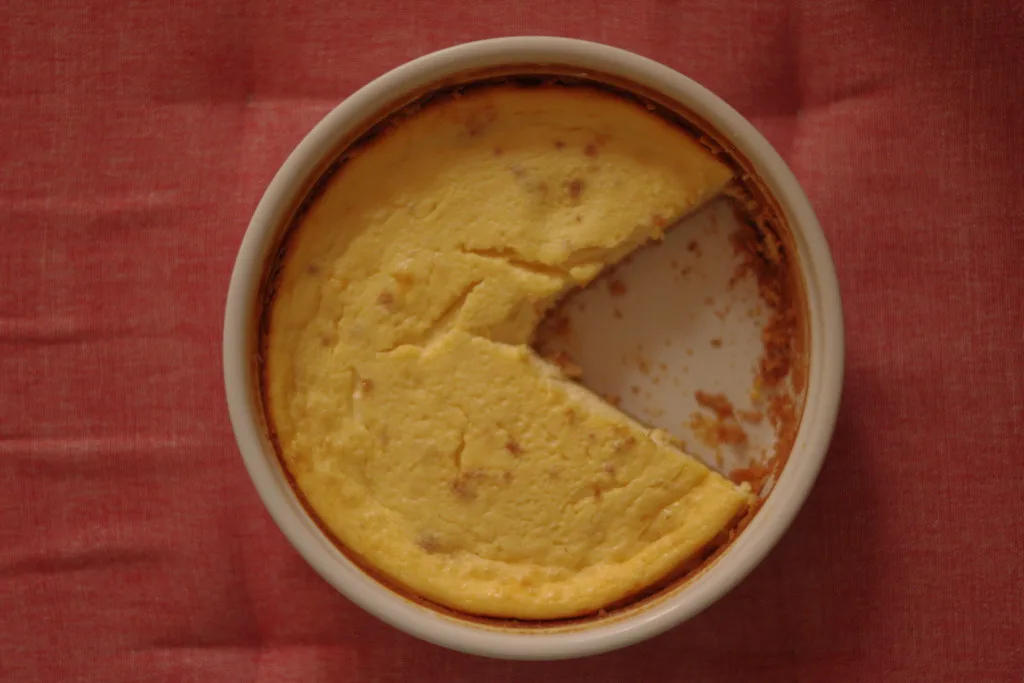
Why German cheesecake tastes tangier and feels lighter
The tang comes straight from the quark, which is a cultured, soured-milk product rather than a neutral cream cheese. Lemon zest and juice in the filling sharpen it further, and because there is less sugar to mask the dairy, you taste the cheese first. The lighter feel follows from the same source: quark is lower in fat than cream cheese, and the whipped or folded components add air to the structure.
Mürbeteig: the shortcrust base instead of graham crackers
Mürbeteig is a simple shortcrust made from flour, butter, sugar and egg, pressed thin across the bottom and about an inch up the sides of a springform pan. It bakes into a firm, crumbly layer that stays crisp under the moist filling, which is why the cake slices cleanly. The dough can look like too little for the pan; keep pressing until it forms an even layer with no cracks, or the filling will leak through.
Common variations: fruit, sheet-pan Blechkuchen and mandarin orange
Plain is the baseline, but fruit is common: mandarin oranges, apples, pears or berries stirred into or laid on the filling. The sheet-pan version, a Blechkuchen, is a home-baking staple and is often topped with mandarin orange segments, which makes it a good cake to cut into squares for a crowd. Chocolate or fresh fruit in the batter is another route if you want to experiment.
Beyond cheesecake, the German café counter runs deep: a Black Forest Cake (Schwarzwälder Kirschtorte) layered with cream and cherries, a Bienenstich with its honey-almond caramel topping, or a Donauwelle striped with cocoa and sour cherries. If you are building a mental bakery order, it helps to know these before you point. Our guide to German Cakes and Pastries maps the whole case.
How it's served and eaten in Germany
Käsekuchen is served as a coffee cake, sliced cold from the fridge or brought back to room temperature, and it is usually eaten plain with no sauce or topping. Bringing it to room temperature before serving improves both flavor and texture, so a slice pulled straight from the chiller tastes flatter than one that has sat out a few minutes. Stored in the fridge, it keeps for three to four days.
At a Konditorei or café, order it with coffee in the afternoon rather than as dessert after a big meal; that is when the cake case is at its best. Bakery counters sell it by the slice too, often alongside other sheet cakes. Ask what is in the filling if fruit variations are on offer, since the topping changes the sweetness considerably.
Making it at home: quark, temperatures and method
One widely used approach preheats the oven to 350 F (180 C), presses the shortcrust into a 10-inch springform, and bakes the filled cake for about an hour until puffed and browned, with a slight jiggle at the center. Then the oven goes off and the cake cools inside with the door ajar, which slows the temperature drop. Let it cool fully before releasing the pan, or the filling may not be set enough to slice.
A second approach bakes at the same temperature for roughly 70 minutes and relies on whipped egg whites for lift, plus a little vanilla pudding powder in the batter. If you cannot get quark, whole-milk ricotta blended smooth is the substitute that recipe recommends. Either way, chill the crust before adding the filling and smooth the top so the cake browns evenly.
Why the top cracks and sinks — and why that's normal
A small crack is normal, and a puffed top that sinks slightly in the center as it cools is exactly what a quark cheesecake does. Big cracks usually come from a sudden temperature change, which is why the cake is left in the switched-off oven with the door open. Slicing too early is the other common problem: the filling needs to cool completely to firm up.
If you want a smoother top for a celebration, bake it a day ahead and let it settle overnight in the fridge. Do not chase a flawless surface at the cost of overbaking, because a dry quark filling loses the tang that makes the cake worth eating. Serve it plain, or with berries on the side rather than a heavy sauce.
Order it plain, then bake one yourself
If you see Käsekuchen in a German café case, order a plain slice first and let the quark do the talking; the fruit versions can come later. At home, the cheese choice is the whole game, so buy real quark or make it, and fall back on strained yogurt or blended ricotta only if you must. Bake it, cool it slowly in the oven, chill it, and serve it at room temperature.
Explore more Germany guides
Frequently Asked Questions
Is German cheesecake served warm or cold?
It is served chilled or at room temperature, never warm from the oven. Letting a slice sit out briefly before eating brings out the flavor and softens the texture.
Can I make Käsekuchen without quark?
Yes, with a change in texture. Strained Greek yogurt, blended cottage cheese or whole-milk ricotta are the usual stand-ins; making quark at home gives the closest result.
Why does my German cheesecake crack on top?
A sudden drop in temperature is the usual cause. Leaving the cake in the switched-off oven with the door ajar as it cools reduces cracking, and a small crack is normal anyway.
Sources
Notes for your next German food trip
Optional updates to our guides.
You might also like



Continue reading
More guides you'll find useful




