
Mett: Germany's Raw Ground Pork Spread and How to Eat
Mett is raw, finely ground seasoned pork eaten on a roll as a Mettbrötchen. Learn what it is, how it's sold, what to order, and how to eat it in Germany.
On this page
Mett is raw ground pork, seasoned with salt and pepper and usually topped with raw onion, eaten cold on a bread roll. Germans call that sandwich a Mettbrötchen, and it is a standard butcher-counter item rather than a dare. This guide covers what Mett is, how it tastes, the variations you will see in the case, and how to order it without guesswork.
It sits apart from the cooked sausages most visitors know. If you are working through the grilled and boiled classics, the wider world of German sausages runs from bratwurst to liverwurst, and Mett is its own raw, spreadable branch.
What Is Mett?
Mett is finely ground raw pork, sold seasoned or seasoned at the counter with salt and black pepper; some regions add garlic or caraway. The name comes from an old German word for chopped pork meat without bacon, and in northern and eastern Germany, Bavaria and Berlin the same thing often goes by Hackepeter. A food-safety rule caps Mett at 35 percent fat, which keeps it leaner than it sounds.
Unless it is pre-packaged, Mett may only be sold on the day it is made, which is why you find it at a butcher counter rather than in a long-life aisle. That same-day rule is the reason a good Mettbrötchen is a morning or midday purchase.
What Mett Tastes Like and How It's Served
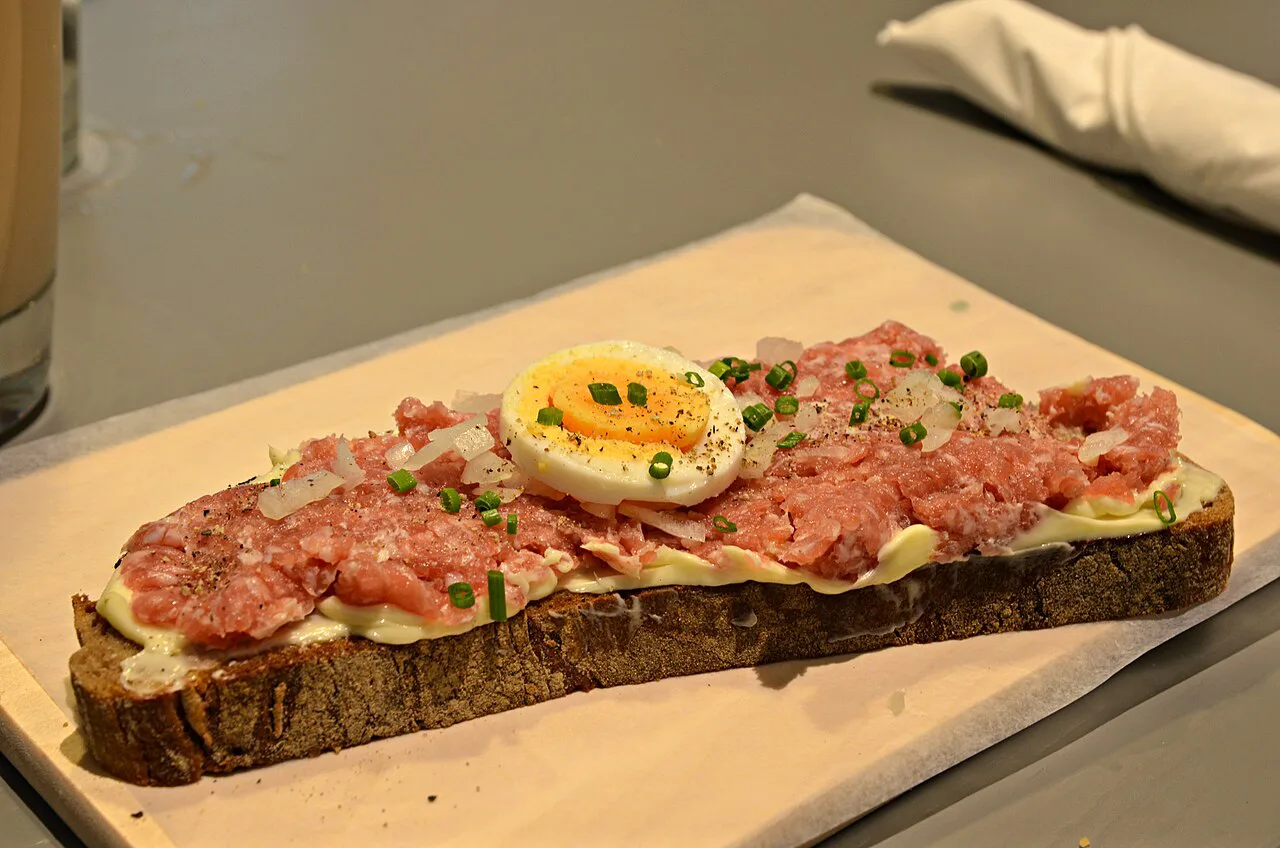
Expect cold, soft, finely textured pork with a clean salted flavor, sharpened by raw onion and a crack of pepper. The caraway version adds a faint anise warmth that keeps the meat from tasting flat, and the whole thing depends on being served properly cold. It is mild rather than funky, closer to a delicate pâté than to a steak.
Is Mett safe to eat raw? German rules are built around freshness: unpackaged Mett may only be sold on the day it is made, and the fat content is capped at 35 percent. Buy it from a butcher counter that grinds it fresh, keep it cold, and eat it the same day.
Is Mett the same as Mettwurst? No. Mett is raw, finely ground seasoned pork eaten as a spread on a roll, while Mettwurst is a raw sausage.
Where do I find a Mettbrötchen in Germany? At a Metzgerei, the German butcher shop, and at bakery counters that assemble rolls to order; butcher stalls at city markets are another option. Ask for ein Mettbrötchen mit Zwiebeln, one roll with onions, and check the counter price there.
Mett is eaten raw on a bread roll or on sliced bread, with raw onion rings or a fine dice on top. In parts of southern Germany it comes on a lye bun instead of a regular roll.
The Mettbrötchen: Germany's Raw Pork Roll
The MettBrötchen is the everyday format: a fresh Brötchen, split and often lightly buttered so the meat does not soak into the crumb, spread thick with Mett and finished with onion. The roll should be fresh that morning and the Mett cold, glossy and pink rather than gray. A good one is judged on that coldness and timing more than on anything else.
Watch for the failure signs: Mett that has warmed and turned tacky, an onion layer heavy enough to bury the pork, or a leathery roll. It is a same-day proposition and not something to keep, so buy it where it is made and eat it soon after.
Zwiebelmett, Schinkenmett, Grobes Schweinemett: The Variations
Zwiebelmett means onion Mett, with chopped onion worked in. Schinkenmett, or ham Mett, is made from the upper part of the pig's leg and is considered the finer cut. Grobes Schweinemett is a coarser grind produced in industrial grinders, with the pork processed partly frozen and kept at or below 2 degrees Celsius during grinding; ice may not be used to cool it.
In practice, most Mett is ground fresh at a local butcher shop, and the coarser grind eats meatier while a fine one spreads like a paste. The Thuringian style keeps the pork lean and clean, sometimes with caraway, and trusts a fresh roll to carry it.
Why Mett Is Sold Fresh and Eaten the Same Day
Two rules shape how Mett reaches you. The fat cap of 35 percent limits how rich it can be, and unpackaged Mett may only be sold on the day it is made, which is why the butcher counter, not the shelf, is where it lives.
That is also why the quality signals are about freshness rather than aging: cold chain kept, roll baked that morning, onion cut bright. If you are buying to eat later, ask the counter what they recommend, and treat it as food for the same day rather than a souvenir to carry home.
Mettigel: The Party Version
At parties and buffets, Mett is sometimes molded into the shape of a hedgehog and called a Mettigel, with onion pieces or pretzel sticks for spikes and olives for the eyes and nose. The format has been popular since the 2000s and is a buffet centerpiece rather than a restaurant order.
For a visitor, the practical distinction is simple: the Mettbrötchen is what you buy at a counter for lunch, and the Mettigel is something you might meet at a buffet or private celebration. You are far more likely to eat the roll.
Thüringer Mett and Rindermett: Regional and Beef Twists
Thüringer Mett follows the same raw-pork logic with a leaner, well-spiced profile and often caraway, mounded onto a crusty Brötchen with raw onion. It shares the regional instinct for clean pork with the grilled Thuringian sausage family, though nothing here touches heat.
Rindermett swaps pork for raw minced beef, leaner and darker, closer in spirit to steak tartare; it is the less common cousin, chosen by people who avoid pork or prefer the cleaner mineral flavor of beef. Some hands add a raw egg yolk or capers, pushing it further toward tartare.
Do not confuse either with Mettwurst, which is a raw sausage, not a spread for a roll. The end of the sausage spectrum is a different subject: if you want the cooked classics, weisswurst with sweet mustard is a Munich morning ritual, and Knockwurst is the plump, snap-skinned cousin.
Where to Buy and Eat Mett in Germany
Look for Mett at a Metzgerei, the German butcher shop, where it is ground and sold the same day, and at bakery counters that assemble Mettbrötchen to order. City markets with butcher stalls are another reliable stop. Ask at the counter rather than scanning shelves, since unpackaged Mett is a same-day counter product.
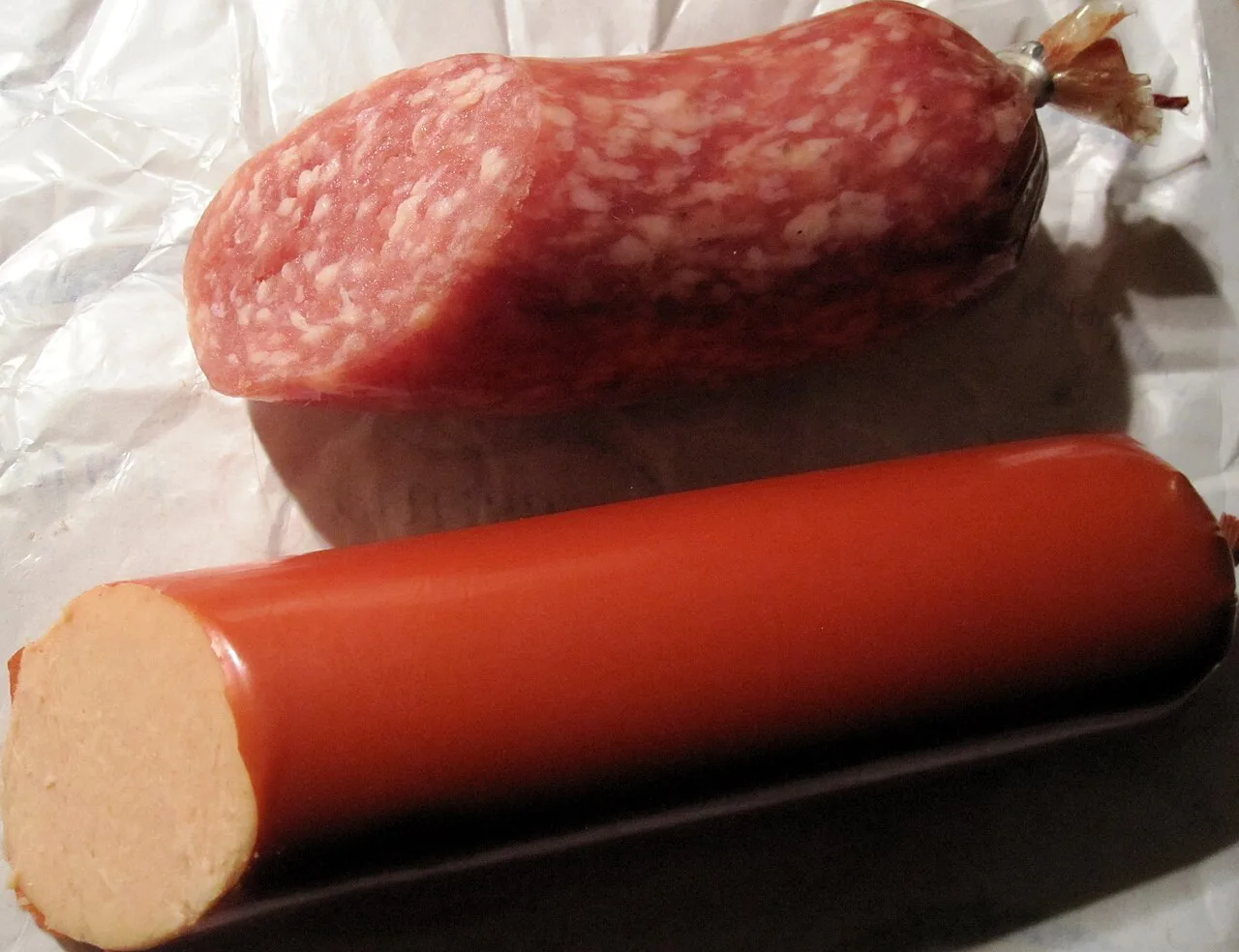
German cities run on these counters, and the spreadable raw sausages sit beside them: Teewurst is the smoked, spreadable one for rye bread, and liverwurst is the smooth coarse-cut classic with grainy mustard. Knowing the family helps you read a butcher case at a glance.
How to Order Mett and Eat It Like a Local
At the counter, ask for ein Mettbrötchen mit Zwiebeln, one Mett roll with onions, and say whether you want the roll buttered. If you are buying loose Mett by weight, ask for it freshly ground and specify whether you want caraway. Pay at the counter as you would for any butcher purchase.
Eat it soon after buying, keep it cold until then, and use your hands. Onion is the usual topping, and a little salt and pepper on top is normal. Prices vary by shop and city, so check the counter board rather than expecting a fixed national price.
Should You Try a Mettbrötchen?
Yes, if you like the idea of cold, clean, delicately seasoned pork on a fresh roll, and yes especially at a butcher counter where it was ground that morning. Skip it if raw meat on bread is a line you do not want to cross; no one at the counter will pressure you.
Treat it as a quick, cheap lunch rather than a challenge, order it with onion, and eat it the same day. For the cooked side of the same tradition, the bratwurst and the grilled Thüringer and Nürnberger versions are the natural next stop on the menu.
Explore more Germany guides
Frequently Asked Questions
Is Mett safe to eat raw?
German rules are built around freshness: unpackaged Mett may only be sold on the day it is made, and the fat content is capped at 35 percent. Buy it from a butcher counter that grinds it fresh, keep it cold, and eat it the same day.
Is Mett the same as Mettwurst?
No. Mett is raw, finely ground seasoned pork eaten as a spread on a roll, while Mettwurst is a raw sausage. They come from the same raw-meat tradition but are different products with different uses.
Where do I find a Mettbrötchen in Germany?
At a Metzgerei, the German butcher shop, and at bakery counters that assemble rolls to order; butcher stalls at city markets are another option. Ask for ein Mettbrötchen mit Zwiebeln, one roll with onions, and check the counter price there.
Sources
Notes for your next German food trip
Optional updates to our guides.
You might also like



Continue reading
More guides you'll find useful





