
Liverwurst: What It Is, How It Tastes, and How to Eat
Liverwurst is a German spreadable sausage of pork and liver, eaten on rye with mustard or onion. Learn what it tastes like and how Braunschweiger differs.
On this page
Liverwurst is a cooked, spreadable sausage built from pork and liver, seasoned and ready to eat cold, and the default way to eat it in Germany is a thick smear on dark rye with mustard and raw onion. The name is the giveaway: Leber means liver, and Wurst means sausage, so you are looking at a sliceable pâté rather than a grilled link. This guide covers what it tastes like, how it is served, how it differs from Braunschweiger, and how to buy it at a deli counter or in a pack.
Treat it as a pantry and deli-counter food, not a hot dish. It sits with the cooked and spreadable members of the German repertoire, which is why a butcher's case often holds several styles next to each other. If you are building a mental map of German sausages, start with the fact that this one is eaten cold and spread, while the grilled and boiled types are a separate branch.
What liverwurst actually is
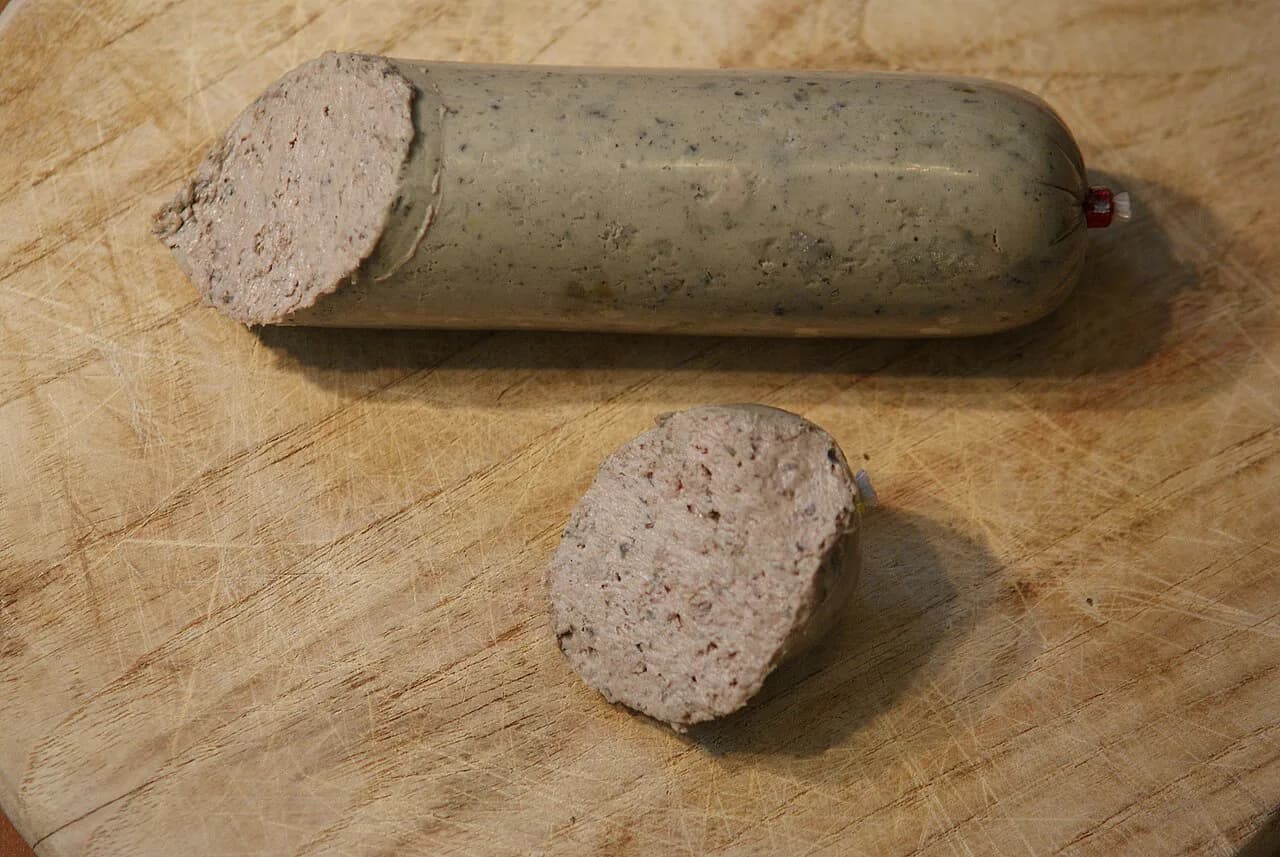
Liverwurst is a cooked sausage: pork and pork liver are ground fine, seasoned, cooked, and packed so the result can be sliced or spread. In the rustic country style it keeps a coarse, pâté-like body, while smoother versions are whipped until they slice cleanly. Either way it is fully prepared and needs no cooking before you eat it.
That ready-to-eat quality is the practical point. Opa's Smoked Meats describes its German Brand version as a rustic, country-pâté style blend of pork and liver, seasoned with German-rooted herbs and spices, and sold ready to serve so you can spread or slice it straight from the package. Nothing about it needs a pan, though a pan is an option covered below.
In Germany the word covers a wide family, and the texture ranges from a soft spread you scoop with a knife to a firm block you cut into neat rounds. Ask at a counter and the butcher will usually point you to the coarser style if that is what you want. That range is worth knowing before you commit to a whole pack.
What liverwurst tastes like
Expect a rich, savory, distinctly liver-forward flavor with a mineral edge and a soft, fatty body. The rustic style is closer to a country pâté than to a smooth paste, so the liver note stays present rather than being buried under creaminess. Seasoning runs to pepper, herbs, and warm spice rather than heat.
What does liverwurst taste like? Rich, savory, and distinctly liver-forward, with a soft fatty body and seasoning that runs to pepper, herbs, and warm spice rather than heat. The rustic country style tastes closer to a coarse pâté than a smooth paste, so the liver note stays present.
What is the difference between Braunschweiger and liverwurst? They share a German root, but Braunschweiger is typically smoother, firmer, and smokier, built to slice cleanly, while rustic liverwurst is coarser, more spreadable, and more directly liver-flavored. Both are cooked and eaten cold.
How should I eat liverwurst? Spread or slice it on dark rye with sharp or grainy mustard and thin-sliced raw onion, or put it on crackers as an appetizer. You can also brown slices in a skillet for a warm version, though cold is the standard serving.
The fat content matters for how it behaves in your mouth and on bread. A liverwurst with a higher fat share spreads easily and tastes milder; a leaner, coarser one is firmer and more intensely liver-flavored. If you are new to it, the smoother, milder style is the gentler entry point, and the rustic block is the one to graduate to.
Liverwurst sold in jars follows the same flavor logic: liver, pork fat, salt, and spice. What changes between products is how finely everything is ground and how much smoke or cure enters the recipe, which is exactly where Braunschweiger splits off.
How to eat it: rye, mustard, onion
The default serving is a slice or a thick spread on dark rye bread with sharp or grainy mustard and thin-sliced raw onion. The bread needs to be sturdy and slightly sour to stand up to the fat, and the mustard should cut through it rather than sweeten it. A few cornichons on the side do the same job, and a slice of Blutwurst, or black pudding, makes a natural companion on the same board.
Opa's describes the classic route in the same terms: slice or spread it on dark rye with sharp mustard and thin-sliced onion, or brown it in a skillet. On a charcuterie board, cornichons and whole-grain mustard do the same work of cutting the fat. None of these requires heat.
Browning it in a skillet is the warm alternative: the slice softens, the edges crisp, and the liver flavor mellows. Serve it that way on toast or with potatoes if you want a hot plate rather than a cold one. Cold remains the standard, though, and it is how you will meet it in a German deli.
For a wider set of spreads to put on the same rye, the Teewurst route is the closest cousin, and it is a fine second spread to buy alongside a pack of liverwurst.
Braunschweiger vs liverwurst
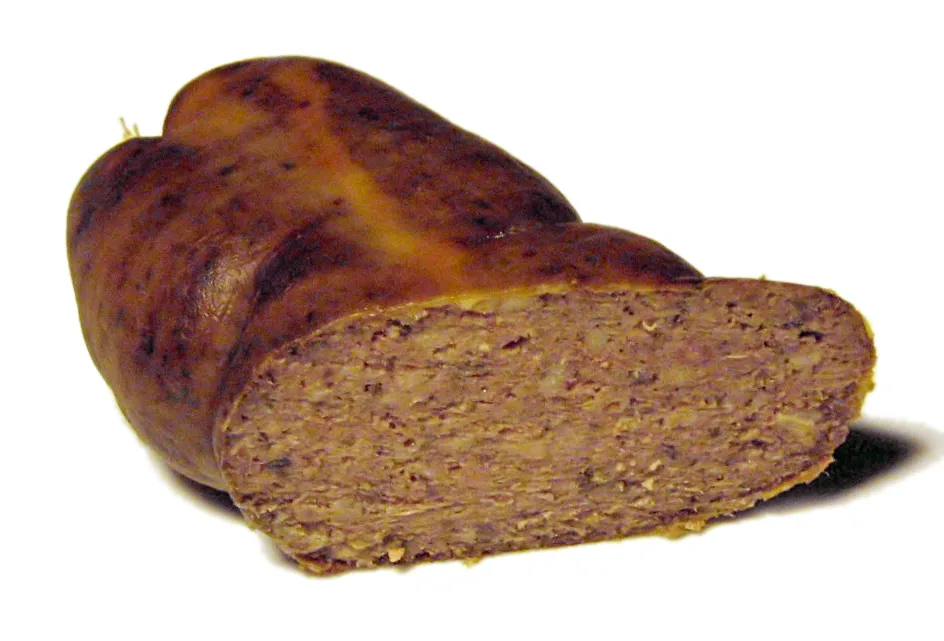
Braunschweiger takes its name from the German town of Braunschweig, or Brunswick, and it started as an old-world style of liverwurst. The American version drifted: the name came to be applied to a range of smoked pork sausages, and Schaller & Weber makes its Braunschweiger from an old-world liverwurst base, smoothing and adjusting it into something easily sliceable.
So the practical difference is texture and smoke. Braunschweiger is typically smoother, firmer, and more smoky, built to slice cleanly for an open-face sandwich; rustic liverwurst is coarser, more spreadable, and more directly liver-forward. Both are cooked and eaten cold, and both belong on rye with onion.
If you like a smoky note, take the Braunschweiger; if you want the liver to lead, take the country-style liverwurst. Buying both in small quantities is the honest way to settle the question, since the labels rarely tell you how coarse the grind is.
The same distinction separates liverwurst from the blood-based sausages, which are a different recipe altogether, just as a frankfurter sausage is a different proposition from a spread. Knowing which family you are ordering keeps the deli counter straightforward.
Buying it: deli counter or pack
At a German deli or butcher counter, ask for it sliced to order and specify thickness: a thin slice for sandwiches, a thicker one if you plan to brown it. Counter service lets you buy a small amount of two styles and compare them before committing. Packaged versions are the alternative when you want a sealed, travel-friendly block.
Two product facts are worth checking: whether the pack is smoked, which decides how much of a Braunschweiger-like note you get, and the pack size. Opa's lists its German Brand as gluten free, made in small batches under USDA inspection in Fredericksburg, Texas, in three one-pound packages. Schaller & Weber sells its Braunschweiger in a 12-ounce retail pack and a three-pound deli pack.
Storage is straightforward but strict. Keep it refrigerated, and once opened use it within about a week; Opa's gives five to seven days airtight in the fridge and says the unopened pack is good through the best-by date. It also freezes well if you buy a larger pack than you can eat.
In Germany, look for it in the refrigerated case of any supermarket or at a Wochenmarkt butcher stall, usually labeled simply Leberwurst with a style name such as grob (coarse) or fein (fine). The style word tells you more about texture than the brand does, and the same counters stock the grilled links, from bratwurst to Landjäger, that fill out a picnic.

Liverwurst and beer
A cold slice of liverwurst on rye with mustard is a classic simple bar plate, and the drink to match is a crisp, clean lager rather than anything heavy or hoppy. The carbonation and dryness reset the fat between bites. Opa's makes the same pairing point, serving it with a crisp lager as a traditional bar plate.
In a German pub, order a Helles or a Pils alongside a Brotzeit plate and let the bread and mustard do the work. Keep the portion modest: this is rich food, and a few slices go a long way.
If you are working through the sausage case generally, the grilled and boiled classics make a natural next stop after the cold spreads. A Thüringer Rostbratwurst or a Knockwurst is a different eating experience entirely, and both show up on the same beer-hall menus.
Which liverwurst to buy first
Start with a small pack of the rustic country style and a small Braunschweiger, plus a dense rye loaf and a jar of grainy mustard. Taste both cold on bread with onion, then brown a slice of each in a pan to see which texture you prefer warm. That comparison settles the choice faster than any label.
If cold spreads turn out to be your thing, the wider map of cooked, spread, and grilled links is worth a look before your next trip to a German deli counter.
Explore more Germany guides
Frequently Asked Questions
What does liverwurst taste like?
Rich, savory, and distinctly liver-forward, with a soft fatty body and seasoning that runs to pepper, herbs, and warm spice rather than heat. The rustic country style tastes closer to a coarse pâté than a smooth paste, so the liver note stays present.
What is the difference between Braunschweiger and liverwurst?
They share a German root, but Braunschweiger is typically smoother, firmer, and smokier, built to slice cleanly, while rustic liverwurst is coarser, more spreadable, and more directly liver-flavored. Both are cooked and eaten cold.
How should I eat liverwurst?
Spread or slice it on dark rye with sharp or grainy mustard and thin-sliced raw onion, or put it on crackers as an appetizer. You can also brown slices in a skillet for a warm version, though cold is the standard serving.
How long does an opened pack keep?
Keep it refrigerated. Opa's advises using an opened pack within five to seven days stored airtight in the fridge, and says the unopened pack keeps until the best-by date on the package.
Sources
Notes for your next German food trip
Optional updates to our guides.
You might also like



Continue reading
More guides you'll find useful





