
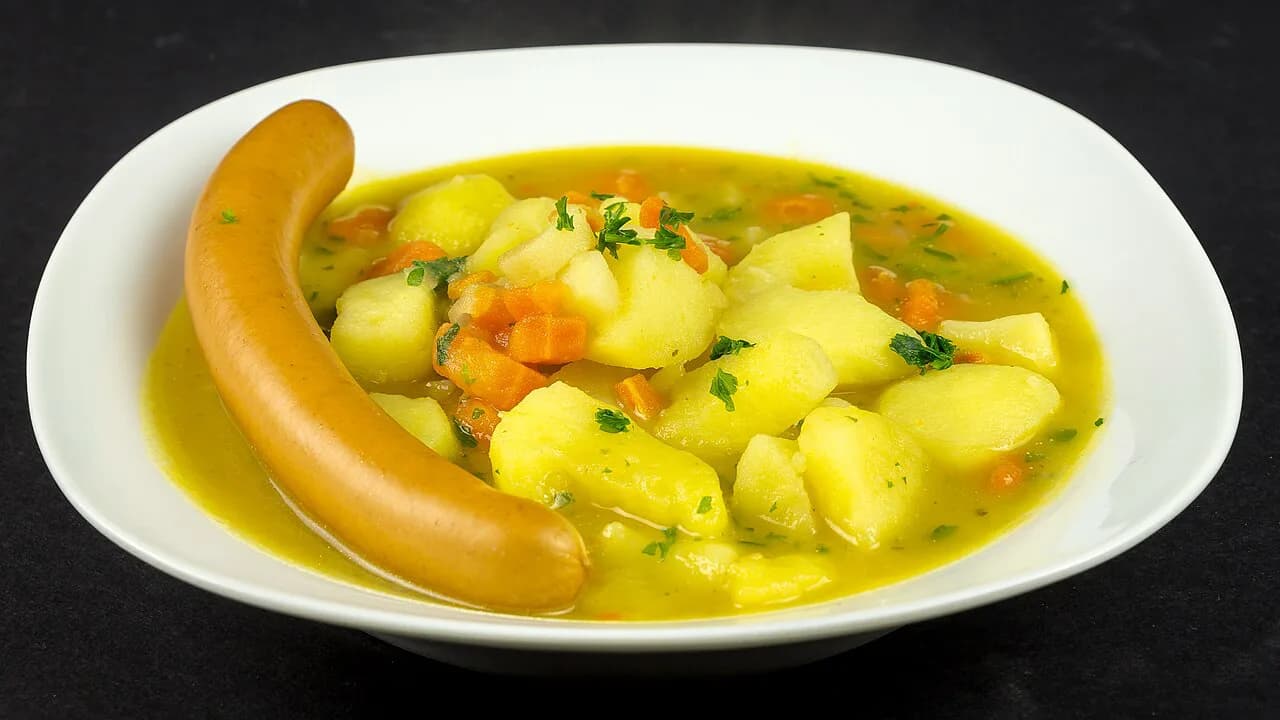
Bockwurst: What to Know Before You Buy in Germany
Bockwurst is a finely ground, lightly smoked German sausage tied to Berlin and Bock beer. Here is what it is, how it tastes, and how to order one.
On this page
Bockwurst is a German scalded sausage: pork, usually with beef or veal, ground fine, cured, lightly smoked and sold ready to eat. It is most closely associated with Berlin, where it became a standard snack in pubs and at railway stations, and it is served hot with mustard and bread rather than grilled like a bratwurst.
This guide covers what a bockwurst is made of, where the beer-flavored name comes from, how it tastes and feels in the mouth, and how it is heated and served. It also sets bockwurst against bratwurst, Knockwurst and Weißwurst, and explains the separate American sausage that borrowed the name.
What bockwurst is: a scalded, cured, lightly smoked sausage from Berlin
Bockwurst belongs to the family of German scalded sausages, meaning the finely ground meat is cured, stuffed, smoked and then cooked in hot water at the plant. It reaches the counter already cooked, with a reddish exterior, a fine elastic cut face and a gentle smoke aroma. That production route is what separates it from fresh sausages that still need cooking through.
The sausage is usually packed in a sheep casing, which gives it a plump, short link with a snap when you bite. Inside, the texture is smooth and even rather than coarse and fatty, closer to a frankfurter than to a hand-chopped country sausage. Berlin is the city most tied to it, and it turned up early in pubs, station buffets and street food.
German food guidelines now group it with fine, reddened small-calibre scalded sausages, which is a useful anchor when a menu lists several similar names. If a shop or stall sells bockwurst cold by weight, treat it as cooked food that needs gentle reheating, not raw meat for the pan.
What bockwurst is made of
The core is pork, often shoulder, combined with beef or veal and enough back fat to keep the grind smooth. Seasoning runs mild: white pepper, paprika, nutmeg or mace, a little onion and ginger, and grated lemon zest that gives the sausage its faint citrus edge. Curing salt fixes the pink color and the lightly smoked flavor.
Does bockwurst contain beer? No. The Bock beer connection is a naming and cultural link tied to Berlin and the strong malty beer style, not an ingredient in the sausage.
Is bockwurst the same as bratwurst? No. Bratwurst is a herby, spiced pork sausage that is pre-cooked but unsmoked and typically grilled, while bockwurst is cured, lightly smoked and finely ground, then reheated gently in hot water.
Can I grill bockwurst? Yes, briefly and over moderate heat, since the sausage is already cooked. Long, hard cooking splits the casing and dries it out, so hot water or steam is the kinder method if you want the classic texture.
Home and small-batch recipes follow the same logic but vary the proportions. One published version uses pork, veal and pork fat with white pepper, ground ginger, onion powder, nutmeg, lemon peel, egg white and whole milk, stuffed into 28 to 32 millimeter hog casings and formed into short links. The milk and egg white are there to build a fine emulsion, the same principle behind a good frankfurter.
For a traveler, the practical takeaway is that bockwurst is a pork sausage with a delicate, aromatic profile, not a fiery one. If you avoid pork, it is not the sausage for you; if you dislike heavy smoke, it is a gentler choice than many smoked specialties.
Why it is called bockwurst: the Berlin story and the Bock beer pairing
The name is traditionally linked to Bock beer, the strong malty brew associated with winter and spring. The best-known Berlin account credits the publican Richard Scholtz and the butcher Benjamin Löwenthal with the sausage in 1889, and whether every detail of that story holds up, the pairing with Bock beer sits at the center of the name's meaning.
Older references place the sausage in Berlin and Bavaria well before that, which is a reminder that origin stories in food often compress a long, messy development into one neat anecdote. You do not need to settle the history to enjoy the sausage; you only need to know that the beer name is a cultural link, not an ingredient.
How bockwurst tastes and how it compares in texture
Expect a mild, savory sausage with a light smoke note, a soft citrus lift from the lemon peel and a peppery finish that stays gentle. The bite is tender and springy, and because the meat is emulsified fine, there are no coarse pockets of fat or gristle. It is a sausage you can eat slowly with bread, not one that demands a cold drink to put out a fire.
Texture is where bockwurst differs most from its neighbors. Knockwurst is usually plumper and more heavily seasoned, while bockwurst is milder and finer. Weißwurst, the Munich veal sausage, is pale, poached and eaten with sweet mustard before noon by tradition, a very different eating occasion from a smoked, reddish bockwurst.
Bratwurst sits at the other end of the family: a pork sausage seasoned with herbs and spices such as marjoram and caraway, pre-cooked but not smoked, and built for the grill. Bockwurst carries the frankfurter qualities instead: it is smoked, pre-cooked and sold ready to reheat, meant to be warmed in water or steamed. The imported bratwurst and bockwurst sold by one German-sourced UK supplier are both described as gluten free.
How it is cooked and served
Bockwurst is already cooked when you buy it, so the job at home or at a stand is reheating, not cooking through. Heat it gently in hot, not boiling, water until it is warmed to the middle; hard boiling splits the casing and pushes out fat, which leaves a dry, wrinkled sausage. Steaming works the same way, and a quick turn on a moderate grill is fine if you keep it moving.
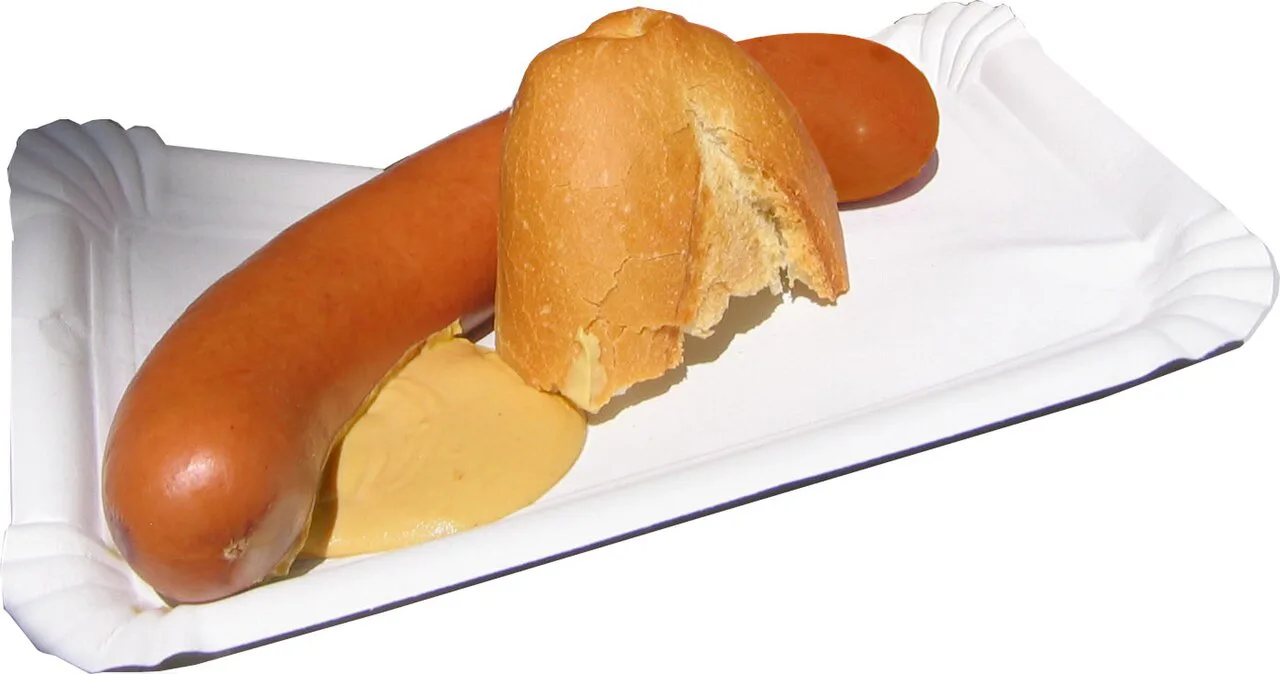
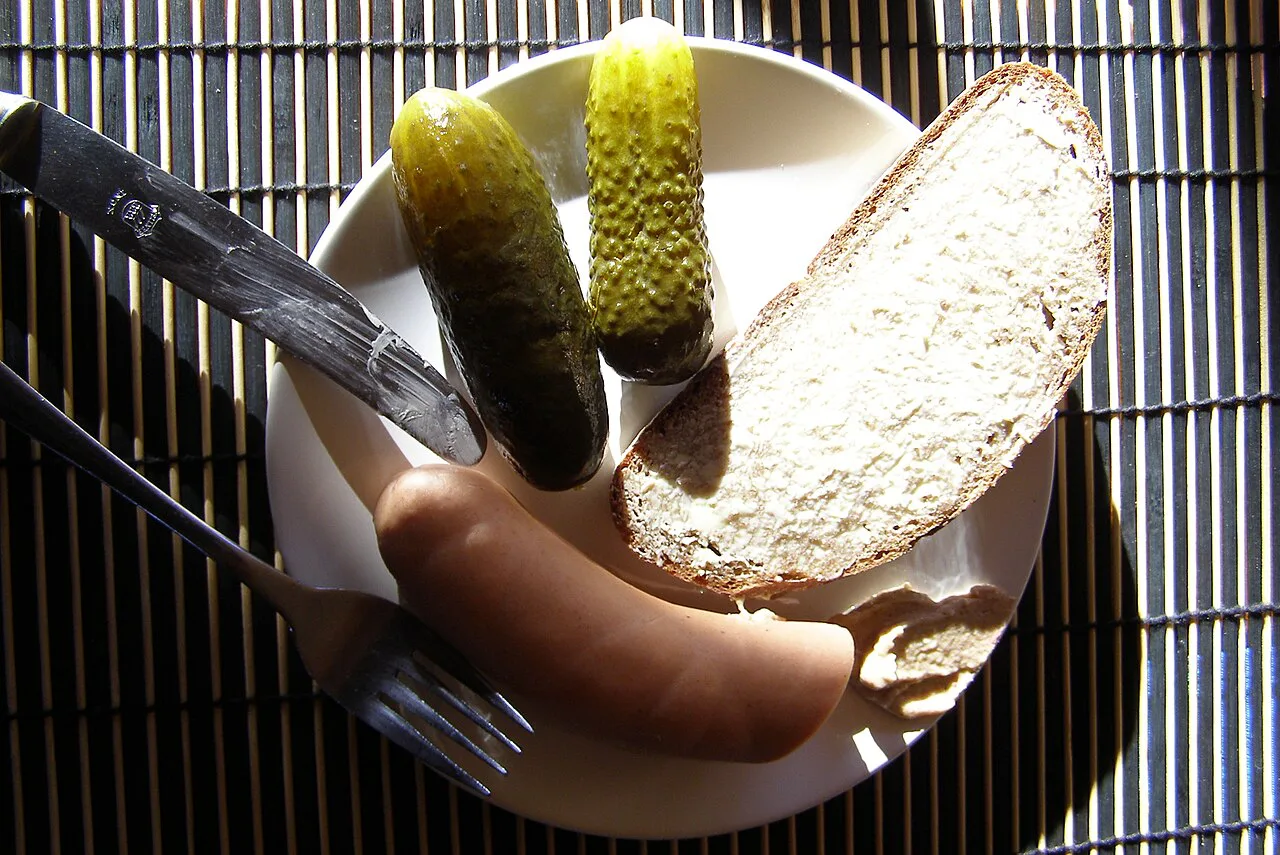
The classic plate is simple: a hot bockwurst with mustard, a slice of rye or a roll, and often potato salad on the side. In Berlin it is pub and station food, eaten standing at a counter with a beer, which is why the Bock beer link stuck. Order it with a sharp mustard if you want contrast, or a sweet mustard if you prefer the sausage's mildness left alone.
If you are making a batch yourself, a published recipe cooks the links in water at 80°C (176°F) for about 30 minutes and then chills them for later. That is a production step, not a restaurant instruction, but it shows how gentle the heat should be. Keep any bockwurst you buy refrigerated and use it promptly, or freeze it.
How to order and eat bockwurst on a trip to Germany
On a menu, look for bockwurst under the cold cuts or the warm sausage section, often with the word "heiße" in front when it is served hot. In a Berlin Imbiss or station counter, order by pointing at the sausage and saying mit Senf for mustard; a roll or a slice of bread is usually a separate small item. Potato salad appears as Kartoffelsalat and is the usual side.
If bockwurst is not on the board, the same counter will often carry bratwurst, Knockwurst or Wiener, so a mixed plate is an easy way to compare them in one sitting. Use the mustard on the table rather than asking for ketchup; it is the standard pairing and does more for the smoke. Carry some cash for small stands, since card acceptance at counters varies.
Pair the sausage with a beer only if you are eating a full meal, and keep it to one; bockwurst is snack food, and the Bock beer tradition is a naming link rather than a reason to drink heavily. A coffee or a water at a station counter is just as normal.
Bockwurst vs bratwurst: herbs and grilling versus smoke and gentle heat
The cleanest way to keep the two apart is by flavor and method. Bratwurst is a herby, spiced pork sausage, pre-cooked but unsmoked, and it comes into its own on a charcoal grill. Bockwurst is smoked, milder, finely ground and reheated in water, so the smoke and the emulsion texture do the work.
That difference matters when you are choosing lunch in a sausage region. In Thuringia and Franconia, grilling traditions rule, and a Thüringer Rostbratwurst or a Nürnberger Rostbratwurst is the local order; in Berlin, the bockwurst is the one with the beer name. A sausage plate that mixes styles is a good way to taste the contrast, and it is cheaper than ordering two full portions.
For anyone curious about the wider map, the German Sausages guide sorts the smoked, scalded and grilled families and explains where each one shows up. Start there if you want to plan a sausage route rather than a single meal.
The American bockwurst is a different sausage
In the United States, bockwurst is often an uncured fresh sausage, sometimes made with veal and pork and sold raw for grilling or simmering at home. That product shares a name and a general shape with the German original but not the cure, the smoke or the ready-to-eat status. Reading the label before you cook is the simplest way to avoid drying it out.
If you want the German experience at home, look for a cured, smoked, pre-cooked sausage and treat it as a reheating job. If you have an American fresh version, cook it through according to its label, because the gentle water method for a finished German bockwurst is not the right approach for raw meat.
Where to find bockwurst in Germany
Berlin is the natural starting point, since the sausage is tied to the city's pub and station food culture. Beyond Berlin, look for it in the sausage sections of delis and butcher shops, and on menus where Berlin specialties appear. It is not a universal menu item across the south, where bratwurst and weisswurst dominate.
Weißwurst has its own rituals and a Munich morning tradition that runs on sweet mustard, so if you are in Bavaria, order that local sausage instead of expecting a Berlin one. Knowing which sausage belongs to which city saves you from a disappointing order.
Order the smoked one when you want mild, not grilled
Pick bockwurst when you want a mild, finely ground, lightly smoked sausage served hot with mustard and bread, and pick bratwurst when you want herbs and char from the grill. The name points to Berlin and Bock beer, but the sausage itself is a gentle, everyday snack rather than a heavy dish.
At a counter, ask for it hot, take the mustard, and add potato salad if you want a full plate. Keep the beer pairing light and let the smoke and lemon peel do the talking.
Explore more Germany guides
Frequently Asked Questions
Does bockwurst contain beer?
No. The Bock beer connection is a naming and cultural link tied to Berlin and the strong malty beer style, not an ingredient in the sausage. The recipe is meat, fat, curing salt, spices and sometimes milk or egg white.
Is bockwurst the same as bratwurst?
No. Bratwurst is a herby, spiced pork sausage that is pre-cooked but unsmoked and typically grilled, while bockwurst is cured, lightly smoked and finely ground, then reheated gently in hot water.
Can I grill bockwurst?
Yes, briefly and over moderate heat, since the sausage is already cooked. Long, hard cooking splits the casing and dries it out, so hot water or steam is the kinder method if you want the classic texture.
Why is it called bockwurst?
The name is traditionally tied to Bock beer, with a Berlin account linking the sausage to a publican and a butcher in 1889. Older references place the sausage in Berlin and Bavaria earlier, so treat the origin story as tradition rather than settled history.
Is bockwurst gluten free?
The bockwurst and bratwurst sold by one German-sourced UK importer are described as gluten free. If you are sensitive, read the label on the specific product, because recipes and fillers vary by maker.
Sources
Notes for your next German food trip
Optional updates to our guides.
You might also like



Continue reading
More guides you'll find useful





