
Thuringian Sausage Guide: What to Order in Germany
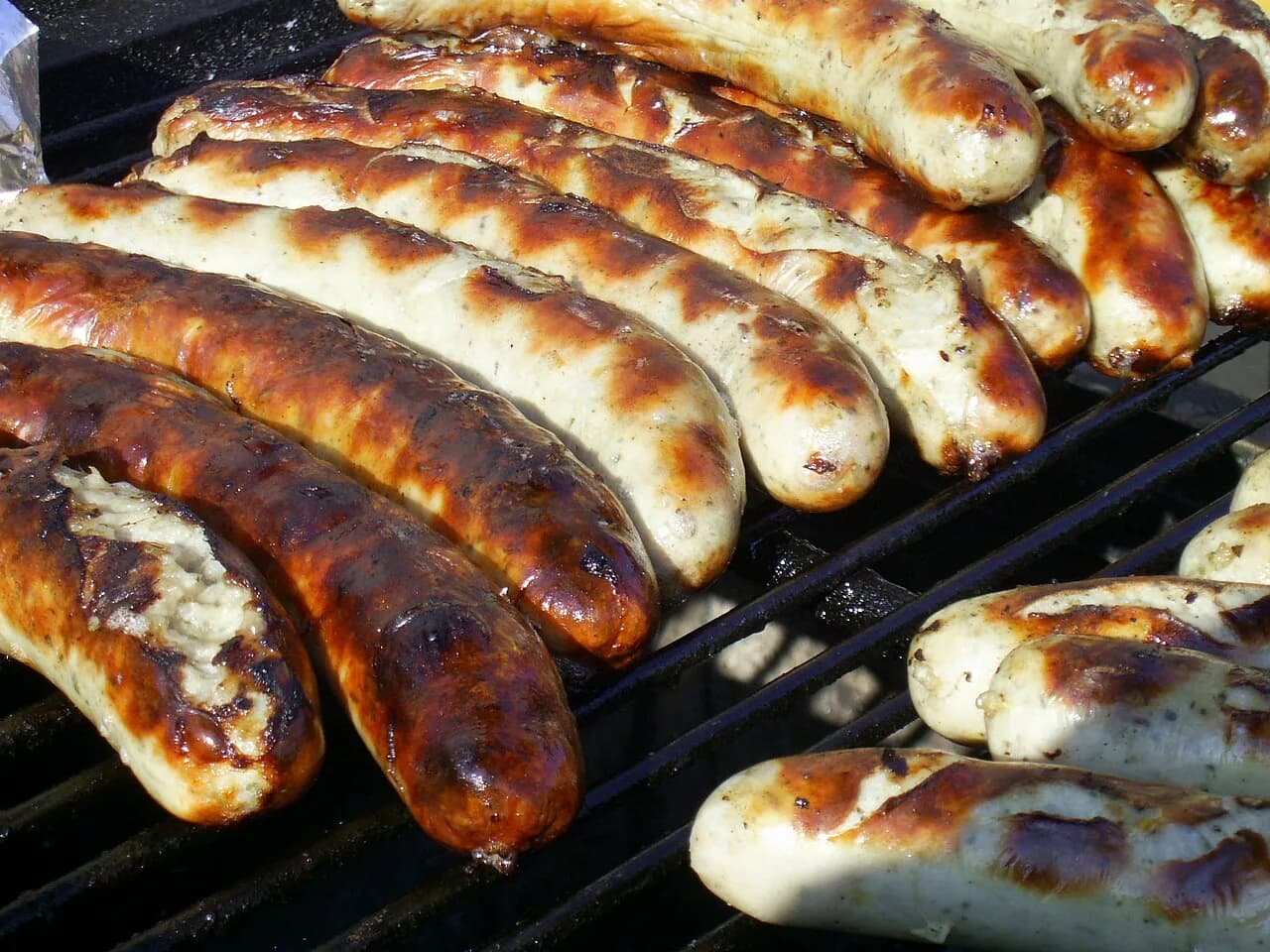
Thuringian sausage is a long, thin pork bratwurst grilled over charcoal and served in a crusty roll with mustard. Here is how to order and eat one.
On this page
Thuringian sausage is a long, thin pork bratwurst from the state of Thuringia, grilled over open charcoal and eaten in a crusty roll with mustard. Ordering one is simple: ask for a Thüringer Bratwurst at a grill stand and say whether you want the roll. This guide covers what the sausage is, how it differs from other types of bratwurst, how the charcoal grill shapes the crust, how ordering works, and what the name on a menu signals.
The style is defined less by a single recipe than by its proportions and its cooking method. A long, slim casing gives far more browned surface per bite than a thick sausage, and the charcoal fire is treated as part of the product rather than a convenient heat source. Once you know that, a grill stand in Erfurt reads differently.
What Thuringian sausage is
A Thüringer Bratwurst is a finely ground pork sausage in a long, thin natural casing, roughly a finger's width and considerably longer than it is thick. The shape is the point: it cooks fast, browns along its whole length and fits a split roll without being cut down. Seasoning runs to warm, earthy spices rather than heat, so the sausage tastes savory rather than spicy.
Marjoram is the herb most associated with the Thuringian style, usually with caraway in support, and salt, pepper and often garlic or onion behind them. That herbal note is the flavor people mean when they call a bratwurst Thuringian. For the wider family of links, from coarse grilled sausages to spreadable and cured types, see this guide to German sausages.
How it differs from Nürnberger and Franken bratwurst
The Nürnberger Rostbratwurst is the opposite approach: short, thumb-sized and served several to a portion. The Thüringer is one long sausage per serving, and the eating rhythm follows from that. A Nürnberger portion is a handful of small, snappy links; a Thüringer is a single long one you work through end to end.
Is Thuringian sausage the same as bratwurst? Thuringian sausage is a type of bratwurst, specifically a long, thin pork sausage from Thuringia grilled over charcoal. The word bratwurst covers many regional German sausages, so a Thüringer Bratwurst is one style within that family, distinct from the short Nürnberger and the thick Franconian versions.
How is a Thüringer Bratwurst normally eaten? It is usually served hot off the charcoal grill in a split crusty roll with mustard. Many people ask for it without the roll to taste the crust on its own.
Can I buy Thuringian sausage in the US? Yes, but check what you are buying. Many US products sold as Thuringer are smoked, sliceable deli sausages in the German-American tradition, not fresh bratwurst for the grill.
A thick Franken bratwurst, the coarse pork sausage of Franconia, is broader and meatier, with a chunkier grind and a slower, heavier chew. Set against it, the Thüringer tastes leaner and more herbal, and its higher surface-to-inside ratio means more crust and less plain interior. The choice comes down to whether you want a coarse, substantial bite or a long, crisp-skinned one.
If you are working out which regional link to order first, the guide to bratwurst covers the main German types side by side, including how each is grilled and served. It is a useful map before you start comparing a Thüringer Bratwurst with a Franconian or Bavarian version.
Why the charcoal grill matters
Thüringer sausages are grilled over open charcoal, and the fire does more than cook the meat. Direct radiant heat crisps the casing quickly and blisters it in patches, giving a snap when you bite and a lightly smoky, bitter edge that a flat griddle does not produce. That crust is the reason the style is worth seeking out at a stand.
The thin shape works with the fire rather than against it. A long, slim sausage can be turned often and brought to a browned, juicy finish in minutes, so the inside stays tender while the outside colors. A thick sausage needs longer over gentler heat, which is exactly why the Franconian and Thuringian styles are built differently.
The roll and the mustard: how it is served
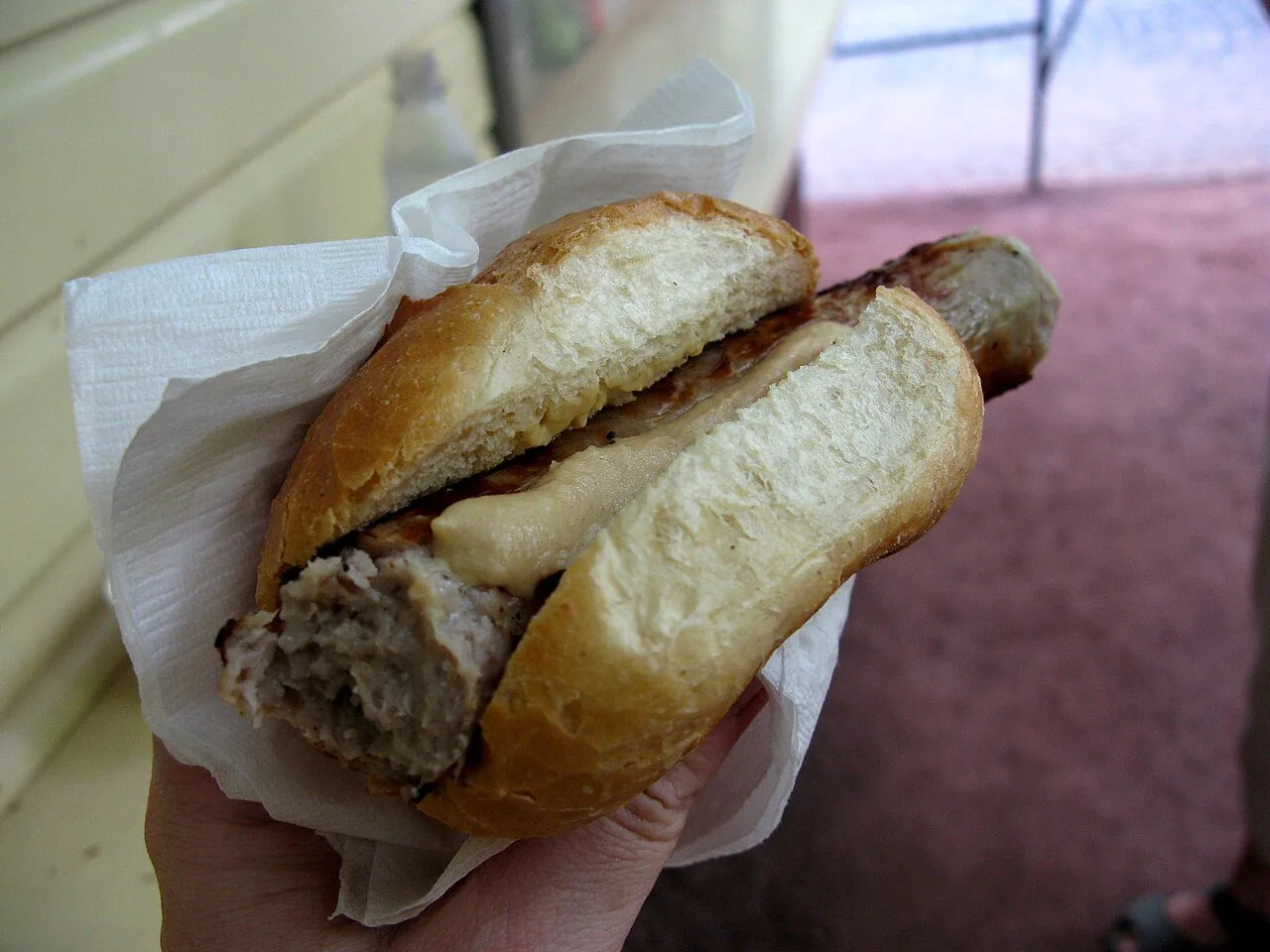
The standard serve is a Thüringer Bratwurst laid in a split crusty roll, with mustard added by the customer or the seller. The roll holds the sausage and catches the fat rather than acting as a sandwich in its own right, so expect a firm, chewy crust. Mustard is the usual condiment, and the choice is usually between a sharp, hot mustard and a milder sweet one.
If you prefer a sweeter mustard, süßer Senf is the mild Bavarian-style option and pairs well with pork sausage; this guide to Weißwurst explains how that mustard is used in Bavaria. Ketchup turns up at stands too, but mustard is the default. Ask for the sausage ohne Weck, without the roll, if you want to taste the meat and crust on their own.
Hold the sausage in the roll and eat it standing at the stand or walking, which is how it is meant to be eaten while hot. Waiting until it cools costs you the crust. A paper napkin is the only equipment you need.
Ordering at a Thuringia grill stand
At a Thuringian grill stand the usual order is a Thüringer Bratwurst, and you say whether you want the roll. You can ask for it mit Weck, with the roll, or ohne Weck, without, and you choose your mustard at the counter. The sausage comes off the grill to order, so expect a short wait rather than something pre-cooked under a lamp.
Payment at these stands is usually in cash, and small notes make the transaction quicker. Watch how the people ahead of you order and pay; that tells you more about the stand's routine than any sign. If you want two, ask for both at once so they come off the fire together.
Where to eat it in Thuringia
Erfurt is the obvious base for eating Thüringer Bratwurst, and the wider region is full of charcoal grill stands, butcher shops that sell the raw sausage and simple taverns that serve it hot. The style is everyday food here, sold at stands and eaten on the street, so you do not need a special occasion or a formal restaurant to try a good one. Look for a stand with a visible charcoal fire and a short line of locals.
Butchers in Thuringia are also worth a stop, because many sell the raw sausage by weight for grilling at home and will tell you how they season theirs. If you are cooking it yourself, hot direct heat and a quick turn beats a slow oven. Outside Thuringia, the same sausage appears on menus around Germany, often labeled Thüringer Rostbratwurst.
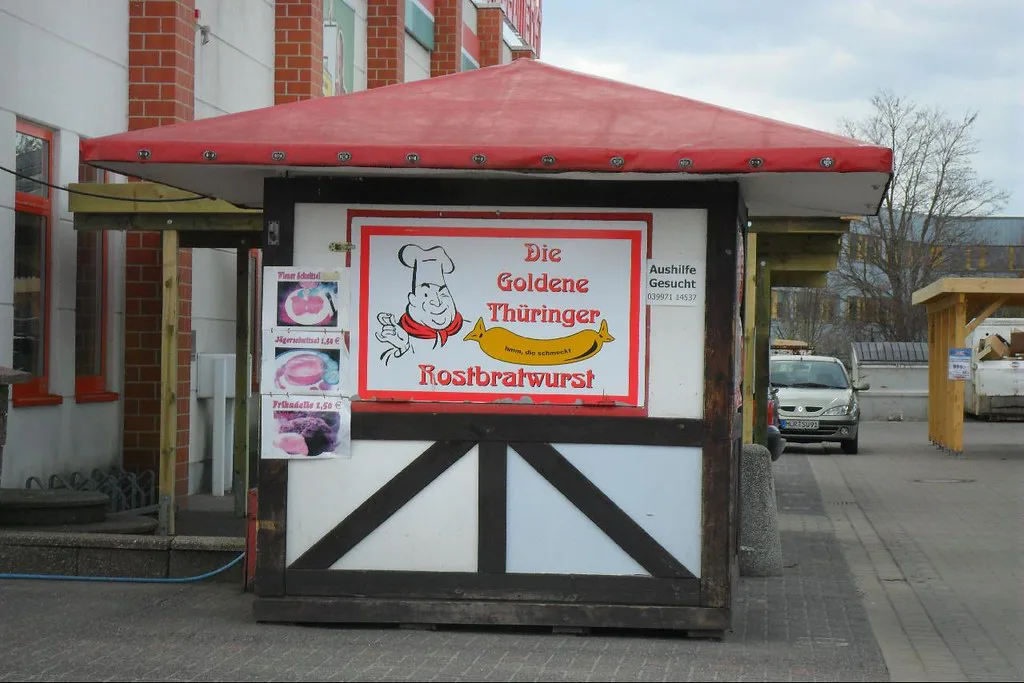
Thüringer Rostbratwurst on a menu
When a menu or a stand names Thüringer Rostbratwurst rather than simply Bratwurst, it is telling you the sausage comes from Thuringia and is made to the regional style, grilled rather than boiled. Treat the name as a quality signal and ask the seller which butcher supplies it if you want to know more. A stand that makes a point of the name generally takes the grilling seriously.
Germanfoods.org describes the grilled Thuringian sausage as a regional classic and pairs it with the charcoal fire, which is why the name on a board usually comes with a grill you can see. The difference between a labeled Thüringer Rostbratwurst and an unlabeled bratwurst on the same menu is usually the origin and seasoning of the meat, not the cooking method. Both can be good; the label simply narrows what you can expect.
Packaged Thuringian sausage outside Germany
What you find sold as Thuringer in a US deli or butcher shop is usually a smoked, sliceable sausage in the German-American deli tradition, closer to a summer sausage than to a fresh bratwurst for the grill. One US producer describes its Thuringer as lean beef and pork seasoned with old-world spices and slow-smoked for 12 hours over hickory, sold in packages of seven links. That is a smoked product built for a deli counter, so judge it on its own terms rather than as the charcoal-grilled fresh sausage you eat in Thuringia.
If you want to cook the fresh style at home outside Germany, look for a raw pork bratwurst in a long, thin casing labeled Thüringer Bratwurst, then grill it over charcoal or a very hot gas grate and turn it often. Check the package for whether the sausage is raw or smoked, since a smoked deli Thuringer is already cooked and will not behave like a fresh bratwurst on the fire. A sharp mustard and a crusty roll complete it.
Is a Thüringer Bratwurst worth seeking out?
Yes, if you want to understand why Germans argue about sausage shapes. The long, thin Thüringer is a different eating experience from a thick Franconian bratwurst or a plate of small Nürnbergers, and the charcoal grill gives it a crust those styles do not have. Order one at a stand in Erfurt or anywhere in Thuringia, take it with the roll and a sharp mustard, and eat it while it is hot.
If you are outside Germany, look for a fresh, raw pork bratwurst labeled Thüringer Bratwurst rather than a smoked deli Thuringer, and grill it over high direct heat. The sausage rewards attention to how it is cooked as much as to what is in it. Pair it with a simple roll, mustard and a cold beer, and you have the Thuringian stand experience at home.
Explore more Germany guides
Frequently Asked Questions
Is Thuringian sausage the same as bratwurst?
Thuringian sausage is a type of bratwurst, specifically a long, thin pork sausage from Thuringia grilled over charcoal. The word bratwurst covers many regional German sausages, so a Thüringer Bratwurst is one style within that family, distinct from the short Nürnberger and the thick Franconian versions.
How is a Thüringer Bratwurst normally eaten?
It is usually served hot off the charcoal grill in a split crusty roll with mustard. Many people ask for it without the roll to taste the crust on its own. It is street food, eaten standing at the stand while it is still hot.
Can I buy Thuringian sausage in the US?
Yes, but check what you are buying. Many US products sold as Thuringer are smoked, sliceable deli sausages in the German-American tradition, not fresh bratwurst for the grill. For the grilled style, look for a raw pork sausage labeled Thüringer Bratwurst and cook it over high direct heat.
Sources
Notes for your next German food trip
Optional updates to our guides.
You might also like



Continue reading
More guides you'll find useful




