
Frankfurter Sausage: What It Is and How It's Different
A frankfurter is a parboiled pork or beef sausage, not a hot dog. Learn what is in one, how it is served in Germany and Austria, and which wurst to order.
On this page
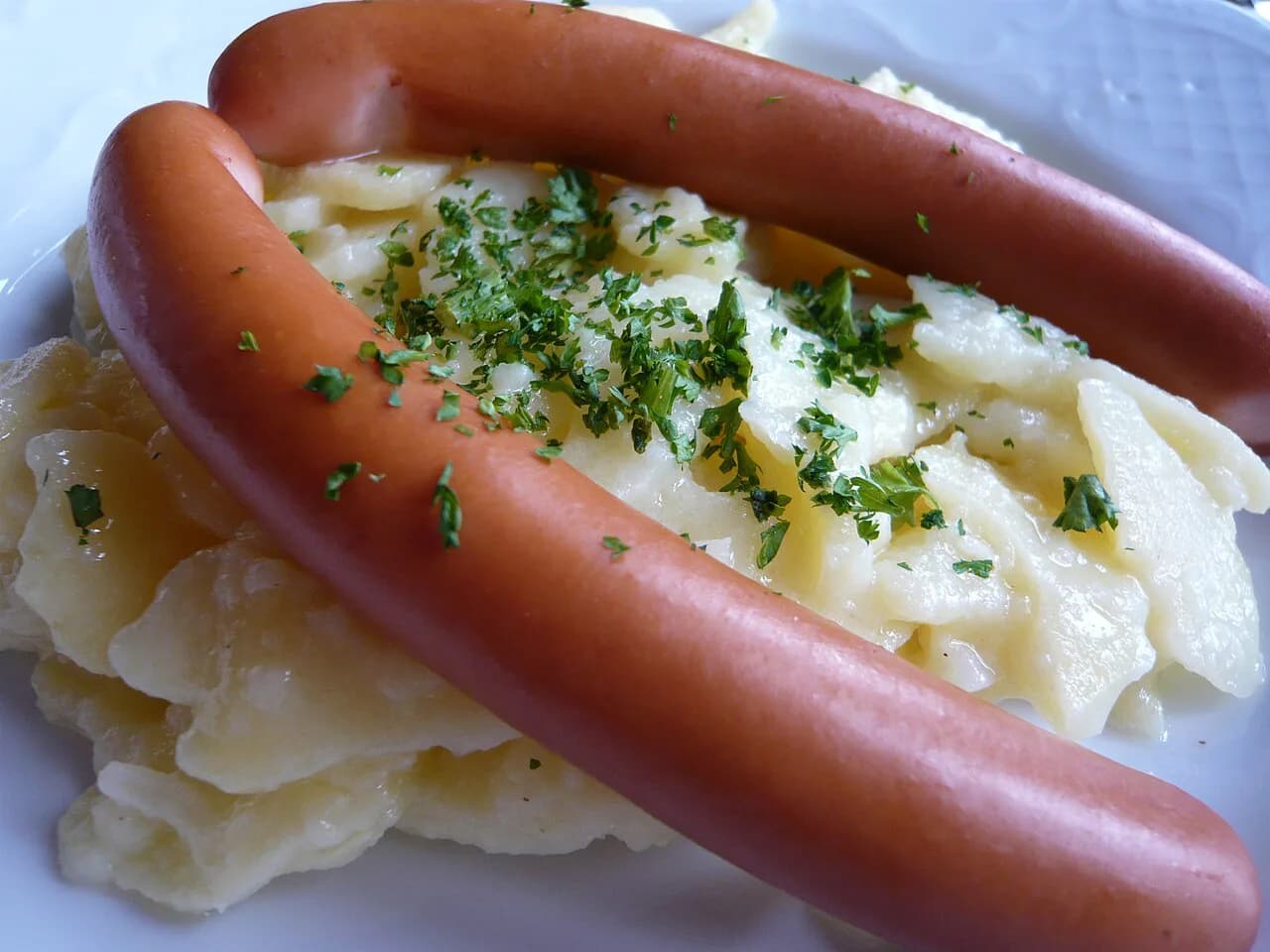
A frankfurter is a parboiled sausage made mostly from pork, sometimes with beef or veal, bacon and seasoning, and it is cooked by simmering in hot water rather than grilling. Order one at a Viennese sausage stand and you usually get a pair with a plain white roll and mustard or ketchup, not a bun loaded with toppings. This guide covers what goes into a frankfurter, how that differs from a hot dog, where it sits among the other wursts on the menu, and how to eat one the way locals do.
What's inside a frankfurter
The core recipe is pork, or a pork-and-beef blend, plus bacon and seasoning, all ground fine enough to produce a smooth, even sausage. That fine grind is what separates a frankfurter from a coarse, country-style sausage: there are no visible chunks of meat or fat, and the link slices cleanly instead of crumbling.
Seasoning is light rather than fiery, which is why a frankfurter reads as mild next to a heavily peppered or garlicky sausage. Some versions lean on beef or veal, and a butcher's frankfurter is usually a beef-pork blend rather than a single meat. If you want to know exactly what you are eating, ask at the counter, since the mix varies by maker and region.
How a frankfurter is cooked
Unlike most of the fried and grilled sausages beside it on a stand, a frankfurter is heated through in hot water before serving. That gentle method keeps the casing taut and the inside juicy, and it gives the link a softer bite than a bratwurst taken off a grill. It also means a frankfurter is a quick order: there is nothing to char, so it arrives fast.
How a frankfurter is cooked. Unlike most of the fried and grilled sausages beside it on a stand, a frankfurter is heated through in hot water before serving.
Frankfurter vs hot dog. The two look nearly identical on a shelf, but they are made differently.
Frankfurter vs bratwurst, weisswurst and bockwurst. Bratwurst is a catchall name for a fresh or smoked sausage meant to be cooked, usually by grilling, and it comes in dozens of regional forms built on pork, veal, beef or a blend.

Frankfurter vs hot dog
The two look nearly identical on a shelf, but they are made differently. Hot dogs are typically an emulsion of finely ground pork and beef with curing agents, which produces the springy, bendy texture and pink color Americans know from cookouts. A frankfurter goes through only a semi-emulsification, so it stays smoother than a coarse sausage but firmer and less rubbery than a hot dog.
Spicing pushes them further apart. Hot dogs lean on garlic and pepper for a slightly sweet, campfire flavor, while frankfurters often carry more complex seasonings such as nutmeg and paprika, with a higher protein and fat content that makes them a bit more filling. The topping tradition follows suit: Americans reach for ketchup and pickles, while Germans traditionally serve frankfurters with sauerkraut and onions.
Frankfurter vs bratwurst, weisswurst and bockwurst
Bratwurst is a catchall name for a fresh or smoked sausage meant to be cooked, usually by grilling, and it comes in dozens of regional forms built on pork, veal, beef or a blend. That makes it the coarse, savory counterpoint to the fine-textured frankfurter. If you want the full map of links you will meet on a German menu, start with the guide to German Sausages and then dig into the regional bratwurst styles.
Weisswurst, literally white sausage, is a mild, finely textured veal-and-pork link from southern Germany seasoned with lemon, nutmeg and white pepper, poached and eaten by sucking the meat from its delicate casing. Bockwurst is essentially a smaller weisswurst seasoned with chives or parsley, fully cooked and commonly eaten at breakfast. Both are gentler, paler sausages than a frankfurter, and knowing the difference helps when a menu lists five wursts in a row.
Then there is the short, plump, garlicky knackwurst, smoked and fully cooked, and named for the snap of its casing when bitten. It is served over sauerkraut more often than a frankfurter is, and it eats more assertively.
Frankfurter, Wiener and Vienna: the naming tangle
The frankfurter is essentially what North America calls a Wiener or Vienna sausage, and the names travel in confusing directions. One story holds that a butcher from Frankfurt invented the sausage while living in Vienna, which would explain why a sausage named for one city became the signature snack of another. Treat that as a story rather than settled history and read the menu by what is described, not by the city in the name.
In Vienna, frankfurter usually means the plainest, simplest sausage on the board, and it is likely the cheapest option there. Locals rarely reach for the word Wiener, even though the frankfurter is basically the same parboiled pork-and-beef family the English term describes. If a menu lists both a frankfurter and a fancier variation, ask which is the simple link and which is the larger or differently seasoned one.
Sacherwürstel and Berner Würstel
Two variations are worth recognizing because they appear beside the basic frankfurter on Viennese sausage-stand menus. The Sacherwürstel is the upmarket version: longer, thinner, made with better ingredients, darker and a little crunchier, and it costs more than a plain frankfurter. Order it if you want the same idea with a finer bite.
The Berner Würstel takes a different route entirely: the sausage is split lengthwise, stuffed with cheese, wrapped in bacon and fried. It is rich and salty rather than light, and it is the order for someone who wants a full, heavy snack instead of a quick pair of links. Despite the name, it did not come from the Swiss city of Bern: it first appeared in the Austrian resort town of Zell am See and is named for the cook Erich Berner.
How to order one at a sausage stand
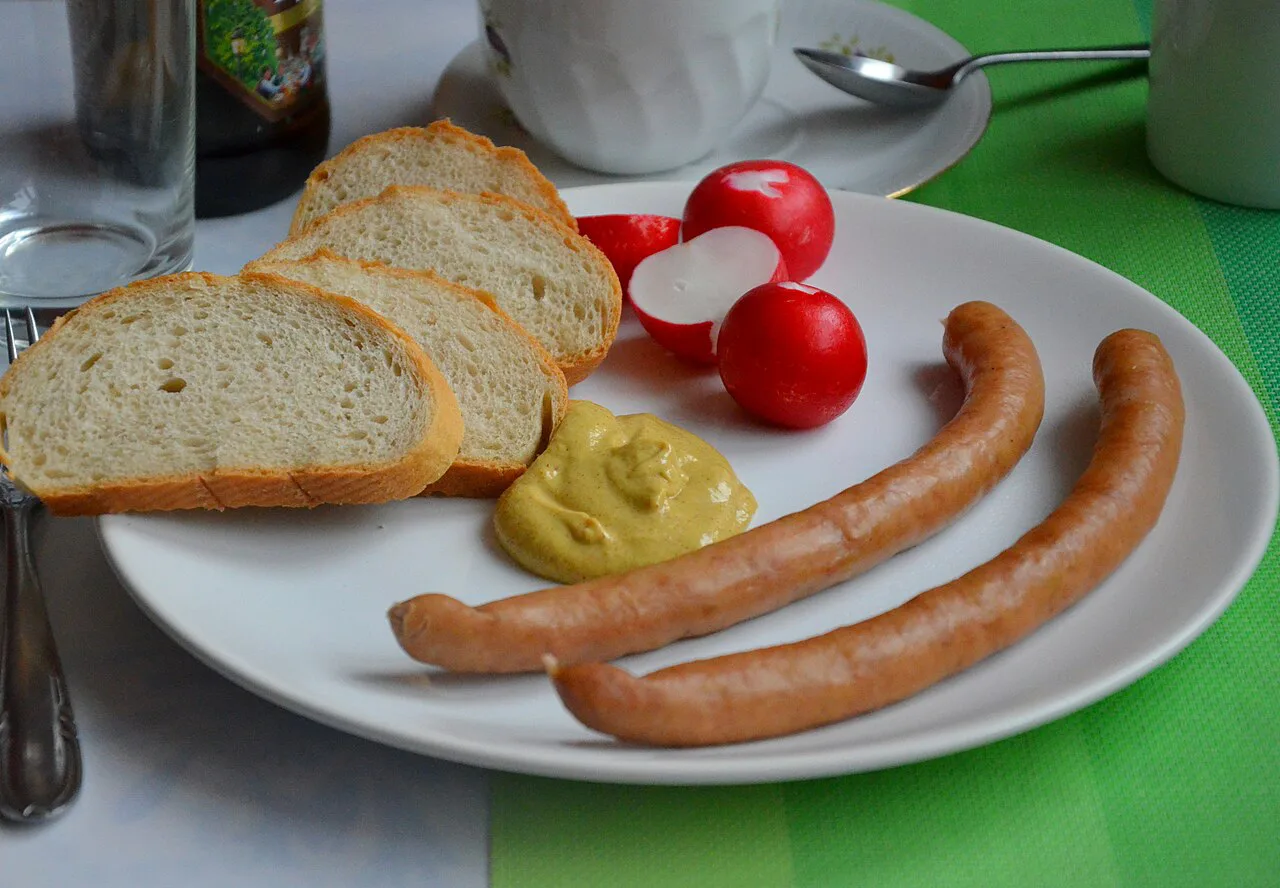
At a Viennese stand, expect the frankfurter to arrive as a pair with a plain white roll and a squirt of mustard or ketchup, and expect to eat it standing up with a small wooden fork. Order by the name on the board, say how many you want, and keep the mustard close: it cuts the richness of the pork. For the German rather than the American treatment, order it with sauerkraut and onions instead of the sweet condiments.
Because the frankfurter is simmered rather than grilled, it is one of the fastest things you can eat in a German or Austrian city, which makes it a sensible lunch between other stops. It is also mild enough that it works for a nervous eater who does not want a strong, garlicky or smoked sausage.
Buying frankfurters to cook at home
At a butcher, a frankfurter is usually a beef-pork blend, while a supermarket frank whose label does not name the meat may include fillers and added water. Read the label for the meat and the water content if you care about what is in the link. A butcher's version generally has fewer preservatives and therefore a shorter shelf life.
Once home, refrigerate fresh sausages and use them within two or three days, cooked ones within four or five, and smoked ones within about a week; freeze anything you will not reach in time. Heat frankfurters gently in hot water rather than boiling them hard, which keeps the casing from splitting. Serve with a sharp mustard, a slice of German rye bread or a spoon of sauerkraut rather than a soft American bun. For the practical details, see the liverwurst.
Which sausage should you order first?
Start with a plain frankfurter if you want the baseline: mild, porky, simmered, and served with a roll and mustard so you can taste the sausage itself. Move on to a bratwurst for a coarse grilled link, a weisswurst for a pale and delicate southern German breakfast, or a knackwurst for a smoked, garlicky snap. Then try a Sacherwürstel for a finer version of the same idea, or a Berner Würstel when you want something rich and fried.
If you are spending a day around food in a German or Austrian city, a frankfurter is an easy, low-cost way to eat like a local between market stops, and it takes minutes rather than an hour. Find a busy stand, order a pair, and ask for sauerkraut if you want the German rather than American treatment.
Explore more Germany guides
Sources
Notes for your next German food trip
Optional updates to our guides.
You might also like



Continue reading
More guides you'll find useful





