
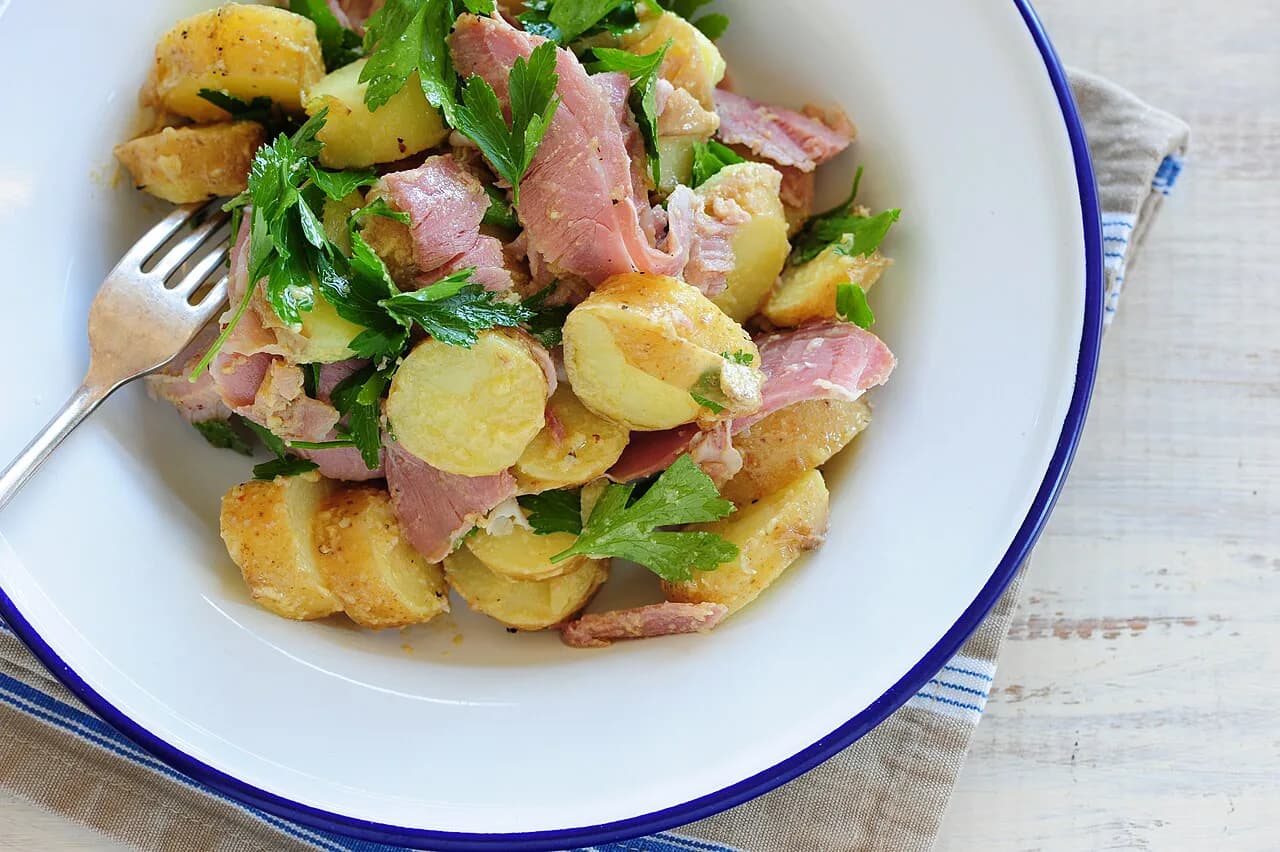
German Potato Salad: The Vinegar-Bacon Kartoffelsalat, Explained
German potato salad is sliced waxy potatoes in a warm bacon-and-vinegar dressing, served warm with no mayonnaise. Here is what is in it and how regions differ.
On this page
German potato salad is sliced waxy potatoes in a warm bacon, onion, and vinegar dressing, served warm or at room temperature with no mayonnaise. That is the version most travelers mean by Kartoffelsalat, and it is a different dish from the cold, mayo-blanketed salad sold under the same name in the US. This guide covers what goes into it, why the dressing goes on hot, how the southern and northern versions differ, and how to pick and cook the potatoes.
Expect a side that is tart, savory, and lighter than it looks, often served beside sausage or a schnitzel. The warm version relies on a bacon vinaigrette that soaks into the slices as it sits, so the flavor is deepest after a short rest. Keep the German names in mind when ordering: Kartoffelsalat on a menu tells you the kitchen's regional lean.
What German potato salad is
The dish is essentially boiled potatoes cut into slices and tossed while still warm in a dressing of bacon fat, vinegar, and broth, with onions and herbs. The warmth matters: hot dressing on hot potatoes lets the fat and vinegar soak in instead of sitting on the surface. Serve it warm, cold, or at room temperature, and it still holds its shape.
It is a side dish rather than a main, and in German cooking it often shares the table with sausage, roasted meat, or a breaded cutlet. A bowl on a Gasthaus menu is usually enough to share as a side for two. If you are building a plate of German sides, this is the one that brings acidity to cut through fat.
An American-style potato salad leans on mayonnaise, eggs, and celery, which is a different, colder, richer dish. German potato salad has no mayo and no creamy binder; the dressing is thin and glossy rather than thick. That difference is the first thing to expect when you order it in Germany.
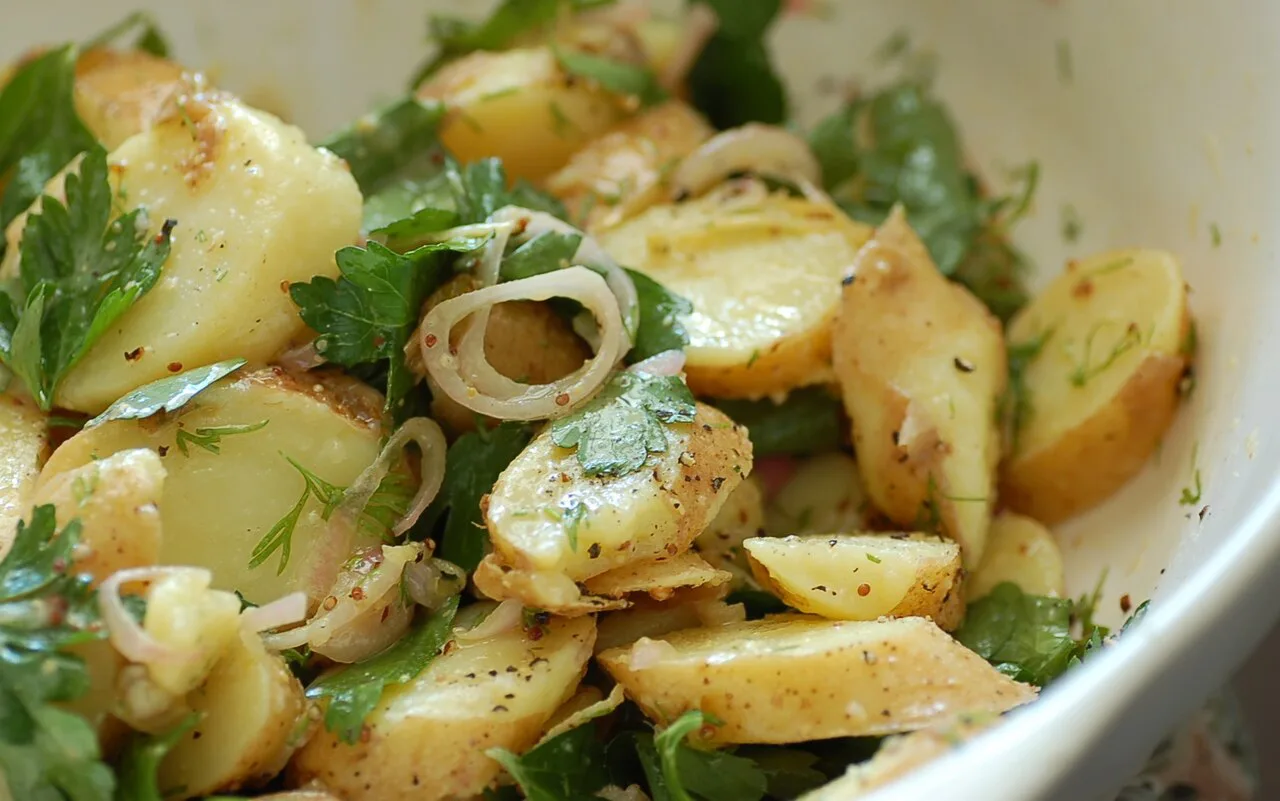
What goes into it: waxy potatoes, bacon, onions, vinegar, and broth
The core ingredients are waxy potatoes, bacon and its rendered fat, onions, vinegar, and beef broth or stock. The bacon does double duty: crisp bits for texture and the rendered fat as the base of the dressing. Parsley is the classic herb, with chives as a common second.
What ingredients are in German potato salad? The warm version uses waxy potatoes, bacon and its fat, onions, vinegar, beef broth or stock, and herbs such as parsley and chives. Some styles omit the bacon and rely on vinegar and broth, and a little sugar often balances the acid.
What is the difference between German potato salad and Bavarian potato salad? In broad terms, southern versions lean on vinegar and broth, while Bavarian versions more often include bacon and onions and are served warm. Kitchens vary, so ask whether the salad comes warm and whether it contains bacon.
Can German potato salad be made without bacon? Yes. Some regional styles, such as certain Swabian versions, are built on vinegar and broth and can be made without bacon, and are still a sturdy side.
Thick-cut bacon is a better choice than thin American-style rashers here, because it survives crisping without turning to crumbs. The recipe's bacon is diced and crisped, and its rendered fat forms the base of the dressing. The dressing also takes a little sugar to balance the vinegar's bite.
A quality beef stock deepens the flavor so the dressing does not taste watered down. If you are using a concentrate or bouillon, start modestly and taste, since salted stocks can dominate. The broth is there for savoriness, not to make a soup.
Why the dressing goes on hot and how the potatoes soak it up
The dressing is mixed in while still hot so its flavor soaks into the potatoes. Hot fat and vinegar enter the porous surface of a warm slice, and as the salad sits the liquid is drawn deeper in. Potatoes that have gone cold close up and take on very little, which is the single most common failure.
Fry the bacon and onions, add vinegar and broth to the pan, then pour that hot dressing straight over the still-warm potato slices. Toss gently so the slices stay intact. Let the salad rest briefly before serving so it drinks up the dressing.
Do not leave the salad sitting in the fridge before the dressing is added. Cook, dress, rest, then store any leftovers covered in the refrigerator and reheat gently if you want it warm again. The resting time is part of the dish, not a step to skip.
Regional split: southern vinegar-based Kartoffelsalat versus northern mayonnaise-based versions
Germany has several potato salads from different regions, and not all of them are the warm vinegar sort. In broad terms, southern versions lean on vinegar and broth, while northern ones often fold in mayonnaise and are served cold. A menu in Bavaria is more likely to hand you the tangy, warm version.
None of this is a hard rule; families and kitchens differ, and the word Kartoffelsalat alone does not promise a particular style. When you order, ask whether it comes warm, or watch for wording that points to a vinegar or mayo dressing. That single question tells you which dish is coming.
For a table spread, a warm vinegar salad pairs well with German dumplings and sauerkraut, where the acidity cuts through the richness. That kind of balance is how these sides work together.
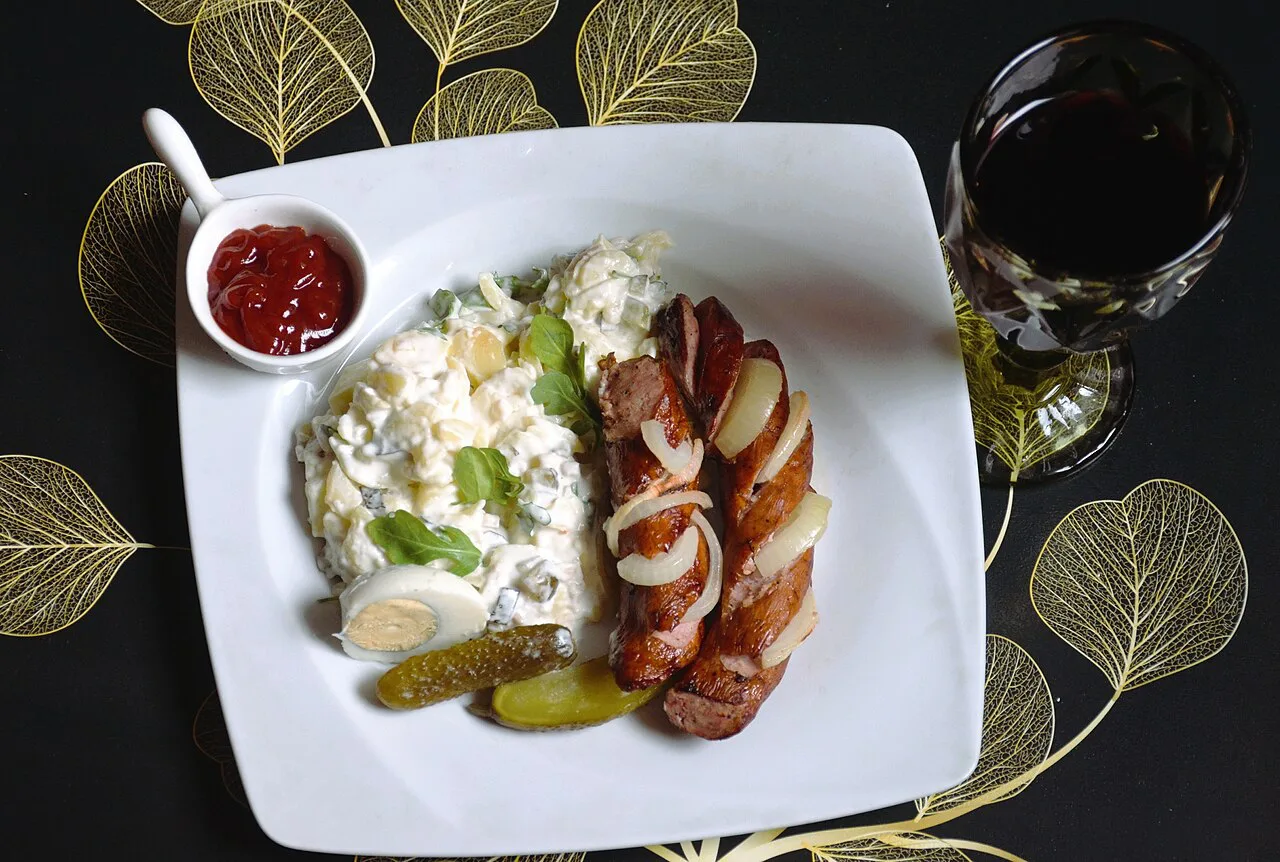
Bacon or no bacon: Swabian and Bavarian styles compared
Bacon, or Speck, is the heart of many versions, but not every regional style uses it. Some recipes omit bacon entirely, some add mustard, and some call for starchier potatoes. The warm, bacon-rich salad is one branch of a family, not the whole of it.
Swabian Kartoffelsalat, Schwäbischer Kartoffelsalat, is one regional style, and some versions come without bacon. Bavarian versions more often include bacon and onions and trend toward the warm, savory style. Neither is better; they suit different plates.
For vegetarians, a broth-and-vinegar salad made without bacon is the safer order, and it is still a sturdy side. It simply carries less smoky depth than the bacon version. Remember that German broths and dressings can also be made with meat stock, so the meatless label is not automatic.
How to choose the potato: waxy red or yellow hold their shape, starchy russets fall apart
Waxy potatoes, such as red or yellow varieties, are the right choice for a sliced salad because they hold their shape. You get neat slices that absorb the warm dressing without disintegrating. Save the floury types for mash.
Starchy russets have their own advantage: their extra starch combines with the dressing and thickens it so it clings to the potatoes. The trade-off is texture; they break apart when stirred, though they still taste good. Choose waxy for neat slices, starchy for a thicker, saucier salad.
If you like fried potatoes at the table, bratkartoffeln are the pan-crisped cousin worth knowing, and waxy potatoes keep them firm, too.
Vinegar choice and the spoonful of sugar that balances acid and fat
Most versions use white vinegar, but red wine vinegar gives a deeper flavor that stands up to the salty, fatty bacon and beef broth. Use what you have, but taste as you go, since vinegars vary in strength. A too-sharp dressing can overpower the potatoes.
A small spoonful of sugar balances the acidity and the fat without making the salad sweet. Add a little, taste, and add more only if the vinegar still bites. Sugar is a balancing tool here, not an ingredient you should taste.
Salt comes from the bacon, broth, and seasoning, so taste the dressing before adding more. Good broth carries salt on its own, and the dish can turn salty quickly. Add salt at the end.
Herbs and add-ons: parsley and chives as the standard, dill for a brighter note
Parsley is the classic herb, and chives are a frequent partner. Dill brings a brighter, warmer lift if you want more freshness. A generous herb finish at the end keeps the salad lively.
Some versions call for mustard, which adds sharpness. Keep extras modest so the potatoes and bacon stay in charge. Add herbs after the salad has rested so they stay green and fresh.
How it is served at a German table and what to order it alongside
Order it as a side, not a starter or a main, and share it if the bowl is large. It works alongside sausage, schnitzel, or a breaded cutlet, and it complements German sides such as spaetzle and German dumplings without competing.
Potato salad is an easy companion to sauerkraut on a hearty plate. A beer in passing is common, but the food is the point.
If you are building a whole plate of German sides, this salad is the one that brings the acidity. Add German potato pancakes on the side for a crisp, fried counterpart. The table stays balanced when one dish is sharp and another rich.
Common mistakes: overcooking, dressing cold potatoes, and skipping the rest
Overcooking is the first mistake; potatoes that are falling apart cannot be sliced. Cook them just until a knife slides in with a little resistance, then drain and let them cool enough to handle, but slice while warm. Firm slices hold the dressing.
The second mistake is dressing potatoes that have gone cold, which leaves a thin, unabsorbed sauce. The third is skipping the resting time, when the flavor soaks in. Dress hot, rest briefly, and taste before serving.
Two smaller errors: adding too much sugar so the salad turns sweet, and over-salting because the bacon and broth are already salty. Taste at each stage and adjust at the end.
Which Kartoffelsalat Should You Order?
If you want the tart, warm, mayo-free dish this page describes, look for a southern-style Kartoffelsalat with vinegar and broth, often with Speck. If you prefer something cold and creamy, ask for a northern mayo-based salad instead. Asking warm or cold at the table settles it quickly.
Cook it at home and waxy potatoes, hot dressing, and a short rest get you most of the way. At a German table, order it as the acidic side to a rich main and let the plate balance itself. Pay attention to the region when you see the name.
Explore more Germany guides
Frequently Asked Questions
What ingredients are in German potato salad?
The warm version uses waxy potatoes, bacon and its fat, onions, vinegar, beef broth or stock, and herbs such as parsley and chives. Some styles omit the bacon and rely on vinegar and broth, and a little sugar often balances the acid.
What is the difference between German potato salad and Bavarian potato salad?
In broad terms, southern versions lean on vinegar and broth, while Bavarian versions more often include bacon and onions and are served warm. Kitchens vary, so ask whether the salad comes warm and whether it contains bacon.
Can German potato salad be made without bacon?
Yes. Some regional styles, such as certain Swabian versions, are built on vinegar and broth and can be made without bacon, and are still a sturdy side. It simply carries less smoky depth, and you should confirm the broth is meat-free if that matters to you.
Sources
Notes for your next German food trip
Optional updates to our guides.
You might also like



Continue reading
More guides you'll find useful





