
Weißwurst: What It Is and How to Eat It Like a Local
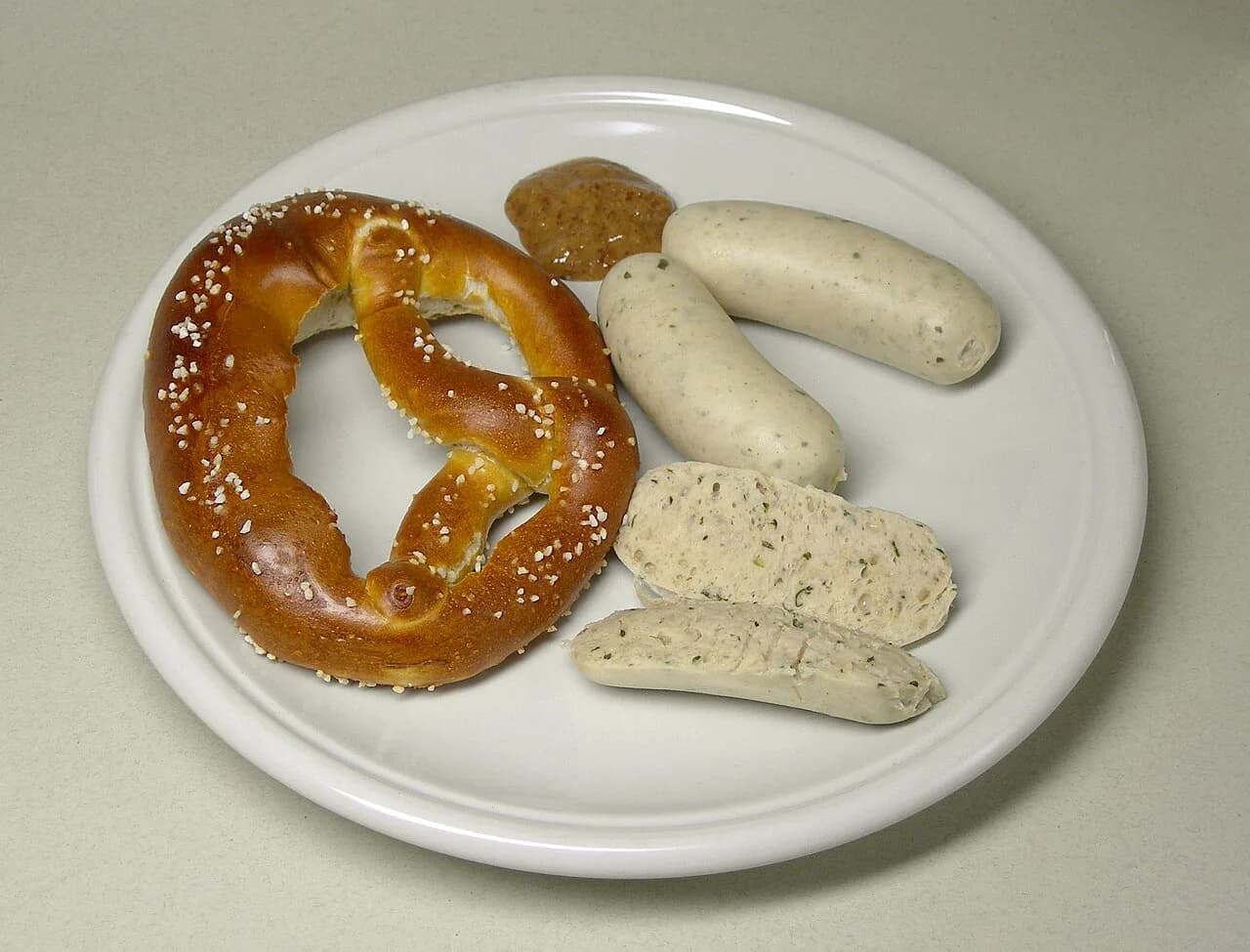
Weißwurst is a pale Bavarian veal and pork sausage eaten warm with sweet mustard and a pretzel. Here's what it tastes like, how it's cooked, and how to peel it.
On this page
Weißwurst is a pale Bavarian sausage made from finely ground veal and pork, served warm with sweet mustard and a pretzel, usually as a mid-morning meal. It is mild rather than smoky or spicy, and the whole point of eating it is the gentle poaching and the sweet mustard alongside. This guide covers what it tastes like, why it stays white, how the hot-water method works, and how it sits next to the grilled sausages most visitors already know.
Expect a soft, fine-textured sausage with a thin skin you take off before eating, either with fingers or a fork. The seasoning is gentle: white pepper, nutmeg, lemon and parsley rather than the coarse salt-and-caraway punch of a grilled sausage. If you have a morning in Munich or anywhere in Bavaria, this is the classic thing to order before lunch, ideally with a Brezel and a small beer or a coffee.
What Weißwurst is: Munich's pale veal and pork sausage
Weißwurst is a Munich and Bavarian specialty built on veal and pork, ground fine and packed into a thin casing. The mixture is seasoned mildly, which is why first-timers often describe it as delicate rather than sausage-forward. It is a morning food by tradition, sold and served in Bavaria long before lunch.
The sausage is parboiled during production, so what you get in a Gasthaus or beer hall is essentially ready-cooked and only needs reheating in hot water. That is also why it keeps its shape and pale color instead of browning. If you are working your way through the wider family of German sausages, Weißwurst is the soft, pale outlier among the grilled and smoked types.
What Weißwurst tastes like and why it is white
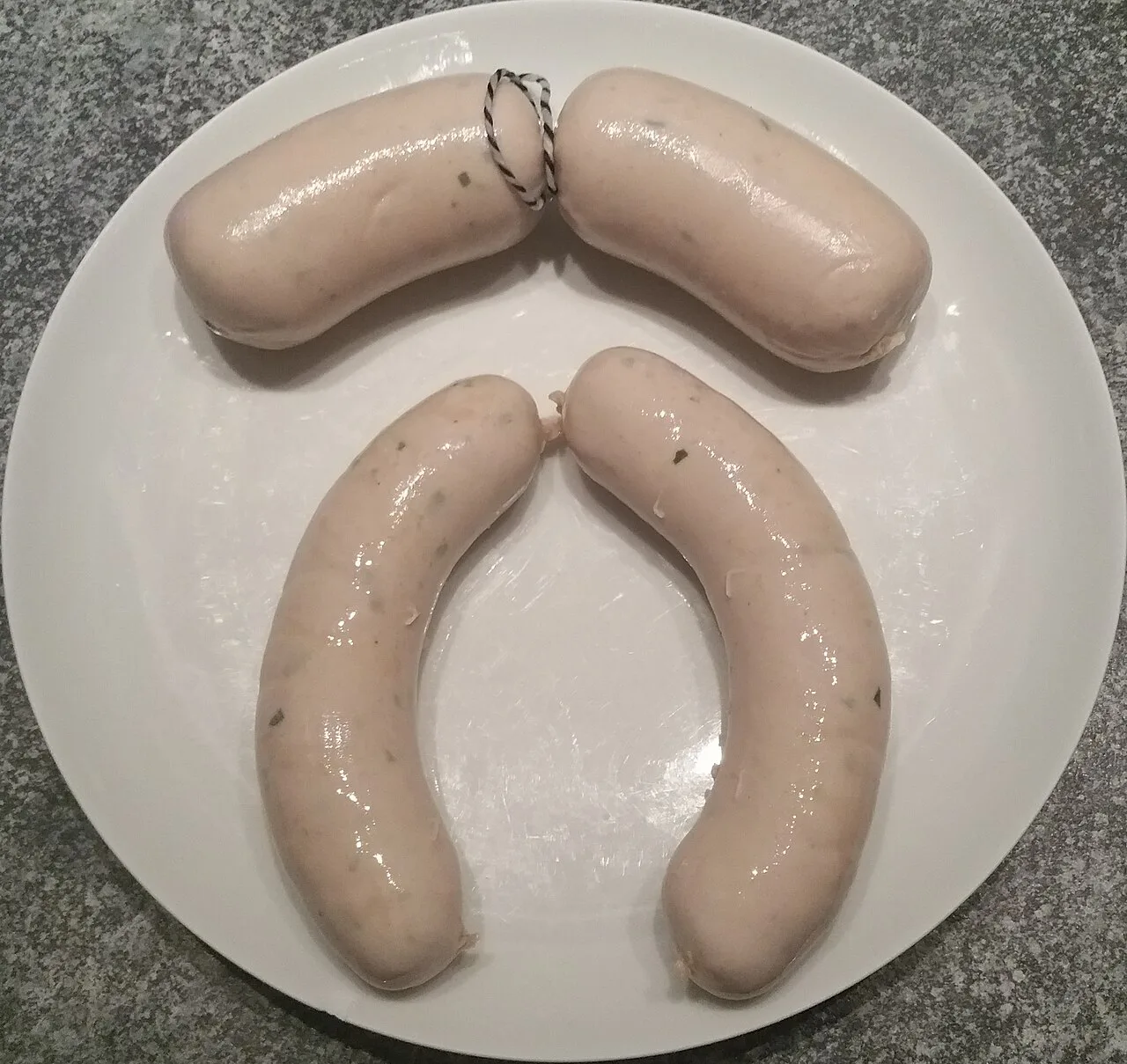
The flavor is mild and slightly savory, with a whisper of lemon and parsley and a warm note from nutmeg and white pepper. There is no smoke and no heavy cure, so the pork and veal come through cleanly. The texture is fine and soft, closer to a delicate pâté than to a coarse grilled sausage, which is why the skin matters so much for holding it together.
Is Weisswurst the same as bratwurst? No. Weißwurst is a pale veal and pork sausage that is parboiled and then reheated in hot water, while bratwurst is a grilled or pan-fried sausage that browns and crisps.
Can you eat the skin of Weißwurst? The casing is not meant to be eaten. Slit it lengthwise and peel it off, or nick one end and suck the filling out, leaving the skin behind.
Are Weisswurst already cooked when you buy them? Yes, they are parboiled during production, so you only need to warm them through. Steep them in hot but not boiling water until heated, and avoid a rolling boil, which splits the thin casing and lets the filling escape.
It is white because it is not smoked, not dried and not grilled: the meat is finely ground, gently cooked and left pale. Any browning would come from a hot pan, which is the opposite of how Weißwurst is handled. That pale look is your cue that you are dealing with a poached sausage, not a fried or flame-grilled one.
The before-noon rule: why Weißwurst is a morning meal
In Bavarian tradition, Weißwurst belongs to the morning, eaten between an early breakfast and lunch with a pretzel and sweet mustard. The old saying that the sausage should not hear the noon bells captures the habit rather than a law. Today you will still find it served earlier in the day in Munich and across Bavaria, and many places simply stop offering it once lunch service takes over.
For a visitor, the practical takeaway is to plan Weißwurst as a late-morning stop rather than an evening meal. If a menu lists it, ordering it at midday is usually fine; ordering it at dinner is where you may find it unavailable. Treat the noon cutoff as a custom to respect, not a rule anyone will enforce.
How Weißwurst is cooked: hot water, never a rolling boil
Weißwurst is reheated by steeping it in hot, not boiling, water for several minutes until heated through. A hard boil is the classic mistake: the thin casing splits, the filling leaks out and you end up with cloudy water and a broken sausage. Keep the pot just below a simmer and let the heat come through gently.
Because the sausage is already parboiled, you are warming it, not cooking it from raw. Lift it out with a slotted spoon, drain it briefly and serve it straight away with the broth-style liquid sometimes offered alongside. If you are preparing it at home, watch the water rather than the clock: as soon as small bubbles cling to the pot and the sausage feels hot through, it is ready.
How to eat Weißwurst: sweet mustard, pretzel, and the skin
The traditional pairing is süßer Senf, a sweet Bavarian mustard, and a Brezel, the chewy lye pretzel. The mustard is pale and mildly sweet rather than sharp, and it is meant to be spooned onto the plate and used generously. A wheat beer or a coffee alongside is normal at a morning table; keep the beer small and the focus on the food.
You do not eat the casing. The standard method is to slit the skin lengthwise with a knife or fork, peel it back and eat the sausage with the mustard. The other, more theatrical method is to hold the sausage at one end, bite or nick the skin and suck the filling out, leaving the empty casing behind; both are accepted, and nobody will mind which you choose.
If you want a fork-only approach, cut the sausage in half lengthwise, peel each half and dip it into the mustard. Order a Brezel on the side to mop up the plate, and ask for extra mustard if the portion looks shy. A small green salad or a pretzel is a common side, but the sausage and mustard are the point.
Weißwurst vs bratwurst: pale and poached versus grilled and browned
The clearest difference is cooking: Weißwurst is poached in hot water and stays pale, while a bratwurst is grilled or pan-fried until browned and crisp-skinned. That changes everything on the plate, from texture to the condiment you reach for. Weißwurst wants sweet mustard; a grilled bratwurst usually wants a sharp mustard or a roll.
Seasoning follows the same split. Weißwurst is mild, with white pepper, nutmeg, lemon and parsley, while grilled sausages lean on coarser salt, pepper and sometimes caraway or marjoram. If you like a snappy, savory sausage, the grilled style will feel more familiar; if you want something soft and delicate, order the Weißwurst.
Portion size and serving style also differ. Weißwurst usually arrives as a pair with mustard and a pretzel, while bratwurst often comes in a roll or on a plate with potato salad. Both are everyday food in Bavaria and beyond, so the choice is about mood and time of day rather than one being more authentic than the other.
How to order Weißwurst in a beer hall or Gasthaus
On a menu, look for Weißwurst with the words süßer Senf and Brezel nearby, which tells you the full set is coming. A portion normally means two sausages, sometimes described as a pair, with mustard and a pretzel on the side. If you only want a taste, ask whether a single sausage is possible before you commit to the plate.
In a busy beer hall, find a seat, catch the server's eye and order when they come by; in a smaller Gasthaus you may be shown to a table. Cash is still common in traditional places, so carry some euros even if cards are accepted. If you are unsure how the bill works, ask for the Rechnung when you are ready rather than waiting to be offered it, and mention the tip amount as you pay.
Keep the order simple: Weißwurst, a Brezel, sweet mustard and a drink. Ask for the mustard on the side if you want to control how much goes on each bite, and ask for the sausage to be served warm rather than hot. For a broader sense of how the sausage family fits together, from the grilled to the poached, it helps to know the other styles before you order.
How to pronounce Weißwurst and Weißwurstäquator
Weißwurst is said roughly as VICE-voorst, with a sharp s sound at the start and a short oo in the middle. The ß is simply a sharp s, so the word sounds like white sausage in German: weiss (white) plus Wurst (sausage). English speakers can spell it Weisswurst without the ß and be understood perfectly.
The Weißwurstäquator, or white sausage equator, is the joking line that separates Bavaria and its white sausage from the north of Germany. It is a cultural marker rather than a real border, and it tells you where Weißwurst is a normal part of the morning. If you are north of it and want the sausage, look for a Bavarian-style pub or a butcher who stocks it.
Should You Order Weißwurst?
Order Weißwurst if you want a mild, soft sausage and you are happy to eat it before lunch with sweet mustard and a pretzel. Skip it if you want a crisp, smoky, grilled bite, in which case a bratwurst or a Nürnberger Rostbratwurst is the better choice. The skin comes off either way, so do not let the peeling ritual put you off trying it.
For a first visit, order it as a morning plate with a Brezel and a small drink, and ask for the mustard on the side so you can taste the sausage on its own. If you enjoy it, use the same trip to compare it with a grilled sausage and you will understand the difference immediately.
Explore more Germany guides
- Bockwurst
- Frankfurter Sausage
- Knockwurst vs Bratwurst: What This German Sausage Is and How to Eat
- Landjäger: What This German Dried Sausage Is and How to Eat
- Liverwurst: What It Is, How It Tastes, and How to Eat
- Mett: Germany's Raw Ground Pork Spread and How to Eat
- What Is Teewurst? A German Sausage Spread Explained
Frequently Asked Questions
Is Weisswurst the same as bratwurst?
No. Weißwurst is a pale veal and pork sausage that is parboiled and then reheated in hot water, while bratwurst is a grilled or pan-fried sausage that browns and crisps. Weißwurst is milder and softer, and it is traditionally eaten with sweet mustard and a pretzel rather than in a roll.
Can you eat the skin of Weißwurst?
The casing is not meant to be eaten. Slit it lengthwise and peel it off, or nick one end and suck the filling out, leaving the skin behind. Both methods are normal in Bavaria and neither will surprise anyone at the table.
Are Weisswurst already cooked when you buy them?
Yes, they are parboiled during production, so you only need to warm them through. Steep them in hot but not boiling water until heated, and avoid a rolling boil, which splits the thin casing and lets the filling escape.
Why is Weißwurst eaten before noon?
It is a Bavarian tradition rather than a rule. The sausage was historically a morning food, and the saying that it should not hear the noon bells reflects that habit. Many places still serve it earlier in the day, so plan it as a late-morning meal rather than a dinner order.
Sources
Notes for your next German food trip
Optional updates to our guides.
You might also like



Continue reading
More guides you'll find useful





