
Pils Beer in Germany: What It Is and How to Order
Pils is Germany's most-ordered beer style: a pale, crisp, hop-forward lager. Here is what makes it different from other lagers and how to order one.
On this page
Pils beer is a pale, bottom-fermented lager with a clean malt base and a pronounced hop bitterness. In Germany it is the beer most often ordered when someone wants something crisp and refreshing rather than malty or cloudy, and it is the style you will see on nearly every drinks menu. This guide covers what makes pils taste the way it does, how it compares to the other German beers a server might offer, and the vocabulary that gets a glass into your hand without confusion.
What pils beer is
Pils is a lager brewed with bottom-fermenting yeast at cool temperatures, which gives it a clean, crisp backbone rather than the fruity character of an ale. Its color ranges from pale straw to light gold, and its defining feature is the hop bitterness that runs through the finish. The style originated in the Czech city of Plzeň in the nineteenth century, where brewers used soft local water and generous hop loads to create a beer that was dramatically different from the dark, cloudy brews common at the time.
Alcohol content for the style generally falls in the range of roughly 4.5 to 5 percent ABV, though individual beers vary and the figure is printed on the label or the menu rather than being fixed by law. That moderate strength is one reason pils works as a session beer in a German beer hall, where a second glass is the norm rather than the exception. If you want the exact figure for a particular bottle, the brewery's own label is the place to look.
Pils vs. lager vs. Pilsner: why the names differ
Pilsner is a type of lager, not a separate category from it. All pils is lager, but not all lager is pils: the word lager describes the fermentation method, while pils describes a specific pale, hoppy style within that family. When a German menu says Pils, it is naming the style directly, the same way a menu in Munich might say Helles. The Czech original and the German interpretation share the same lineage, though German brewers generally push the bitterness a little further and keep the malt character leaner.
Is pils the same as a lager? Pils is a type of lager, not a separate category. All pils is brewed with bottom-fermenting yeast at cool temperatures, but the word pils describes a specific pale, hop-forward style within the wider lager family.
What is the alcohol content of Pils beer? The style generally falls in the range of roughly 4.5 to 5 percent ABV, though individual beers vary. The exact figure for a named beer is printed on its label or listed on the menu.
Why do Germans say Pils instead of Pilsner? Pils is the short everyday form of the word and the one used on menus, tap handles and coasters. Pilsner names the same style and is understood, but it sounds slightly more formal in a German pub.
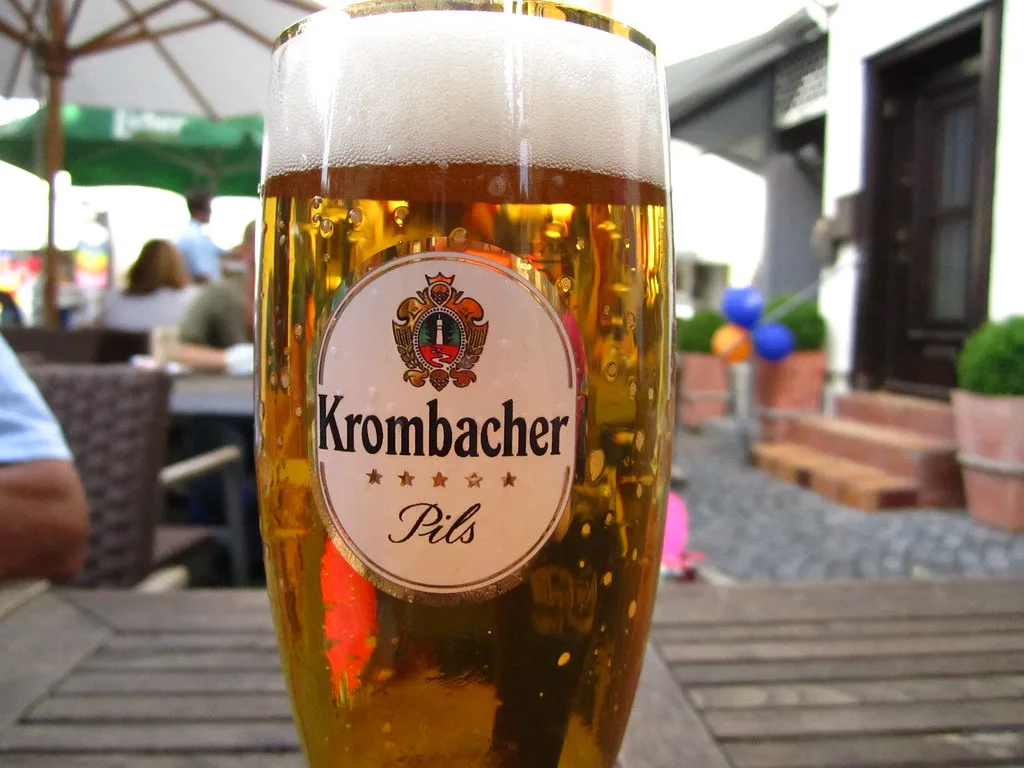
Germans say Pils rather than Pilsner in everyday speech, and the short form is what you will see on tap handles, menus and beer coasters. Asking for a Pilsner in a German pub is not wrong, but it sounds slightly formal, as though you are naming the style for the record rather than ordering a drink. The word Pilsener, with the extra syllable, is also used but is less common on modern German menus.
What German Pils tastes like and why the bitterness is the point
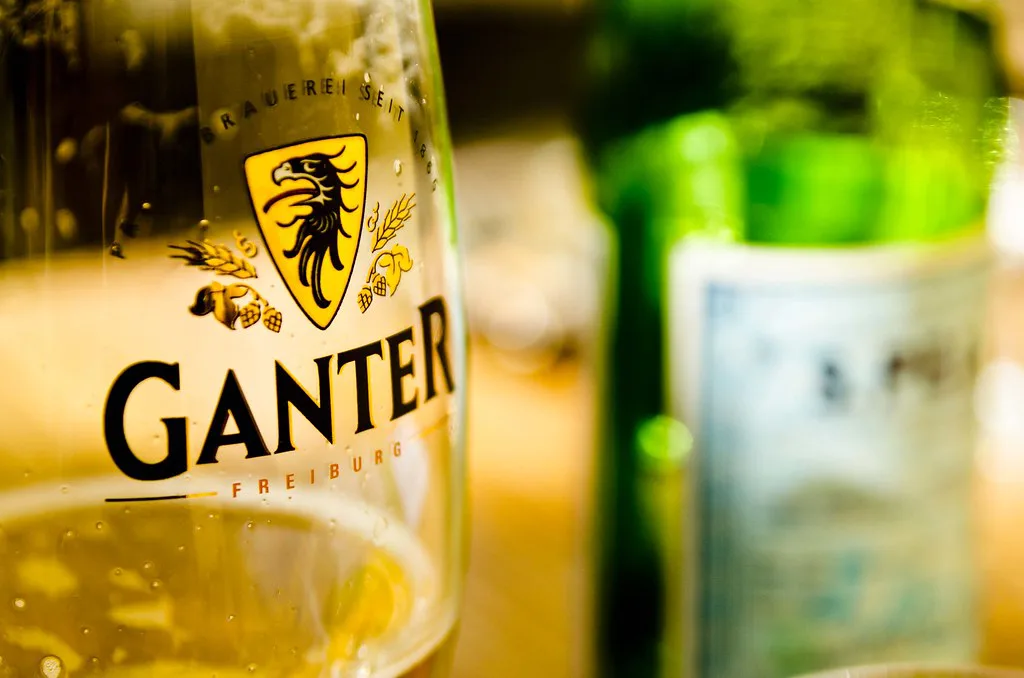
German pils leads with a dry, biscuity malt base that clears the way for a firm hop bitterness in the middle and a long, crisp finish. The bitterness is not an accident or a flaw to be tolerated; it is the reason the style exists and the reason it pairs so well with rich food. Compared with a Munich Helles, which leans on soft malt sweetness, a pils is leaner and more assertive, and compared with a Kölsch it is more bitter and less delicate.
If you are used to mass-market lagers that taste of very little, a German pils can come as a surprise: the hop character is forward and the finish is clean rather than sweet. That is the house style, and it is why pils remains the default order for a large share of German beer drinkers. If you want to taste the full range of German brewing rather than just the default, the German beer guide maps the other styles against this one.
Where pils sits on a German drinks menu
A German drinks menu usually groups beers by style rather than by brand, and pils sits near the top alongside Helles and Weizen. In Cologne, the local Kölsch is a pale top-fermented beer served in small glasses, and in Düsseldorf the local Altbier is dark and top-fermented; both are regional specialties that a server will offer before a pils. In Bavaria, Helles is the everyday lager and Weizen, or German wheat beer, is the cloudy alternative, so pils is often the crisper, more bitter choice on the same list.
Darker lagers such as dunkel and schwarzbier appear on many menus too, and they offer a maltier contrast to pils without abandoning the lager method. If you want to compare the two ends of the German lager spectrum in one sitting, ordering a pils and a dunkel side by side is the clearest way to taste the difference. Bock beer is stronger and maltier still, typically a seasonal or cold-weather order rather than an everyday glass.
How to order a pils in a German restaurant or beer hall
The basic order is ein Pils, bitte, which means one pils, please. If you want it on draft rather than from a bottle, say vom Fass, which means from the tap; a server will understand either request, but the draft version is the fresher pour. To order a round for the table, say eine Runde Pils, bitte, and the server will bring one glass for each person.
German restaurant service runs at a different pace from what many visitors expect. You signal for the bill by catching the server's eye and saying Zahlen bitte, and splitting the bill, or getrennt zahlen, is completely normal. Cash remains the preferred payment method in many German restaurants, especially smaller traditional ones, so carry some euros even if you plan to pay by card.
Vom Fass vs. bottled: what changes in the glass
Draft pils, served vom Fass, is usually poured fresh from a keg and arrives with a thin, tight head of foam. Bottled pils is the same beer but has spent time in glass, and the carbonation can feel sharper and the hop aroma a little more muted than a freshly tapped pour. In a busy beer hall the keg is turned over quickly, which is one reason a draft pils often tastes brighter than the bottle.
The trade-off is practical: draft is the better drinking experience, but bottled is what you will find at smaller places that do not have a tap, and it travels better if you are taking beer away. Neither version changes the underlying style, so the bitterness and the pale color are the constants. If a venue lists both, the draft is the one to order first.
How pils is served and drunk in Germany
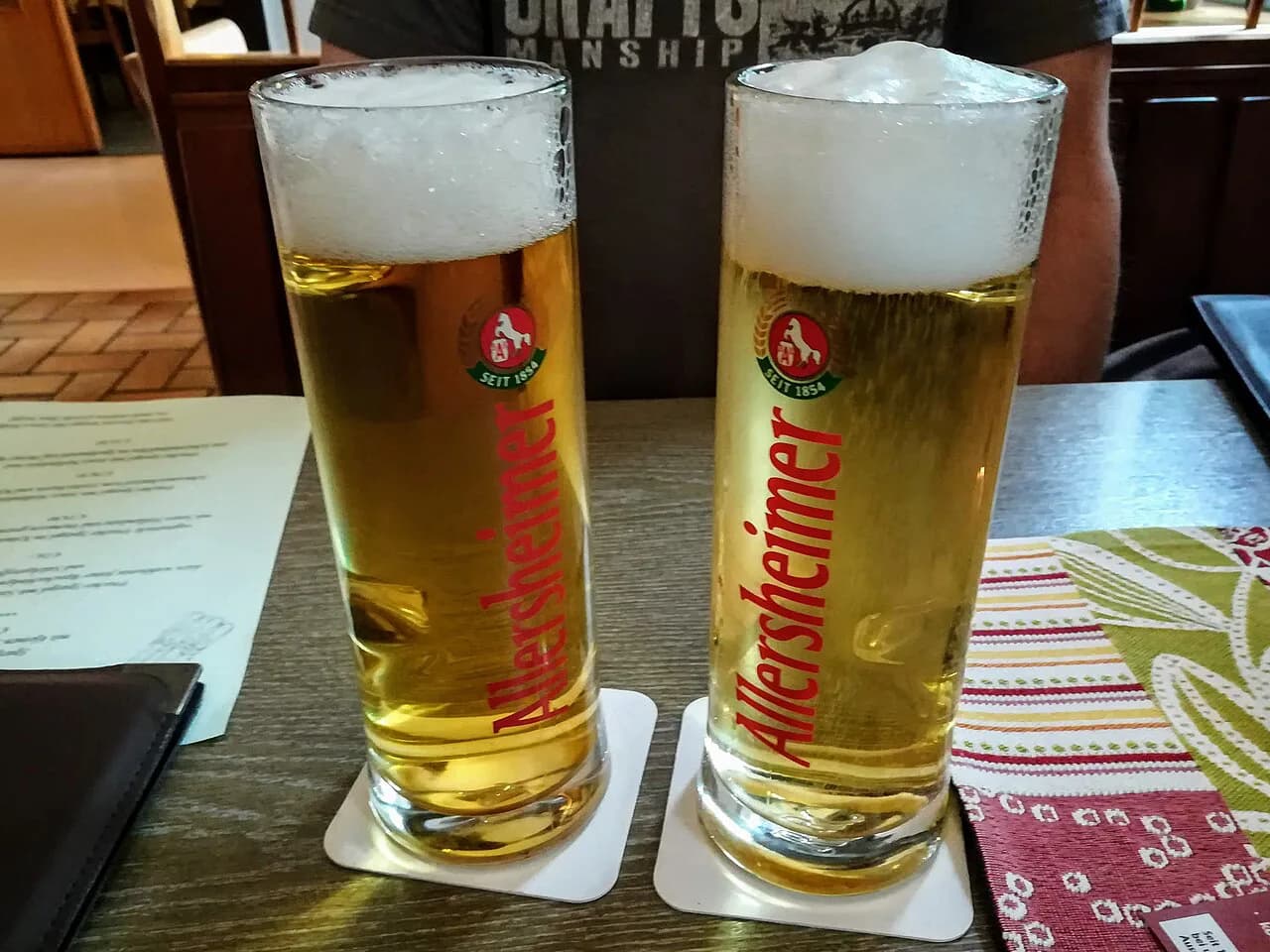
In a German beer hall, pils typically arrives in a tall, narrow glass rather than a stein, and the server may replace it before it is empty if the pace of the table is quick. The glass is designed to keep the beer cold and the head intact, and it is meant to be drunk while the beer is still fresh rather than nursed. Ordering a second round is normal, and there is no expectation that you will match the pace of the table.
Pils is served cold, and in summer a beer garden will pour it colder still to suit the weather. The etiquette is simple: drink at your own pace, keep the glass on a coaster, and order food alongside the beer rather than treating the beer as the whole meal. If you want a lighter, cloudy alternative for a hot afternoon, a hefeweizen is the classic Bavarian choice.
What to eat with a pils in a German pub or beer hall
The bitterness of a pils cuts through rich, fatty food, which is why it works so well with the pork, sausage and dumpling dishes that dominate German pub menus. A plate of roast pork with crackling, a pair of bratwurst with mustard, or a slice of meatloaf with fried egg all benefit from the clean, hoppy finish. The same logic applies to a plate of Käsespätzle, the German cheese noodles, where the beer's bitterness balances the melted cheese.
If you finish with something sweet, the German afternoon ritual of Kaffee und Kuchen, or coffee and cake, is a separate occasion from the beer hall and usually happens at a café or Konditorei rather than at the bar. A slice of apple cake or a piece of streuselkuchen, the crumb-topped yeast cake, is a lighter close to a heavy meal than a chocolate torte. The beer and the cake are not usually ordered together, but they belong to the same day of eating in Germany.
Which beer to order first
If you want the beer most Germans reach for by default, order a pils and drink it fresh. Its pale color, lean malt base and firm hop bitterness make it the clearest introduction to German lager brewing, and it pairs with almost everything on a pub menu. If you want a softer, maltier glass instead, a Helles is the natural next step, and the German beer guide lays out the rest of the field from there.
The order itself is simple: ein Pils, bitte for a glass, vom Fass if you want it from the tap, and eine Runde Pils if you are buying for the table. Ask for the bill with Zahlen bitte when you are ready, and keep some cash on hand for the smaller places that still prefer it. That is enough to walk into a German beer hall and order with confidence.
Explore more Germany guides
Frequently Asked Questions
Is pils the same as a lager?
Pils is a type of lager, not a separate category. All pils is brewed with bottom-fermenting yeast at cool temperatures, but the word pils describes a specific pale, hop-forward style within the wider lager family.
What is the alcohol content of Pils beer?
The style generally falls in the range of roughly 4.5 to 5 percent ABV, though individual beers vary. The exact figure for a named beer is printed on its label or listed on the menu.
Why do Germans say Pils instead of Pilsner?
Pils is the short everyday form of the word and the one used on menus, tap handles and coasters. Pilsner names the same style and is understood, but it sounds slightly more formal in a German pub.
Sources
Notes for your next German food trip
Optional updates to our guides.
You might also like



Continue reading
More guides you'll find useful



