
German Menu Decoded: What the Sections and Dish Names Mean
A German menu splits into Vorspeise, Hauptgericht and dessert, with a daily Tageskarte alongside. Learn what each section and dish name means and what to order.
On this page
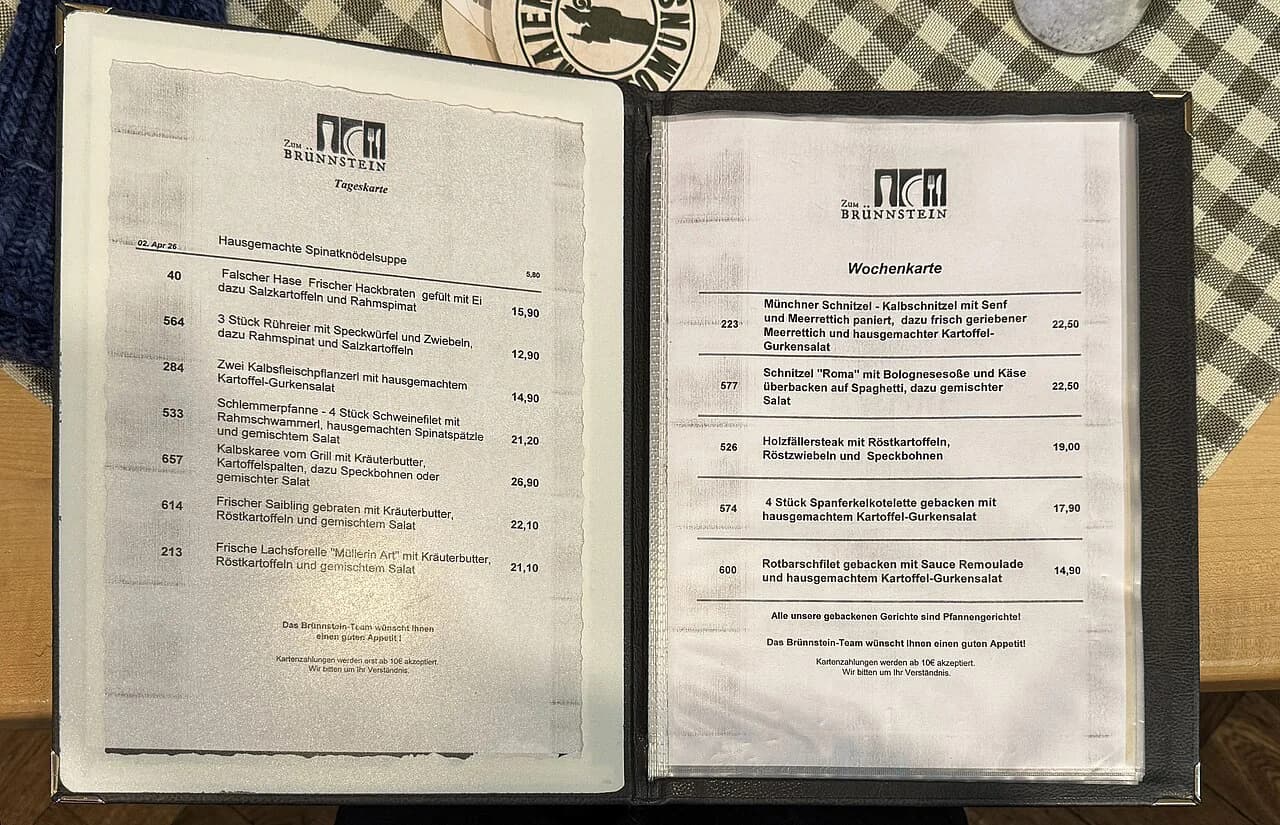
Reading a German menu gets much easier once you know two things: the page runs in a fixed order from Vorspeise (starter) to Hauptgericht (main) to dessert, and the separate Tageskarte board lists the day's specials rather than more of the same. This guide walks a real Speisekarte in the order you actually scan it, so you can decode the sections, the recurring dish names and the drink sizes before the server comes back. It also covers the phrases you need at the end of the meal.
Most of the vocabulary is shared nationwide, but a few names shift by region, and drink lines trip up more first-time visitors than the food does. Keep the glossary below to hand and you can order with confidence in Dresden, Düsseldorf or anywhere between.
Speisekarte, Karte and the Tageskarte board
The menu itself is the Speisekarte, often shortened to Karte on a chalkboard or window sign. The Tageskarte is a separate daily sheet or board listing what the kitchen is cooking that day, and it usually changes more often than the printed card. Ask for it if it is not already on the table.
A German menu commonly opens with Vorspeise (starters), moves through Hauptgerichte (mains) and Beilagen (side dishes), and closes with Dessert or Nachspeisen. Treat that order as your map: if you only want a soup and a main, you can skip whole columns without missing anything.
Starters and soups to recognize
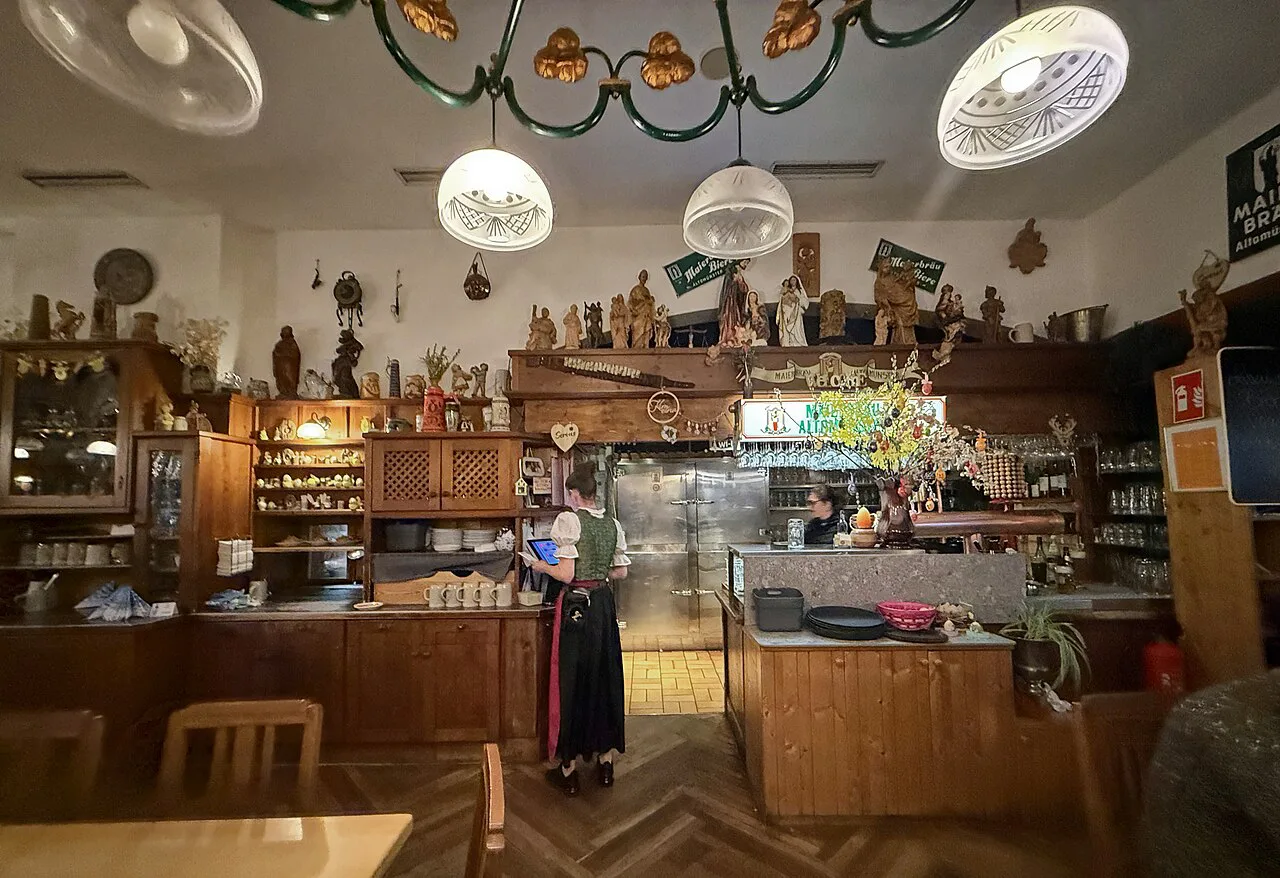
Under Vorspeise you will meet Brotzeit, a cold plate of bread, cheese, cold cuts and butter that works as a shared opener or a light meal, and Suppe, usually a clear broth or a creamy soup of the day. Salat covers everything from a small side salad to a main-course bowl with toppings.
What is the typical German lunch? Lunch is the main cooked meal of the day for many Germans, built around a Hauptgericht such as a Schnitzel, a Braten or a plate of Spätzle with a Beilage on the side. A soup or a small salad often precedes it, and the Tageskarte board usually lists the day's lunch specials.
What is Germany's favorite street food? The Döner Kebab is the street-food staple most travelers meet first, sold from Imbiss stands and small shops, with Bratwurst and pretzels close behind. These are quick counter orders rather than menu sit-down meals, so you pay at the counter and eat standing or walking.
What are good German appetizers for a party? A Brotzeit board of bread, cheese, cold cuts and butter is the easiest German starter to put out for a group, and a warm pretzel alongside works well. Small sausages and a bowl of soup are other options that scale easily.
Portions in Germany tend to be generous, so a starter plus a main is often enough for two lighter appetites. If you want to keep the meal small, a soup and a side salad is a legitimate order and no one will blink.
The main-course names you will see most
Schnitzel is a thin breaded cutlet, usually pork or veal, and it appears on nearly every card; Braten means a slow-cooked roast, often pork or beef, served with a sauce. Spätzle are small egg noodles, Knödel are boiled dumplings made from potato or bread, and Wurst covers the sausage family from Bratwurst to Weisswurst.
These names repeat across the country, so a Schnitzel in Leipzig and one in Freiburg will be recognizably the same dish even when the sauce or side changes. Regional specialties sit alongside them, and asking what is local is a fair question.
Fish, vegetarian plates and the seasonal menu
Fish appears most often in the north and along rivers, usually as Forelle (trout) or Zander (pike-perch), and vegetarian options have widened well beyond a token salad. Look for a separate seasonal page or a highlighted section on the card.
Spring brings Spargel, the white asparagus that dominates menus for a few weeks, and autumn brings Pfifferlinge, wild chanterelle mushrooms. Both are worth ordering when they appear, because they vanish from the card once the season ends.
Side dishes and what arrives automatically
Beilagen are listed under or beside each main, and they tell you what comes on the plate: potatoes in some form, dumplings, vegetables or a small salad. Read that line before you add a side, because many mains already include one.
Bread and butter do not always arrive unasked, and a pretzel on the table may be a paid item rather than a free nibble. If you are unsure, ask before you eat it, and the same goes for a basket of bread.
Desserts and the Kaffee und Kuchen tradition
The dessert page is usually short and seasonal, with Schwarzwälder Kirschtorte (Black Forest cake, layers of chocolate sponge, cream, cherries and kirsch) as the best-known entry; apple strudel, Bienenstich (a yeasted cake topped with almonds and honey) and simple crumb cake are common too.
Kaffee und Kuchen, the afternoon coffee-and-cake habit, is a social institution rather than a menu section, and many cafés and Konditoreien serve cake through the afternoon. Butterkuchen, a simple yeasted tray cake topped with butter and sugar, is a classic to look for.
Drinks on the menu: beer sizes and Schorle
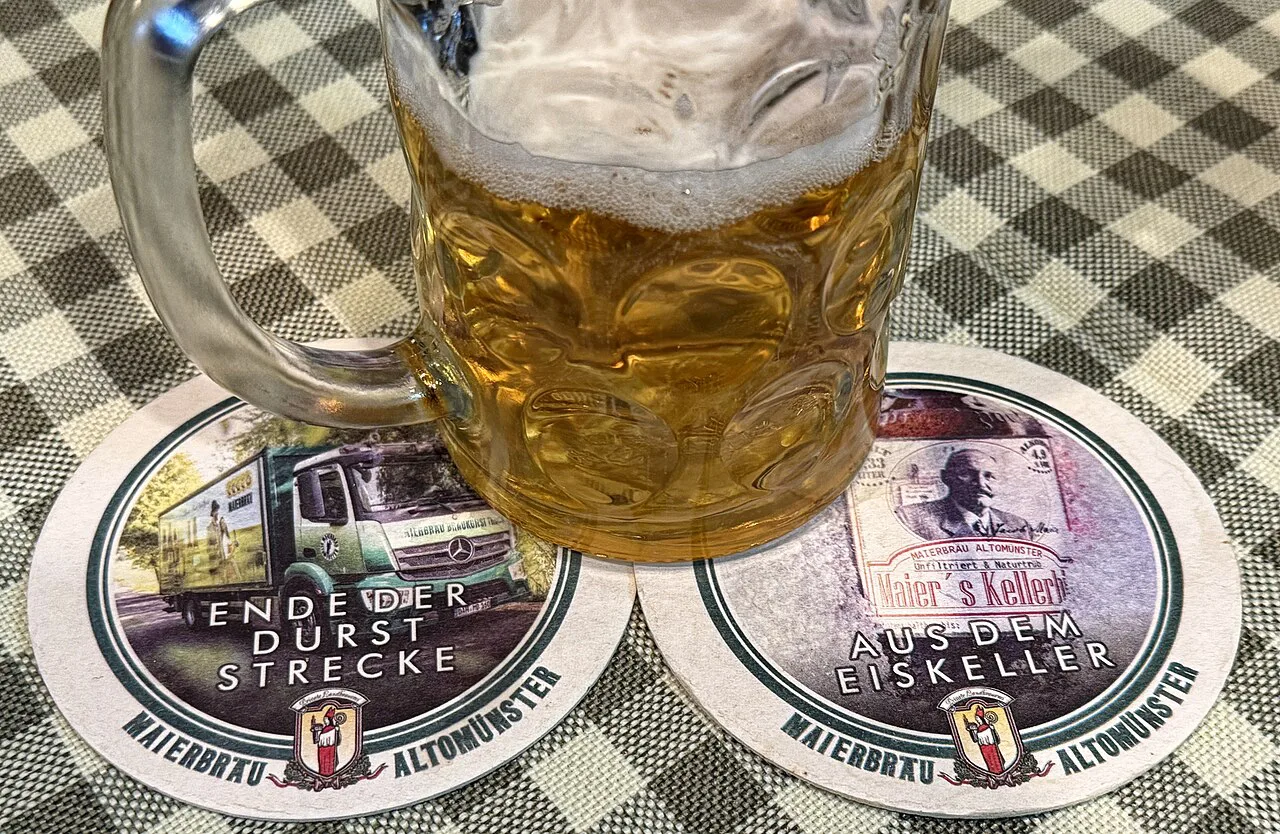
Beer is listed in sizes, typically a small glass and a larger one, and the card will say which is which; order the small if you want to pace the meal. Schorle is juice mixed with sparkling water, so an Apfelschorle is apple juice and fizzy water rather than a sweet cider.
Apfelsaft is plain apple juice, often served as a tall glass, and bottled water comes in still or sparkling versions; tap water is not automatically brought to the table. If you want a soft drink instead of beer, the menu lists those alongside the beer lines.
Prices, portions and the cover-charge question
Prices on the card are the full price of the dish, and a cover charge for bread or a table setting is uncommon in everyday restaurants, though a pretzel or bread basket can be billed separately. Portions are large enough that sharing a starter is normal.
For a sense of what a Schnitzel or a bowl of soup costs against your budget, compare the card with everyday supermarket prices rather than guessing.
How to order, ask for the bill and pay
When you are ready to order, catch the server's eye and state the dish by name; pointing at the card is perfectly acceptable. To ask for the bill, say the two words every visitor should know, Zahlen bitte, and for separate bills say getrennt zahlen, which is routine and not awkward.
On tipping, the German habit is to round up and say Stimmt so as you hand over the money, rather than leave a percentage on the table.
Card payment is increasingly common, but smaller traditional places may still prefer cash, so carrying some euros avoids a scramble at the end.
What the menu page will not tell you
A Ruhetag is a restaurant's weekly rest day, and it is usually posted on the door or the website rather than printed on the Speisekarte, so a place that looks open on the card may be closed on a Monday. Kitchen closing times also sit outside the menu, and a kitchen can stop taking orders well before the front door locks.
For a first German meal, the safest order is a soup, a Schnitzel with its listed side, and a slice of cake with coffee; that covers the sections, the sides and the dessert in one sitting.
Which German menu section to start with
Read a Speisekarte top to bottom and it stops being a vocabulary test: starters and soups first, mains with their Beilagen, dessert and coffee last, and a separate Tageskarte for the day's cooking. Order the seasonal plate if Spargel or Pfifferlinge is listed, and finish with cake and coffee if you have the time.
Keep Zahlen bitte and getrennt zahlen ready for the end of the meal, and round up with Stimmt so if the service was good.
Explore more Germany guides
Frequently Asked Questions
What is the typical German lunch?
Lunch is the main cooked meal of the day for many Germans, built around a Hauptgericht such as a Schnitzel, a Braten or a plate of Spätzle with a Beilage on the side. A soup or a small salad often precedes it, and the Tageskarte board usually lists the day's lunch specials. Portions are generous, so a starter and a main is a full meal.
What is Germany's favorite street food?
The Döner Kebab is the street-food staple most travelers meet first, sold from Imbiss stands and small shops, with Bratwurst and pretzels close behind. These are quick counter orders rather than menu sit-down meals, so you pay at the counter and eat standing or walking.
What are good German appetizers for a party?
A Brotzeit board of bread, cheese, cold cuts and butter is the easiest German starter to put out for a group, and a warm pretzel alongside works well. Small sausages and a bowl of soup are other options that scale easily. Keep the portions modest, since German mains are large.
What is the traditional cuisine of Germany?
It is built on pork and beef roasts, breaded Schnitzel, sausages, potato and bread dumplings, and egg noodles like Spätzle, with seasonal vegetables such as Spargel in spring. Cakes and coffee anchor the afternoon, and beer is the usual drink with the meal. The exact plate shifts by region.
Sources
Notes for your next German food trip
Optional updates to our guides.
You might also like



Continue reading
More guides you'll find useful





