
Bavarian Pretzel: What It Is and How a Brezel Tastes
A Bavarian pretzel is a dark, glossy lye bread with a soft, chewy crumb. Learn what makes a Brezel different and how to order one in Germany.
On this page
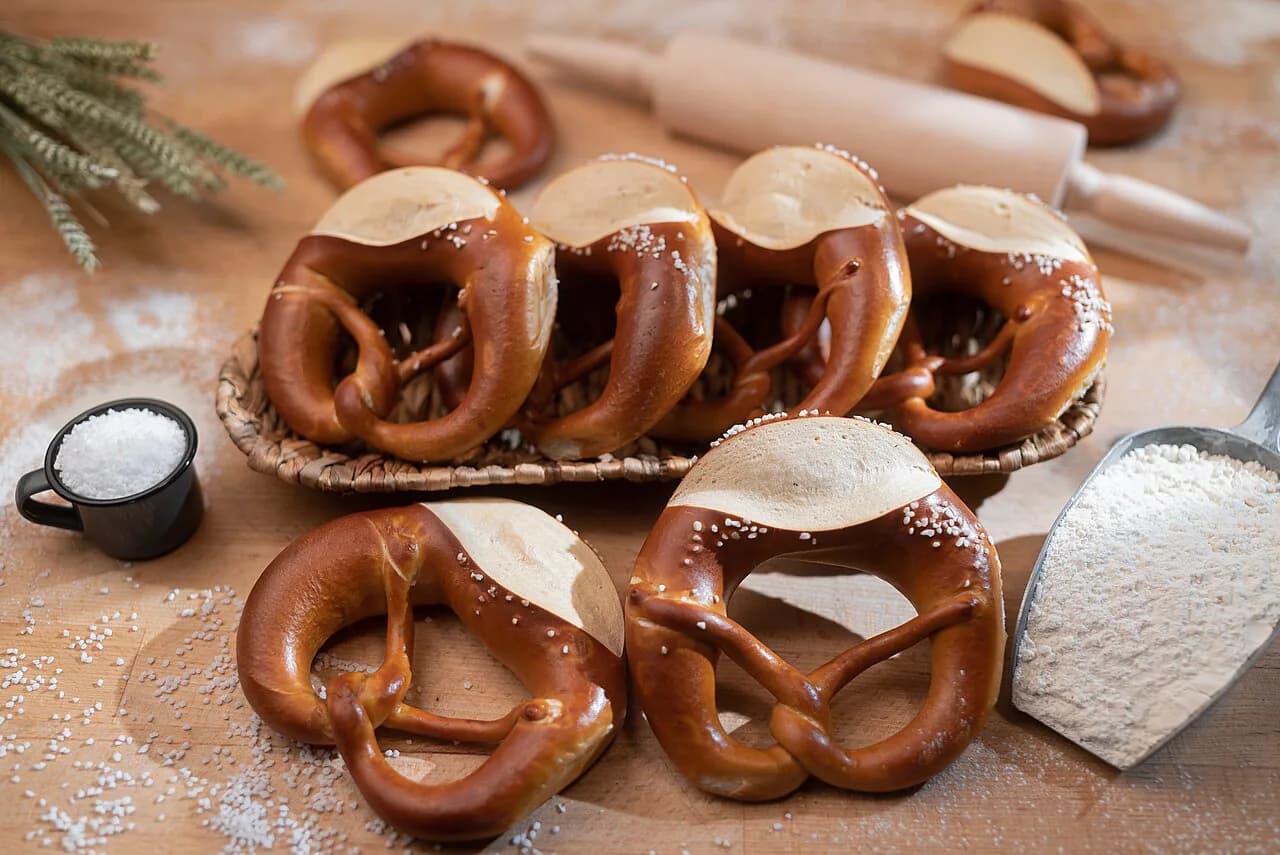
A Bavarian pretzel is a lye-dipped wheat bread with a thin, glossy, deep mahogany crust, a soft and chewy interior and coarse salt on top. Locals call it a Brezel, and it is eaten plain, with butter or alongside a cold beer rather than dunked in cheese sauce. This guide covers what it tastes like, how it is made, how it differs from the Swabian version and what to ask for at a bakery counter, with more background in the Bavarian food guide.
What a Bavarian pretzel actually is
A Brezel is a small wheat bread, not a pastry and not a snack cracker. The dough is shaped into a knot with a looped belly, briefly dipped in an alkaline lye solution, salted and baked hot, which is why the crust turns dark brown so quickly while the inside stays pale and moist. The salt is coarse and sits on the crust rather than in the dough, so each bite moves between salty and clean.
The result is closer to a good roll than to a cake: savory, wheaty and faintly bitter at the darkest edges of the crust. A proper Brezel is a bread you buy in the morning and eat within hours, which is why it belongs with the rest of the country's baking on the German bread map rather than in a dessert case.
What it tastes like and why it needs no dipping sauce
A real Bavarian soft pretzel has a thin, crisp, deep-mahogany crust with a glossy snap and a soft, dense, chewy interior, and its clean, lightly salted flavor comes from long-aged dough and coarse pretzel salt rather than additives. The slight tang and the bitterness at the darkest spots come from the lye. It does not need melted cheese or a tub of sauce to taste good, because the bread itself is the point.
Where did the Bavarian pretzel originate? The pretzel is claimed by both Bavaria and Swabia, and the two regions still argue over which version is the original. What is clear is that the lye-dipped, salted Brezel is a bread of southern Germany, sold in bakeries and eaten at breakfast or with beer.
How many calories are in two soft pretzels? Calorie counts vary too much by size, recipe and topping to give a single number, and bakeries rarely publish them. If you need exact figures, ask the bakery or check the packaging on a packaged pretzel.
That is why Bavarians eat them plain, with a swipe of butter or a touch of Düsseldorf mustard, and why the crust matters more than any topping. If you are used to soft pretzels sold with a dipping cup, the plain version can feel austere at first bite; give it two or three bites before you decide.
Brezel vs. the American soft pretzel
The mall pretzel and the Bavarian Brezel are the same shape but not the same bread. The American version is often pale, thick and doughy, built for dipping and eaten warm as a snack; the Bavarian one has a dark, glossy shell and a tighter crumb that holds its shape. The Brezel is treated as a bread eaten at breakfast or with a beer rather than as a dessert.
The clearest test is the crust: if it bends without cracking, it is not a well-baked lye Brezel. The dark color is not burnt and not caramel coloring; it comes from the lye reacting with the dough in a hot oven.
Bavarian Brezel versus Swabian Brezel
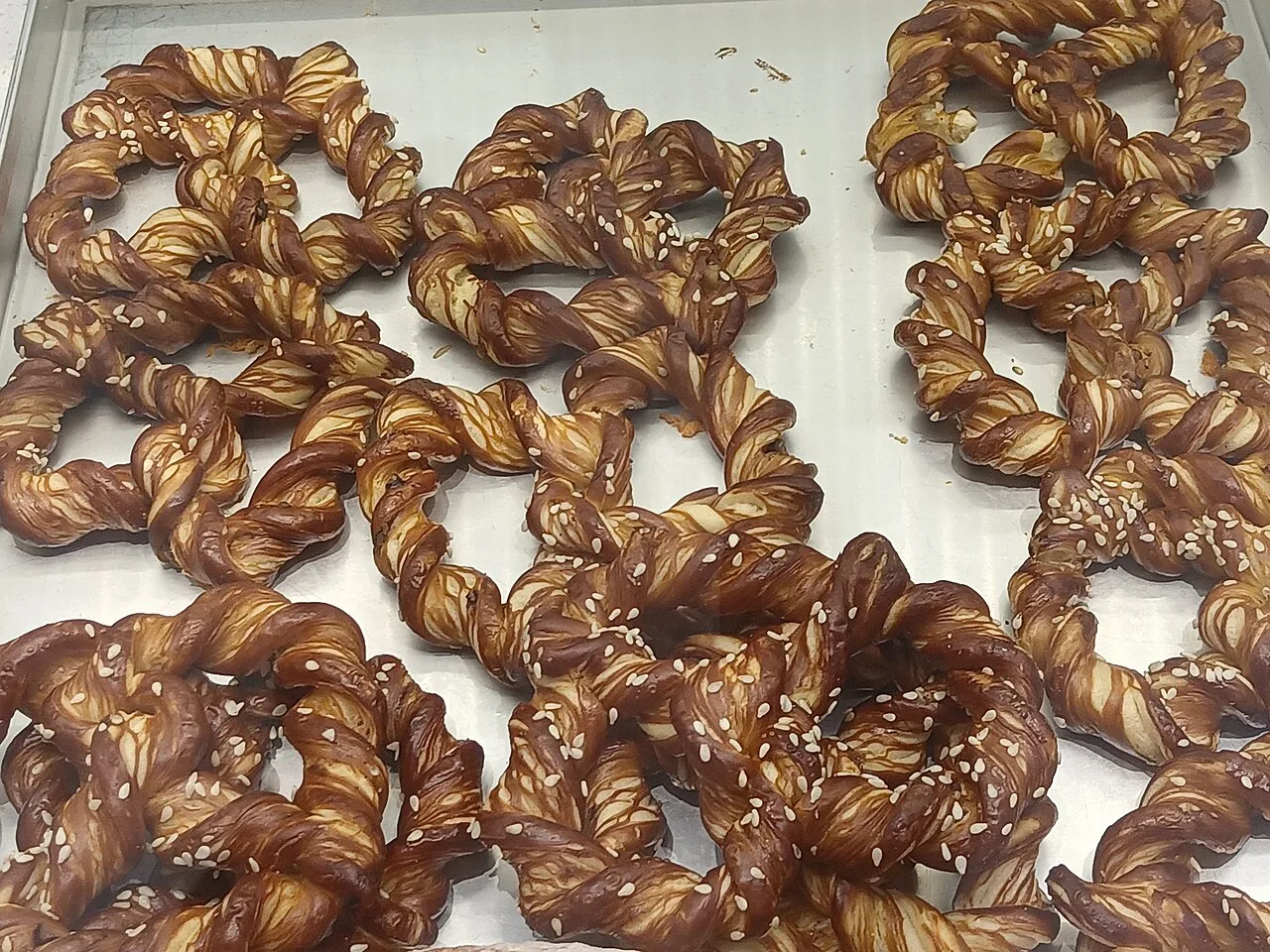
Bavaria and Swabia both claim the Brezel, and regional bakers shape and bake them somewhat differently. The split belly, the fat section across the middle, is the part Bavarians judge first: it should be full, glossy and evenly salted.
How each is eaten is a matter of local habit rather than rule. In Bavaria the Brezel turns up at breakfast with butter, alongside Obatzda, a soft cheese spread of camembert, butter and paprika, or at a beer garden with mustard. Order whichever pairing the counter offers and judge for yourself which side of the border does it better; the beer styles that suit it are on the Bavarian beer page.
How a Brezel is made: lye, belly and salt
The method is short and unforgiving, and the pretzel is made from just five simple ingredients with no preservatives. The dough is kneaded, rested and shaped, then the whole piece is dipped in a lye bath, which is what gives the crust its color and sheen. Coarse pretzel salt goes on after the dip and before baking, and the oven runs hot so the crust sets before the interior dries out.
Baking is fast, and commercial bakers flash-freeze the pretzels at peak freshness right after baking to lock in the crust and crumb. That is also why the best fresh Brezeln come from bakeries that bake often rather than stacking them for the whole day; quality bakeries across the country are covered in the German bakeries guide. This is the same family of lye-baked goods, called Laugengebäck, that includes lye rolls and lye croissants.
What to order with a Brezel
At a bakery counter, ask for a Brezel and a pat of butter, or a Brezel with Obatzda if the shop sells it. At a beer garden, mustard is the standard partner: Düsseldorf-style mustard for a sharp hit, or a milder sweet Bavarian mustard if you want the salt cut. A cold lager or a wheat beer is the classic drink, though a Brezel also works with a coffee at breakfast.
Pairings to look for on a menu or counter card include Obatzda, a soft cheese spread with paprika; Radi, thinly sliced radish; and a simple buttered Brezel with a boiled egg. If you are building a picnic lunch, add a few rolls from the same bakery: the difference between a plain Brötchen and a lye-baked Brezel is worth tasting side by side.
Where to buy one in Germany
The reliable place is a bakery, ideally before mid-morning when the first batch is still warm. Market stalls, railway station bakeries and beer garden counters also sell them. Order one from a bakery that bakes in small batches through the day rather than a stand that stacks them, and look for a dark, glossy crust and visible coarse salt.
At a beer garden or brewery tap, order at the food counter rather than from the drink server, and pay attention to whether the Brezel is sold cold or warmed. Cash is common at small bakery counters, so carry some euros.
Salt, leftovers and a stale Brezel
A Brezel is at its best within a few hours of baking. Left overnight, the crust softens and the crumb dries, and it will not recover in a microwave. The practical fix is to split it, toast the cut sides in a dry pan or oven, and eat it with butter and a little extra salt.
Do not scrape off the salt if the crust is already salty; instead balance it with unsalted butter or a mild cheese. A stale Brezel also works cubed and toasted as a soup topping, the same role stale rye plays in other German dishes such as pumpernickel.
Is there a sweet pretzel?
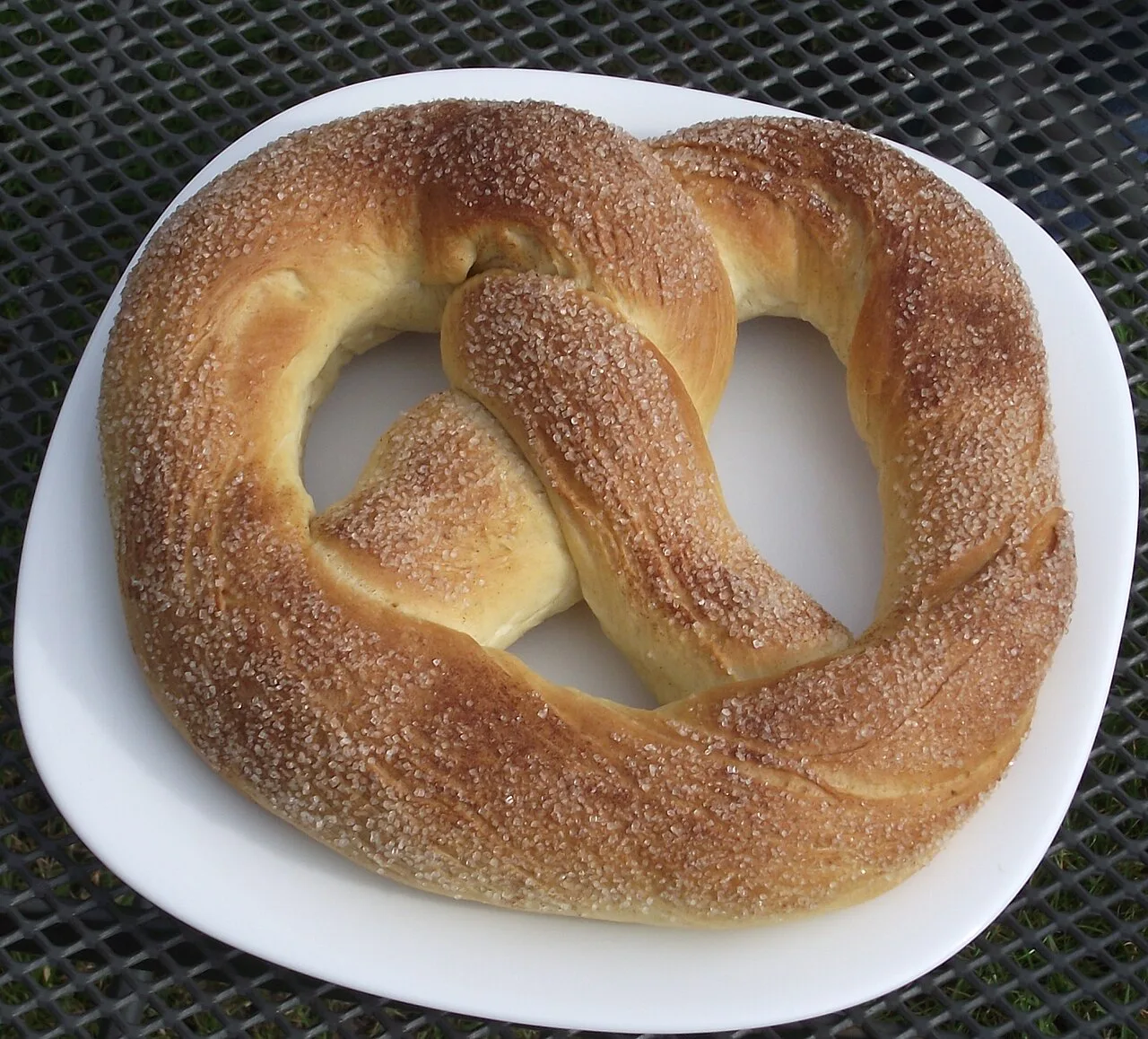
In Germany the sweet pretzel is a different item: a yeasted pastry, sometimes called a Zuckerbrezel, dusted with sugar or glazed, sold at bakeries and fairs rather than as the lye-baked bread. A chocolate-covered pretzel of the kind sold in candy shops, such as the white-chocolate-coated version sold by the Bavarian Chocolate Haus, is a confection, not a bread, and it is a separate product from a bakery Brezel.
Treat sweet pretzels as dessert and savory Brezeln as bread. If you want the real thing, order the dark, salted version at a bakery and leave the chocolate for later.
Which Brezel to order first
Start with a plain lye-baked Brezel from a bakery, still warm, with butter and coarse salt. Then try it with Obatzda at a beer garden and with mustard alongside a beer, and you will have covered the main ways Bavaria eats it. Judge the belly, the crust and the salt, and you will know which bakery to return to.
Explore more Germany guides
Frequently Asked Questions
Where did the Bavarian pretzel originate?
The pretzel is claimed by both Bavaria and Swabia, and the two regions still argue over which version is the original. What is clear is that the lye-dipped, salted Brezel is a bread of southern Germany, sold in bakeries and eaten at breakfast or with beer. Treat any single-inventor story with caution.
How many calories are in two soft pretzels?
Calorie counts vary too much by size, recipe and topping to give a single number, and bakeries rarely publish them. If you need exact figures, ask the bakery or check the packaging on a packaged pretzel.
Sources
Notes for your next German food trip
Optional updates to our guides.
You might also like



Continue reading
More guides you'll find useful





