
Kölsch Beer: What It Is, How It Tastes, and How to Order
Kölsch is Cologne's pale, top-fermented beer, poured in narrow Stange glasses and replaced without asking. Here's how it tastes and how to order it.
On this page
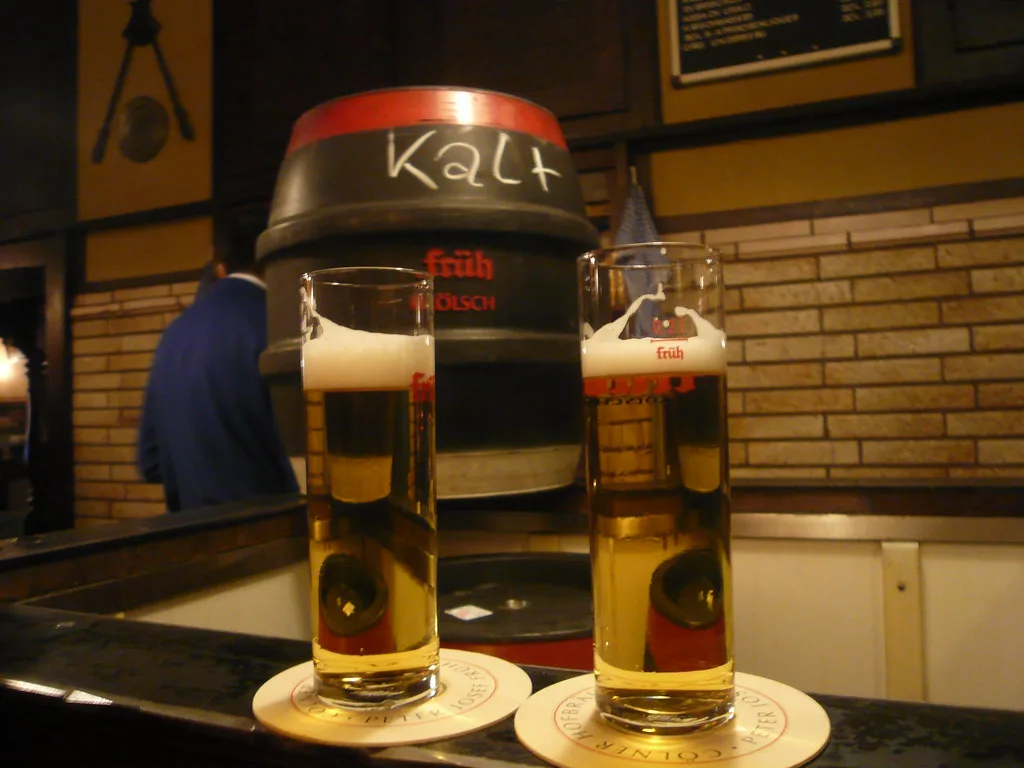
Kölsch is a pale, crisp beer brewed in Cologne with top-fermenting yeast, so it is technically an ale even though it drinks like a light lager. Visitors meet it in narrow Stange glasses that a waiter replaces before the glass is empty, with each round marked on a coaster underneath. This guide covers how Kölsch tastes, why the serve is so small, how the coaster tally works, and how it fits into the wider world of German beer.
Cologne treats its local beer as a civic identity, and the city's pubs pour little else on tap. If you arrive from Munich and expect a liter mug of Helles, the pace here will feel different: many small, fresh glasses instead of one large one going warm.
What Kölsch is: a pale, top-fermented beer brewed in Cologne
Kölsch is a top-fermenting beer, meaning the yeast works at warmer temperatures and rises to the top, the same family as British ales. Cologne's brewers also borrowed a Bavarian habit and lager the beer cold after fermentation, which is why it lands pale, clear and crisp rather than cloudy. The result sits in an unusual middle ground: ale fermentation, lager finish, and a flavor that surprises drinkers who expect a plain light beer.
The style has deep roots in the Rhineland, where hopped ales were brewed and shipped along the Rhine long before pale lagers spread north. Cologne's local brewing tradition grew out of that Rhenish ale country rather than the lager culture of Bavaria. That history explains why the city's signature beer is an ale at all, in a country better known for lagers.
Cologne banned lager brewing in 1603, codifying top-fermenting beer as the city's standard drink, a decision that kept the local ale tradition alive for centuries. Modern Kölsch only turned pale in the 19th century, when brewers adopted cold lagering and paler malt in response to the pale lagers arriving from the south.
How Kölsch tastes: crisp, lightly bitter, softly fruity
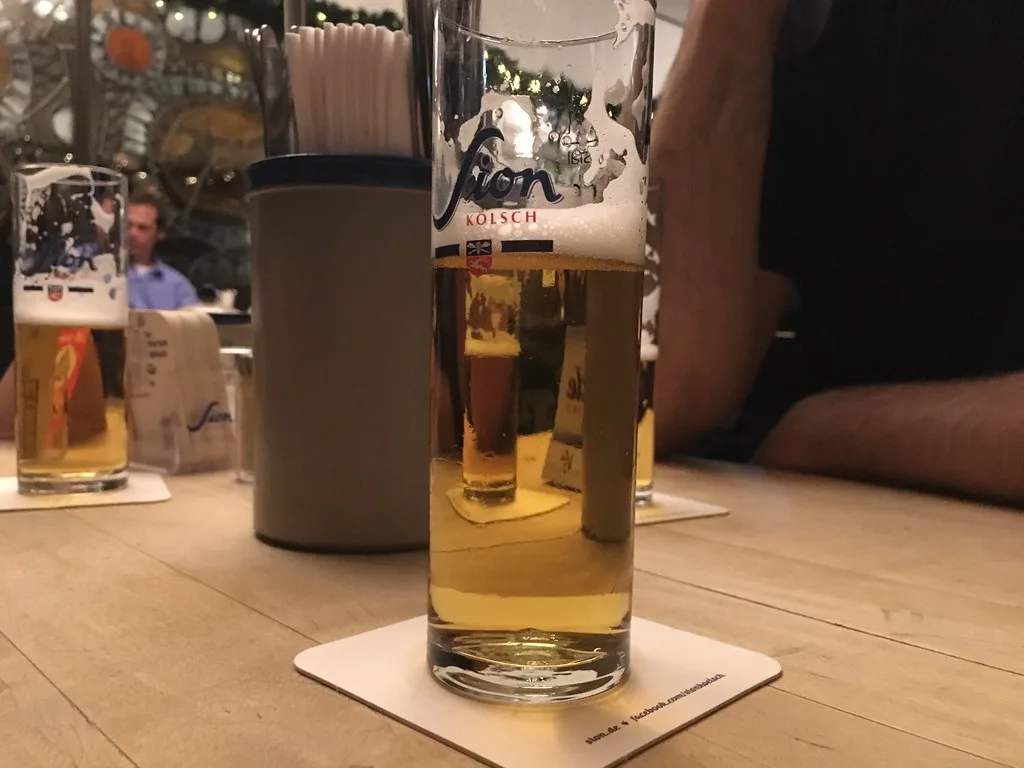
Expect a light golden beer with a soft malt base, a gentle hop bitterness and a faint fruitiness from the ale yeast. It finishes dry and clean, which is why it goes down quickly and why the small glass makes sense. Think of it as a beer built for refreshment rather than intensity.
How do you pronounce Kölsch? Say it roughly as "kurlsh," with a rounded vowel like the u in fur and a soft sh at the end. The ö is the hard part for English speakers; dropping it to a plain "o" still gets you the beer in Cologne.
Is Kölsch a lager or an ale? Kölsch is an ale, brewed with top-fermenting yeast, but Cologne brewers lager it cold after fermentation. That combination gives it ale fruitiness with lager-like clarity and crispness.
Why does the waiter keep bringing beer without asking? That is standard Köbes service in Cologne brewhouses: the waiter replaces an empty glass on sight and tracks each beer with a coaster. Put your coaster on the glass when you want to stop and settle the bill.
Lager drinkers usually take to Kölsch immediately, because the cold finish and pale color read as familiar. Ale drinkers notice the subtle orchard-fruit note that separates it from a neutral pilsner. Order one glass before committing to a long session, and judge it fresh.
Historical Kölsch held more bitterness than the modern version, which became softer from the 1960s onward as the beer settled into its role as Cologne's everyday drink. Today's pours lean balanced and easy rather than aggressively hopped, so drinkers who want a bracing bitter finish should look to a pilsner instead.
Why it comes in a Stange, the narrow glass
A Stange is a tall, narrow glass, and its shape is functional: a small pour stays cold and carbonated to the last sip. In a Cologne pub the waiter brings a fresh glass as soon as yours nears empty, so the beer never sits and warms. The trade-off is frequency: you will see your server often, and the glasses stack up fast.
Visitors used to a pint should recalibrate. A Stange holds only a few good mouthfuls, so an evening is a series of small, fresh pours rather than one long one. That rhythm is the point: you drink the beer at its best and order as you go.
The narrow glass also shows off the beer's clarity and pale color, which is part of the point in Cologne's brewhouses. Drink it soon after it lands; Kölsch is not a beer to nurse.
How the evening works: your Köbes keeps replacing the glass and marks your deckel
The waiter in a traditional Cologne brewhouse is called a Köbes, and the job comes with a distinct style: brisk, unsentimental and fast. He carries a tray of Stangen through the room and sets a fresh one down when he sees an empty glass, without asking first. If you want to slow down, keep your glass partly full.
Payment works on a running tab tracked with coasters, called deckel in Cologne. Each coaster under your glass marks one beer, so the stack at the end is your bill, and the waiter counts it when you ask. The tab is settled at the end rather than paid per round.
The system is efficient and trusting, and it assumes you are keeping track too. A fresh Stange arrives to replace an empty glass rather than being pushed on a full one, so keeping your glass partly full is how you slow the pace. If you lose count, ask the Köbes to settle up and he will count the coasters for you.
How to signal you're done: the coaster over the glass
When you have had enough, place your coaster on top of the glass. That single gesture tells the Köbes to stop bringing beer and to bring the bill instead, and it works without a word of German. It is the one piece of local etiquette worth learning before you sit down.
Use it early if you are driving, pacing yourself, or simply moving on to food. Nobody will pressure you to keep drinking, and a coaster on the glass is respected immediately. The same gesture ends the round for a whole table when everyone does it together.
Kölsch and Altbier: Cologne versus Düsseldorf
Düsseldorf, about 25 miles up the Rhine, brews Altbier, a darker top-fermenting ale served in its own small glasses, and the two cities treat each other's beer as a friendly rival. Kölsch is native to Cologne and hard to find on tap in Düsseldorf, while Altbier is the reverse. Bars in each city lean firmly toward their own.
Both are top-fermenting ales from the same Rhenish brewing tradition, which makes a side-by-side comparison genuinely instructive. Kölsch is pale and crisp; Altbier is copper-brown with more malt and a firmer bitter edge. If you only have one evening in the region, try the local beer of the city you are in first, then compare on a second stop.
The rivalry is mostly good-natured shorthand for civic pride, so treat it that way. Ordering Kölsch in Düsseldorf or Altbier in Cologne will get a smile, not a fight, though the tap list may not cooperate.
The Kölsch Konvention of 1985 and what it protected
By the 1980s Kölsch had become popular enough that Cologne's breweries worried about imitations, so two dozen of them signed the Kölsch Konvention in 1985. The document set benchmarks for what could be called Kölsch and was meant to prevent the beer's debasement as it spread.
The agreement reflects a broader pattern in German brewing, where regional styles come with local rules and strong civic backing. Kölsch is still tied closely to Cologne, and more than a dozen breweries there continue to brew it, each with its own loyal following.
Local loyalties run deep, and Cologne drinkers argue about their favorite brewhouses the way sports fans argue about teams. Rather than settling on one brand for a whole trip, try pours at two or three different Cologne brewhouses to taste how the style varies from house to house.
Kölsch outside Cologne, and how it's served in the US
Some larger Cologne brands distribute small amounts elsewhere in Germany, mostly for people from Cologne living away from home, so you will occasionally find Kölsch on draft beyond the city. It is not a common tap handle in Munich or Berlin, and the served-in-Cologne ritual of the Stange and the Köbes does not travel with it.
American craft brewers also make Kölsch-style ale. Altstadt Brewery in Fredericksburg, Texas, brews one with German malts and noble hops, describing it as light golden with soft malt and a delicate hop finish; it won gold at the 2019 Great American Beer Festival. It is a US-brewed beer in the Cologne style, not a Cologne import.
In the US, Kölsch-style ales often arrive in pints and are built for easy drinking rather than the tight, fresh Stange rhythm of a Cologne brewhouse. Set a Kölsch next to a German wheat beer and the difference is plain: the wheat pour is fuller, bready and yeasty where Kölsch stays lean.
Which beer should you order first?
Start with a Kölsch if you want something pale, crisp and easy with a plate of Rhenish food, and let the Köbes bring a second Stange only if you liked the first. If you are in Düsseldorf, begin with Altbier instead and save the comparison for your next stop.
The verdict is simple: order Kölsch by the glass, not by the liter, and keep the coaster close at hand.
Explore more Germany guides
Frequently Asked Questions
How do you pronounce Kölsch?
Say it roughly as "kurlsh," with a rounded vowel like the u in fur and a soft sh at the end. The ö is the hard part for English speakers; dropping it to a plain "o" still gets you the beer in Cologne.
Is Kölsch a lager or an ale?
Kölsch is an ale, brewed with top-fermenting yeast, but Cologne brewers lager it cold after fermentation. That combination gives it ale fruitiness with lager-like clarity and crispness.
Why does the waiter keep bringing beer without asking?
That is standard Köbes service in Cologne brewhouses: the waiter replaces an empty glass on sight and tracks each beer with a coaster. Put your coaster on the glass when you want to stop and settle the bill.
Can I find Kölsch outside Cologne?
A few Cologne brands ship small quantities elsewhere in Germany, and US craft breweries make Kölsch-style ales. What you miss abroad is the Cologne serving ritual of the Stange and the fast, coaster-tallied pour.
Sources
Notes for your next German food trip
Optional updates to our guides.
You might also like



Continue reading
More guides you'll find useful



