
Hefeweizen Explained: What This German Wheat Beer Is and How to Drink
Hefeweizen is a German wheat beer brewed with at least half malted wheat, cloudy with yeast and full of banana and clove. Here's what to order and how it's poured.
On this page
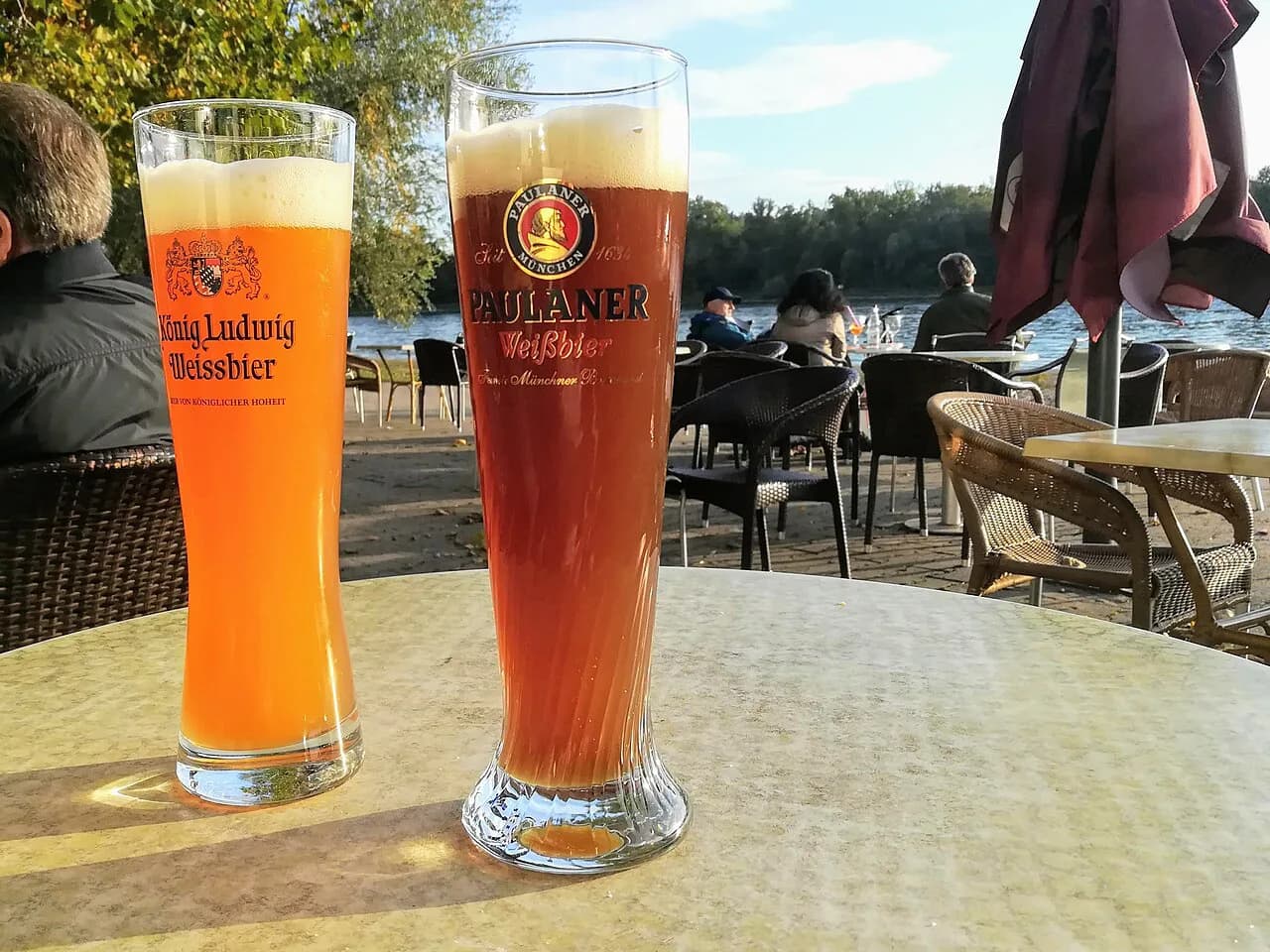
Hefeweizen is a German wheat beer brewed with at least 50 percent malted wheat, left cloudy because the yeast stays in the bottle and the glass. Its flavor comes mostly from that yeast rather than from hops, which is why it tastes of banana and clove instead of the grassy bitterness of a lager. This guide decodes the words on a German beer menu, explains the glass and the pour, and pairs the beer with food that will not bury it.
If you usually drink a crisp pale lager such as Helles, a hefeweizen will feel like a different drink entirely: softer, bubblier, faintly sweet and aromatic. That contrast is the point, and it is worth ordering one at least once in a Bavarian-style brewery or Gasthaus before you settle back into your usual.
What a hefeweizen actually is
A hefeweizen is a top-fermented German wheat beer, meaning it is brewed with an ale yeast that works at warmer temperatures than a lager yeast. German brewing tradition treats wheat beers as their own family, separate from the pale lagers that dominate most German taps. When you see a row of unfamiliar taps in a German brewery, the wheat beer is usually the hazy one with the tall head.
The style sits at the lighter end of the beer spectrum: mildly bitter, highly carbonated and built for refreshment rather than for sipping slowly. That makes it a good first beer of an evening or a good partner to a midday meal, when a heavier dark lager would sit too heavily.
What "hefe" and "weizen" mean, and why the beer is cloudy
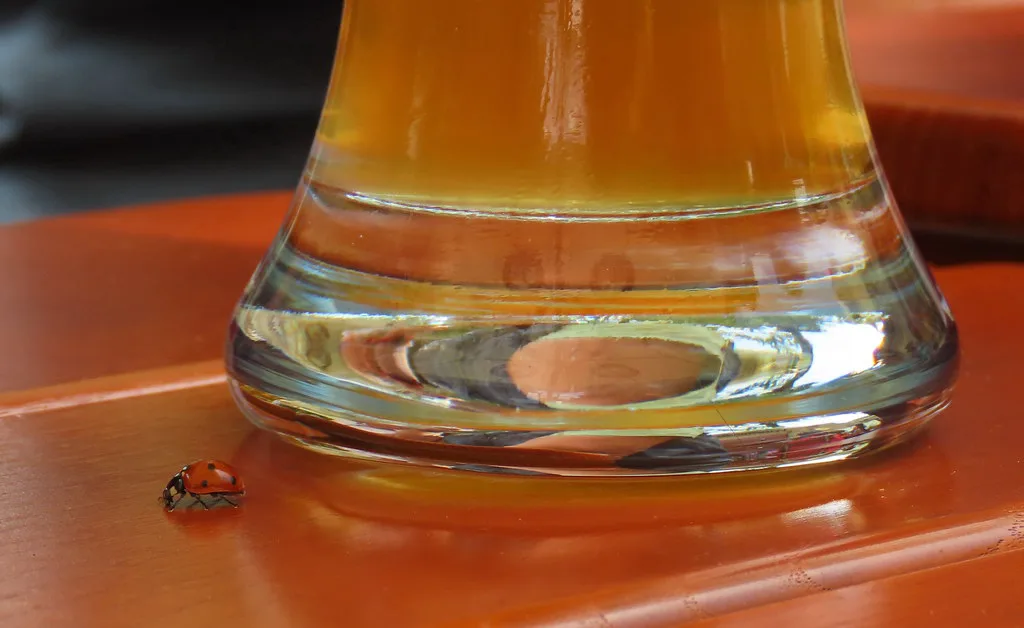
The name is a compound of two German words. Hefe means yeast, and weizen means wheat, so hefeweizen is literally yeast-wheat beer, and the yeast left in suspension gives the beer its hazy, straw-to-amber look and fast-rising bubbles.
Is Blue Moon a hefeweizen? Blue Moon is a Belgian-style witbier, not a German hefeweizen. Both are cloudy wheat beers, but a hefeweizen is defined by its German weizen yeast, which gives the banana and clove character, while a witbier typically adds coriander and orange peel.
Why is hefeweizen so cloudy? The yeast is not filtered out. Hefe means yeast, and that suspended yeast gives the beer its hazy straw-to-amber appearance and carries the banana and clove aromas.
How is hefeweizen different from a lager? Hefeweizen is brewed with an ale yeast at warmer temperatures, while lagers use a cold-fermenting yeast. That makes hefeweizen fruitier, bubblier and less hop-bitter than a pale lager such as Helles.
In practice the cloudiness is a sign of what you are about to taste. A filtered wheat beer, sometimes sold as Kristallweizen, is clear and lighter in flavor because the yeast has been removed; the unfiltered version keeps the banana and clove character that makes the style distinctive. If the menu lists both, choose based on whether you want that yeast character or a cleaner, crisper drink.
What hefeweizen tastes like
The aroma and flavor are driven by the weizen ale yeast, which produces two very different impressions at once: fruity banana esters and spicy clove phenols. How strongly each one shows varies from brewer to brewer, but the two are usually kept in balance rather than one dominating. Hop flavor is barely perceptible and hop bitterness is very low.
Bitterness figures for the style sit around 15 IBU, low enough that the beer never tastes sharp. The body is mouth-coating and the carbonation high, so the finish is short and clean rather than lingering. Expect a mild alcohol warmth rather than a hot one.
That flavor profile explains why the style works with lighter food. It is not a beer built to stand up to smoke or heavy fat; it is built to refresh between bites.
Hefeweizen vs Weissbier: two words for the same beer
Weissbier means white beer in German, and in everyday German use it refers to the same wheat beer family that includes hefeweizen. Weissbier is the broader term you will see on tap handles and bottle labels across southern Germany; hefeweizen is the more specific name for the unfiltered, yeast-in version. If a menu offers Weizen, Weissbier or Hefeweizen, you are looking at variations on one theme rather than three unrelated drinks.
This vocabulary matters mostly for reading a German menu without guessing. Once you know that Weizen and Weissbier point to wheat beer, you can tell at a glance which tap is the hazy, aromatic one and which is the clear lager beside it. It also stops the common mix-up with Berliner Weisse, a tart, low-strength wheat beer from Berlin that is a completely different drink, often served with sweet syrup.
Alcohol and body: what strength to expect
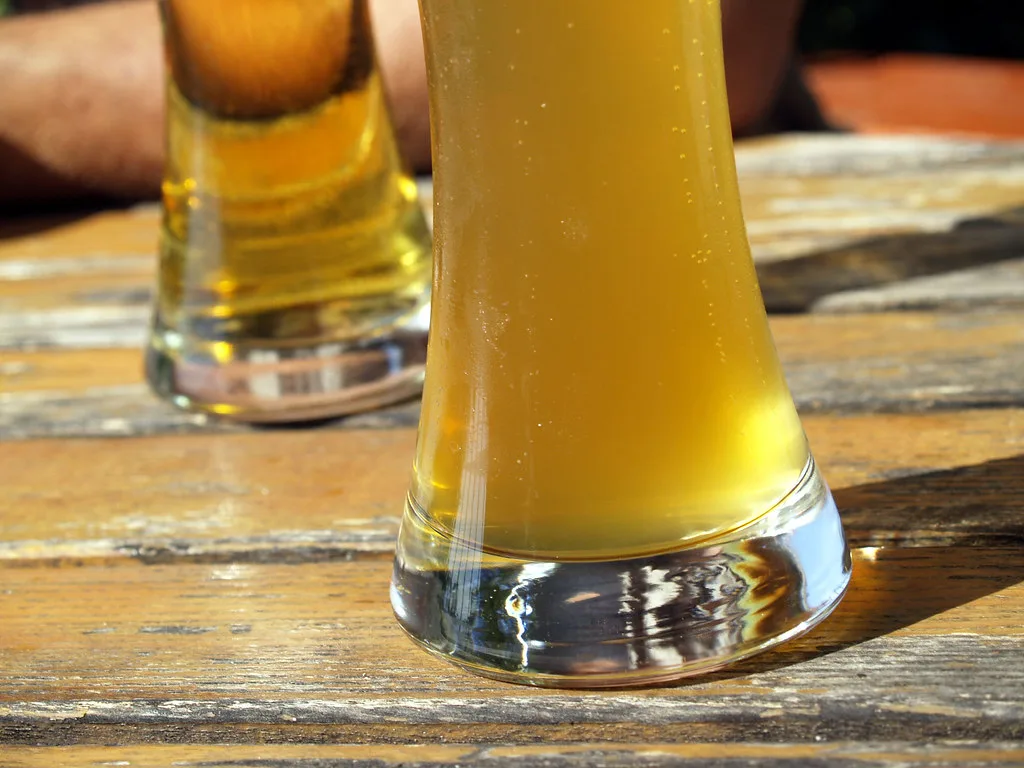
Hefeweizen is generally a low-to-moderate-strength beer rather than a strong one. CraftBeer.com lists the German-style hefeweizen at 4.9 to 5.6 percent alcohol by volume, while the broader hefeweizen category runs from about 4.0 to 7.0 percent. Because the beer is highly carbonated and easy to drink, it goes down faster than its strength suggests, so pace a long afternoon accordingly.
If you want something stronger and maltier for a cold evening, a bock beer is the seasonal answer in German brewing; the wheat beer style is the warm-weather, easy-drinking choice.
The weizen vase glass and why the pour matters
Hefeweizen is traditionally served in a weizen vase, the tall, curvy glass that narrows toward the base and flares at the top. The shape does two jobs: it shows off the beer's glow, and it holds the large, persistent foam cap that the style's carbonation produces. A straight tumbler will taste the same, but it will not present the beer the way a German bar intends.
A proper pour starts with a rinsed, cool glass and a gentle stream down the side to keep the foam from exploding over the rim. The last finger of beer in the bottle holds the settled yeast, and German custom is to swirl it and add it to the glass, which darkens the beer and intensifies the banana and clove notes. If you would rather keep the beer lighter, leave that last pour in the bottle.
How to order a hefeweizen in a German brewery or Gasthaus
In a German brewery taproom or a Gasthaus, order by the style name and a size; the default wheat beer order in southern Germany is a half-liter, a "halbe" Weizen. Saying "ein Weizen, bitte" or "ein Hefeweizen, bitte" is enough. If you want the unfiltered version specifically, ask for Hefeweizen rather than Weissbier, since the broader word occasionally covers the filtered kind.
Beer arrives with the bottle sometimes and is poured at the table, so do not be surprised if the server opens it, fills the glass and leaves the bottle with you. Payment in smaller German places is often cash, and tipping is done by rounding up or naming a total when you pay. If you want to know the alcohol content of a specific beer, read the label or ask at the bar.
Germany's beer landscape runs well beyond wheat beer, and pale lagers such as Pils beer dominate many taps, so it helps to know what the alternatives taste like before you choose.
What to eat with a hefeweizen
The style's bright fruit and spice make it a natural match for lighter food: salads, seafood and egg dishes are the classic pairings. A soft cheese such as chèvre also works, because the carbonation cuts through the richness. In a German kitchen that might mean a plate of cold cuts and radishes, a light fish dish, or eggs in some form rather than a heavy roast.
The classic Bavarian partner, a plate of white sausages with sweet mustard and a pretzel, is a natural fit for a wheat beer. If the kitchen is serving something smoky or heavily braised, a darker beer will hold up better than a hefeweizen, which tends to get lost beside strong flavors.
Ordering food and beer together in Germany is usually straightforward: you order at the table, the beer comes first, and the food follows when it is ready. Menus often list wheat beers alongside the lagers rather than in a separate section, so scan the drinks list for Weizen, Weissbier or Hefeweizen before you commit to a lager.
Should you order a hefeweizen first?
Yes, if you want to taste something that is genuinely different from the pale lagers most travelers drink in Germany. A hefeweizen gives you the banana-and-clove yeast character, the tall foamy head and the weizen vase in one order, and it is mild enough to enjoy with a light meal rather than instead of one.
Order one early in your trip so you can compare it against the clear lagers that follow, and ask for it by its German name when the menu is in German. If the foamy head and hazy color are new to you, that is the style announcing itself, not a flaw in the pour.
Explore more Germany guides
Frequently Asked Questions
Is Blue Moon a hefeweizen?
Blue Moon is a Belgian-style witbier, not a German hefeweizen. Both are cloudy wheat beers, but a hefeweizen is defined by its German weizen yeast, which gives the banana and clove character, while a witbier typically adds coriander and orange peel.
Why is hefeweizen so cloudy?
The yeast is not filtered out. Hefe means yeast, and that suspended yeast gives the beer its hazy straw-to-amber appearance and carries the banana and clove aromas.
How is hefeweizen different from a lager?
Hefeweizen is brewed with an ale yeast at warmer temperatures, while lagers use a cold-fermenting yeast. That makes hefeweizen fruitier, bubblier and less hop-bitter than a pale lager such as Helles.
Sources
Notes for your next German food trip
Optional updates to our guides.
You might also like



Continue reading
More guides you'll find useful



