
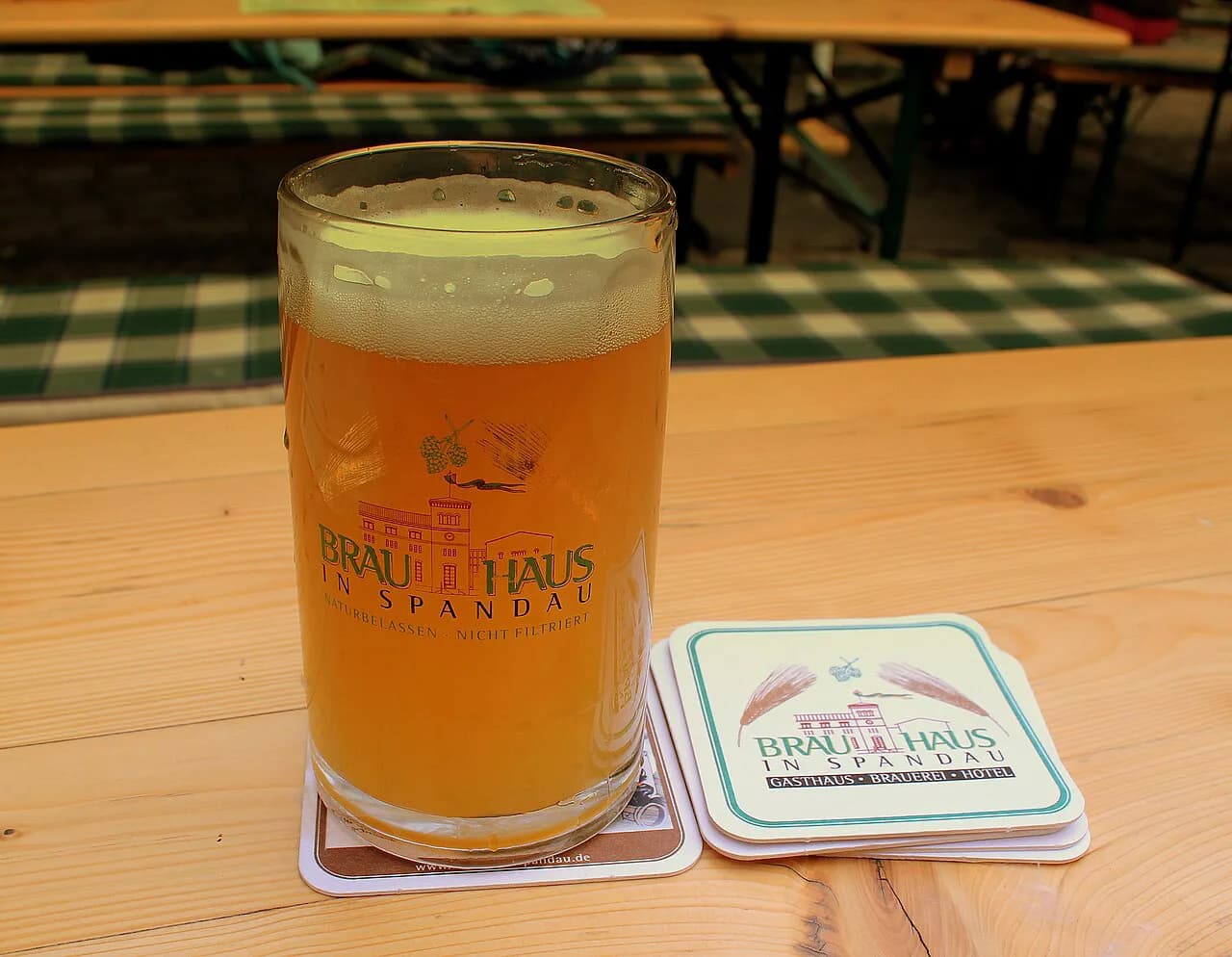
Helles Beer: What It Is, How It Tastes and How to Order
Helles is a pale, malt-forward Munich lager with soft bready sweetness and restrained hops. Learn its history, how it differs from Pilsner, and how to order it.
On this page
Helles is a pale, gold-colored German lager that leads with soft, grainy malt sweetness and finishes dry and clean, with just enough Noble-hop spice to keep it from tasting sweet. If you order one thing on a Munich tap list without knowing the brewery, order this. This guide covers what the name means, how the beer tastes, where the style came from, how it lines up against Pilsner and other lagers, and the German phrases that get a glass into your hand.
The style rewards plain language: a moderate body, medium carbonation and a restrained bitterness that lets the malt do the talking. You will meet it in Munich beer halls in a stone mug, in a Franconian Gasthaus in a slim flute, and on supermarket shelves under a dozen label spellings. Knowing which of those words signals what is the practical part.
What helles actually is
Helles is a fully attenuated lager brewed from continental Pilsner malt and German Saazer-type hops, fermented with a clean lager yeast. The beer is clear, pale gold with a persistent creamy white head, and the flavor is malt-dominated without being sweet. Think fresh bread crust rather than caramel.
The technical envelope is narrow: roughly 4.7 to 5.4 percent alcohol by volume and 16 to 22 IBU, with a color between 3 and 5 SRM. That bitterness range sits below a German Pils and well below an IPA, which is why helles drinks like a session beer even at a liter. The finish is soft and dry rather than crisp and biting.
Helles belongs to the pale lager family, and it is the everyday beer of southern Germany rather than a special-occasion pour. It was created in Munich in 1894 at the Spaten brewery to compete with pale Pilsner-type beers coming out of Bohemia, and it has been the region's default order ever since.
Why the name does not mean light beer
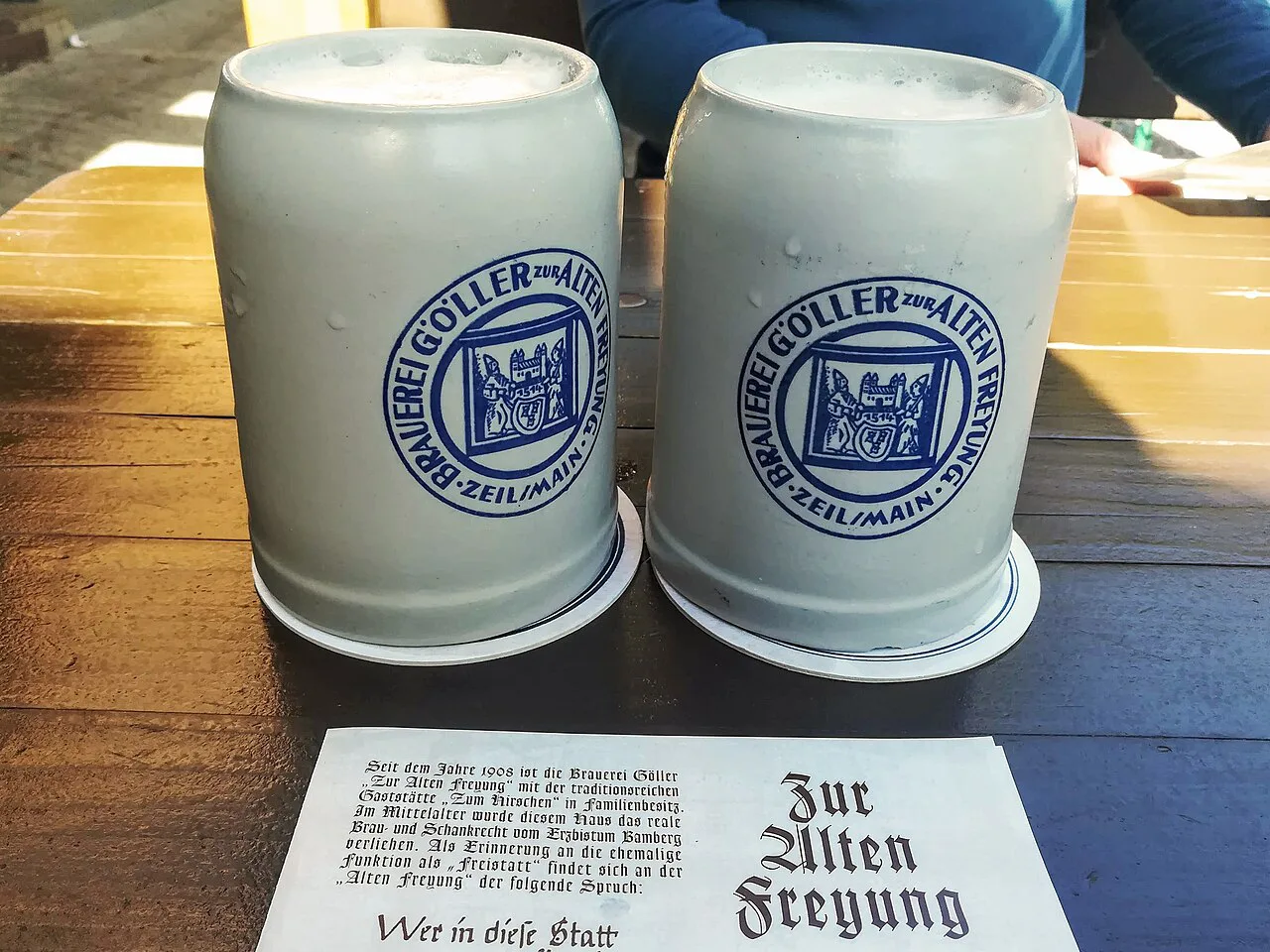
The German word Hell means pale in color, so helles simply describes a beer that is light in appearance, not one that is weak. A helles at 5 percent alcohol is stronger than many beers sold as light elsewhere. When a German menu lists Hell, helles or helles Lagerbier, the word is telling you the beer is golden, not that it is diet.
Why the name does not mean light beer. The German word Hell means pale in color, so helles simply describes a beer that is light in appearance, not one that is weak.
How helles tastes, step by step. The first impression is grainy-sweet malt, often described as lightly toasted barley or fresh bread, over a rounded medium body.
Helles versus Pilsner versus light lager. Against a German Pils, helles has more body and more malt presence with less hop character throughout; the bitterness is supporting rather than leading.
That distinction matters when you scan a tap list next to a dunkel, which is dark, or a bock, which is strong. If you want something malty but not dark, helles is the correct call. If you want roast flavor, you are looking at the wrong line.
English speakers say it roughly as HEL-ess, with a short, open e and a clear final syllable; the German plural is the same word. Brewers outside Germany sometimes label the same beer simply as helles lager, which means the same thing.
How helles tastes, step by step
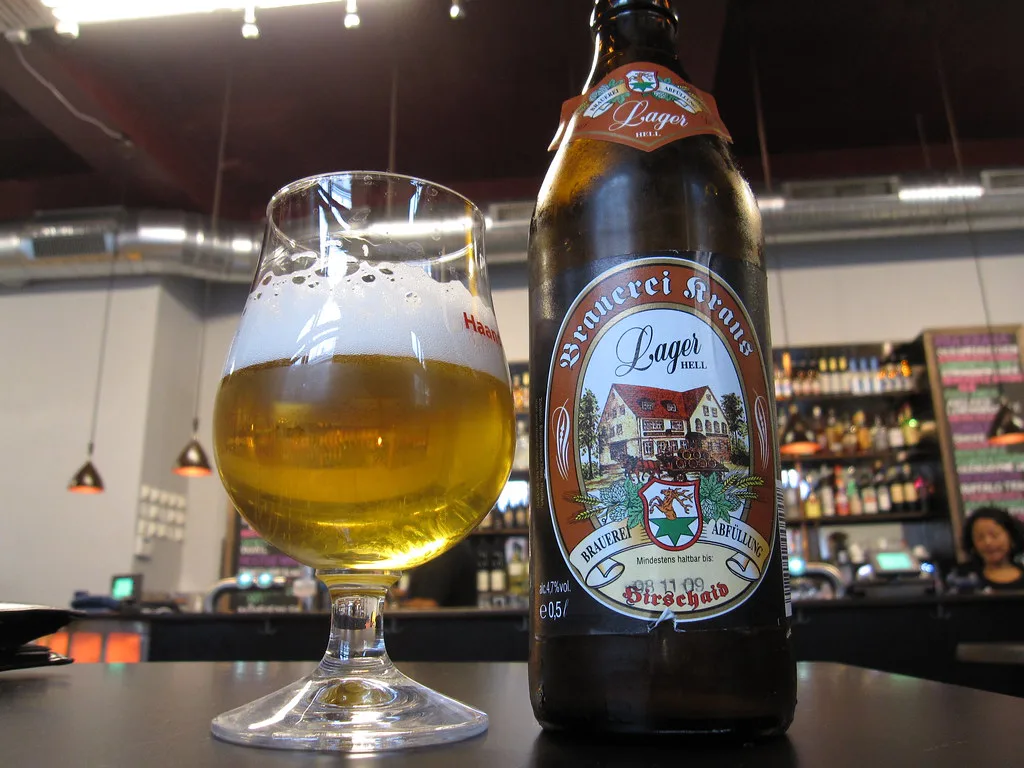
The first impression is grainy-sweet malt, often described as lightly toasted barley or fresh bread, over a rounded medium body. Hop aroma is low to moderate and reads as spicy, floral or herbal rather than citrusy, since the hops are Noble varieties. Carbonation is medium, and the finish is short to medium and dry.
Very fresh helles tastes noticeably sweeter, because the rich malt character fades with time; a beer that has traveled far can taste thinner than the same style poured near the brewery. That is one reason the freshest glass is often the simplest one. A low background note of DMS, a faint cooked-vegetable aroma, is tolerated in the style rather than treated as a fault.
Helles is served cool but not ice cold, in a slim flute that keeps the head and concentrates the malt aroma. A cold mug numbs the very subtleties you are paying for, so let the beer warm a little in the glass before you judge it.
Helles versus Pilsner versus light lager
Against a German Pils, helles has more body and more malt presence with less hop character throughout; the bitterness is supporting rather than leading. Against a standard light lager, helles is rounder and fuller, with a measurable malt backbone instead of a watery middle. Against a German Exportbier, the malt profile is similar but the hops step back.
If you normally drink Pils and find it sharp, helles is the gentler choice with the same refreshment. If you find helles bland, move up the hop scale to a Pils rather than writing off German lager altogether. The two styles are close relatives with different balance points.
For contrast on the other side of the color line, a German-style dark lager keeps the same clean fermentation but adds roasted malt, which is a different drink entirely. Helles is not a dark beer, and it is not a heavy bock, so ordering by color words alone will mislead you.
The Munich origin and why the city's helles is lighter
Spaten brewed the first helles in Munich in 1894 as an answer to pale Pilsner-type beers, and the style became the most popular in southern Germany. The history explains its job: it was designed as an all-purpose drinking beer, not a showcase.
Helles poured in Munich tends to be lighter in every dimension than versions brewed outside the city, which can be more assertive with more body, flavor and hop character, according to the BJCP style guidelines. Travelers who love a helles in Munich and then buy the same brand at home are often surprised by the difference. Judge the style by where you drink it.
The label words worth knowing
Hell or helles on a label means pale; Lagerbier Hell is the same beer under a slightly older name, common on Bavarian bottles. Naturtrüb means naturally cloudy and unfiltered, so expect a hazier pour with a fuller yeast texture. Export on a German label points to a stronger, more robust version built for shipping rather than the delicate Munich pour.
A tap list may also say vom Fass, which means from the keg rather than the bottle, and that is usually the fresher option for a delicate malt-forward beer. None of these words changes the basic style; they narrow down which version of it you are getting.
How to order helles in a beer hall or Gasthaus
The practical vocabulary is short. Eine Halbe is a half-liter, a Maß is a full liter, and vom Fass means draught, so eine Halbe Helles vom Fass is a precise and polite order. In Munich beer halls the liter is the default serving; in smaller Gasthäuser the half-liter is more common.
If you only want to taste, ask for a small glass rather than committing to a liter, and say you are trying the style. Beer is poured to a marked line, and the head is part of the serve, so do not expect it filled to the brim. Paying at the table is normal in a Gasthaus, while beer halls often run a tab you settle before leaving.
Ordering a helles alongside a wheat beer at the same table is a good way to taste the difference between a clean lager fermentation and the banana-and-clove character of a German wheat beer. Both are session-strength southern German standards, and the contrast is immediate.
Helles with food
The malt-forward, low-bitterness build makes helles a flexible food beer. It pairs well with light dishes such as salad or fresh shellfish, and the soft bready note stands up to a Brotzeit of bread, cheese, radishes and cold cuts without overwhelming anything.
At a full Bavarian meal, helles is the safer choice than a wheat beer with roast pork or a breaded schnitzel, because the restrained hops clean the palate without competing with the crust. If the dish is rich and creamy, the dry finish does the work. If the dish is delicate fish, the malt sweetness flatters it.
Ignore hop-forward pairings here. A pils or an IPA will flatten a plate of mild cheese, while a helles leaves room for it; that is the whole argument for keeping a malt-accented lager on the table.
Why brewers call helles a brewer's beer
Helles is sometimes described as a masterclass in restraint, and the phrase is apt: with only malt, Noble hops, water and lager yeast, there is nowhere to hide a fault. A rough fermentation or a stale malt shows up immediately in a beer this pale and this soft.
The same plainness is governed in Germany by the beer purity law, which limits brewers to a short ingredient list and pushes quality into process rather than additives. That constraint is why a well-made helles tastes clean rather than engineered.
German helles brands to look for
The classic Munich names on a tap list include Augustiner Lagerbier Hell, Hacker-Pschorr Münchner Gold, Löwenbräu Original, Paulaner Premium Lager and Spaten Premium, with Bürgerbräu Wolznacher Hell Naturtrüb as an unfiltered example. Treat these as recognizable reference points for the style, not as a ranking.
When a tap list is unfamiliar, look for the word Hell or helles and confirm whether the beer is filtered; that single question tells you most of what you need before you order. If you want a broader map of the styles around it, start with our German Beer guide and other lager styles and work outward from helles.
Which glass should you order first?
Start with a helles vom Fass in a half-liter, taste it before the food arrives, and decide from there whether you want a liter or a different style. The malt sweetness and dry finish tell you quickly whether you are in the market for a Pils, a wheat beer or something darker. Helles is the right first order in southern Germany precisely because it is mild enough to be a baseline.
If the beer tastes flatter or sweeter than expected, consider freshness and serving temperature before judging the style; a helles that has traveled or sat too cold loses its best quality. Order the second glass from a tap you can see.
Explore more Germany guides
Sources
Notes for your next German food trip
Optional updates to our guides.
You might also like



Continue reading
More guides you'll find useful




