
Bock Beer Guide: Styles to Try in Germany
Bock beer is a strong, malty German lager that began in Einbeck and moved to Munich. Here is how it tastes, the styles to know, and how to order it.
On this page
Bock beer is a strong, malt-forward German lager in which caramel, toffee and bread-crust flavors carry the beer and hops stay in the background. It ranges from deep copper to dark brown, drinks full on the tongue, and runs noticeably stronger than the pale lagers most visitors know. This guide covers where the style came from, how it tastes, the strength ranges behind standard bock, Doppelbock and Maibock, and the words to use when you order one.
Treat bock as a cold-month beer. Its malt weight and warmth suit a winter evening in a Munich beer hall better than a hot afternoon in a beer garden, and it is the sort of pour you sip slowly rather than drink by the liter.
What bock beer is
Bock belongs to the lager family but sits apart from the crisp pale lagers on most German taps. Brewers build it around specialty malts, which gives it a rich, often sweet maltiness and a fuller body than a standard lager of the same strength.
The contrast with Munich's pale lagers is the quickest way to understand it. A Helles: The Pale Munich Lager Germans Drink by the Liter is built to be light and drinkable by the liter, while a bock is denser, sweeter and served as a slower glass.
Bock ferments with lager yeast at cool temperatures, which keeps the beer clean and smooth rather than fruity. That clean fermentation is what lets the malt, not yeast character, define the flavor.
Where the name comes from: Einbeck to Munich
The style traces to Einbeck, a Lower Saxony trade town in the Hanseatic League, where brewers made a strong beer sturdy enough to survive long export journeys. A 1378 receipt records Einbecker beer sold to the town of Celle, one of the earliest written traces of the brew.
Is bock beer an ale or a lager? Bock is a lager. It ferments with lager yeast at cool temperatures and then conditions at near-freezing temperatures for weeks or months, which is what gives it a clean, smooth character behind the malt.
What is the difference between bock and Doppelbock? Doppelbock is the stronger, maltier branch of the family, with a history tied to Munich's Paulaner monks and their Salvator brew. A standard bock is already robust; a doppelbock pushes the malt and the alcohol further, so one glass is usually enough.
Is Maibock different from a standard bock? Maibock is a variation of bock with a slightly more pronounced hop presence than a standard bock, balancing the malt sweetness a little more toward hops. It is still a bock, so expect the same malty base and strength.
By the 17th century the beer had a following in Munich, and Bavarian brewers brought an Einbeck brewmaster, Elias Pichler, to help replicate it in 1612. Under his guidance the Hofbräuhaus produced a strong lager inspired by the northern original, adapted to local ingredients and bottom fermentation.
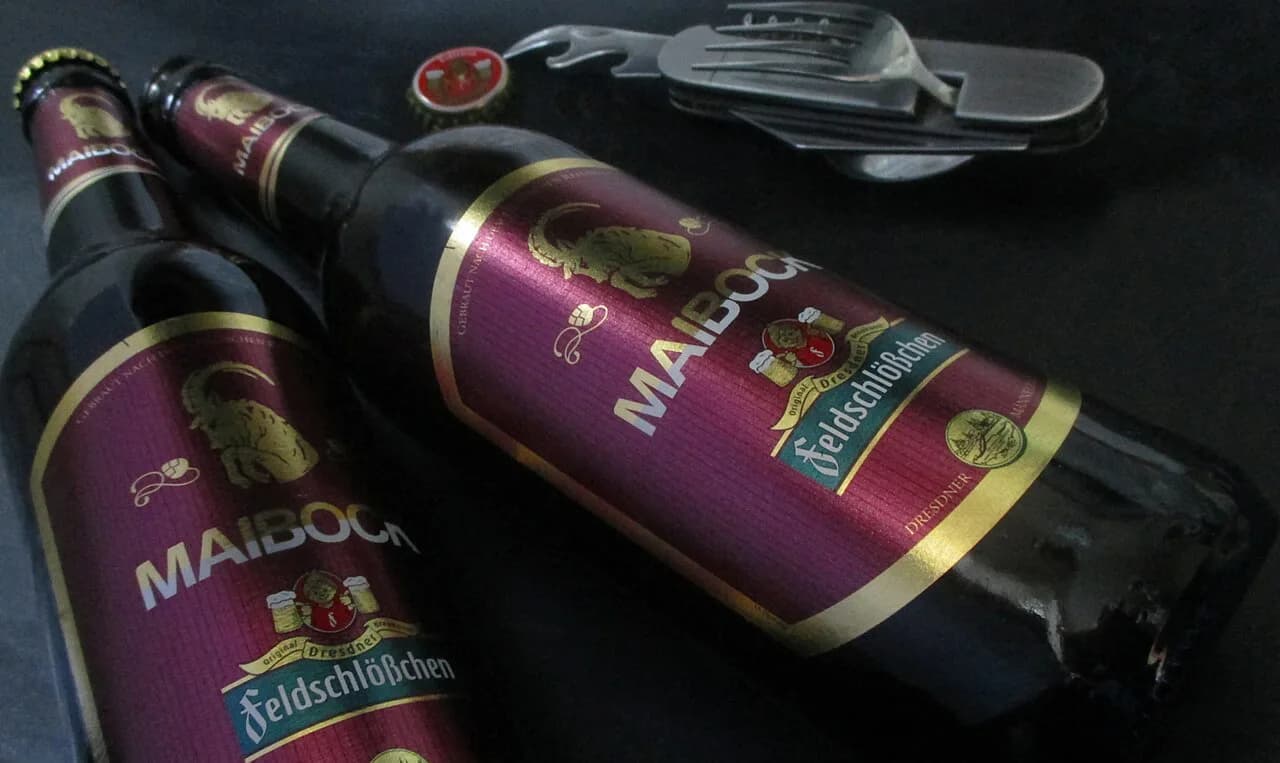
The name itself is usually explained as a Bavarian mishearing: Einbeck came out sounding like ein Bock, which means a billy goat. That is why goats keep turning up on bock labels, and why the story is worth knowing before you read a German beer menu.
How bock beer tastes
Expect caramel, toffee and bread crust up front, with hints of chocolate or nuts in darker examples. Hop bitterness is deliberately restrained so the malt can lead, and the finish feels smooth and warming rather than sharp.
If you already drink dunkel beer, the flavor family will feel familiar, though bock usually carries more malt sweetness and more alcohol. Order a small glass first if you are unsure; the density is the point, and a full pour of a strong bock is a commitment.
How strong bock beer is
Standard bock typically falls around 6.3% to 7.6% ABV, with moderate bitterness in the region of 20 to 30 IBU. It is a beer to pace, not a session lager, and the alcohol is part of why it feels warming.
Stronger branches of the family push higher. Traditional bocks sit in the 6% to 7% range, while doppelbocks can reach 10% or more, which puts them closer to a sipping beer than a round of drinks.
How bock beer is made
Brewing starts with a malt-heavy mash: barley is steeped in hot water so enzymes convert starch into sugar, and the resulting wort is boiled with hops for balance. The grain bill uses a high proportion of malt, which is what produces the full body and the deep color.
Fermentation runs cool, around 45 to 55°F (7 to 13°C), using lager yeast. After that the beer lagers at near-freezing temperatures for weeks or even months, and that slow conditioning is what smooths the malt into the round, layered flavor bock is known for.
Lagering is the step home brewers find hardest to replicate, which is why bock has a reputation as a demanding style to brew well. Commercially it rewards patience: the malt layers need time to settle into that dense, smooth profile.
Bock vs. Doppelbock
Doppelbock is the stronger, maltier branch of the family, and its history runs through Munich's monastic brewing. The Paulaner order established its Munich brewery in 1634 and brewed a particularly robust bock they named Salvator, Latin for Savior, which was released to the public in 1780 and became the model for the style.
Monks fasting from solid food turned to these strong, calorie-rich beers as liquid bread during Lent and other periods of observance. That heritage explains why doppelbock is so malty and so strong: it was built to nourish as much as to refresh.
On a German menu, the practical difference is simple. A standard bock is a robust cold-weather beer; a doppelbock is heavier, sweeter and strong enough that one glass is usually the sensible order.
Maibock: a hoppier bock
Maibock is a variation of bock with a slightly more pronounced hop presence than a standard bock. The malt sweetness is still there, but the balance tilts a little toward hops, which gives it a different feel from the darker bocks.
Its name points to May, but treat the hop balance, not a color, as the guide on a menu: if a Gasthaus lists a Maibock, it is worth ordering before the darker bocks if you want something a touch brighter and more bitter.
Drinking bock in Germany
In a German Gasthaus or beer hall, the useful words are bock, Doppelbock and Maibock; say the style name and staff will point you to what is on tap or in bottle. Ask for a small glass if you want to compare styles without committing to a full pour of something strong.
Bock is a cold-weather fixture, so it turns up more often on winter menus than in high summer, when the taps lean toward pale lagers and wheat beer. If your trip is built around beer gardens in July, treat bock as a bonus rather than the main event.
One habit worth adopting is reading the strength before you order a second round. A bock at the top of its range is closer to a strong ale than to the light lagers you may have been drinking all afternoon.
Bock, seasons and Lent
Bock's place in the calendar is unusually old. Bavarian monasteries brewed strong beers for fasting periods, and that religious rhythm is part of how the style survived and evolved into the doppelbock tradition.
For a traveler, that history explains the beer's character better than any tasting note. It is a dark, malty, warming pour designed for cold months, and approaching it that way will tell you whether to order one on a January evening or skip it in favor of something lighter.
Bock, Doppelbock and Maibock: which to order
If you want one bock and want to understand the style, order a standard bock: malty, full-bodied and roughly 6.3% to 7.6% ABV. Choose a Doppelbock when you want the biggest, sweetest version and are content with a single glass, and a Maibock in spring when you want the paler, slightly hoppier take.
Read the style name rather than the label art, since the goat on a bock bottle is a naming story, not a strength guide. Then let the malt do the talking and keep the pace modest, because this is a family of beers built for slow sipping.
Explore more Germany guides
Frequently Asked Questions
Is bock beer an ale or a lager?
Bock is a lager. It ferments with lager yeast at cool temperatures and then conditions at near-freezing temperatures for weeks or months, which is what gives it a clean, smooth character behind the malt.
What is the difference between bock and Doppelbock?
Doppelbock is the stronger, maltier branch of the family, with a history tied to Munich's Paulaner monks and their Salvator brew. A standard bock is already robust; a doppelbock pushes the malt and the alcohol further, so one glass is usually enough.
Is Maibock different from a standard bock?
Maibock is a variation of bock with a slightly more pronounced hop presence than a standard bock, balancing the malt sweetness a little more toward hops. It is still a bock, so expect the same malty base and strength.
Why do bock beer labels show a goat?
The name is usually explained as a Bavarian rendering of Einbeck, the northern German town where the style began, which sounded like ein Bock, meaning billy goat. Brewers adopted the goat as a label symbol, and it stuck.
Sources
Notes for your next German food trip
Optional updates to our guides.
You might also like



Continue reading
More guides you'll find useful



