
Brötchen: What German Bread Rolls Are and How to Order Them
Brötchen are small, crisp-crusted German wheat rolls eaten at breakfast and as sandwiches. Here are the regional names, common types and what to order.
On this page
A Brötchen is a small German bread roll with a crisp, browned crust and a light, tender crumb, and it is the default thing most Germans buy at a bakery in the morning. It is not a miniature loaf of the dark, dense bread sold by the slice, and knowing that difference makes the counter much easier. This guide covers what the roll tastes like, why the same thing is called a Semmel, Schrippe or Weck depending on where you are, and which types to point at first.
You can eat Brötchen three ways in a day: split warm at breakfast, bought ready-made as a belegte Brötchen sandwich, or wrapped around a sausage at a market stand. Each is a slightly different purchase with its own vocabulary, and the sections below follow that day rather than a recipe.
What a Brötchen is and what it tastes like
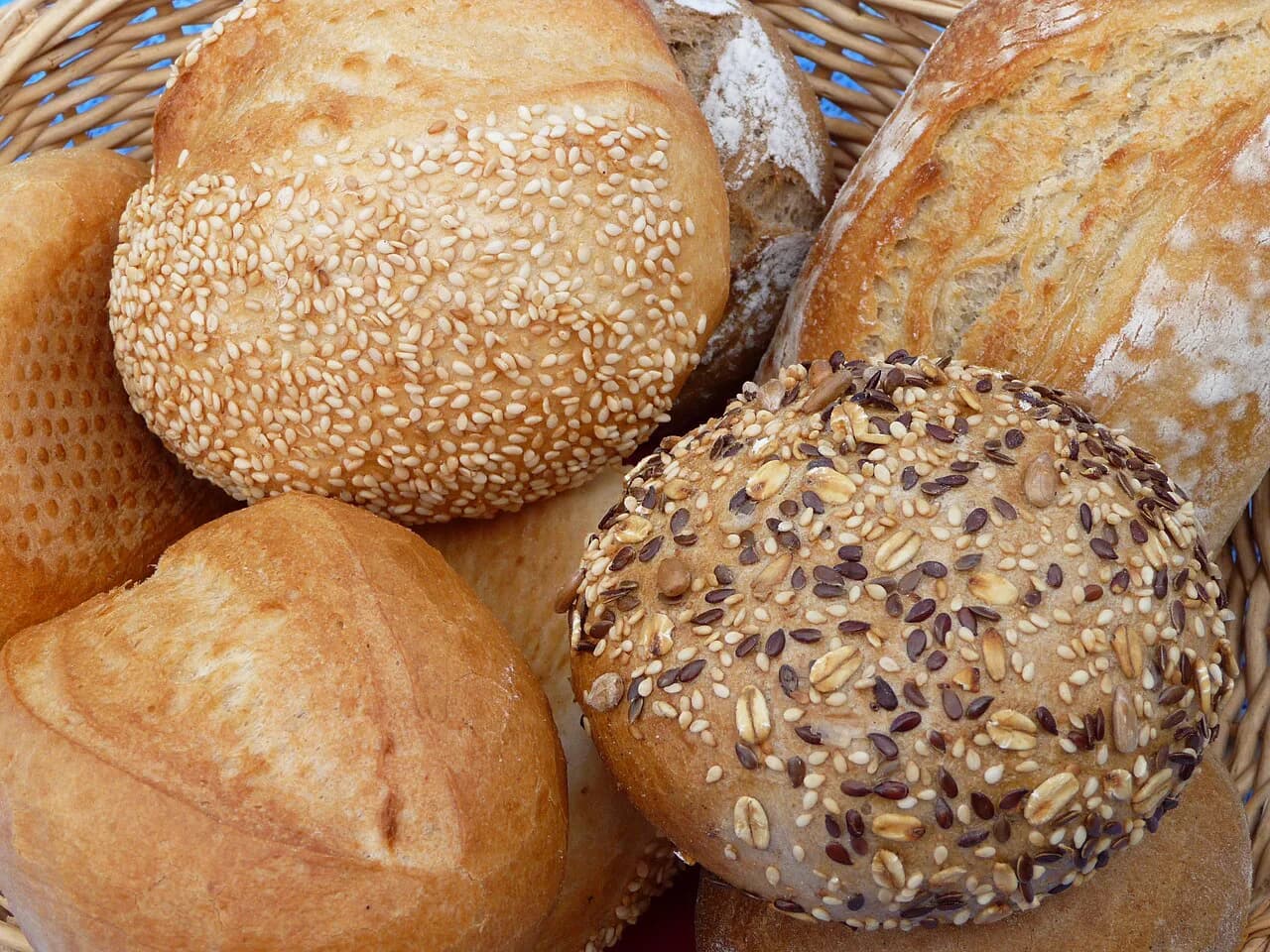
A plain Brötchen is a lean wheat roll, shaped small and baked hot with steam so the crust blisters while the inside stays soft and cottony. Each region of Germany names its rolls differently, and the standard white roll is described as crispy outside and soft inside, with seeded, rye, whole grain and pretzel-dough versions alongside it. The flavor is mild and slightly yeasty rather than sour, with a faint sweetness from the wheat.
That mildness is the point. A Brötchen is a carrier, built to hold butter, Quark, cold cuts or a sausage without competing with them, which is why two is a normal breakfast portion and one is a snack.
Brötchen in English: roll, bun or bread roll
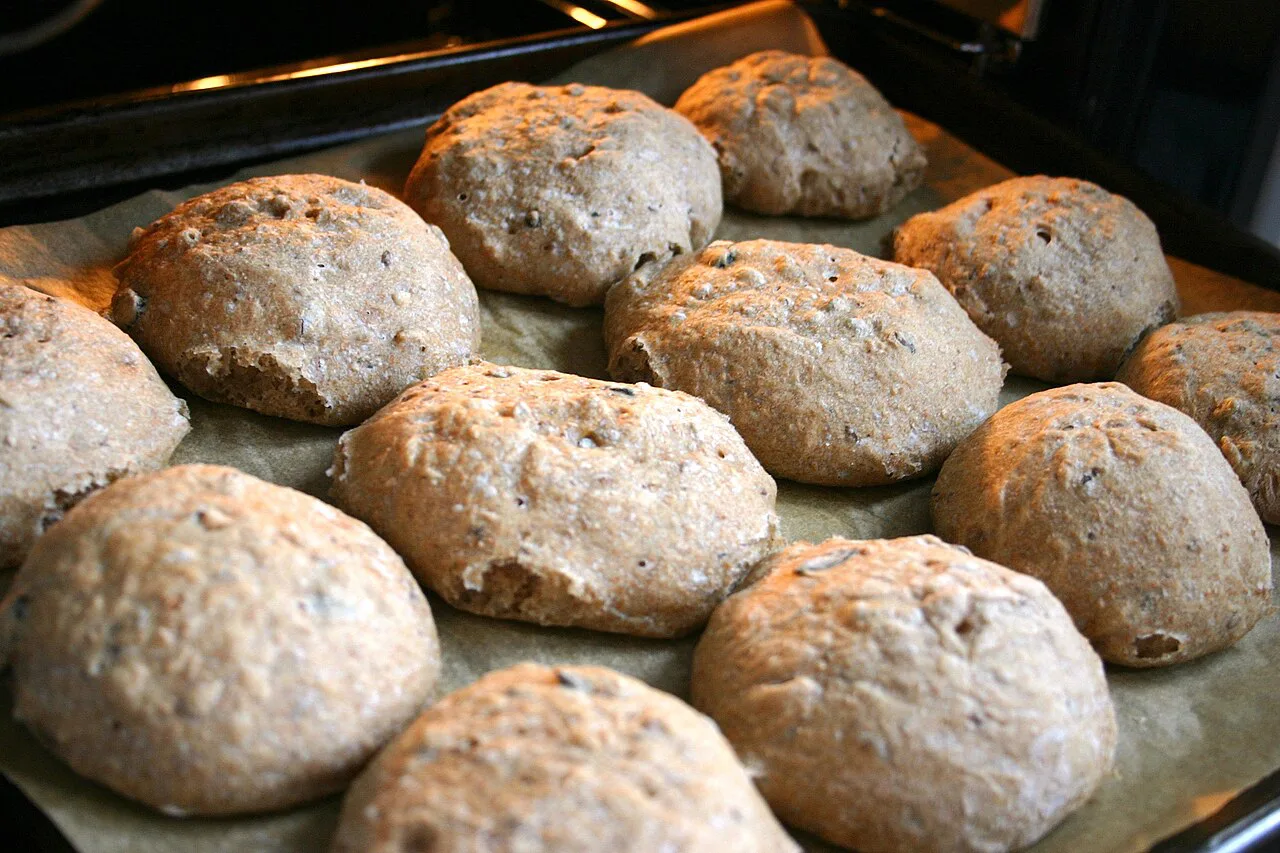
In English, Brötchen is best translated as bread roll or simply roll. Bun is misleading, because a Brötchen is not sweet, soft or enriched the way an American burger bun is, and it is not a pastry. Crusty roll, hard roll and German bread roll all appear on English menus and describe the same lean roll.
Brötchen in English: roll, bun or bread roll. In English, Brötchen is best translated as bread roll or simply roll.
How to pronounce Brötchen and how to ask for one in a bakery. Say it roughly as BRURT-shen may mislead, so aim instead for a short first syllable with rounded lips and a soft sh at the end.
Regional names: Semmel, Schrippe, Weck and Brötli. The same roll appears under several regional names, which is the single most confusing thing about ordering bread in Germany.
German uses the same form for one and many: ein Brötchen is one roll, zwei Brötchen is two. The diminutive ending -chen is the clue, a little Brot, or little bread, which is also why the roll and the loaf are not interchangeable at the table.
How to pronounce Brötchen and how to ask for one in a bakery
Say it roughly as BRURT-shen may mislead, so aim instead for a short first syllable with rounded lips and a soft sh at the end. The ö is the hard part: shape your lips as if saying oh but try to say an eh sound, and the result is close enough that an assistant will understand. If the umlaut is unavailable, Broetchen is the usual spelling.
At the counter, the phrases are short. Ein Brötchen, bitte gets you one plain roll, zwei Brötchen, bitte gets you two, and ein belegtes Brötchen asks for one that is cut and filled. Use the tongs rather than your hands when picking from an open basket.
Rolls come out early, and a full German bakery counter runs from small family Bäckereien to in-store bakery sections in supermarkets, with the same logic of buying fresh and eating the same day. Our guide to the German bakery explains how those counters work in practice.
Regional names: Semmel, Schrippe, Weck and Brötli
The same roll appears under several regional names, which is the single most confusing thing about ordering bread in Germany. The sources give Semmel for Bavaria and Austria, Schrippe for Berlin, Weck or Weckle for the Rhineland and Swabia, and Brötli in the southwest. Shape and toppings shift slightly with the name, but the object is the same small, lean wheat roll.
This matters because a bakery in Munich may sell no Brötchen at all, and one in Berlin may label the whole basket Schrippen. If the word you know gets a blank look, describe what you want or simply point. In Bavaria the word Semmel also slides into compound names, which is why a Leberkässemmel is meatloaf in a roll.
The rolls to know: Kaiserbrötchen, Laugenbrötchen, Mohnbrötchen and more
At a full display, the decision that matters is between a plain roll, a seeded roll and a savory roll with a distinctive crust. The star-scored Kaisersemmel and the oval Schrippe are plain, for butter, jam or cold cuts. Mohnbrötchen with poppy seeds, Sesambrötchen with sesame and Kürbiskernbrötchen with pumpkin seeds add crunch and a nutty note, and are the ones to buy if you are eating the roll on its own.
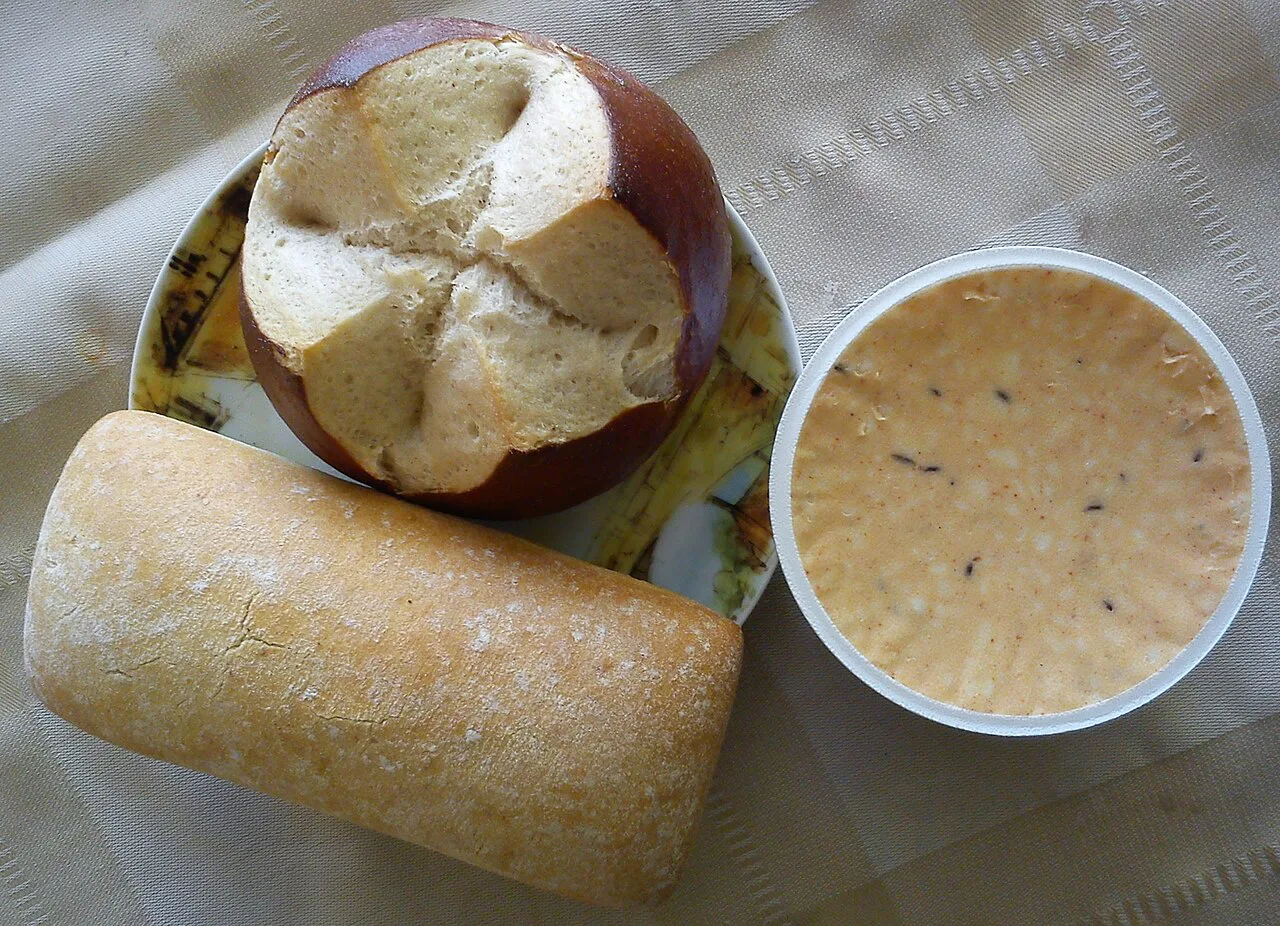
Laugenbrötchen is the pretzel roll, made from lye-dipped dough: shiny, dark brown and faintly alkaline, with a soft interior. It is the sturdiest sandwich roll in the case and a natural bridge to the Bavarian Pretzel — the full pretzel, with its chewy crumb and coarse salt, is a separate order.
The grain side of the case runs from Roggenbrötchen, a darker rye roll with a faintly sour edge, to Vollkornbrötchen and Mehrkornbrötchen, which are denser and seed-heavy. Order a Roggenbrötchen if you like German rye bread and want it in portable form. Kartoffelbrötchen, made with potato, is softer and slightly sweet, and Milchbrötchen is softer still.
Belegte Brötchen: the ready-made sandwich counter
Belegte Brötchen are ready-made sandwiches built on a split roll and sold from the same case, usually with salami, cheese, egg, ham or a salad leaf. They are the fastest lunch in a German town and designed to be eaten standing or on a bench. Expect them alongside the plain rolls in the morning and around lunchtime.
The other grab-and-go version is regional. In Bavaria a warm Leberkässemmel puts a slice of baked meatloaf into a roll, in the north a Fischbrötchen holds herring, mackerel or fried fish, and at markets and stadium stands a Bratwurst im Brötchen is a sausage in a roll.
How Brötchen fit into Frühstück and Abendbrot
Frühstück, breakfast, is where the roll is most at home: split warm with butter, Marmelade (jam), honey or Quark (a fresh, soft, slightly tart cheese), or built into open-faced sandwiches with cheese and cold cuts. Weekend mornings often mean a walk to the bakery for fresh Sonntagsbrötchen, the Sunday rolls.
Abendbrot, the German cold evening meal, puts bread and rolls on the table with sliced vegetables, pickles, cheese and spreads instead of a hot dinner, which is why the bakery case is still busy late in the afternoon. The Swabian and Bavarian Brotzeit, a cold snack of bread, cheese and sausage, works on the same principle and is worth knowing as a menu word.
Brot vs. Brötchen: what changes at the table
Brot is the loaf, sliced at the table or bought presliced, and it is usually heavier, often rye-based and eaten with Abendbrot or as the base for open sandwiches. A Brötchen is a single portion, baked separately, and belongs to breakfast and street food. At the counter the difference is physical: loaves are cut to order, rolls are picked with tongs.
The grain vocabulary carries over between the two, so a dark, sour rye loaf may sit next to a mild rye roll. At the far end of the spectrum, the very dark, sweet, steamed rye known as pumpernickel is a loaf rather than a roll, and it belongs to the Westphalian table rather than the breakfast basket.
With what to eat them: butter, Quark, cold cuts, sausage and soup
The classic pairings are simple. Sweet means butter and jam, honey, or Quark with plum butter or rhubarb compote; savory means ham, salami, pâté, cheese with red onion chutney, or a spoon of Fleischsalat (a creamy meat salad) or egg salad. Buy the roll plain and assemble it yourself.
Brötchen also work as an accompaniment, which is where they earn their place on a German table. They are served alongside Bratwurst, Currywurst and Frankfurters, and used to dunk into hearty soups such as potato soup or goulash. A crusty roll with a bowl of Gulaschsuppe is a lunch in itself.
What happens to yesterday's rolls: Semmelknödel and breadcrumbs
Nothing is wasted. Stale rolls are the base of Semmelknödel, the Bavarian bread dumplings served with saucy dishes such as Rouladen, Sauerbraten or a mushroom Jäger sauce, and of Serviettenknödel, the same mixture rolled in a cloth and sliced. Soaking and crumbling old rolls is a deliberate step in those recipes, not a salvage operation.
Other leftovers become Semmelbrösel, dried and ground breadcrumbs used to coat Schnitzel or bind Frikadellen, or go into sweet bread puddings such as Kirschmichel with cherries or Scheiterhaufen with apples and raisins. Rolls keep a day or two in a paper or cloth bag rather than plastic; on a trip, buy what you will eat that morning.
Which roll to buy first
If you buy one roll in Germany, make it a Laugenbrötchen for a sandwich or a plain Brötchen with butter and jam for breakfast, and buy it early while the crust is still crisp. If the bakery uses a regional name, ask for a Semmel in Bavaria, a Schrippe in Berlin or a Weck in the Rhineland, and use Brötchen elsewhere.
Then branch out: a seeded Mohnbrötchen or Kürbiskernbrötchen for crunch, a Roggenbrötchen if you like sour rye, and a belegte Brötchen when you want lunch without sitting down. The bakery case rewards pointing as much as vocabulary, so pick two and compare.
Sources
Notes for your next German food trip
Optional updates to our guides.
You might also like



Continue reading
More guides you'll find useful





