
German Side Dishes: Dumplings, Spätzle, Sauerkraut and Potatoes
German side dishes explained: Semmelknödel, Thüringer Klöße, Käsespätzle, sauerkraut, red cabbage and potato sides, plus what each one is served with.
On this page
German sides follow a predictable pattern: a starch, a cabbage or vegetable, and often a gravy that ties the two to the meat. Learn four or five of them and most Gasthaus menus stop looking like a wall of nouns. This guide explains what each side dish actually is, which main it belongs with, and when the dish you assumed was a side turns out to be the main event.
What Counts as a German Side Dish
The core template is starch plus cabbage or vegetable. A pork roast arrives with dumplings and red cabbage; a sausage plate arrives with sauerkraut and boiled potatoes; a schnitzel arrives with fries or potato salad. The side is rarely an afterthought and often takes up more of the plate than the meat. For the dumpling side of that template, see German Dumplings.
The starch changes by region and by main. Bread dumplings belong to roast pork and game with dark gravy, potato dumplings to Sauerbraten and other braised meats, and Spätzle to schnitzel, roast meat and anything with melted cheese. The cabbage side is chosen by taste: sauerkraut is sour and sharp, red cabbage is sweet-sour, and both are cooked soft rather than crisp.
Portions are generous because the sides are meant to fill, not garnish. A roast with dumplings and cabbage often reads on the menu as one dish rather than meat plus two separate orders. "Mit Beilagen" means with sides; "Beilagen nach Wahl" means a choice of sides and usually lists them.
Knödel and Klöße: The Dumpling Family
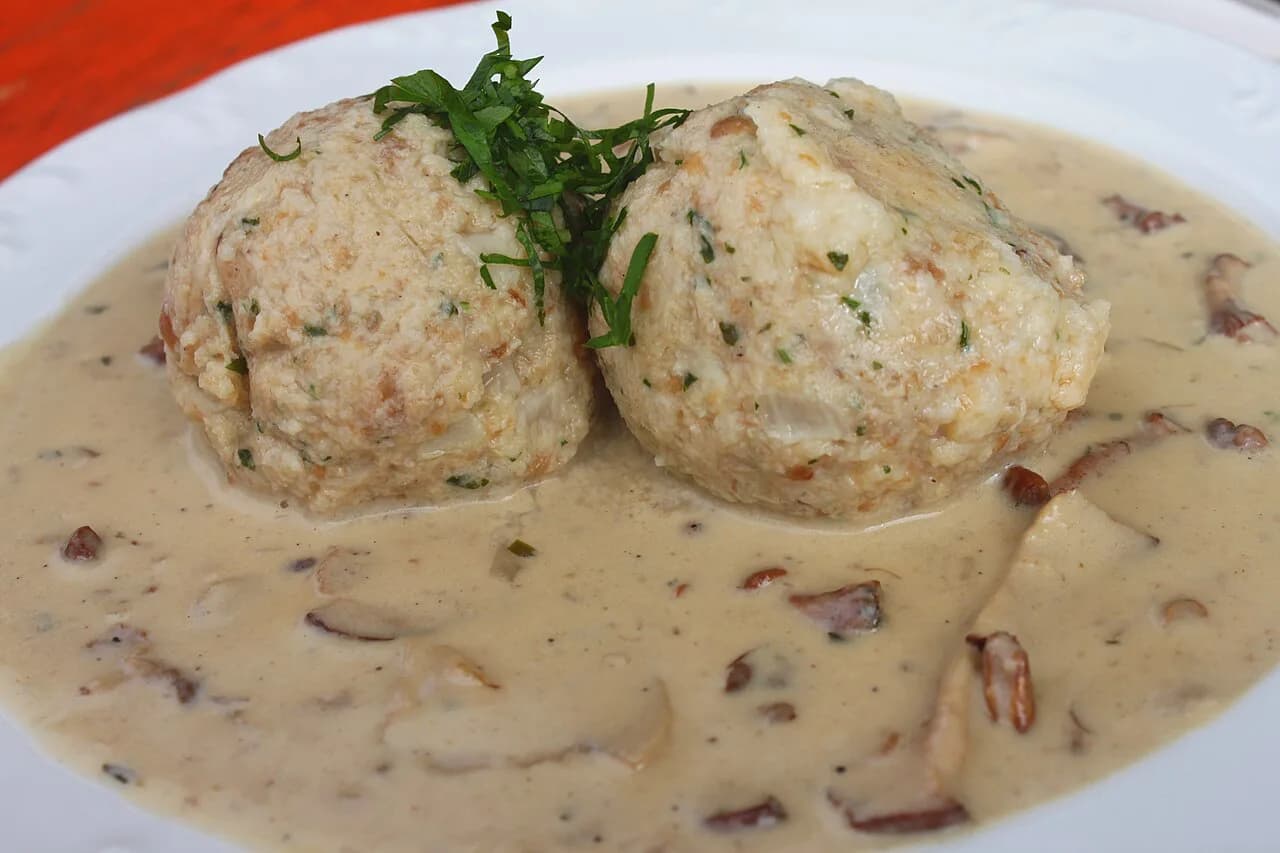
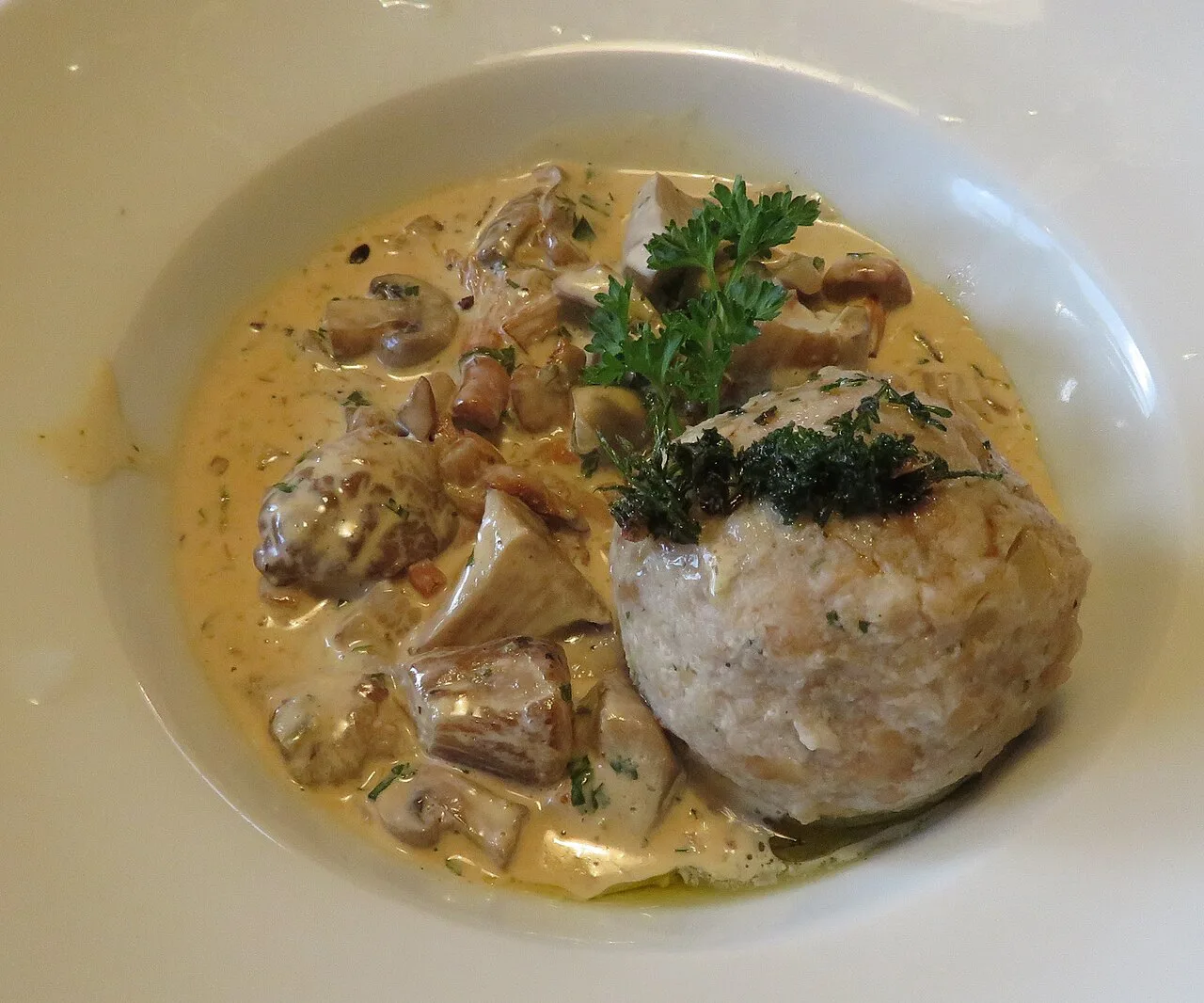
German dumplings split into bread-based and potato-based. Semmelknödel are bread dumplings made from cubed rolls, milk and egg, cooked until firm and spongy so they soak up gravy without falling apart. Kartoffelknödel are potato dumplings, heavier and denser, made from cooked potatoes and often a little starch to bind them. Thüringer Klöße are the Thuringian version, made from grated raw potato and traditionally the Sunday dumpling in that region.
What goes well with bratwurst as a side? Mustard and a bread roll are the standard pair at a stand. At a table, potato salad, sauerkraut and a roll are the usual sides, and a light lager or wheat beer is the common drink alongside.
Is German potato salad served warm or cold? It depends on the region. The southern style is served warm with a vinegar-based broth, while the northern style is cold and creamy with mayonnaise.
Match the dumpling to the gravy. Bread dumplings are the better choice with a thin dark roast gravy or mushroom sauce, because they absorb liquid. Potato dumplings hold up to thicker braised-meat sauces and to Sauerbraten, and Silesian potato dumplings are a classic partner for Sauerbraten. Thüringer Klöße are served alongside roasts and game in Thuringia.
A dumpling is a full starch portion, so one dumpling plus cabbage is a normal plate. If you order two mains with dumplings on the side, expect a lot of food. Dumplings also appear in soup, sliced, which is a lighter way to try them.
The dumpling family runs from bread dumplings through potato dumplings to the steamed buns served as a main or dessert; the recipes for all of them are collected on German Dumplings. The side that most often accompanies them is red cabbage, and the potatoes used in some recipes are starchy rather than waxy, which matters if you are trying to reproduce the texture at home.
Spätzle and Käsespätzle: Egg Noodles, Side and Main
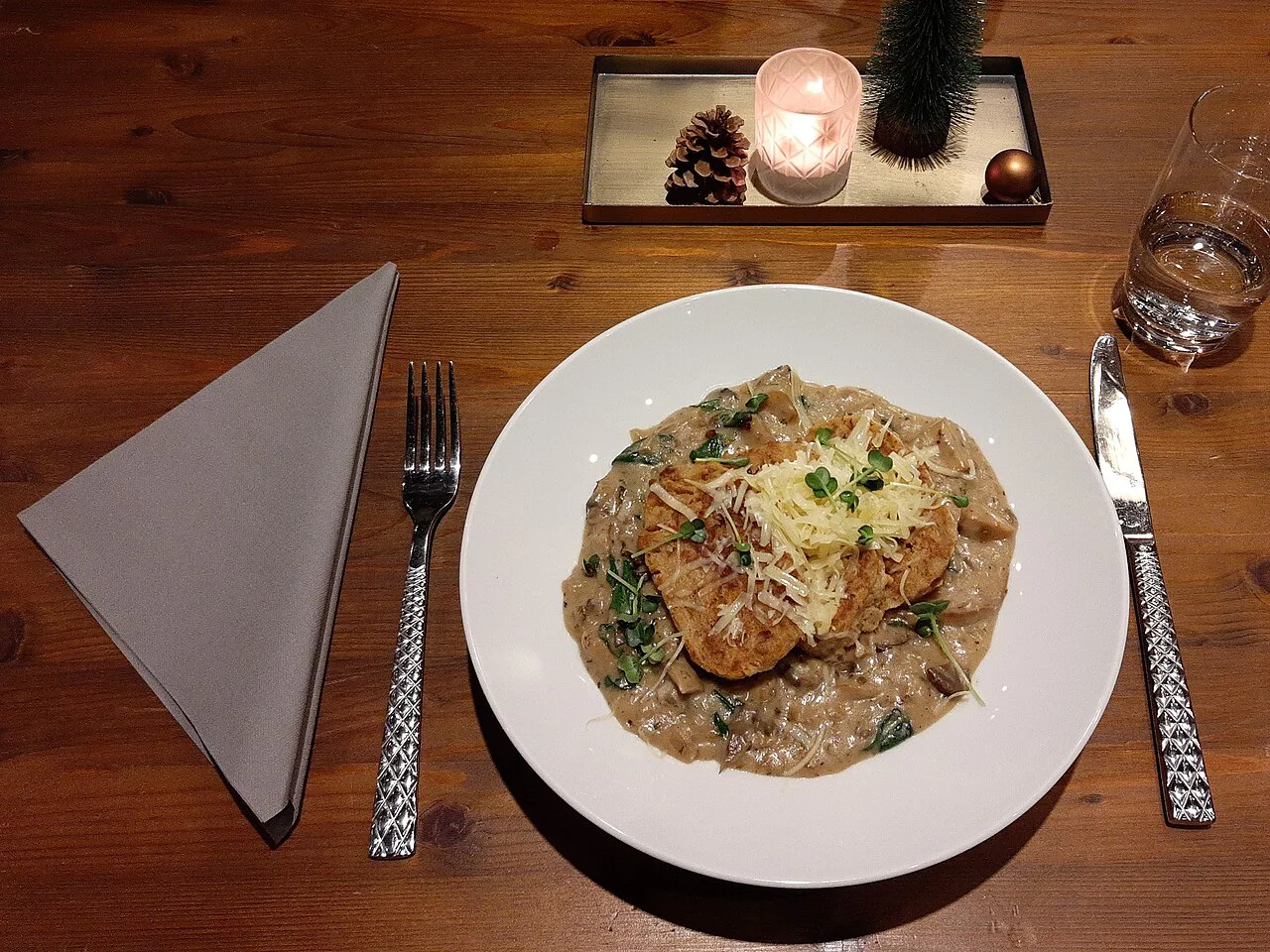
Spätzle are soft egg noodles, made from a stiff flour-and-egg dough that is scraped or pressed into boiling water and served either plain with butter or tossed in cheese. As a side, Spätzle usually comes with schnitzel, roast meat or a sauce-heavy dish instead of potatoes or dumplings. Käsespätzle is the cheesy version, layered with grated cheese and topped with fried onions, and in Swabia it is served as a main dish rather than a side.
That distinction matters when you order. If you ask for Käsespätzle alongside a schnitzel, you are effectively ordering two mains, and many kitchens will serve it as its own plate. Plain Spätzle with butter is the side; Käsespätzle is the dish. For the noodle itself and how to order it, see Spätzle: Germany's Egg Noodles and How to Order Them.
Schupfnudeln are a related starch side, often described as potato finger noodles: rolled, finger-shaped potato dumplings that are fried until crisp. They appear with sauerkraut and hearty meat dishes and are sometimes served sweet. They are a useful side to know because they sit between dumpling and potato cake rather than in either camp.
Sauerkraut: Sour Cabbage Alongside Sausage and Pork
Sauerkraut is fermented white cabbage, shredded and salted so that lactic acid bacteria turn it sour. In a Gasthaus it arrives cooked rather than raw, often with a little bacon, apple or caraway, and the flavor is sharp and acidic rather than salty. It is the standard partner for bratwurst, pork knuckle and other rich pork dishes because the acidity cuts through the fat.
Treat it as a condiment with bulk: it is there to balance each forkful of meat rather than to be eaten as a vegetable course on its own. If you want more, it is normally available as a separate side. For how the cabbage is fermented and served, see sauerkraut.
Sauerkraut also shows up in cooked dishes, from sauerkraut soup to Sauerkrautkuchen, a savory cake with sauerkraut in the topping. Those are dishes in their own right, not sides, and should be ordered as such.
Rotkohl and Blaukraut: Sweet-Sour Red Cabbage
Rotkohl is braised red cabbage, cooked slowly with apple, vinegar, sugar and sometimes red wine or cloves until soft and sweet-sour. In Bavaria and Austria the same dish is called Blaukraut, and some menus list both names. It is the standard accompaniment to roast goose, game and pork roast, and it is the milder, sweeter alternative to sauerkraut for anyone who finds sour cabbage too aggressive.
Choose between the two by what you are eating. Sauerkraut is the better match for sausage and pork knuckle; Rotkohl is the better match for game and richer roasts, where the sweetness balances the sauce. Neither is meant to be crisp—both are long-cooked and soft, and the color of Rotkohl is a deep purple-red rather than the bright red some visitors expect.
Potato Sides: Salt Potatoes, Mash and Potato Cakes
Salzkartoffeln are simply boiled potatoes, usually tossed in butter and parsley, and they are the default potato side when none is named. Kartoffelpüree is mashed potatoes, often served with roast meat and sausages. Kartoffelpuffer are grated potato cakes, fried crisp, and they appear both savory with applesauce and sweet with powdered sugar.
Bratkartoffeln are pan-fried sliced potatoes, usually made with waxy potatoes so the slices hold together, and often cooked with bacon and red onions. They are a classic partner for fried sausage and for eggs, so they straddle the side-and-main line the same way Käsespätzle does. If you order them as a side, expect a substantial portion. For the potato cake side and its sweet version, see German pancakes.
Salads That Count as Sides: Gurkensalat and Wurstsalat
Gurkensalat is German cucumber salad, and it comes in two styles. One is creamy, made with sour cream, oil, white wine vinegar and a little sugar, with dill and chives added for flavor and color, and it tastes cool and slightly sweet. The other is a lighter oil-and-vinegar version. Both are sliced thin; the creamy one is the version most visitors meet, and it is commonly served with schnitzel and other fried dishes. Letting the cucumber slices drain on paper towel first keeps the dressing from watering down. The full recipe for the creamy version is at Creamy German Cucumber Salad.
Wurstsalat is sausage salad: strips of cooked sausage tossed with onion, vinegar and oil, and often served with bread rather than as a vegetable side. It is a hearty cold plate that works as a light main at lunch. Eiersalat is egg salad in a creamy dressing and follows the same logic, appearing as a starter or as part of a cold plate rather than as a hot side.
German potato salad belongs on this list too, but there is no single version: the southern style is warm with a vinegar broth, the northern style is cold and creamy with mayonnaise, and which one comes on the plate depends on where you are. For the split, see German potato salad.
Spargel Season: Asparagus, Soup and Spring Sides
In spring, Weißer Spargel—white asparagus—takes over menus, and the side dishes follow it. The classic plate is white asparagus with boiled potatoes, melted butter and ham or schnitzel, with the potatoes and sauce acting as the sides. Spargelsuppe is cream of asparagus soup made from the peelings and stems so nothing is wasted, and it is often served as a starter before the asparagus main rather than alongside it.
White asparagus is eaten peeled and cooked, not raw, and the season is short and treated as an event. If you are traveling in spring, expect asparagus to appear as a soup, a side and a main all at once. For the vegetable and the way it is served, see Spargel: Germany's White Asparagus and How It's Served.
What Comes With Bratwurst
At a stand, a bratwurst usually comes in a roll—a Brötchen—with mustard, and that is the whole order. Sit-down versions come with potato salad, sauerkraut or a bread roll on the side. Mustard is the standard condiment, and German mustard ranges from mild to sharp, so ask if you want the hotter kind.
If you are eating in a Biergarten, the sausage plate is often the simplest order: sausage, mustard, bread and one side. For bread and rolls at a stand, the roll is the side as well as the holder. To drink alongside, a light lager or a wheat beer is the usual match; for the styles themselves, see German beer.
How Sides Arrive at a Gasthaus
On most menus a main dish lists its sides with it, so you do not order them separately. The words to look for are "mit" (with) followed by the side, as in "mit Kartoffelsalat" or "mit Rotkohl und Klößen." If sides are listed separately under Beilagen, order them as an extra, and expect the kitchen to bring them on a separate plate.
When in doubt, order one main and one extra side to share rather than two mains. That way you can try a dumpling and a cabbage without ending up with two full plates. If a side you want is not listed with your main, ask whether it can be swapped; many kitchens will substitute potatoes for dumplings without argument, though not always without a charge.
Bread and Brezel on the Table
Bread does not automatically arrive with a meal. If a basket appears, ask whether it is included before you help yourself. A Brezel ordered from the menu is a separate item.
Brezel are lye-baked pretzels, dark and glossy outside and chewy inside, and they are served with butter or with Obatzda, a Bavarian beer cheese dip made from soft cheese, butter, onion and paprika. Obatzda is a starter or snack rather than a side, but it is the classic partner for a Brezel and the easiest way to start a meal in a beer hall. For bread styles, see German beer to match the drink, or browse the bread guide for bakery rolls.
Pick Your Side Before You Order
Start with one starch and one cabbage. If the main comes with dumplings, choose red cabbage for game and sauerkraut for sausage; if it comes with Spätzle, leave the Käsespätzle as a separate order rather than a side. Potato sides fill the gap when the menu lists neither, and a cucumber or sausage salad is the light option when you want something cold alongside.
Explore more Germany guides
Frequently Asked Questions
What goes well with bratwurst as a side?
Mustard and a bread roll are the standard pair at a stand. At a table, potato salad, sauerkraut and a roll are the usual sides, and a light lager or wheat beer is the common drink alongside.
Is German potato salad served warm or cold?
It depends on the region. The southern style is served warm with a vinegar-based broth, while the northern style is cold and creamy with mayonnaise. The menu name or the region you are eating in usually tells you which one you will get.
Sources
Notes for your next German food trip
Optional updates to our guides.
You might also like



Continue reading
More guides you'll find useful





