
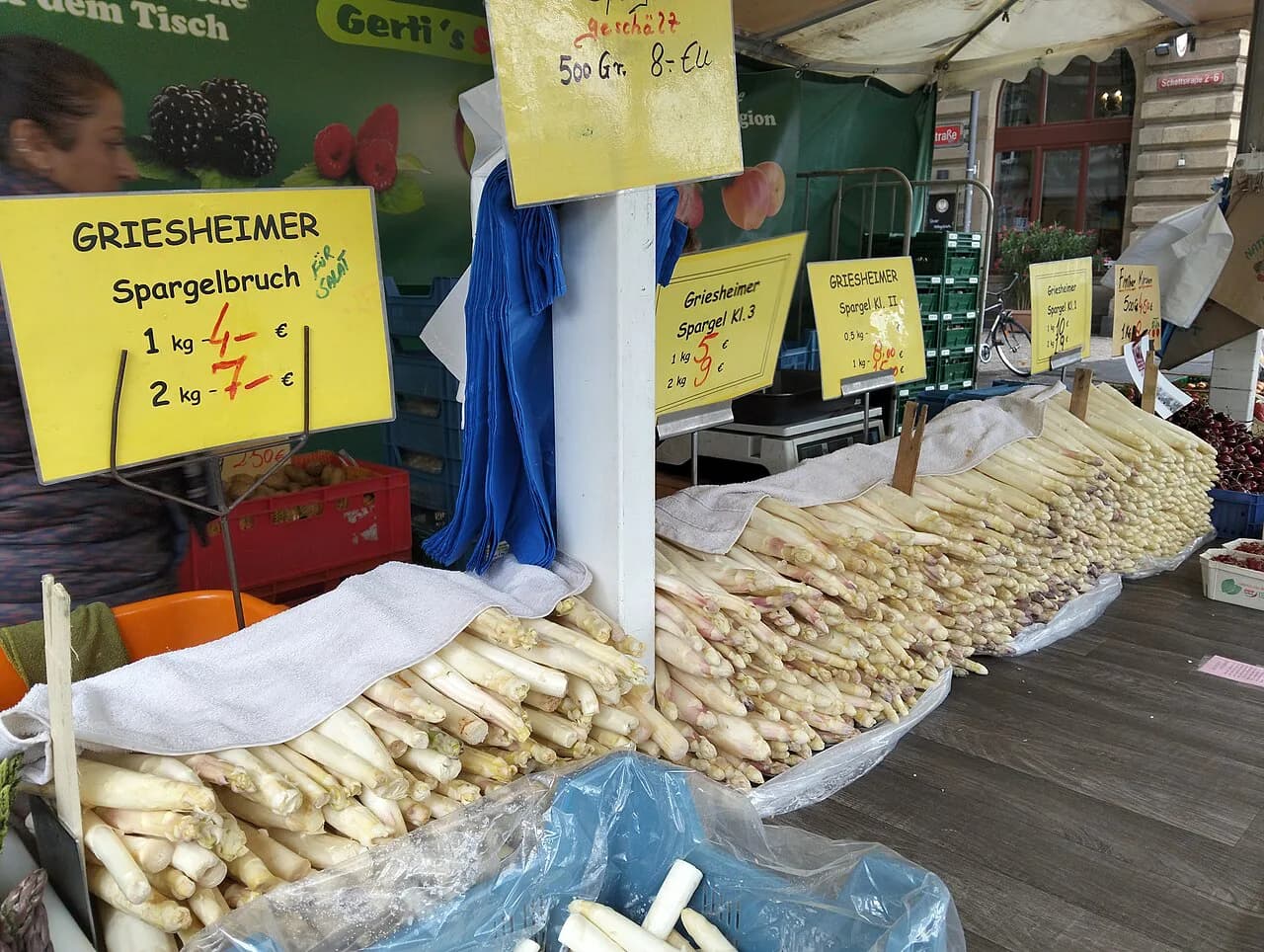
Spargel Guide: What White Asparagus Is and Why Germany Waits
Spargel is white asparagus, and Germans eat it obsessively in spring. Here's what it is, how it tastes, and what to order when it appears on menus.
On this page
Spargel is the German word for asparagus, and in everyday use it means the white kind: thick, pale spears grown underground so they never turn green. When Germans say Spargelzeit, they mean the spring stretch when restaurants, Gasthäuser and market stalls put white asparagus at the center of the menu. This guide covers what white asparagus actually is, how it differs from the green spears you know, what the classic plate looks like, and how to order it without guesswork.
The vegetable has a short run and a strong ritual around it. Spargel is white asparagus grown and eaten in spring, which is why the season carries so much anticipation. Knowing what to expect on the plate matters more than knowing exact dates, since the dish itself is simple and the texture is what surprises most first-timers.
What Spargel Is: White Asparagus Grown Underground
White asparagus is ordinary asparagus that is never allowed to see sunlight. The spears are grown under soil or ridged mounds, and because no light reaches them, they don't produce the chlorophyll that turns asparagus green. The result is a pale, thick spear with a tighter, more fibrous skin and a milder flavor than the green version.
That growing method explains nearly everything else about how the vegetable is handled. The lack of light means the spear spends its energy pushing through soil rather than greening up, which is why white asparagus arrives thicker and needs more work before it can be eaten. The season is short and intense, and the buying, peeling and serving advice published for it all assumes you are working with fresh spring spears.
In German usage, Spargel alone almost always means the white kind, and the green sort gets its own word, Grünspargel, when a distinction is needed. If you order Spargel in a restaurant expecting thin green spears, you'll get something else entirely.
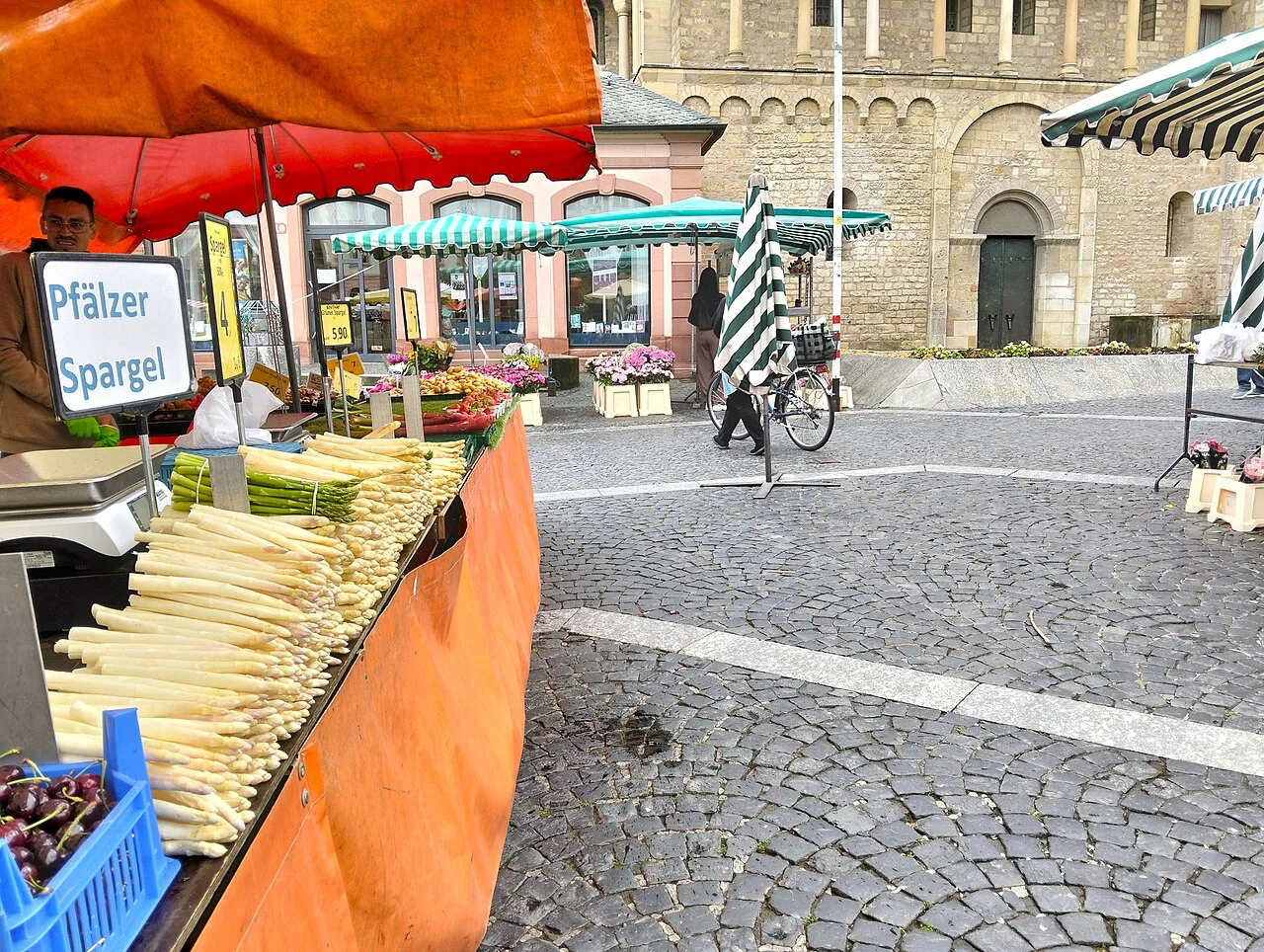
White vs Green Asparagus: Color, Texture and Flavor
Green asparagus is the version most American and British shoppers know: slender, grassy, and quick to cook. White asparagus is thicker, paler, and more restrained in flavor, with a tenderness that comes from long, gentle cooking rather than a quick sear. Grünspargel, the green sort, is sold in Germany too, but it plays a supporting role next to the white.
White vs Green Asparagus: Color, Texture and Flavor. Green asparagus is the version most American and British shoppers know: slender, grassy, and quick to cook.
Why Germans Wait All Year for Spargel. Spargel carries the weight of a cultural symbol in Germany, not just a vegetable on a menu.
The Classic Plate: Spargel mit Sauce Hollandaise, Potatoes and Ham. The standard order is Spargel mit Sauce Hollandaise, usually listed on menus with boiled potatoes and ham alongside.
The difference in texture is the part that catches people out. White spears are stringier on the outside and softer within, so they're served fork-tender rather than crisp. If you're used to snappy green asparagus, expect something closer to a soft vegetable than a crunchy one.
At a market stall, the distinction is obvious once you know what to look for: thick, ivory-colored stalks with tight tips mean white Spargel, while thin green stalks mean Grünspargel. Vendors often sell both side by side during the season, so pointing is perfectly acceptable if the words don't come.

Why Germans Wait All Year for Spargel
Spargel carries the weight of a cultural symbol in Germany, not just a vegetable on a menu. The pale spears are historically tied to spring, renewal and a sense of occasion, and their brief availability is exactly what makes them matter. When the season opens, menus across the country reorganize around them.
The scarcity does most of the work. White asparagus is typically enjoyed in Germany from April until June, and outside that window it largely disappears from restaurant menus and market tables. That narrow run turns a plain vegetable into something people plan their spring cooking around rather than buy on impulse.
For a visitor, this means the dish is genuinely seasonal rather than a permanent fixture. If you're in Germany in spring, the vegetable will show up almost everywhere; at other times of year, asking for it usually gets a shrug.
The Classic Plate: Spargel mit Sauce Hollandaise, Potatoes and Ham
The standard order is Spargel mit Sauce Hollandaise, usually listed on menus with boiled potatoes and ham alongside. The asparagus is served warm, draped in the pale yellow sauce, with small waxy potatoes and thin slices of Schinken (cured ham) on the same plate. It's a composed dish rather than a side, and portions tend toward the generous.
Sauce Hollandaise is the rich, buttery sauce most closely associated with the plate, and it's the element that makes or breaks the order. Some kitchens serve the asparagus with melted butter instead, which is lighter and lets the vegetable's own flavor come through. If you're weighing the two, hollandaise is the classic version and butter is the quieter one.
Potatoes prepared as German Side Dishes matter as much as the asparagus itself, and boiled waxy potatoes are the usual partner because they hold their shape under sauce. If you want the wider logic of these plates, the German Side Dishes guide covers the potato and dumpling sides that turn up next to a spring Spargel order, and Spätzle: Germany's Egg Noodles and How to Order Them explains the noodle side that appears when kitchens swap out the potatoes.
Ham is often optional in practice, and many menus offer the asparagus with or without it so vegetarians can order the same plate. The trade-off is small: without ham you lose the salty contrast against the buttery sauce, but the asparagus and potatoes still carry the dish.
How Spargel Tastes and Why the Texture Surprises First-Timers
The flavor is gentle, faintly sweet and slightly earthy, with none of the grassy bite of green asparagus. What arrives first is the sauce and the butter, then the vegetable's own quiet sweetness underneath. Seasoning is usually light, so salt and pepper at the table are part of the experience.
Texture is the bigger adjustment. White spears are cooked until completely tender, so they give way under a fork instead of resisting it, and the thicker ends can be soft enough to spread. First-timers who expect crunch often find the plate richer and heavier than they imagined.
The sauce does most of the heavy lifting on the palate. Hollandaise is butter, egg yolk and lemon, so a full plate is substantial, and it's common to see it served as a main course rather than something light. If you want something less rich, ask for the butter version.
Peeling and Cooking: Why the Spears Get All That Work
White asparagus is peeled before cooking, all the way up the stalk, because the outer layer is tough and fibrous. That step is not optional or decorative: an unpeeled spear stays stringy no matter how long it cooks. Home cooks and restaurant kitchens alike strip the skin and often trim the woody base before the asparagus goes into the pot.
Cooking is gentle and fairly long. The peeled spears are usually simmered until tender rather than blanched or roasted, which is why they arrive soft and yielding. That method also explains why restaurant versions tend to be more consistent than home attempts: the timing is forgiving once the peeling is done properly.
If you're cooking it yourself, the practical takeaway is to buy more than you think you need and to set aside time for the peeling. White asparagus loses a fair amount of weight to trimmings, and rushing the prep is the most common way the dish goes wrong.
Where Spargel Shows Up on Menus
During the season, white asparagus appears on a separate seasonal board or insert at many restaurants and Gasthäuser, sometimes as a small card placed inside the regular Speisekarte. That's the thing to look for when you sit down: if there's a special Spargel menu, the kitchen is signaling what it wants you to order.
Traditional Gasthäuser serve the classic plate, while modern restaurants often use the vegetable in soups, salads or with fish. Ordering from the seasonal insert is usually the safer bet in either case, because those dishes are the ones the kitchen is currently focused on.
Casual places generally don't require reservations, though busier spots in cities may fill up on weekends. For a spring evening at a popular Gasthaus, booking ahead is worth the phone call, especially for groups of four or more.
Payment is where visitors get caught: cash is still widely expected in many restaurants, particularly smaller traditional ones, so carry some even if cards are accepted. Separate bills are normal, and asking for the check is done by catching the server's eye rather than waving.
Beer and Wine Alongside Spargel, in Moderation
The classic plate is rich, so a crisp, dry white wine or a light lager alongside it makes sense if you're drinking at all. In beer terms, a clean pilsner cuts through the butter without competing with the asparagus. Ordering a glass rather than a full bottle keeps the meal balanced.
Beer is the everyday drink in most Gasthäuser, and a small beer with Spargel is a perfectly normal choice at lunch. Wine shows up on the list too, but this is a plate where a single glass goes a long way.
Should You Order Spargel When It's in Season?
Yes, if you're in Germany during spring and want to eat what the country is actually excited about. The classic plate with hollandaise, potatoes and ham is the version to try first, and the butter alternative is there if you want something lighter.
Skip it if you dislike soft, rich vegetable dishes or want a light lunch, since a full plate is substantial. And if you're visiting outside the spring window, don't build a meal around it: the vegetable largely steps off menus once the season ends.
Explore more Germany guides
Sources
Notes for your next German food trip
Optional updates to our guides.
You might also like



Continue reading
More guides you'll find useful





