
Spätzle: What It Is and How to Eat It in Germany
Spätzle are Swabian egg noodles served with gravy, cheese, or butter. Learn what they are made of, how they differ from pasta, and the dishes to order.
On this page
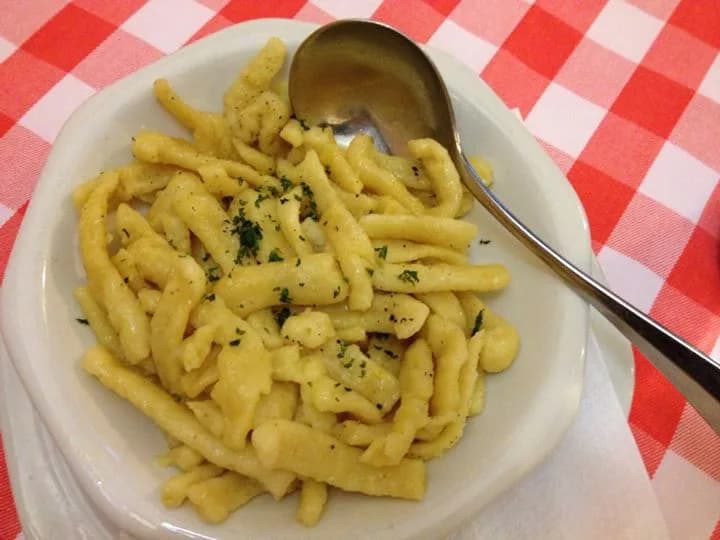
Spätzle are small, irregular egg noodles from Swabia, the southwest German region centered on Stuttgart and also known as Schwabenland, and the dish to order first is Käsespätzle, a cheese casserole topped with crispy fried onions. The same egg noodles are also enjoyed in Austria and Switzerland.
This guide covers what goes into the dough, how the noodles are formed, where they sit between pasta and dumplings, the menu names to recognize, and how they are served as a side or a main.
What spätzle are: Swabian egg noodles
Spätzle are a soft wheat dough pushed or scraped into simmering water and boiled until the pieces float. They come from Baden-Württemberg, the southwest state whose Swabian core is home to some of Germany's most distinctive cooking, including the pasta-like Maultaschen and the potato dumplings called Schupfnudeln.
The noodles arrive rough and porous rather than smooth, which is why they grip gravy, melted cheese, and butter instead of letting it slide off. That surface is the whole point of the shape, and it is what separates a good plateful from a mushy one.
Spätzle share the table with other Swabian staples, and they are one of the region's contributions to the wider map of German sides alongside dumplings and potatoes. If you are building a plate around them, the broader set of German sides is worth knowing so you don't end up with three starches and no vegetables.
What spätzle are made of
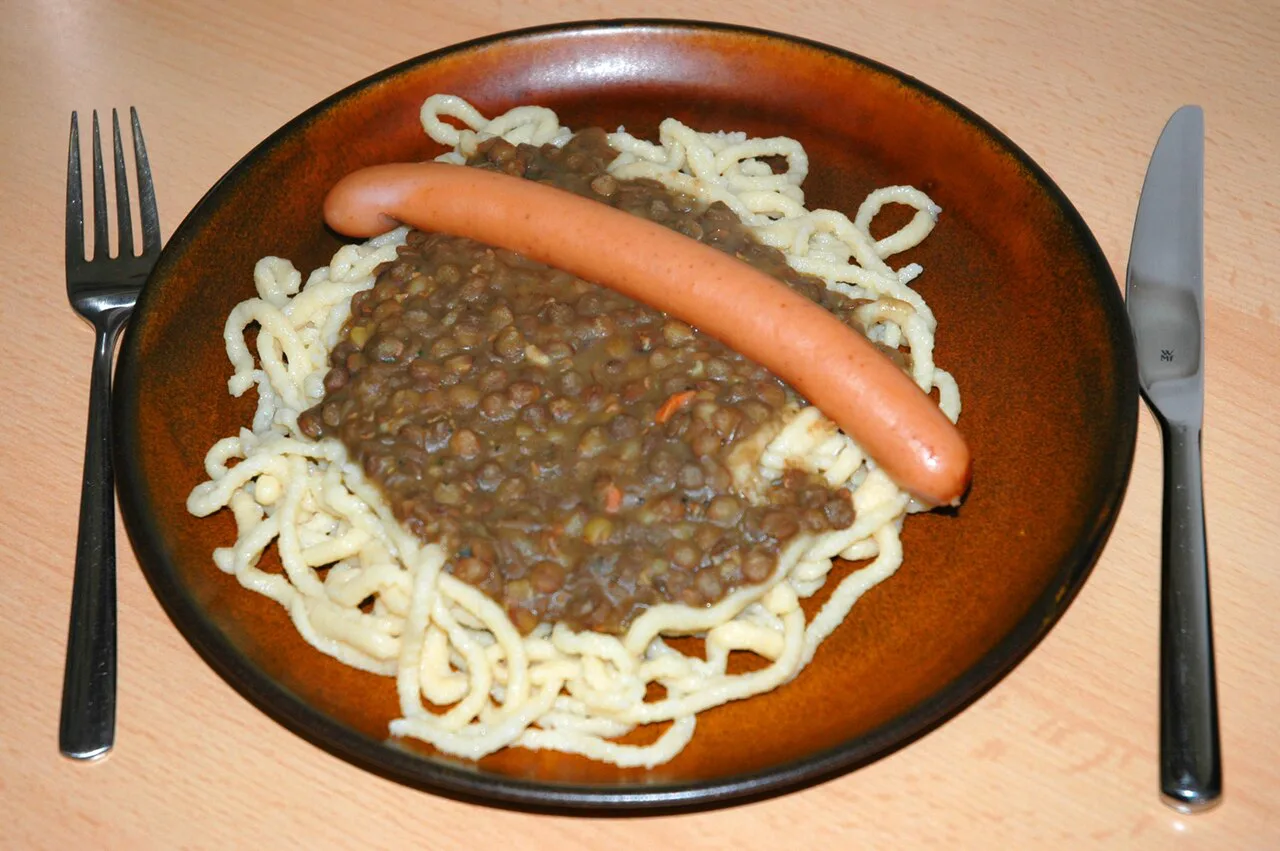
The dough is simple: flour, eggs, salt, and milk or water. Some cooks add a little nutmeg, though it is not part of the traditional formula, and a spoonful of herbs is another common variation.
Is spätzle similar to gnocchi? Only loosely. Both are boiled starch-based items served with sauce, but gnocchi are made with potato and shaped into smooth rounds, while spätzle are an egg-and-flour dough pressed into irregular, rough noodles that soak up gravy and melted cheese more readily.
What do Germans eat with spätzle? Usually something with a sauce: goulash, pork roast, schnitzel, or a mushroom gravy. As a main, the noodles are served layered with cheese and topped with fried onions as Käsespätzle, or simply tossed in butter as a side.
Are spätzle pasta or dumplings? They are made from an egg-and-flour dough boiled in water, closer to a soft egg noodle than to a bread- or potato-bound dumpling, though they are rougher and more irregular than Italian pasta and are often grouped with dumplings on a German menu.
The milk-or-water question is a real debate among German home cooks. Milk gives a richer noodle and water a leaner, springier one, and either works. What matters more is the consistency of the batter: thick enough to hold together, loose enough to press through holes.
Because the dough is mostly egg and flour, spätzle bring their own richness but little seasoning. On a menu they are designed to be eaten with something flavorful rather than on their own.
How spätzle are made
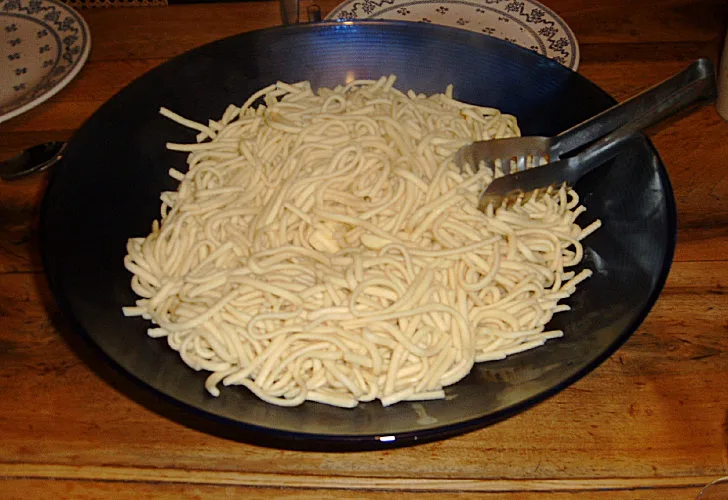
The dough is mixed until bubbles form, then rested briefly. It is then pressed through a spätzle maker, a board with holes and a scraper, or a wide-holed colander straight into a pot of lightly salted simmering water.
The noodles are ready in a minute or so, when they rise to the surface. They are cooked in batches and drained, and a little butter tossed through while they are hot keeps them from sticking together.
Traditionally the dough was spread on a wet wooden board and cut into strips with a knife, a skill that older Swabian cooks made look effortless. Most home cooks today use a press or scraper, and many simply buy them ready-made. For a visitor, the practical point is that the noodles are boiled fresh, not dried and stored like Italian pasta.
Pasta or dumpling? How spätzle differ from Italian pasta and gnocchi
Spätzle are an egg-flour dough boiled in water, not a dumpling bound with bread or potato, though many menus and eaters treat them as a dumpling. The confusion is fair, because they are neither rolled smooth like Italian pasta nor shaped into neat rounds like gnocchi.
The texture is the giveaway. Spätzle come out irregular, thick in places and thin in others, with a rough, porous crust that sauce clings to; gnocchi are denser, smoother, and made with potato. If you like the way gnocchi feel in your mouth but want something chewier and better at soaking up gravy, spätzle are the closer match.
Because the shape is never uniform, don't expect a neat, even plate. Sizes vary from batch to batch and kitchen to kitchen, and that irregularity is part of the style rather than a flaw.
The names on the menu: Spätzle, Knöpfle, Spatzen
The word Spätzle comes from Spatzen, German for sparrows, because the little pieces were thought to look like the birds. The same dough also appears as Knöpfle, literally "little buttons," when it is made shorter and stubbier.
Spatzen is the name for a larger version, sized somewhere between a small noodle and a tiny potato dumpling. On a Swabian menu you may see all three, and they describe shape and size rather than different dishes.
When spätzle are on the plate beside a roast or a stew, they belong to the same family as the wider world of German dumplings and starch sides: the thing that soaks up the sauce so you don't waste it. Knowing that family helps you read a menu quickly.
Käsespätzle: the dish to order first
Käsespätzle is cheese spätzle, a dish of the noodles layered with cheese and topped with crispy fried onions. It is a well-known main way to eat spätzle and a good first order if you are trying them.
Order it as a main, not a side. It is hot and rich, and filling enough on its own; a small salad or a pickled side is a sensible balance rather than a second starch. Look for it in straightforward Gasthäuser rather than only on tourist menus.
Because the noodles bring little seasoning of their own, the cheese and onions do the flavor work. That is also why a simple green salad or something sharp on the side cuts through the richness better than another starch.
Spätzle as a side: gravy, goulash, schnitzel, and roast pork
Plain spätzle are a side dish, and their job is to catch sauce. They turn up under goulash, alongside a schnitzel, with pork roast, and with any dish that comes with a generous gravy.
Tossed in melted butter with nothing else, they work as a simple vegetarian side; with a mushroom gravy they become a full main. That flexibility is why they show up across the menu rather than in one fixed dish.
They also pair naturally with the rest of the German side repertoire, from sauerkraut to a German potato salad when the plate needs something sharper next to all that butter and gravy.
How to order spätzle in a German restaurant
As a side, expect a modest portion served in a small bowl or spooned next to the meat; as a main, order Käsespätzle and you get a full plate. If the menu lists Spätzle as a Beilage, that means side dish.
Leftover spätzle are typically reheated in a pan with butter, which crisps the edges and makes them even more delicious.
If you are unsure between two dishes, ask which one comes with spätzle rather than potatoes or dumplings; many roasts come with a choice, and the answer tells you what the kitchen does best that day.
Which spätzle dish should you order?
Order Käsespätzle if it is your first time. It is the dish that shows what the noodles can do, and it is a meal in itself rather than a garnish.
For a second visit, take them as a side under gravy with a schnitzel or a pork roast, and compare the texture: the rough, porous noodle should hold the sauce rather than turn soft. Either way, look for them on menus in Swabia and the Allgäu, where they are the local staple rather than a tourist item.
Explore more Germany guides
Frequently Asked Questions
Is spätzle similar to gnocchi?
Only loosely. Both are boiled starch-based items served with sauce, but gnocchi are made with potato and shaped into smooth rounds, while spätzle are an egg-and-flour dough pressed into irregular, rough noodles that soak up gravy and melted cheese more readily.
What do Germans eat with spätzle?
Usually something with a sauce: goulash, pork roast, schnitzel, or a mushroom gravy. As a main, the noodles are served layered with cheese and topped with fried onions as Käsespätzle, or simply tossed in butter as a side.
Are spätzle pasta or dumplings?
They are made from an egg-and-flour dough boiled in water, closer to a soft egg noodle than to a bread- or potato-bound dumpling, though they are rougher and more irregular than Italian pasta and are often grouped with dumplings on a German menu.
Sources
Notes for your next German food trip
Optional updates to our guides.
You might also like



Continue reading
More guides you'll find useful





