German Dumplings: Knödel and Klöße, and What to Order
German dumplings are mostly Knödel or Klöße, bread or potato balls served with roast meat and gravy. Here is what to order and how the styles differ.
On this page
German dumplings are, almost always, either bread dumplings (Semmelknödel) or potato dumplings, which appear on menus as Kartoffelknödel in Bavaria or Kartoffelklöße in much of central and eastern Germany. The name changes with the region rather than the ingredient, so the fastest way to read a menu is to check whether the word starts with Semmel (bread roll) or Kartoffel (potato). This guide separates the two families and matches each dumpling to the roast or gravy it handles best.
Both are filling side dishes, not light garnishes, and both are built to soak up sauce. One dumpling per person is usually enough as a side, and a dumpling with a roast and a cabbage side makes a full meal. The sections below cover names, textures, pairings, the fried-leftover dish you may spot on a menu, and the practical differences between making them at home from boiled or raw potatoes.
Knödel and Klöße: why the name changes by region
Knödel and Klöße mean the same thing: a boiled dumpling, usually round, served hot. Southern Germany and Bavaria lean on Knödel, while Klöße is the common form in Thuringia and parts of central Germany, which is why the same potato side can arrive under two quite different words. The bread version is nearly always Semmelknödel, from Semmel, the southern German word for a bread roll.
For a visitor, the naming matters less than the second word on the menu. Kartoffelknödel and Kartoffelklöße are potato dumplings; Semmelknödel and Serviettenknödel are bread dumplings, the latter cooked in a cloth roll and sliced. If a menu lists Klöße alone under a roast, assume potato unless the description says otherwise, and ask which style the kitchen makes, since the answer varies from town to town.
Semmelknödel: bread dumplings that soak up gravy
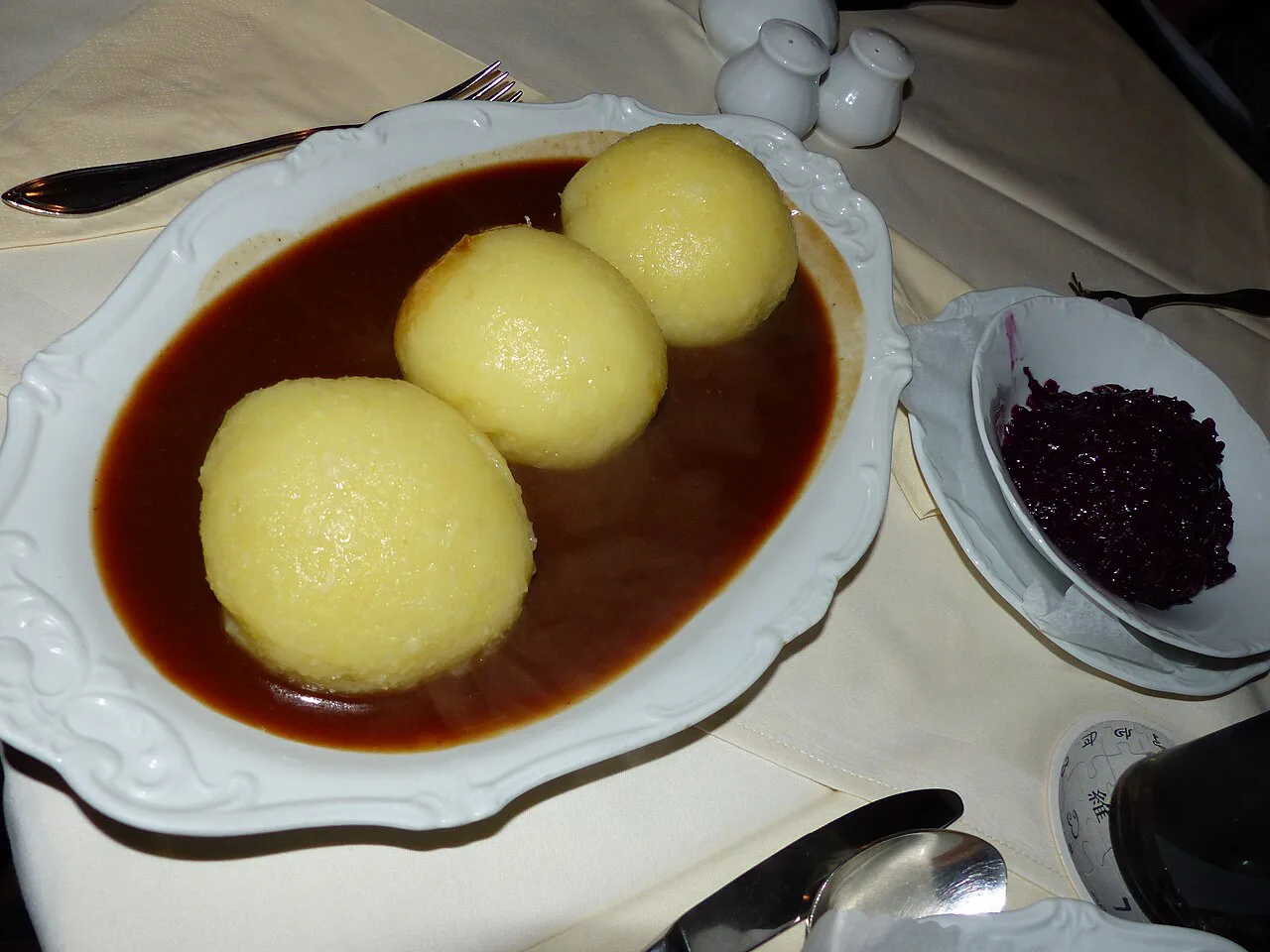
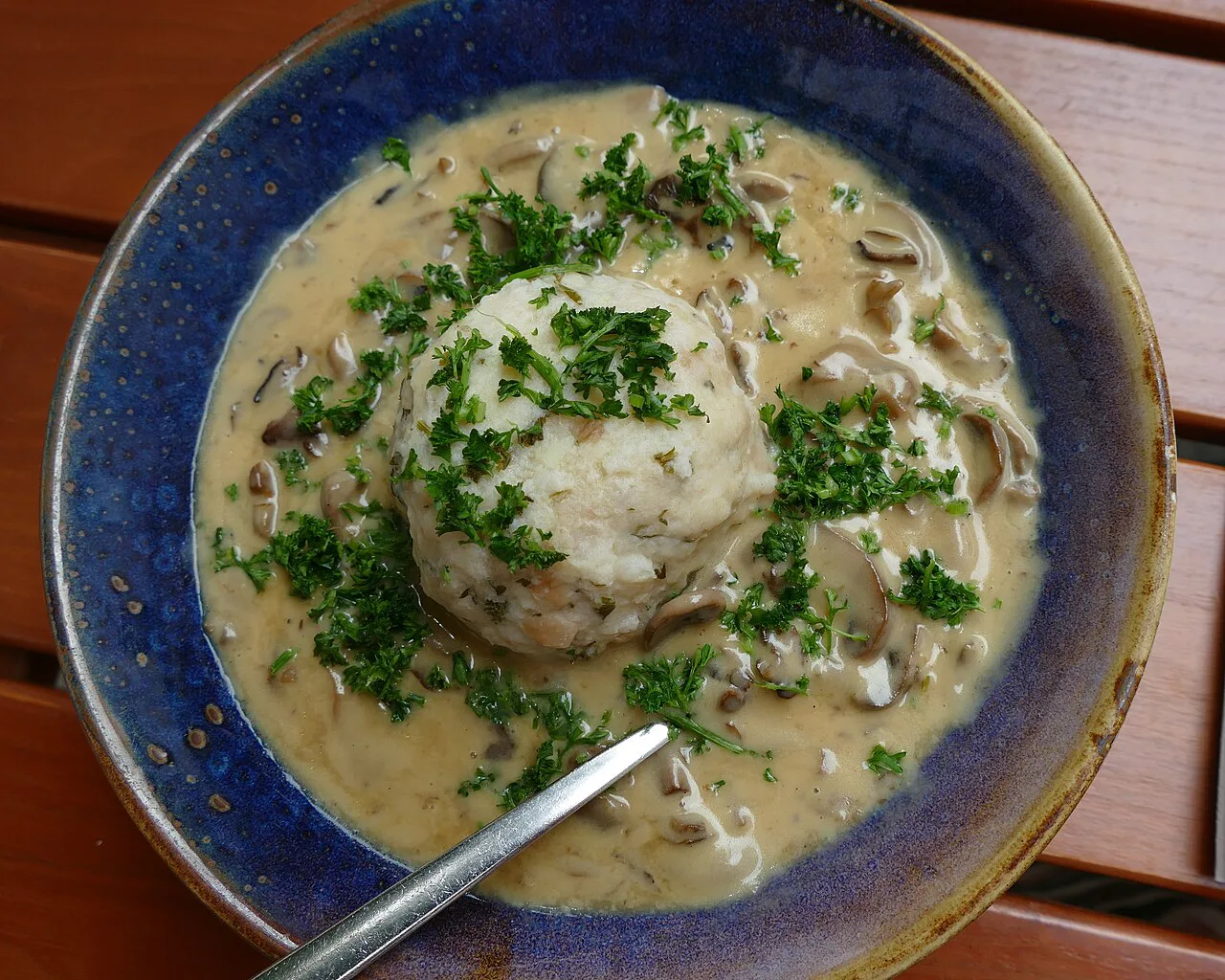
Semmelknödel are made from cubed day-old bread rolls softened in milk, bound with egg, and often flecked with parsley or onion, then poached until firm. Their open, bready texture is the point: they drink up sauce in a way a potato dumpling cannot, which is why they turn up beside mushroom dishes and roast pork with plenty of gravy. They are also the lighter of the two, so they suit a rich main course without adding another layer of heaviness.
What is the German word for dumpling? The common words are Knödel and Klöße, which both mean a boiled dumpling; Knödel is usual in southern Germany and Bavaria, while Klöße is the standard form in Thuringia and parts of central Germany.
Is gnocchi the same as potato dumplings? No. Gnocchi are small Italian potato dumplings made with flour and usually served with sauce, while German potato dumplings are larger, bound with potato starch and egg, and served as a side to roasts and gravy.
Are German dumplings served as a main course? They can be. Most often they are a side with roast meat, but you also see them sliced in mushroom sauce as a vegetarian main, and leftover dumplings fried in butter as a dish in their own right.
On a menu, bread dumplings often appear as a single large ball or as slices of Serviettenknödel, the rolled version poached in a cloth and sliced. Either way, treat them as the starch component of the plate and skip an extra side of potatoes unless you are genuinely hungry.
Kartoffelknödel and Kartoffelklöße: boiled versus raw potato
Potato dumplings are made from starchy potatoes bound with potato starch, egg, salt, and often nutmeg, but the method splits into two broad camps. The boiled-potato version mashes cooked potatoes, mixes in starch and egg, and forms the dough into balls; it is the quicker, more forgiving method and produces a soft, buttery dumpling, as this boiled-potato dumpling recipe sets out. The raw-potato version grates uncooked potatoes and squeezes out the excess water before binding, which gives a denser, springier result but takes more work.
Starchy potatoes such as Russets or Idaho are the recommended choice because their higher starch content helps the dumpling hold together in the water. Whichever method a kitchen uses, the dumplings are poached in gently simmering, never boiling, salted water, since a hard boil breaks them apart. That technical detail explains the texture on your plate: a boiled-potato dumpling is tender and slightly yielding, while a raw-potato one fights back a little.
Bavarian style: half raw, half cooked, with a bread cube inside
In Bavaria, potato dumplings are commonly made half-and-half from raw and cooked potatoes, which balances the lightness of mash against the bite of grated raw potato. The signature detail is a few toasted bread cubes pressed into the center of each dumpling before it is poached, so the middle carries a small crunchy, savory surprise. They are often finished with bread crumbs fried in butter scattered on top, which adds a toasted crust to an otherwise soft surface.
For a diner, this is a texture decision as much as a regional one. The bread cube gives the dumpling a defined center and a bit of crunch, while the buttered crumbs add richness that suits roast pork or duck with dark gravy.
Thuringian style: Klöße as a multi-step ritual
Thuringia treats potato dumplings as a project rather than a side order, with many separate steps that cooks there grow up learning at home. The result is the Thüringer Klöße you see on menus across the region, denser and more potato-forward than the Bavarian version and usually served with a generous pour of gravy. For a visitor, the dumpling is often the most traditional thing on the plate, and the roast is chosen to flatter it.
This is the regional name to recognize alongside Semmelknödel and Kartoffelknödel, and it belongs with the wider family of German Side Dishes that arrive with a roast, from cabbage to pan-fried potatoes. It also explains why dumplings ordered in Thuringia can taste noticeably different from the same word used loosely elsewhere.
What to serve with German dumplings
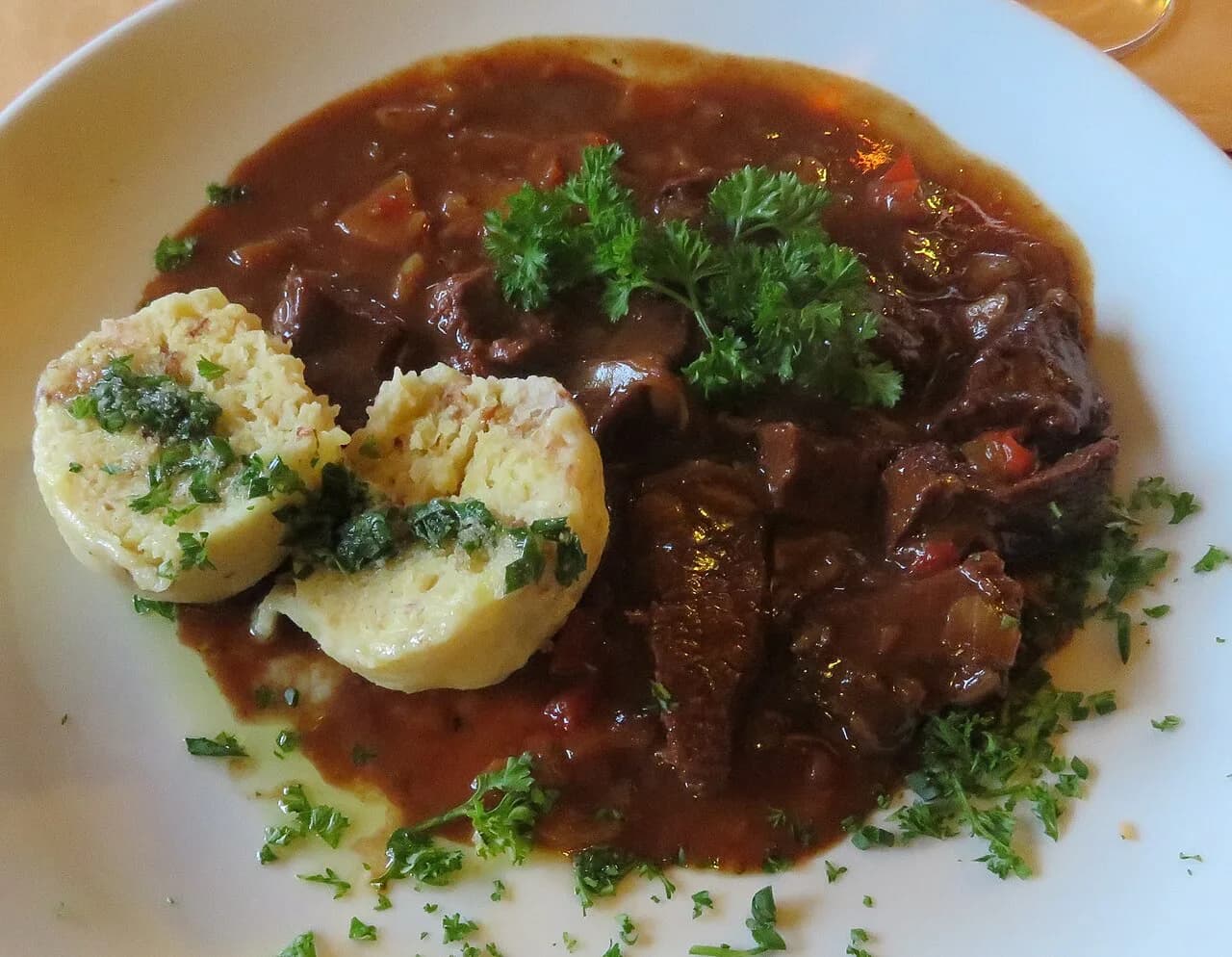
The classic pairing is roast meat with gravy: roast pork, duck, goose, or a pot roast, with the dumpling positioned to catch the sauce. Sauerbraten, the sour marinated beef roast, and goulash both bring a lot of liquid, which makes a bread dumpling or a sturdy potato Klöße the sensible choice. Red cabbage, braised and slightly sweet, is the usual vegetable alongside, cutting through the richness of the meat and the starch.
If you want a second starch on the plate, keep it in the same family. A dumpling already covers the potato-and-starch role, so pairing it with another heavy side is where an order tips from filling to excessive. You will see dumplings offered with dishes that would otherwise come with Spätzle: Germany's Egg Noodles and How to Order Them, the egg-noodle alternative that fills the same slot on the plate, so you can usually ask to swap if one appeals more.
When a menu lists dumplings alongside sauerkraut, the fermented white cabbage, take it: the sharp, sour edge balances gravy and fat in the same way the red cabbage does. Both are standard companions to pork and dumplings across southern and central Germany, and a plate of sauerkraut usually costs less than a second dumpling.
How German dumplings taste and how filling they are
Bread dumplings taste of toasted bread, milk, and parsley, with a soft, spongy crumb that absorbs sauce quickly. Potato dumplings are denser and taste of potato, butter, and nutmeg, with a texture closer to a firm gnocchi than to mashed potato. Neither is spicy or sharp; both are comfort food, which is why they are served with strongly flavored roasts rather than delicate ones.
Portion sizing is where visitors often overshoot. One large dumpling or two smaller ones is a normal side portion, and a dumpling plus a roast plus a cabbage side is a full meal. If you are ordering a starter and a dessert, consider sharing the dumpling portion, since the starch is the part of the plate that fills you up fastest.
Beyond the plain side: dumplings in sauce and fried leftovers
Dumplings also appear as a main course in their own right. Sliced dumplings in a mushroom sauce, sometimes called Schwammerl or Pilze, turn the side into a vegetarian plate, and the bread version is especially good at absorbing a creamy sauce. A toasted bread cube inside a Bavarian potato dumpling gives the same dish a little crunch to break up the softness.
Leftover dumplings have their own afterlife. Sliced and fried in butter, they become crisp-edged and golden, close in spirit to bratkartoffeln, the pan-fried potatoes that are themselves a classic German side. If you spot a fried dumpling dish on a menu, it is a way to use up the previous day's batch rather than a lesser order, and the texture is worth trying at least once.
Are German dumplings gluten free?
Potato dumplings made traditionally from potato, potato starch, egg, salt, and nutmeg can be gluten free, since the starch does the binding that flour would otherwise do. Bread dumplings are not, because their core ingredient is bread. The catch is recipe variation: some kitchens add flour to potato dumplings for stability, so the only reliable answer comes from asking the kitchen directly.
If gluten is a medical issue, ask before ordering rather than relying on the dish name. The boiled-potato style is the easier one to adapt, but no flour-free version is guaranteed across every kitchen.
Making German dumplings at home
The home-cooking trade-off is simple: the boiled-potato method is beginner-friendly and hard to ruin, while the raw-potato method needs the grated potato squeezed dry and your hands kept floured, or the dough sticks and falls apart. For the boiled version, cook the potatoes in their skins, cool and mash them without milk or butter, then chill the mash for at least an hour before mixing in flour, cornstarch, egg, and salt. This home potato dumpling method shows the chilling step is what keeps the dough workable.
Chilling the mashed potato is the step most first attempts skip, and it is the one that decides whether the dough holds. Once mixed, keep your hands floured, roll the dough into balls about two inches across, and poach them in barely simmering salted water for roughly fifteen minutes, in batches so they are not crowded. The boiled-potato route skips the raw grating altogether and recommends starchy potatoes, a practice ball to test the starch level, and a gentle simmer without a lid.
If you want the bread-crumb-and-egg style, this potato dumpling recipe folds breadcrumbs, cornstarch, butter, and egg into chilled potato and forms the mix into individual dumplings. Whichever route you take, never boil the water hard.
Bread dumpling or potato dumpling?
Choose Semmelknödel when the sauce is the star and you want something light enough to soak it up, and potato dumplings when you want a denser, more substantial partner to roast pork, duck, or Sauerbraten. In Bavaria, expect the half-raw style with a bread cube inside; in Thuringia, expect the labor-intensive Klöße. Whichever you order, one dumpling is usually enough as a side.
At home, start with the boiled-potato version, chill the mash properly, and test one dumpling in barely simmering water before committing the batch.
Explore more Germany guides
Frequently Asked Questions
What is the German word for dumpling?
The common words are Knödel and Klöße, which both mean a boiled dumpling; Knödel is usual in southern Germany and Bavaria, while Klöße is the standard form in Thuringia and parts of central Germany.
Is gnocchi the same as potato dumplings?
No. Gnocchi are small Italian potato dumplings made with flour and usually served with sauce, while German potato dumplings are larger, bound with potato starch and egg, and served as a side to roasts and gravy.
Are German dumplings served as a main course?
They can be. Most often they are a side with roast meat, but you also see them sliced in mushroom sauce as a vegetarian main, and leftover dumplings fried in butter as a dish in their own right.
How many dumplings should one person order?
A single large dumpling or two smaller ones is a normal side portion alongside a roast. If you are also having a starter and dessert, consider sharing the dumpling, since the starch fills you up fastest.
Sources
Notes for your next German food trip
Optional updates to our guides.
You might also like

Continue reading
More guides you'll find useful