
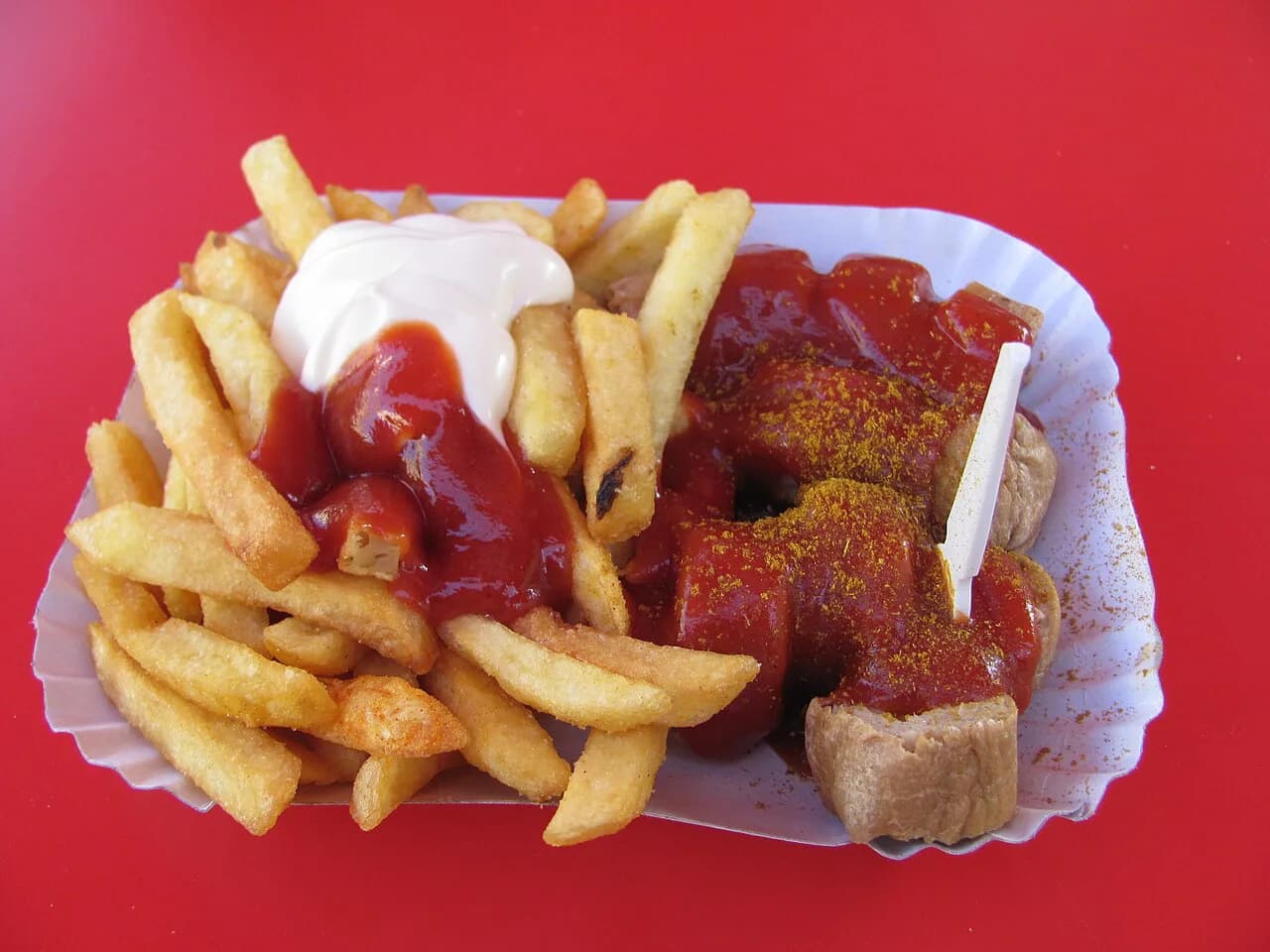
German Street Food: What to Order, From Currywurst to Döner
German street food runs from currywurst and Döner kebab to butter pretzels and Fischbrötchen. Here is what each snack is and how to order it at the counter.
On this page
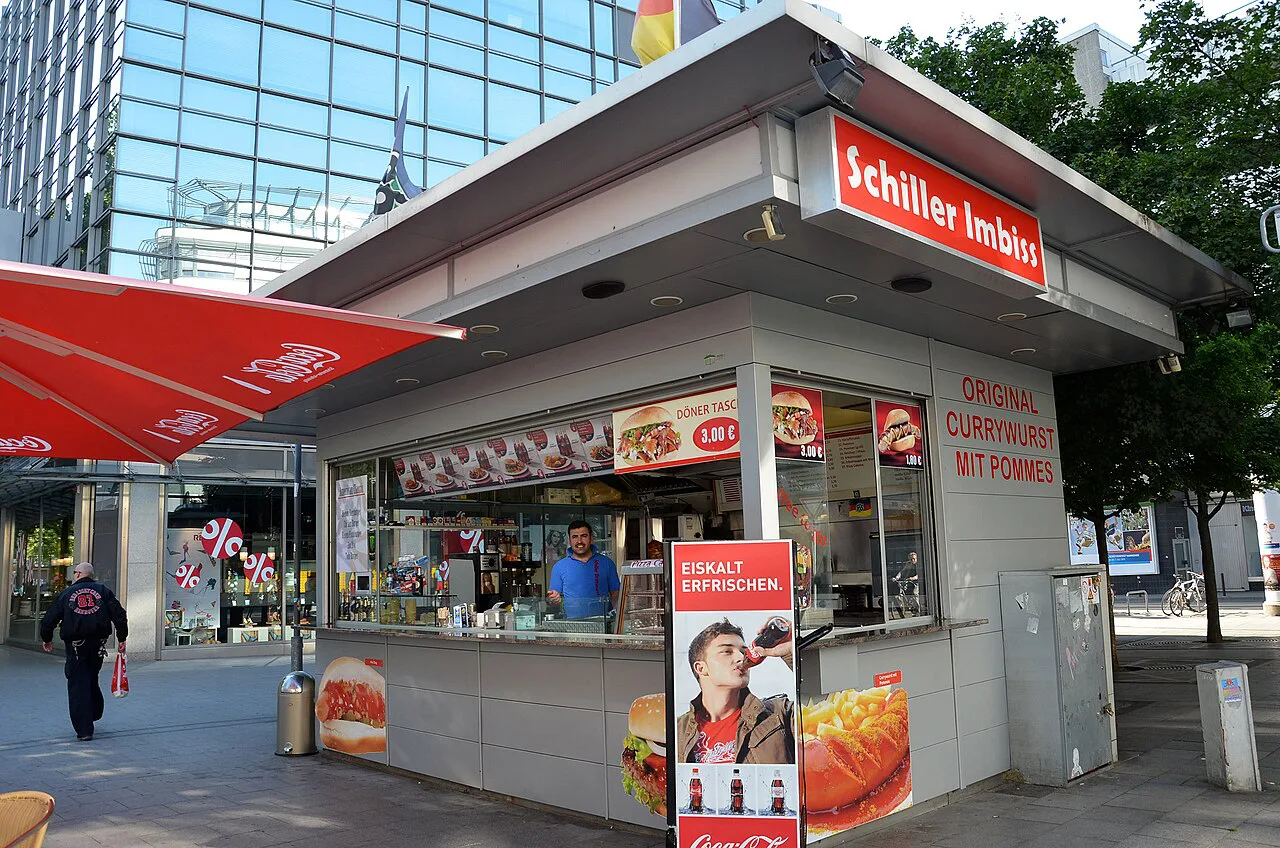
German street food is mostly counter food rather than food trucks: currywurst sliced into a curry-tomato sauce and eaten with a toothpick, a butter pretzel picked up at a bakery, a Döner kebab from the corner Imbiss. The format is the Imbiss, a small stand or shop where you order at the counter, often stand to eat, and pay before you leave. This guide covers the snacks worth knowing, what each one actually is, and how to slot one into a sightseeing day.
Sausages dominate, but the range is wider than bratwurst. You will find butter pretzels at bakery counters, Fischbrötchen at harbor stands in the north, and Leberkäse in a roll at butcher shops and Imbisse in the south. Each one is a small, cheap meal rather than a sit-down course, which is exactly why they work so well at lunch.
What Counts as German Street Food
The venues matter more than the dishes. An Imbiss is a compact stand or shop with a counter, a short menu, and often no seats or only a shelf to lean on; bakeries sell pretzels and rolls over the counter, and harbor stalls sell fish rolls to people walking the pier. None of these is a restaurant, and none expects you to linger.
Ordering is simple and fast: read the board, say the name of the item, and pay at the counter. Mustard, called Senf, is the usual accompaniment, and small stands often run on cash, so keep coins and small notes on you rather than relying on a card.
Currywurst: Sliced Sausage in Curry-Tomato Sauce
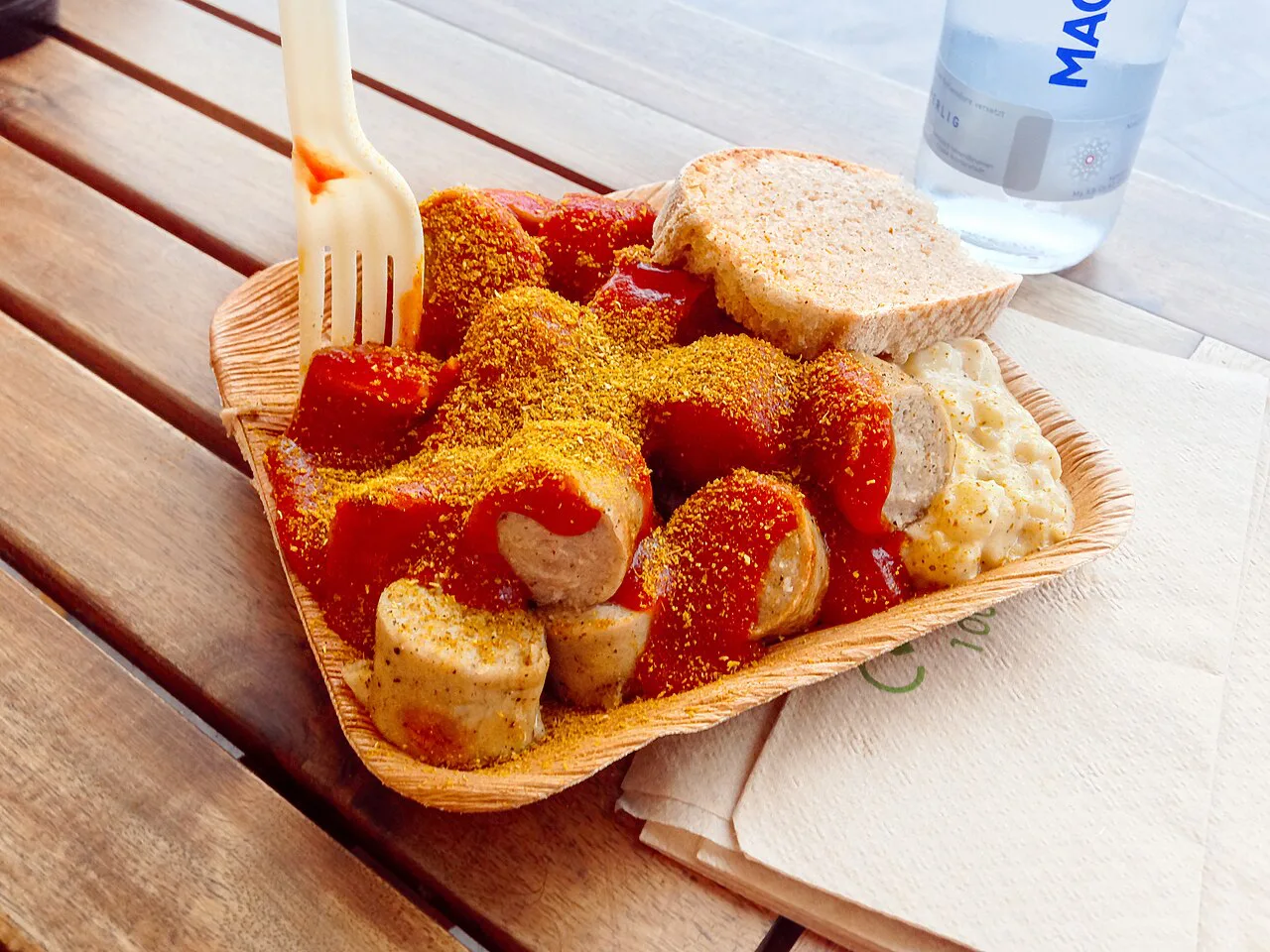
Currywurst is a sausage cut into slices and covered in a red curry-tomato sauce, eaten with a toothpick or a small plastic fork. It is sold all over Germany and is the most popular street food in Berlin. The sauce is the point: sweet, tangy, and dusted with curry powder, with the sausage providing the salt and snap.
Currywurst: Sliced Sausage in Curry-Tomato Sauce. Currywurst is a sausage cut into slices and covered in a red curry-tomato sauce, eaten with a toothpick or a small plastic fork.
Butter Pretzel: The Bakery-Counter Snack. A Butterbrezel is a large pretzel sliced open, filled with a thick cold slab of butter, and closed again.
Döner Kebab: The Everyday Imbiss Order. The Döner kebab is a pita or flatbread stuffed with shaved meat, salad, and sauce, assembled to order at Turkish-run Imbisse across the country.
It comes on a paper tray or a small cardboard dish, sometimes with a roll or fries alongside. Eat it standing at the stand's shelf, and keep the toothpick: spearing a slice is how the whole thing is designed to be eaten.
Butter Pretzel: The Bakery-Counter Snack
A Butterbrezel is a large pretzel sliced open, filled with a thick cold slab of butter, and closed again. It is a bakery-counter item, sold at small bakeries and station bakery counters rather than a market-only treat. The contrast between the chewy, salted crust and cold butter is the whole appeal.
Germans bake pretzels from flour, malt, salt, yeast, and water, then knot, boil, and bake them, which gives the dark, shiny crust. Buy one for breakfast or a train ride, and eat it within a few hours while the crust still has bite.
Döner Kebab: The Everyday Imbiss Order
The Döner kebab is a pita or flatbread stuffed with shaved meat, salad, and sauce, assembled to order at Turkish-run Imbisse across the country. It sits alongside Turkish pizza wraps on the same menus, and it has become ordinary German everyday food rather than an exotic option. Ask for it mild or spicy if the sauce choice is offered, and expect it to be wrapped in paper for eating on the move.
For a fuller picture of how the Döner became a German staple and what distinguishes the good versions, see this guide to the doner kebab in Germany. It is a fast, filling lunch and a good way to eat well between sights.
Bratwurst and Nuremberg Bratwurst
Bratwurst is a grilled sausage served in a crusty roll or on a paper plate with mustard. The Nuremberg version is the small one: short, thin, and usually served several to a portion, which changes how you order it. A standard bratwurst is one substantial sausage; the Nuremberg style is a handful of small ones, so ask for a portion rather than a single sausage.
Both are street food at its plainest, and both live or die on the roll and the mustard. Take the Senf seriously: a sharp, grainy mustard is the traditional partner at a bratwurst stand.
Fischbrötchen: The Northern Harbor Roll
A Fischbrötchen is a roll filled with fish, lettuce, and sometimes pickles and onions. It is a northern German order, sold at stands along the Hamburg harbor at Landungsbrücken, which is also the name of the subway stop there. Herring, salmon, and Rollmops, a pickled herring roll, are the classic fillings.
Eat one at the harbor rather than saving it, because the roll softens fast. This is coastal and harbor food, so do not expect it to be a nationwide staple; in Bavaria, the equivalent quick bite is a sausage in a roll.
Leberkäse in a Roll: The Southern Sandwich
Leberkäse is a baked meat loaf, sliced thick and served hot in a roll with mustard, and it is the butcher-shop and Imbiss sandwich of southern Germany. Ask for a Leberkässemmel and you get the slice in a roll, which is a full lunch for very little.
It is sold at butcher counters as well as Imbiss stands, and it is best when the slice comes straight from the oven, with a dark crust on the edge. Order it with mustard rather than ketchup if you want the standard version.
In the southwest, the butcher-and-bakery counter logic extends to a thin flatbread topped with crème fraîche, onions, and bacon, the Flammkuchen, baked crisp and cut into portions to eat by hand. See the site's guide to Flammkuchen for the dish and where to find it.
How to Order and Eat at an Imbiss
The rhythm is the same almost everywhere: look at the board, order at the counter, pay, and take your food to a standing shelf or a nearby bench. Menus are short and the names are the order, so you rarely need more than the dish name and a yes or no on sauce. Mustard and napkins are usually within reach, and there is often no cutlery beyond a small fork or toothpick.
Cash matters at small stands, and so does timing: Imbisse are busiest at midday, when office workers and school groups arrive at once. Going slightly before or after the noon rush gets you your food faster and a spot at the shelf. In station food courts, the bakery counter is the quickest option when you have a train to catch.
Where German Street Food Changes by Region
The north is fish-roll country: harbor stands sell Fischbrötchen with herring, salmon, and Rollmops, and the pier at Landungsbrücken in Hamburg is the classic setting. Berlin is currywurst country, with stands selling it across the city. The south leans on sausages and Leberkäse, with butcher counters and bakery pretzels doing much of the work.
Bavaria's bakery counters are where pretzels and rolls dominate, and a butter pretzel there is a morning habit rather than a novelty. None of this is rigid: you can find currywurst in Munich and Leberkäse in Berlin, but the local version is usually the better one.
Street Food Markets and Stalls Worth a Lunch
Markets and station bakeries are the practical way to build a street-food lunch without hunting for a specific address. Bakeries sell pretzels and filled rolls to commuters, and small neighborhood bakeries do the same with better bread. Harbor piers and city center Imbisse cover the cooked side, from currywurst to Döner.
Berlin's scene runs from traditional currywurst to newer international stalls, which makes it the easiest city for a grazing lunch. If you want one market meal rather than three snacks, pick the stall with the shortest menu and the longest local line, and eat standing.
A fried meat patty, the Frikadellen, is another butcher-counter buy that fits the same quick-meal slot, eaten warm in a roll or cold. It is the kind of thing to add to a bakery-and-butcher lunch rather than a destination in itself.
Quick Imbiss Lunch or Sit-Down Gasthaus Meal
An Imbiss lunch costs a fraction of a restaurant meal and takes fifteen minutes, which leaves more of the day for the places you came to see. A sit-down Gasthaus meal takes an hour or more and gives you a table, a proper plate, and a beer you can linger over. The trade-off is time against comfort, and on a short trip the stand usually wins at midday.
If you want the sit-down version of the same food culture, a Biergarten in Germany covers the beer and the roast chicken, the halbes Hendl, in a setting built for a long afternoon. Save that for the evening and keep the Imbiss for lunch.
Which Snack Should You Order First?
Start with currywurst if you are in Berlin, a Fischbrötchen at the Hamburg harbor, and a Leberkässemmel once you reach Bavaria. Add a butter pretzel from a bakery counter on any travel morning, and keep a Döner kebab as your fallback when time is short and the line is long.
Carry small cash, eat standing where the locals do, and treat the Imbiss as a meal rather than a snack between meals. That is how a fifteen-minute stop turns into one of the better food memories of the trip. Staying in Potsdam, next to Berlin? Our Potsdam restaurant guide covers its sit-down options.
Explore more Germany guides
Sources
Notes for your next German food trip
Optional updates to our guides.
You might also like



Continue reading
More guides you'll find useful





