
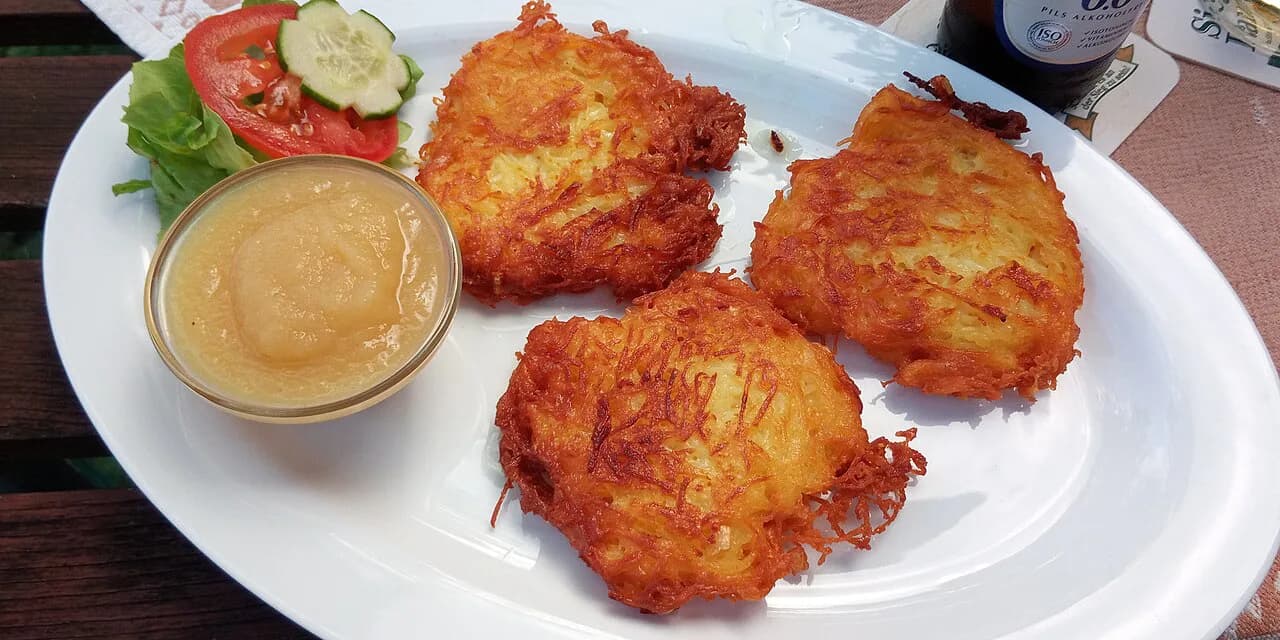
German Potato Pancakes: Kartoffelpuffer, Reibekuchen and How to Order Them
Kartoffelpuffer, also called Reibekuchen, are crisp fried potato cakes served with applesauce or sour cream. Here is what they are and what to order.
On this page
German potato pancakes are grated raw potatoes bound with egg and a little flour, fried in a shallow layer of fat until golden-brown and crisp, and served either sweet with applesauce or savory with sour cream or smoked salmon. They are a main course or a hearty snack in Germany, not a dessert, and they show up on lunch menus, at fair stalls and at Christmas market stands. This guide covers what they taste like, the many regional names you will see on menus, what to order alongside them, and how they differ from Jewish latkes.
What German potato pancakes are
At their core these are small, round cakes made mainly from potatoes and fried in fat until golden-brown, which is why they read as a crisp street or fair food as much as a home dish. Egg holds the grated potato together, and a spoonful of flour soaks up the juices so the cakes do not fall apart in the pan. Order them expecting a savory fried cake with a faint sweetness from the potato, not a fluffy breakfast pancake.
The names you will see on menus
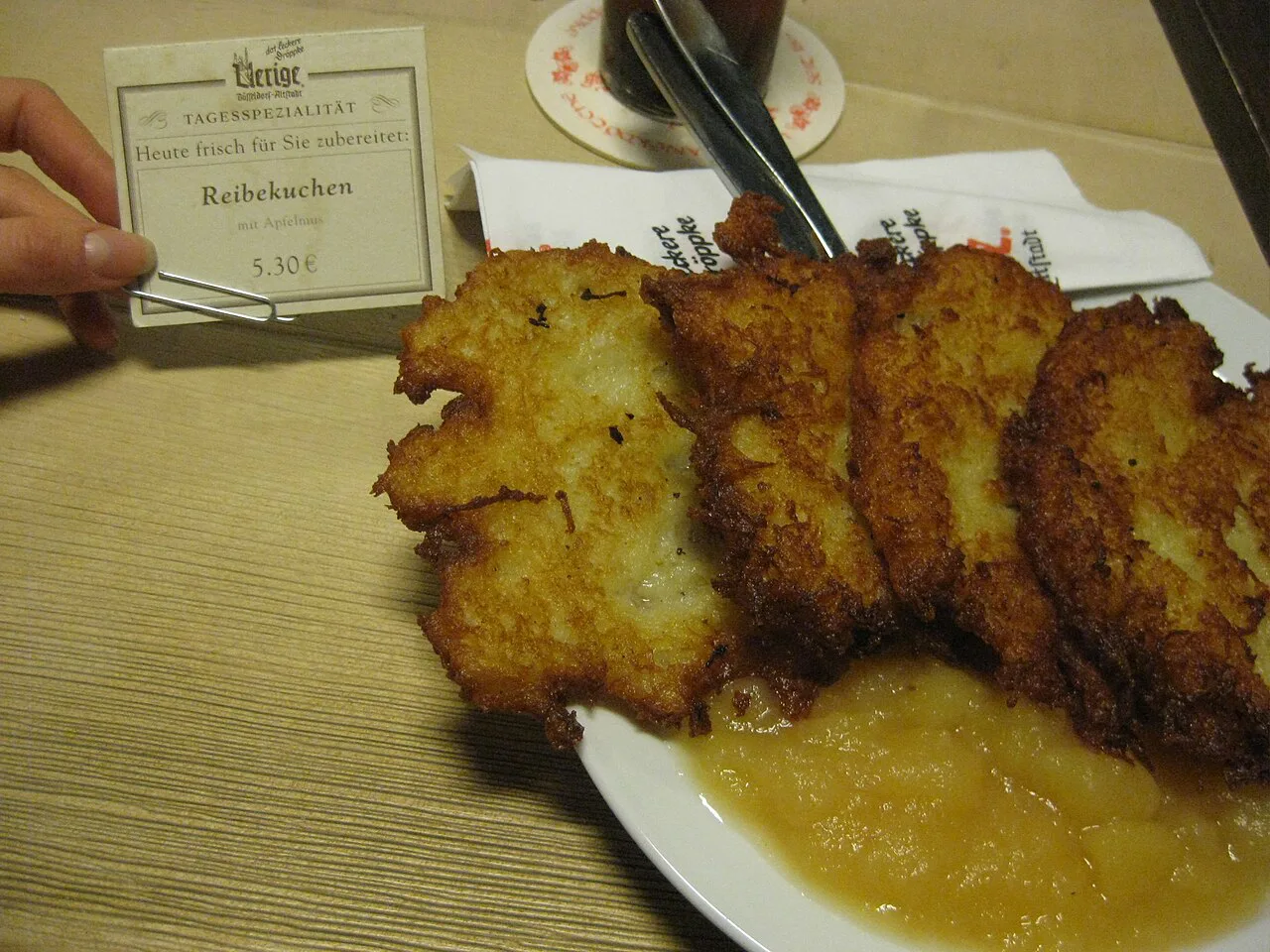
Kartoffelpuffer and Reibekuchen are the names you will meet most often, and both mean the same fried potato cake. Regional menus use their own words: Reiberdatschi or Datschi in Bavarian and Swabian dialects, Reibekiechle in the Palatinate, Reibebratze in Saxon, and Grumbeerekiechle in Alemannic. Across the Swiss border the same idea is called Rösti. If a menu offers Reibekuchen with applesauce, you have found the dish, whatever the spelling.
Are latkes and German potato pancakes the same? They are closely related: both are grated potato cakes fried in oil, and German potato pancakes are often described as the German version of the Jewish latke. The mix and the toppings differ, but the basic idea is the same.
What are potato pancakes called in German? Kartoffelpuffer and Reibekuchen are the two most common standard names. Regional menus also use Reiberdatschi, Reibekiechle, Reibebratze and Grumbeerekiechle, and in Switzerland the dish is called Rösti.
What do you eat with German potato pancakes? Applesauce is the traditional accompaniment, and cinnamon sugar or lingonberry jam works for a sweet version. For a savory plate, order sour cream, Quark or smoked salmon with sour cream, and in the Rhineland look for Rübensirup, a sugar beet syrup.
What they taste like
A good Kartoffelpuffer is crisp on the outside and soft and savory inside, with a hint of sweetness from the potato itself. That texture is the whole point: the crust should crackle when you cut it, and the middle should stay tender rather than dense. They are at their best eaten hot and fresh, straight from the pan or the stall, because the crust softens as they sit.
What to order with them
Applesauce, called Apfelmus in German, is the traditional partner and the sweet default most Germans reach for. For a savory plate, order sour cream or Quark, a thick fresh dairy product somewhere between yogurt and cream cheese, or add smoked salmon with sour cream. Cinnamon sugar turns them into a sweet snack, and lingonberry jam works much the same way.
In the Rhineland, people serve them with Rübensirup, a sugar beet syrup similar to molasses but milder, which is worth trying once to see the sweet-savory line blur. If you order them as a side rather than a main, they sit easily next to the wider world of German sides, from dumplings to cabbage.
Where Germans eat them
Germans typically eat potato pancakes as a main course at lunch or dinner, or as a hearty snack in between. They are a popular dish in the Christmas season, when stalls and festive menus serve them hot, and you will also find them at fairs and festivals, especially in the south. Treat them as a plate of food or a substantial bite, not something to finish a meal.
Kartoffelpuffer vs latkes
The two are close cousins: both are grated potato cakes fried in oil, and German potato pancakes are often described as the German version of the Jewish latke. The differences are in the details of the mix and the tradition rather than in the basic idea of frying grated potato. If you know latkes, you already know roughly what to expect from a Kartoffelpuffer; the toppings are where they part ways.
How they are made
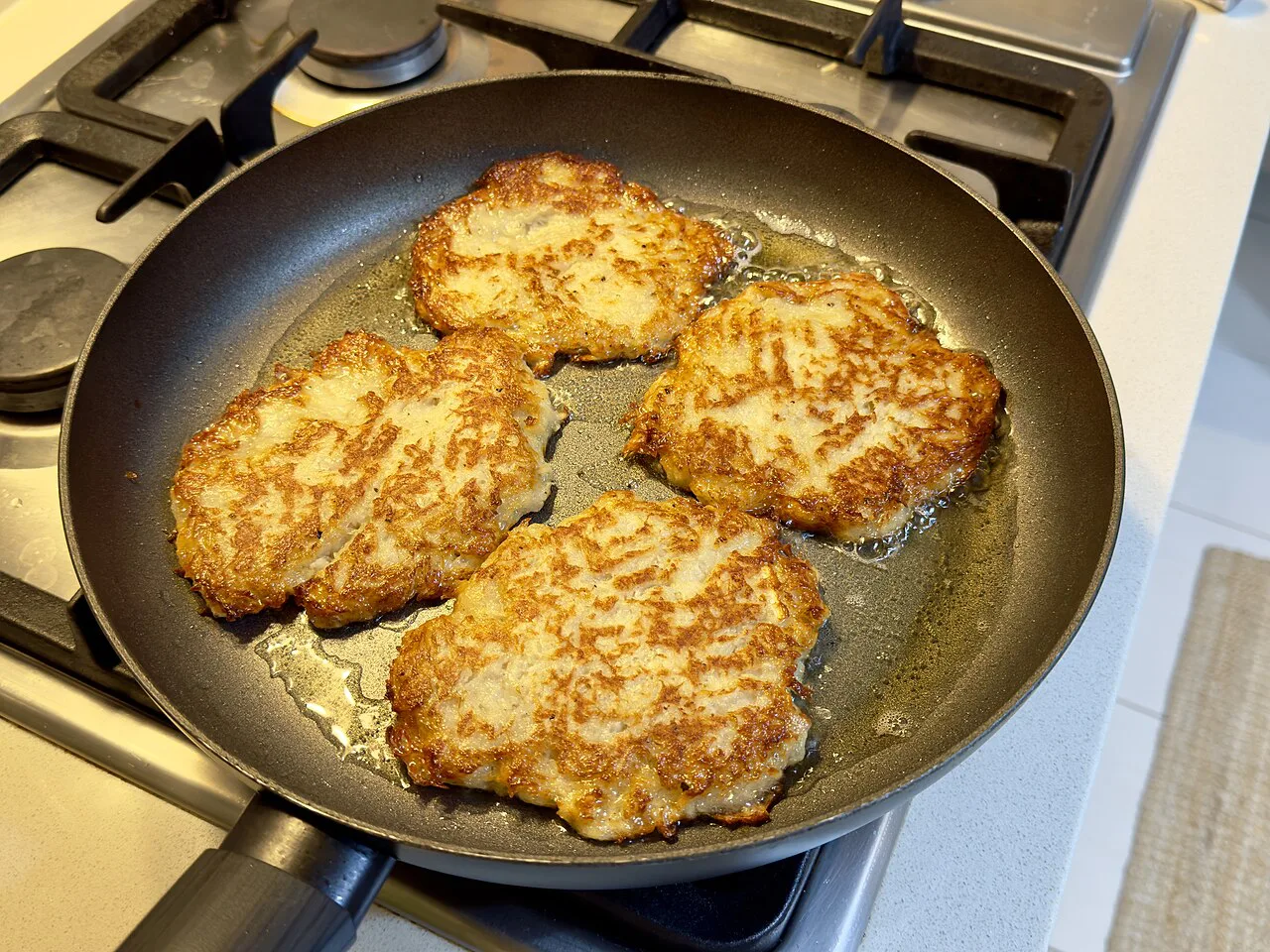
The home cook's method is short: peel and grate starchy potatoes such as Russets, let the watery juices drain, then mix with egg, a little flour, salt and often grated onion. The step that decides whether you get crisp cakes or soggy ones is squeezing the water out of the grated potato, which is easier in small batches. Pour off the drained juices and fry in enough oil to shallow-fry the cakes rather than leave them sitting dry, and keep the finished ones hot.
If you are cooking a German plate at home and want the full spread, these cakes share the potato-and-fat logic of bratkartoffeln, pan-fried potatoes with onion, and they work well beside Spätzle: Germany's Egg Noodles and How to Order Them when you want something to soak up a sauce.
Regional names
Regional naming is where travelers get tripped up. Kartoffelpuffer and Reibekuchen are the standard German names, while regional menus add their own: Reiberdatschi in Bavarian and Swabian dialects, Reibekiechle in the Palatinate, Reibebratze in Saxon, and Grumbeerekiechle in Alemannic. The basic recipe stays recognizable across all of them, so order with confidence rather than hunting for a translation.
How to order and eat them in Germany
On a menu, look for them among main courses or in a snacks and small plates section; Germans eat them as a main course at lunch or dinner, or as a hearty snack. Decide sweet or savory when you order, since the topping is usually listed with the dish and the kitchen plates it that way.
They belong to the same hearty potato tradition as German dumplings and sauerkraut, so expect them to appear beside pork dishes and in the potato-heavy cooking of southern Germany. Order a beer or an Apfelschorle alongside, and skip the urge to treat them as a light starter.
Order them sweet or savory
Order Kartoffelpuffer with applesauce if you want the traditional version, or with sour cream and smoked salmon if you want a savory lunch that feels like a full meal. On a menu, scan for Reibekuchen or a regional name, and expect a portion of fried potato cakes rather than a light side. Either way, eat them hot and let the crisp crust be the point.
Explore more Germany guides
Frequently Asked Questions
Are latkes and German potato pancakes the same?
They are closely related: both are grated potato cakes fried in oil, and German potato pancakes are often described as the German version of the Jewish latke. The mix and the toppings differ, but the basic idea is the same.
What are potato pancakes called in German?
Kartoffelpuffer and Reibekuchen are the two most common standard names. Regional menus also use Reiberdatschi, Reibekiechle, Reibebratze and Grumbeerekiechle, and in Switzerland the dish is called Rösti.
What do you eat with German potato pancakes?
Applesauce is the traditional accompaniment, and cinnamon sugar or lingonberry jam works for a sweet version. For a savory plate, order sour cream, Quark or smoked salmon with sour cream, and in the Rhineland look for Rübensirup, a sugar beet syrup.
Are German potato pancakes vegan?
The classic recipe uses egg, so a standard Kartoffelpuffer is not vegan. For a vegan version, look for one that replaces the egg, or ask the kitchen.
Is a potato pancake recipe gluten free?
Most recipes include a small amount of wheat flour to bind the grated potato, so a standard version is not gluten free. Potato starch can replace the flour, but confirm the ingredients with the kitchen or the recipe you are following.
Where do potato pancakes sit on a German menu?
Kartoffelpuffer are a main dish or a hearty snack rather than a dessert, so look for them in the main courses or in a small plates section. Choose your topping when you order, because the sweet or savory side is usually plated with the cakes.
Sources
Notes for your next German food trip
Optional updates to our guides.
You might also like



Continue reading
More guides you'll find useful





