
Pfifferling Guide: Germany's Chanterelles & How to Eat Them
A Pfifferling is a chanterelle, the golden wild mushroom that appears on German menus in late summer. Here is what it tastes like and how to order it.
On this page
A Pfifferling is a chanterelle, the golden wild mushroom that German menus celebrate in late summer and early fall. You will most often meet it in a cream sauce over pasta, in a mushroom ragout or alongside a schnitzel, and knowing the word makes those dishes easy to spot. This guide covers what the mushroom looks like, why it commands a higher price than cultivated varieties, and the menu terms worth ordering.
German cooks treat Pfifferlinge as a seasonal treat rather than an everyday ingredient, which is why they tend to appear on specials boards and in dishes of the day. Fresh chanterelles are best eaten soon after gathering, and a simple preparation lets their character show. It belongs to the same late-summer table as the rest of Germany's seasonal food, from game to harvest dishes.
What a Pfifferling is
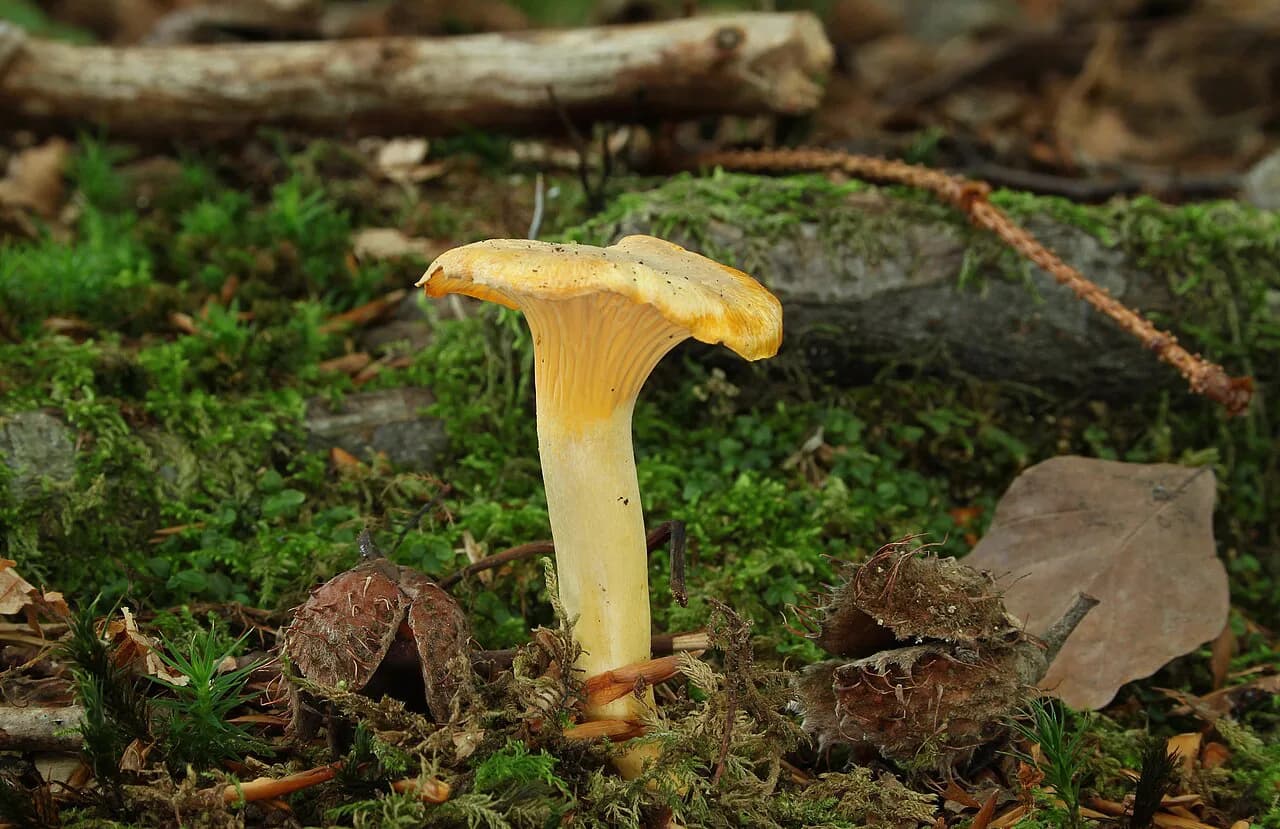
A Pfifferling is the German name for the chanterelle, known in Latin as Cantharellus cibarius and in English simply as the chanterelle. It grows in forests in a partnership with trees rather than on a farm, which is the single biggest reason it stays a wild ingredient rather than a supermarket staple. Because foragers bring it in by hand, quantities vary through the season and from region to region.
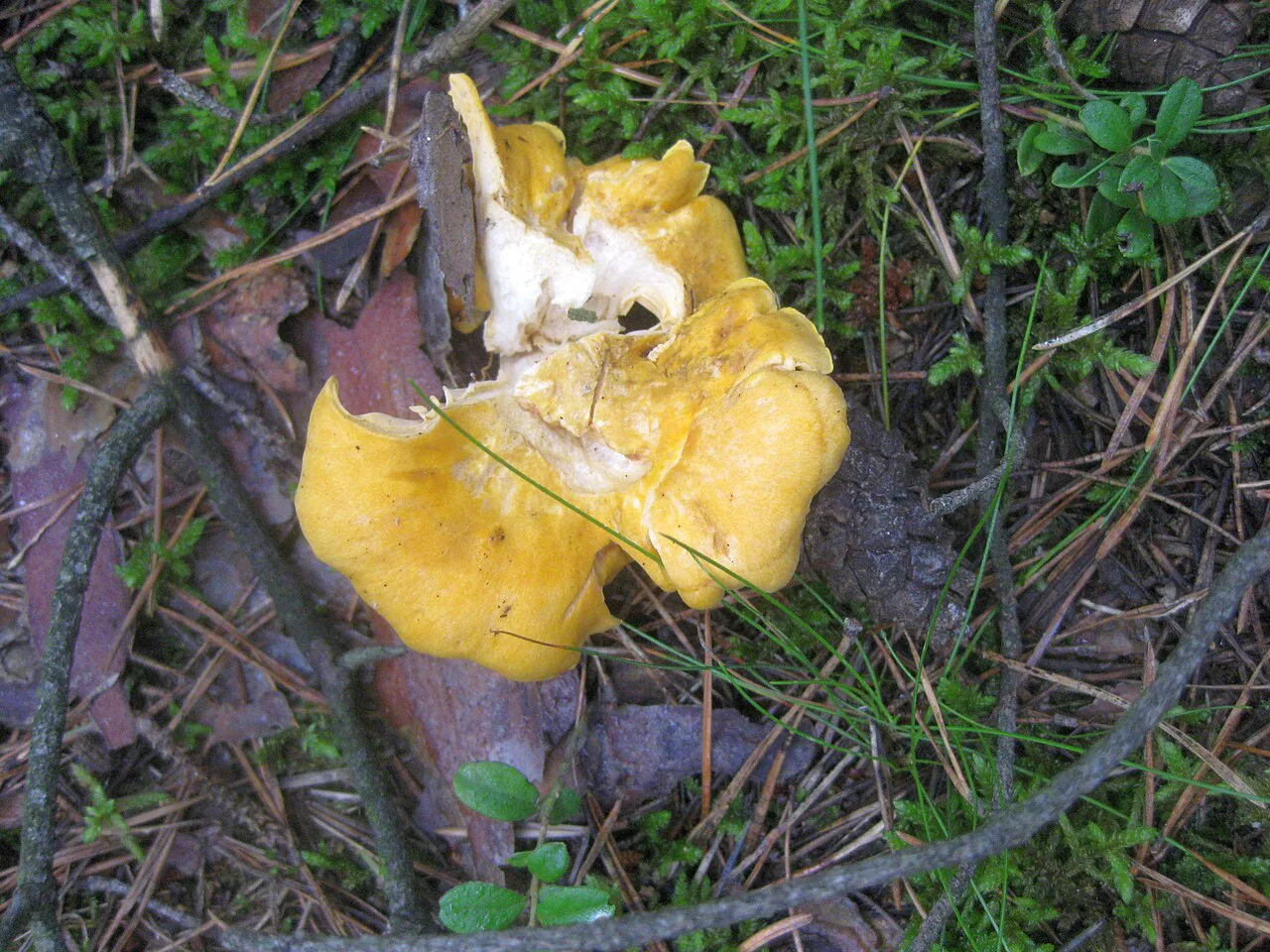
The mushroom has a warm yellow color all the way through, including the flesh inside the stem, and that uniform color is one of the easiest things to check. A funnel-shaped cap with an irregular, lobed rim gives it a slightly ruffled outline compared with the neat round caps of button mushrooms. The stem is solid, so a Pfifferling feels firm and meaty when picked whole.
How to recognize a Pfifferling
Look underneath the cap first, because that is where the true chanterelle separates itself from the pretenders. Instead of the thin, blade-like gills of an ordinary mushroom, the Pfifferling has blunt, ridge-like folds that run down onto the stem and look almost like veins pressed into the surface. Those ridges are thick enough to scrape with a fingernail, while real gills are paper-thin and separate.
Are chanterelles the same as Pfifferlinge? Yes. A Pfifferling is the German word for a chanterelle, classified as Cantharellus cibarius.
Why are chanterelles so expensive? Chanterelles are foraged from forests rather than cultivated, so they must be found and picked by hand in limited quantities. They spoil quickly, which adds cost from forest to kitchen.
Are there chanterelle look-alikes to watch out for? The false chanterelle, Hygrophoropsis aurantiaca, can be mistaken for a true chanterelle. True chanterelles have blunt ridges that run down the stem, while the false one has thin, true gills.
The flesh is yellow inside and firm, not spongy or watery, and the mushroom should look clean and intact when you buy it. Skip specimens with dark, soft patches or a slimy cap, since those are past their best.
When Pfifferlinge are in season
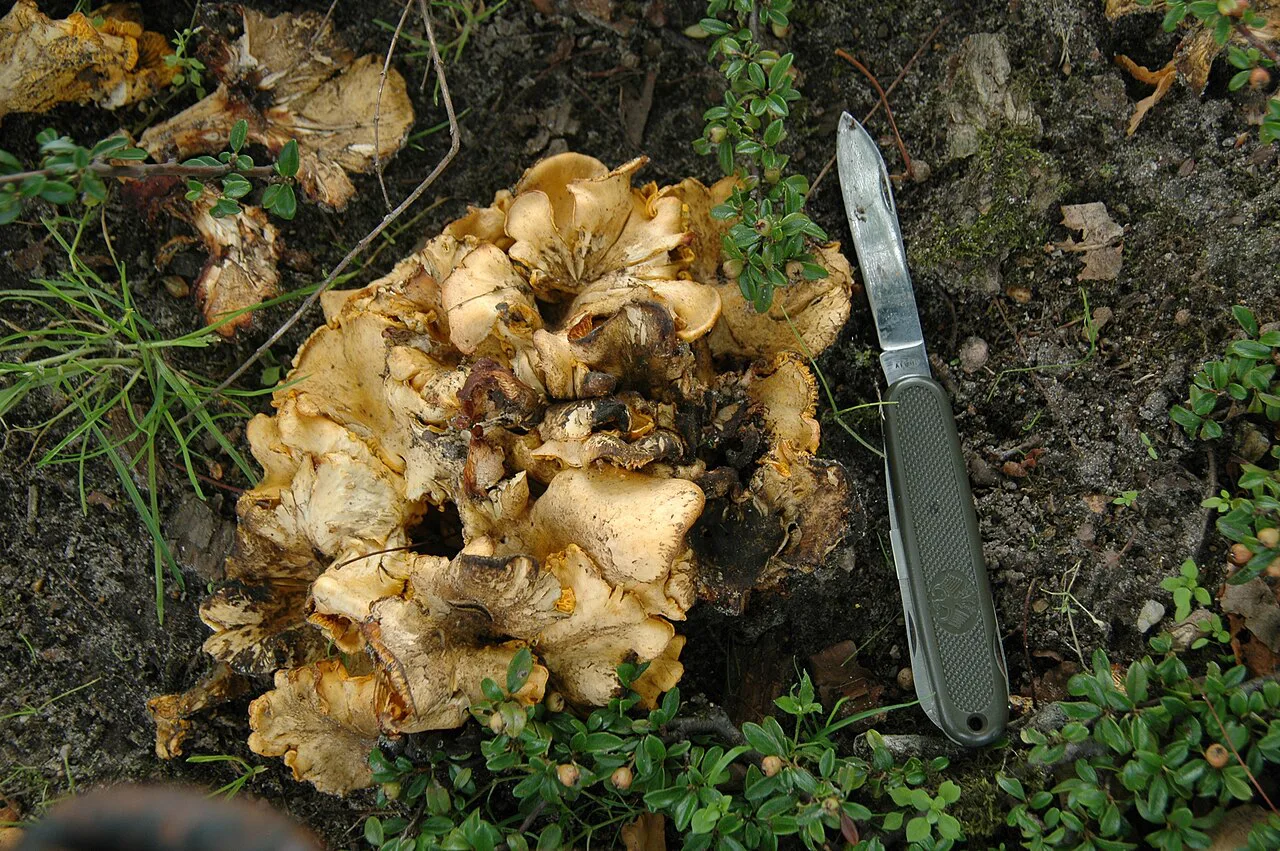
Chanterelles are a warm-weather mushroom, and in Finland the wild season runs from about the end of June to the end of September, which gives some sense of the European window. In Germany, restaurants put Pfifferlinge on when their suppliers deliver, so a dish can appear and vanish within a couple of weeks.
Do not assume a Pfifferling dish on a menu means it is the height of the season; preserved and imported supplies keep the name on the page beyond the local harvest. Dried or frozen chanterelles are available year-round, and their flavor is flatter than fresh ones. If fresh is what you want, ask before you order.
How Pfifferlinge taste and why they cost more
The flavor is delicate rather than bold, with a characteristic fruity aroma that strengthens when the mushrooms are cooked, so simple butter, shallots, cream and parsley usually bring out the best in a Pfifferling. They also keep their shape reasonably well in the pan, giving a bit of bite rather than turning to mush.
Chanterelles are not a supermarket staple: they must be found in the right forest at the right moment and picked by hand, which means a lot of labor for a small, perishable harvest. Wild mushrooms also bruise and spoil quickly, adding cost at every step from forest to kitchen. The trade-off for the diner is a short, expensive pleasure that is at its best for only a few weeks.
The German dishes to order
The compound most worth knowing is Pfifferlingsahnesauce: Pfifferling is chanterelle, Sahne is cream, and Sauce is sauce, so it means a cream sauce built from chanterelles. It is the kind of sauce typically spooned over pasta, Spätzle or a bread dumpling, and sometimes served with a chop or schnitzel.
Other common menu mentions include Pfifferlinge in Rahm, meaning chanterelles in cream, and Pfifferlingspfanne, a pan-fried chanterelle dish. A mushroom ragout over Spätzle is another frequent sight in late summer. Look for dishes flagged as Saison, which signals a seasonal item.
If you prefer to cook them yourself, Pfifferlinge turn up in German markets and some grocery stalls during the season. A chanterelle needs no special pretreatment, and it takes well to drying, freezing or marinating. A simple sauté in butter or oil lets the fruity aroma come through.
Pfifferling versus the false chanterelle
The false chanterelle, Hygrophoropsis aurantiaca, is the look-alike that trips people up. From above it can look deceptively like a true chanterelle, but underneath it has densely spaced true gills rather than the thick, ridge-like folds of a real Pfifferling.
Given how easily the two are confused, the practical takeaway for a traveler is simple: leave identification to the market or the restaurant kitchen, and enjoy the mushroom on a plate rather than in a basket. Only ever eat a wild mushroom you can positively identify.
Which mushroom dish to order
The next time a German menu lists Pfifferlinge, order the Pfifferlingsahnesauce over pasta or Spätzle to taste the mushroom at its simplest. It is a seasonal splurge rather than a budget dish, and it rewards a cook who leaves it mostly alone. For the rest of the autumn table, look at what else Germans eat when the weather turns, including Martinsgans, the roast goose of St. Martin.
Outside chanterelle season, the German menu keeps its rhythm with other named specialties, from Frankfurt Green Sauce to Bärlauch, but Pfifferlinge are worth catching while they last. Order them fresh, keep the sauce simple, and let the mild earthiness do the work.
Explore more Germany guides
Frequently Asked Questions
Are chanterelles the same as Pfifferlinge?
Yes. A Pfifferling is the German word for a chanterelle, classified as Cantharellus cibarius. The name appears on German menus in dishes such as Pfifferlingsahnesauce.
Why are chanterelles so expensive?
Chanterelles are foraged from forests rather than cultivated, so they must be found and picked by hand in limited quantities. They spoil quickly, which adds cost from forest to kitchen.
Are there chanterelle look-alikes to watch out for?
The false chanterelle, Hygrophoropsis aurantiaca, can be mistaken for a true chanterelle. True chanterelles have blunt ridges that run down the stem, while the false one has thin, true gills.
Sources
Notes for your next German food trip
Optional updates to our guides.
You might also like



Continue reading
More guides you'll find useful





