
Green Sauce Frankfurt: How to Order Grüne Soße in Germany
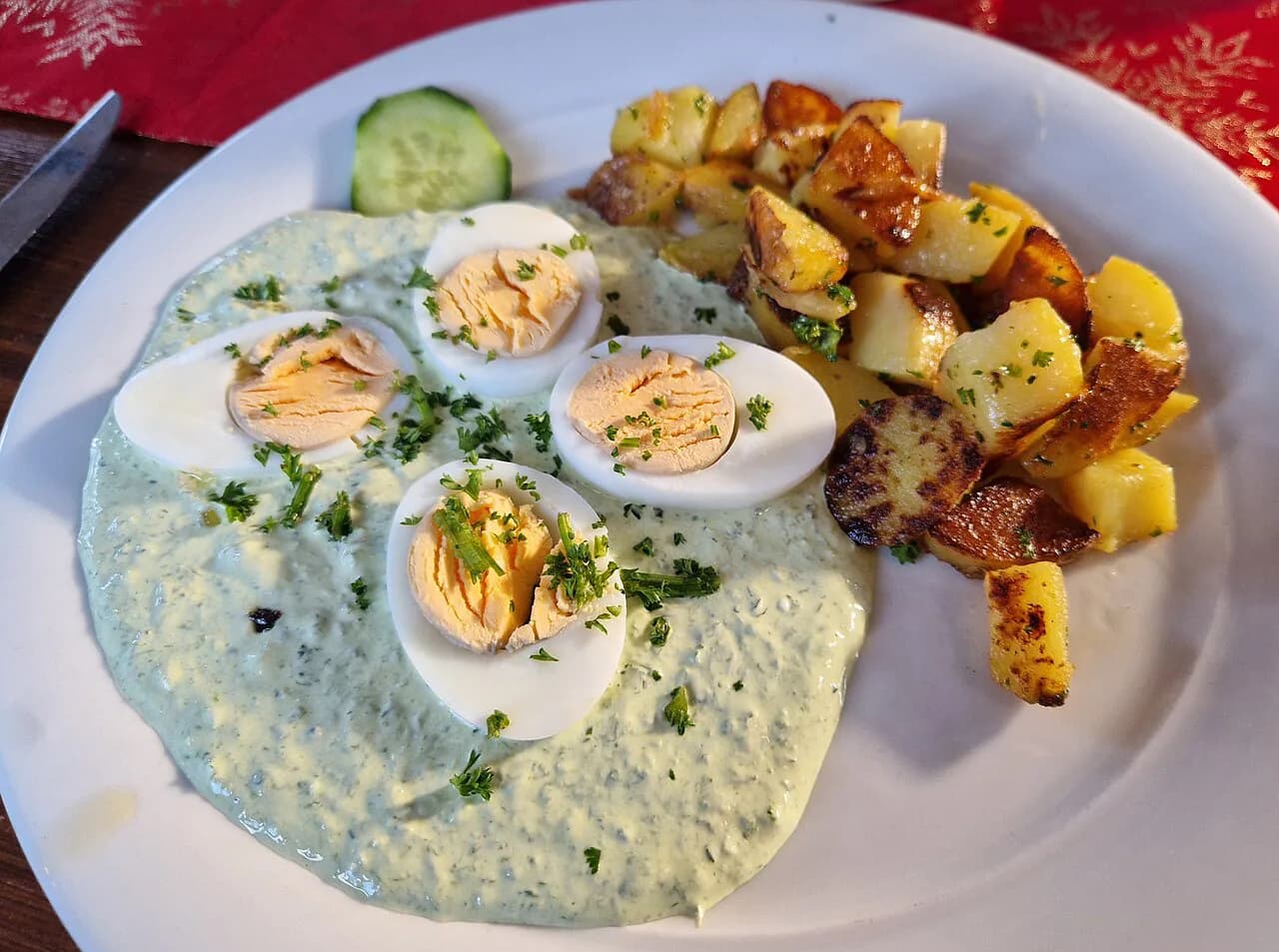
Frankfurt's green sauce, Grüne Soße, is a cold herb sauce of seven specific herbs bound with sour cream, yogurt or mayonnaise and served with eggs and potatoes.
On this page
Frankfurt green sauce is Grüne Soße, called Grie Soß in the local dialect: a cold, creamy sauce of seven finely chopped herbs, usually served with boiled potatoes and hard-boiled eggs or spooned over schnitzel, beef, fish or asparagus. It belongs to the country's wider seasonal food calendar, because the herbs peak in spring rather than in deep winter.
What follows covers the fixed herb list, the dairy base, the serving formats, the origin stories and the taverns that put it on the plate. Ordering it is simple once you know the sauce arrives cold and that the potatoes and eggs are part of the dish.
What Frankfurt Green Sauce Is
Grüne Soße is a cold sauce, not a warm gravy, which surprises people expecting a herb béchamel. The herbs are chopped fine and stirred into a dairy base, then the sauce is served chilled alongside or over the main ingredient. In Frankfurt the dish is so tied to the city that the sauce carries protected geographical indication status in Germany: genuine Frankfurter Grüne Soße must be made with the seven specific herbs grown in a defined region around the city.
That protection covers the name and the herb blend, not a single recipe, so texture ranges from coarse and spoonable to smooth enough to pour. For a visitor, a plate of Grüne Soße in Frankfurt is a regional specialty with rules behind it, not a generic green dip.
The Seven Herbs That Define It
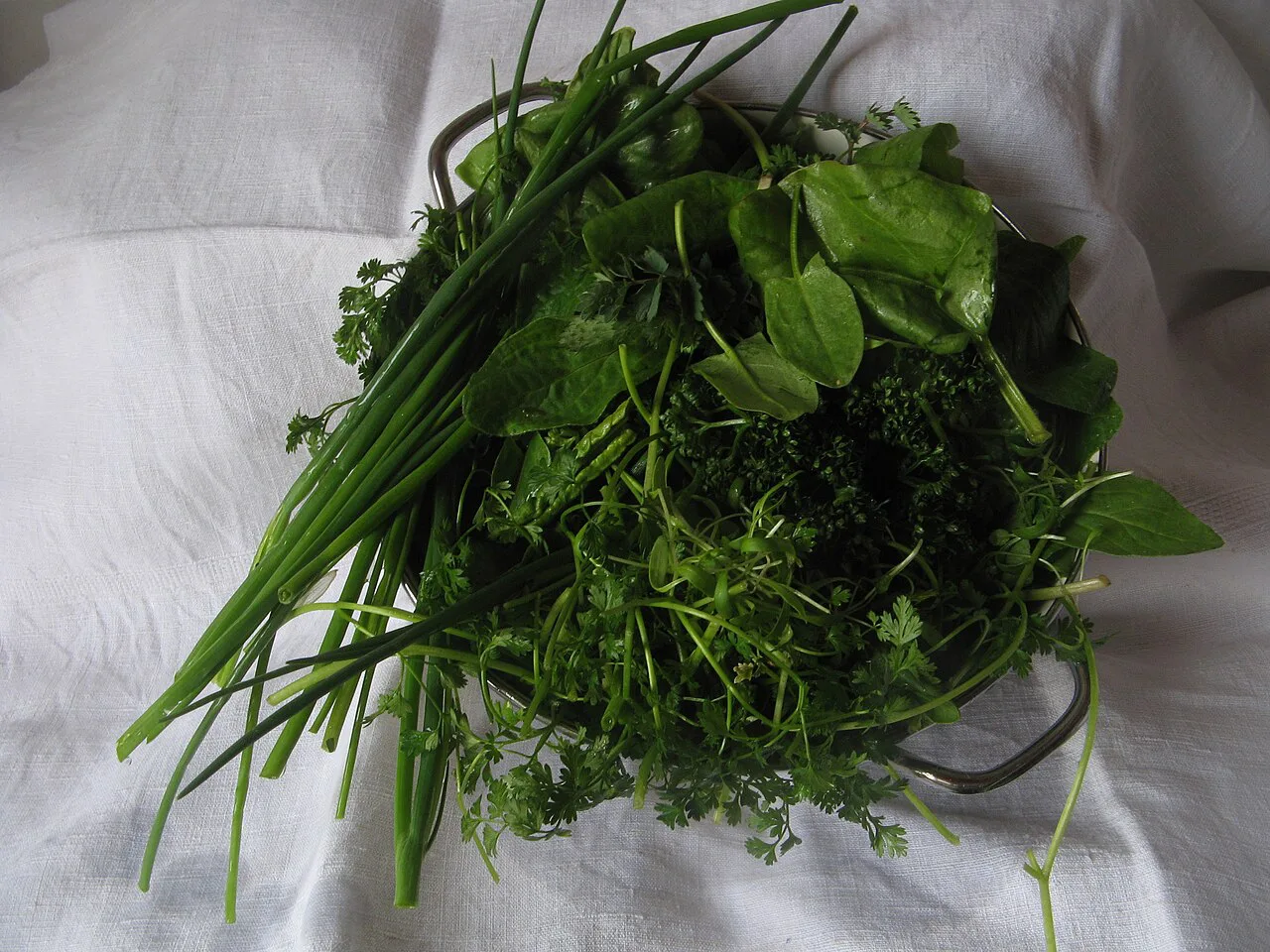
The canonical list is parsley, chives, garden cress, sorrel, chervil, borage and salad burnet, and that seven-herb set is the fixed rule; families and kitchens vary the proportions and everything else. Borage brings a faint cucumber note, sorrel a lemony tartness, salad burnet something nutty and chervil a gentle anise edge, so the mix tastes more complex than ordinary kitchen herbs.
What's in Frankfurt green sauce? Grüne Soße is made from seven herbs: parsley, chives, garden cress, sorrel, chervil, borage and salad burnet. They are chopped and mixed with sour cream, yogurt or crème fraîche, often with oil, lemon juice, egg and seasoning.
What are some other green sauces around the world? Argentina has chimichurri, Italy has salsa verde, India has mint chutney and Yemen has zhoug, all herb-based sauces with their own character. Frankfurt's version stands apart through its dairy base and the fixed seven-herb blend.
Because two of the seven are unusual, dried or supermarket substitutions change the dish noticeably. Without borage or salad burnet the sauce is still green and herby, but it will not taste like the Frankfurt original. Buy the herbs as a bundle rather than picking individual packets if you want the intended balance.
How It's Made
The chopped herbs are bound with sour cream, yogurt, crème fraîche or mayonnaise, often thinned with oil, lemon juice and sometimes white vinegar. Egg is common: some cooks mash hard-boiled yolk into the sauce, others stir in chopped white, and some recipes use mustard in place of egg for body. Salt and pepper finish it, and chopped raw onion or a spoon of quark appears in some home versions.
The one point of doctrine among purists is the knife: some cooks insist the herbs must be chopped by hand rather than blended, because a food processor bruises them and turns the sauce darker and looser. Restaurants differ, which is why two plates of Grüne Soße in the same city can look and taste quite different.
How It's Served
The classic plate is cold Grüne Soße with boiled potatoes and two hard-boiled eggs, and that combination is a full meal on its own. The sauce can also go over Frankfurter schnitzel, a schnitzel topped with green sauce, or over roast beef, fish or asparagus. In spring, asparagus is the natural partner, and the sauce works as a cool counterpoint to the warm spears.
If you want the traditional experience, order the plate with potatoes and eggs and eat the sauce cold as intended. If you want it as an accompaniment, ask for it over schnitzel and expect a generous spoonful rather than a thin drizzle. The menu wording at each place is the reliable guide to portions and garnish.
Where the Recipe Comes From
Nobody knows the sauce's exact origin. One legend credits French Huguenots who brought a green sauce to Germany in the 16th century, another points to Italian traders, and a popular Frankfurt tale says Goethe's mother invented it and that it was his favorite food. The documentary record is less romantic: the first German cookbook recipe for green sauce did not appear until 1860, almost 30 years after Goethe's death.
The likely ancestor is a southern European green sauce, related to French salsa verte or Italian salsa verde, reworked in Frankfurt with a creamier base. Treat the legends as tavern-table storytelling and the cookbook date as the hard fact. Either way, the sauce settled into Frankfurt's kitchens long before anyone thought to protect its name.
Why It Belongs to Frankfurt
Frankfurt's farmers markets and food stores sell the seven herbs in bundled packets, usually wrapped in white paper, during the season. That is how home cooks get the exact mix without hunting down borage and salad burnet separately. Buy a bundle if you have a kitchen, or simply note that the bundles are a spring fixture of the city's market stalls.
It also sits naturally beside other German spring foods. The same weeks bring Bärlauch, wild garlic, into forests and markets, and cooks who like the green, herbal end of German cooking tend to enjoy both. The chanterelle, called Pfifferling in German, belongs to a later part of the mushroom season.
Where to Eat It in Frankfurt
Frankfurt's traditional apple wine taverns are the natural setting for Grüne Soße. In the 2018 green sauce competition, Gasthaus Zum Einhorn in Bonames took the overall title, with Zum Lahmen Esel in Niederursel second and Apfelwein Adolf Wagner in Sachsenhausen third. These are historical results, not a current ranking, but the three taverns are established addresses for the dish.
Zum Einhorn occupies a timbered house in Bonames that dates from 1549 and is run by the same family that took over the tavern from the previous generation in 1990. Zum Lahmen Esel has operated as a traditional apple wine tavern since 1807, also in a half-timbered building. Apfelwein Adolf Wagner sits on Schweizer Straße in Sachsenhausen, the district with the densest cluster of apple wine taverns.
Expect the sauce in the classic format, with boiled potatoes and eggs or over schnitzel, and expect the recipe to vary by kitchen. Apple wine is the traditional drink alongside, poured from a ribbed glass; it is tart and low in alcohol, and a small glass with the meal is the normal way to have it.
How the Sauce Differs from Kitchen to Kitchen
The variables are consistent even when the results are not: knife-chopped or blended herbs, mayonnaise or not, egg inside the sauce or on the side, more sour cream or more yogurt. A mayonnaise-based version tastes richer and holds together longer; a yogurt-heavy one is sharper and lighter. Neither is wrong, and both appear in reputable Frankfurt taverns.
If you have a preference, ask before ordering whether the egg comes in the sauce or on the plate and whether the kitchen leans on mayonnaise. This is also how to find out how the plate is garnished without guessing from a translated menu.
Making It at Home
To make Grüne Soße yourself, chop small amounts of parsley, chives, cress, sorrel, chervil, borage and salad burnet as finely as you can. Mix them with sour cream or crème fraîche, a little yogurt, oil, lemon juice, salt and pepper, and add mashed hard-boiled egg or chopped onion if you like. Rest the sauce in the fridge so the herbs infuse the dairy, then taste and adjust the lemon.
Boil waxy potatoes and hard-boil the eggs while the sauce chills, then serve everything cold or at room temperature. If borage and salad burnet are unavailable, the result is an approximation rather than the Frankfurt article. A food processor works, though hand chopping gives a brighter color and looser texture.
The Grüne Soße Festival
Frankfurt celebrates the sauce with an eight-day festival each mid-spring, built around a blind-tasting competition among restaurants from the Frankfurt area. In 2026, 49 restaurants competed across eight evenings, with 650 guests tasting seven sauces a night and voting for a nightly winner before a champion was crowned; Darmstädter Ratskeller Hausbrauerei took the title that year.
The evening tastings require tickets, but the festival also runs a market and live music during the day that visitors can attend without buying one. Evenings include comedy, music and cabaret alongside the sauce judging. If you want to be one of the 650 tasters, book through the festival's own site rather than assuming you can walk in.
Green Sauce or Schnitzel First?
If you have one meal in Frankfurt, order the classic plate of Grüne Soße with boiled potatoes and two hard-boiled eggs, because that is the format the city treats as its own. If you want the sauce as a topping, ask for Frankfurter schnitzel and taste it over meat instead. Either way, an apple wine tavern in Sachsenhausen or a timbered Gasthaus in Bonames or Niederursel gives you the right setting.
Spring is the best-timed visit, when the herb bundles are in the markets, asparagus is on menus and the festival runs its evening tastings. Outside that window, the sauce is still on tavern menus, and the seven-herb rule is what makes it worth ordering.
Explore more Germany guides
Frequently Asked Questions
What's in Frankfurt green sauce?
Grüne Soße is made from seven herbs: parsley, chives, garden cress, sorrel, chervil, borage and salad burnet. They are chopped and mixed with sour cream, yogurt or crème fraîche, often with oil, lemon juice, egg and seasoning. Some kitchens add mayonnaise, mustard or onion, and families vary the proportions even though the seven-herb set stays fixed.
What are some other green sauces around the world?
Argentina has chimichurri, Italy has salsa verde, India has mint chutney and Yemen has zhoug, all herb-based sauces with their own character. Frankfurt's version stands apart through its dairy base and the fixed seven-herb blend. The closest European relatives are the French and Italian green sauces that likely inspired it.
Sources
Notes for your next German food trip
Optional updates to our guides.
You might also like



Continue reading
More guides you'll find useful





