

German Easter Food: What to Serve in Germany
German Easter food centers on sweet yeast breads like Osterbrot, Osterzopf and Osterkranz. Learn what each shape is and how it reaches the table.
On this page
German Easter food centers on a sweet, enriched yeast bread served at Easter breakfast or brunch, not on a savory main course. The three names you will see most are Osterbrot (Easter bread), Osterzopf (Easter braid) and Osterkranz (Easter wreath), and they describe shapes of the same basic idea. This guide explains what each shape is, what goes into the dough, how the bread reaches the table, and how to bake one yourself without wrecking the braid.
The bread is made from a soft yeast dough enriched with milk, butter, eggs and sugar, sometimes scented with cardamom and finished with sliced almonds or coarse sugar. It is a home-baking project rather than a restaurant dish, so the useful information is about shaping, rising and timing rather than where to book a table.
What German Easter food actually is
The centerpiece is a sweet yeast bake, and it is treated as essential rather than optional: Easter breakfast would not be complete without it. The dough is a simple enriched yeast dough, and most of the work is waiting for it to rise rather than active kneading. That makes it a realistic project for a home cook, provided you plan the rising time into your morning or the night before.
It sits alongside other spring dishes on the German table, but the bread is the one item that is specifically tied to the holiday. If you want the wider picture of how German cooking shifts with the calendar, the guide to seasonal food Germany explains how asparagus, game and other window-limited ingredients structure the year. Easter bread belongs to that same rhythm: it appears for a few weeks and then disappears.
Osterbrot, Osterzopf and Osterkranz: which shape is which
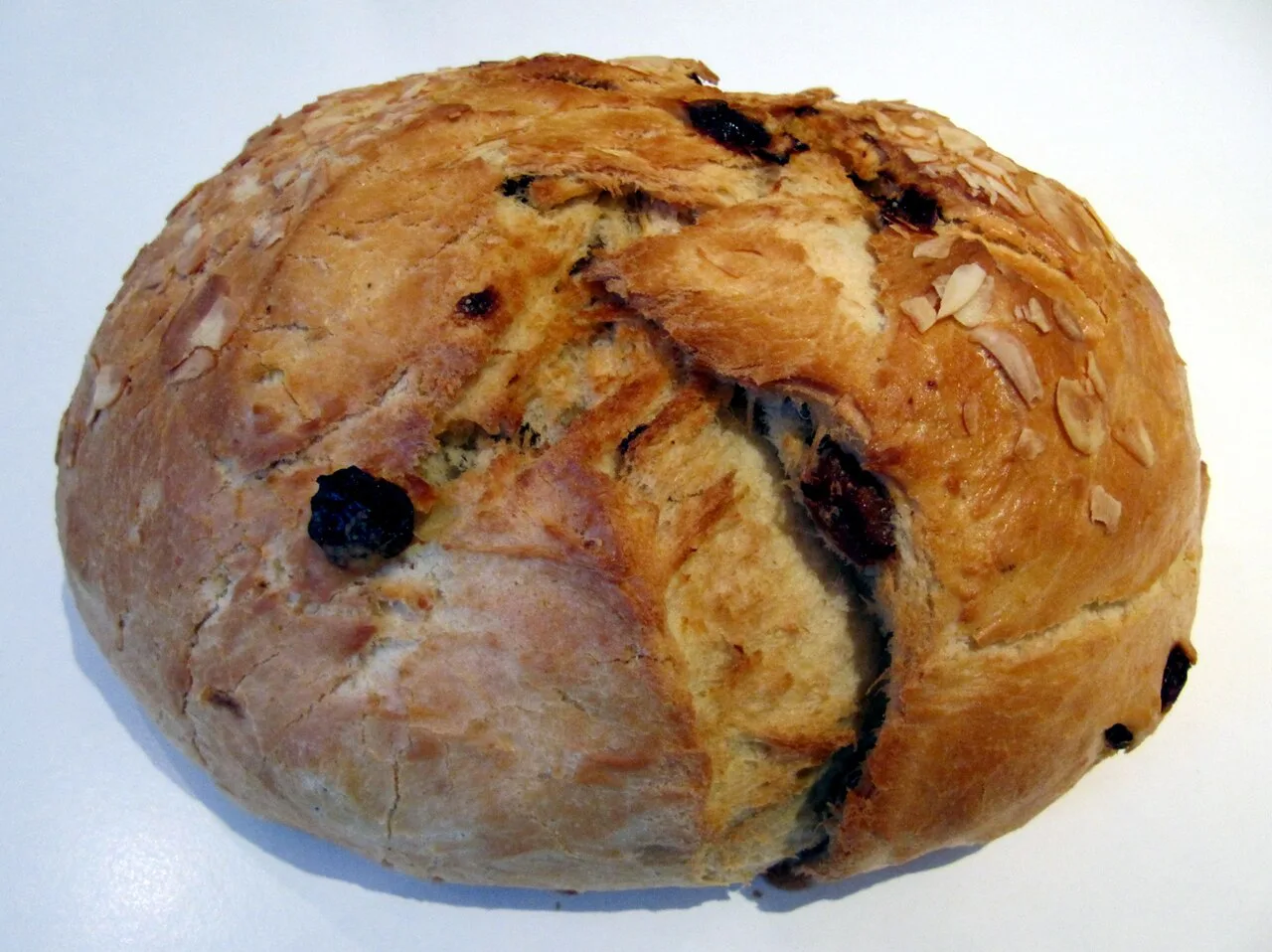
Osterbrot is the umbrella term and also the plainest form: a round loaf, or a loaf that is scored on top with a cross before baking. Osterzopf is the long braided loaf, usually made from three strands. Osterkranz is the braided wreath, where the dough is shaped into a ring instead of a straight loaf.
Is German Easter bread sweet or savory? The classic versions are sweetened yeast breads, enriched with sugar, butter, eggs and sometimes marzipan. Savory Easter breads filled with ham, cheese and herbs exist in other European traditions, but the German Osterbrot, Osterzopf and Osterkranz you will see in bakeries at Easter are sweet.
What is the difference between Osterzopf and Osterkranz? Osterzopf is the straight braided loaf, usually made from three strands. Osterkranz uses the same braided technique but is formed into a ring, and it is often filled with marzipan.
Can I make the dough the night before? Yes. Mix and knead the dough in the evening, let it complete its first rise, then cover and refrigerate it overnight.
The names map onto the shape, so ordering or baking the right one is mostly a question of deciding whether you want a round loaf, a straight braid or a ring. A braided loaf does not need scoring, because the braid itself provides the surface pattern. The wreath is the most festive of the three and the shape most commonly found in German bakeries at Easter, as a German baking guide describes the Osterkranz.
Why the bread is shaped the way it is
The shapes carry traditional symbolism. The round loaf stands for the sun and for light coming into the world, the three-strand braid stands for the Holy Trinity, and the wreath, having no beginning and no end, stands for eternity and renewal. The golden color is part of the message too: dough was traditionally enriched with saffron or brushed with egg yolk so the baked bread glows like the returning sun.
Treat these as inherited traditions rather than rules anyone enforces today. They explain why a German Easter table so often has a ring rather than a loaf, and why the bread is brushed and decorated rather than left plain.
The marzipan-filled Osterkranz and German marzipan
The richer version of the wreath hides a filling of marzipan, ground almonds, sugar, melted butter and a little milk, spread over the rolled-out dough, rolled up into a log, cut lengthwise into two strands and twisted into a ring. The result is a soft, almond-scented bread that needs nothing more than butter. It is the answer if a plain braid feels like it is missing something.
German marzipan is different from what most American and British supermarkets sell: by law it must contain at least 50 percent almonds, which gives it a denser, more intense flavor than the sweeter paste sold elsewhere. If you cannot find good marzipan, making your own almond paste is a reasonable substitute and gives you control over the sweetness. Either way, the filling should be a crumbly paste rather than a wet spread, so it does not tear the dough as you roll.
What goes into the dough and what each ingredient does
Fresh yeast, lukewarm milk and a spoonful of sugar are combined first and left for about ten minutes until the yeast bubbles, which confirms it is alive before you commit the flour. Eggs and butter make the crumb soft and rich, sugar feeds the yeast and sweetens the loaf, and a pinch of salt keeps it from tasting flat. Cardamom is optional but gives the bread a warm, slightly Scandinavian note that suits the almond topping.
The flour is plain all-purpose or German Type 550, and the dough is kneaded for roughly eight to ten minutes until smooth before its first rise of sixty to ninety minutes. For decoration, an egg yolk mixed with a little milk gives the shine, and sliced almonds and Hagelzucker, a coarse hail sugar, add crunch on top. The dough can be mixed in advance and baked the next morning, which is the single most useful piece of scheduling advice for anyone making this on Easter Sunday.
How it is eaten: Easter breakfast and brunch
The bread is breakfast and brunch food. It comes to the table on Easter Sunday morning alongside butter, jam or marmalade, and often coffee or milk, and slices are toasted lightly and eaten warm. It is not a dessert and not a sandwich bread; think of it as the sweet, enriched equivalent of a weekend breakfast loaf.
Leftovers keep for a couple of days at room temperature in an airtight container and can be refreshed in a toaster, which is why a large wreath is not a problem for a small household. Stale slices also work in bread pudding or French toast. If you are building a bigger spring table, the guide to Bärlauch, or wild garlic, covers the other seasonal ingredient that shows up in German kitchens at exactly this time of year.
Serving it the German way at the Easter table
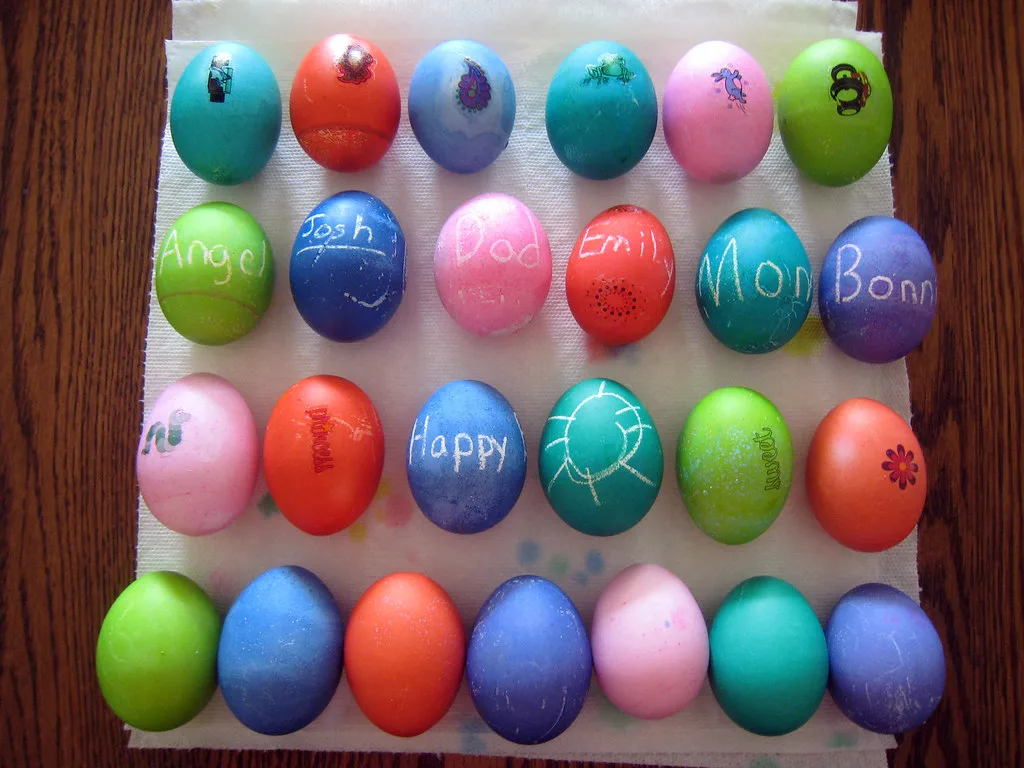
Serve the bread sliced rather than whole, with soft butter and a jam or marmalade on the side, and put it on the table at breakfast rather than after the meal. A dusting of powdered sugar is optional; the egg wash and almonds already do most of the visual work. If you want it to look festive, set a few colored boiled eggs on or beside the wreath, a presentation some recipes suggest as a finish.
Timing matters more than decoration: the bread is at its best slightly warm on the morning it is baked, so organize the dough so the second rise finishes just before breakfast. That usually means shaping the night before or getting up early enough to allow the final thirty minutes of proofing.
Making it ahead: the overnight dough timeline
The practical version of Easter bread can be a two-part schedule with very little work on either part. Mix and knead the dough in advance and let it rise, then bake the next morning; this advance-preparation option is one way to make the bread fit a holiday morning. In the morning, shape it, let it proof for roughly twenty-five to thirty minutes, brush it with egg wash and bake. The home-baking recipe behind this structure uses a first rise of sixty to ninety minutes and a short second proof after shaping.
A warm, draft-free spot makes the difference on the first rise: a switched-off oven with the door closed, or a bowl covered with a damp towel, is enough. Do not rush the first rise; the dough should look visibly puffy and nearly doubled before you divide it into strands and braid.
Common mistakes with the yeast dough and the braid
The most frequent problems are underproofed dough, a braid that unravels and a top that browns before the center is baked. Tuck the ends of the braid firmly underneath and pinch the joins, and keep the strands the same thickness so the loaf rises evenly. If the surface darkens early, tent it loosely with foil for the last part of the bake rather than lowering the oven temperature from the start, since the initial heat is what gives the bread its rise.
For the marzipan wreath, the risk is a filling that bursts through the dough. Keep the paste crumbly, spread it in a thin even layer, and roll tightly from the long edge before cutting the log in two and twisting. That wreath recipe sets the oven to 160°C, or 320°F, and bakes for around forty-five minutes until a skewer comes out clean, a lower and slower bake than the plaited loaf, which reflects the denser filled shape.
Easter Saturday, Lent and the fasting tradition
The bread has a historical reason for existing: it was originally baked to break the Lenten fast, the forty days before Easter when rich foods such as butter, eggs and sugar were given up. Baking the sweet, enriched bread on Karsamstag, Easter Saturday, and serving it at Sunday breakfast was the reward at the end of that stretch. The tradition explains why the dough is loaded with exactly the ingredients that were forbidden.
Today most people bake it because it belongs on the table, not because the fast demands it, and German bakeries fill their windows with wreaths in the weeks before Easter. If you are in Germany in spring and see an iced or sugar-dusted ring in a bakery case, it is almost certainly an Osterkranz. Other seasonal windows in the German food year work the same way; the article on the Pfifferling (Chanterelle) shows how a short mushroom season concentrates attention on one ingredient for a few weeks.
Which Easter bread should you make?
For a first attempt, bake the plain Osterzopf: a three-strand braid, no filling, brushed with egg wash and scattered with almonds, and you will learn the dough without the risk of a leaking marzipan layer. The straightforward version many home bakers start with is a plain braided loaf topped only with coarse sugar and sliced almonds, with the dough mixed the day before and baked fresh in the morning. Move to the Osterkranz once the braid holds its shape, because the filled wreath is the more impressive bake and the one that looks most like what German bakeries sell at Easter.
Build the schedule around the rise, not the baking: mix and knead the dough the day before, shape and proof it in the morning, and put the bread on the breakfast table warm. That single decision turns a fussy project into something you can actually do on a holiday morning.
Explore more Germany guides
Frequently Asked Questions
Is German Easter bread sweet or savory?
The classic versions are sweetened yeast breads, enriched with sugar, butter, eggs and sometimes marzipan. Savory Easter breads filled with ham, cheese and herbs exist in other European traditions, but the German Osterbrot, Osterzopf and Osterkranz you will see in bakeries at Easter are sweet.
What is the difference between Osterzopf and Osterkranz?
Osterzopf is the straight braided loaf, usually made from three strands. Osterkranz uses the same braided technique but is formed into a ring, and it is often filled with marzipan. The wreath is the more festive of the two and the one most commonly sold in German bakeries in the run-up to Easter.
Can I make the dough the night before?
Yes. Mix and knead the dough in the evening, let it complete its first rise, then cover and refrigerate it overnight. In the morning, shape it, let it proof for about twenty-five to thirty minutes, brush with egg wash and bake.
Why does German marzipan taste stronger?
German marzipan must contain at least 50 percent almonds by law, which gives it a denser, more intensely almond flavor than the sweeter, softer marzipan sold in the US and UK. That is why a marzipan filling made with German-style marzipan needs relatively little added sugar.
Sources
Notes for your next German food trip
Optional updates to our guides.
You might also like



Continue reading
More guides you'll find useful



